
Zebra DS3608-ER vs Datalogic PD9531-DPM: Specification Comparison
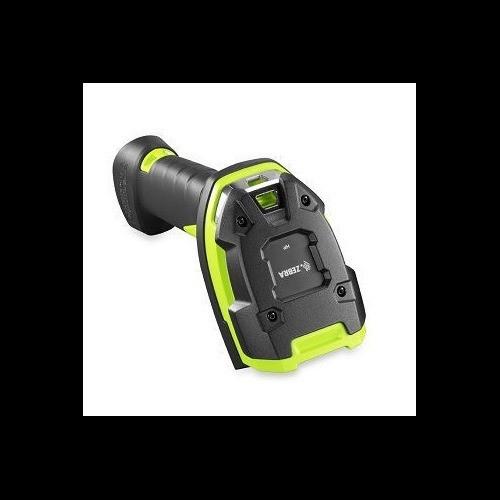
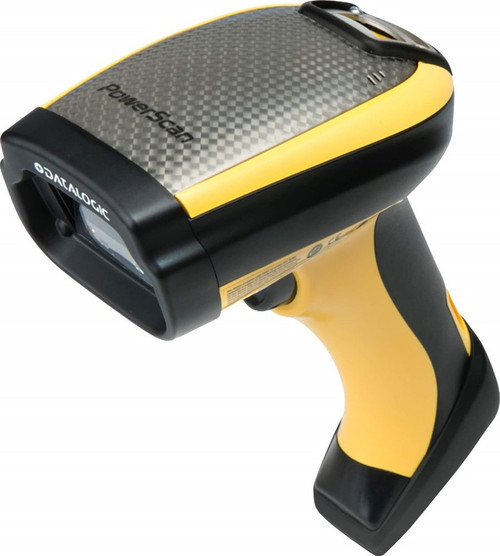
Both the Zebra DS3608-ER and the Datalogic PD9531-DPM are industrial-grade handheld 2D area-imager barcode scanners aimed at demanding warehouse, manufacturing, and logistics environments. The comparison covers ruggedization and sealing, scan performance and decode range, and connectivity plus power characteristics — the three axes that most directly drive purchasing decisions in this product class. Neither unit is an accessory; both are primary scanning devices intended for direct-connect or wireless operation in harsh conditions.
In This Guide
Which scanner is built tougher for harsh industrial environments?
The Zebra DS3608-ER carries dual IP65 and IP67 sealing ratings on the scanner body, offering protection against both dust ingress and sustained water immersion, while its FLB cradle is rated IP65. The Datalogic PD9531-DPM is rated IP65 only, providing dust-tight and water-jet protection but no immersion rating per the provided specifications.
On drop performance, the DS3608-ER is specified to withstand multiple drops from 8.0 ft (2.4 m) to concrete, and adds a tumble specification of 5,000 tumbles at 3.3 ft (1 m). The PD9531-DPM is rated for a 2.0 m (6.6 ft) single drop rating. The DS3608-ER's multiple-drop language and tumble spec represent a more comprehensive mechanical durability statement than the PD9531-DPM's single-drop figure.
The DS3608-ER specifies an operating temperature range of -22 °F to 122 °F (-30 °C to 50 °C) in corded configuration and storage down to -40 °F (-40 °C). No operating or storage temperature range is provided in the supplied specifications for the PD9531-DPM, so a direct thermal comparison cannot be made.
ESD protection is explicitly detailed for the DS3608-ER at ±25 KV air discharge and ±10 KV direct/indirect discharge per EN 61000-4-2. No ESD rating is stated in the PD9531-DPM specifications provided.
How do decode range, image sensor, and DPM capability compare?
The Zebra DS3608-ER uses a fixed-focus 1,280 × 800 pixel imager with a 42° horizontal and 28° vertical field of view. Decode ranges are explicitly published: Code 128 at 5 mil reaches 1.3–6.7 in. (3.3–17 cm); at 20 mil, 2.8–28.0 in. (7.1–71.1 cm); at 40 mil, up to 60 in. (152.4 cm). Datamatrix at 7.5 mil spans 1.9–6.0 in. (4.8–15.2 cm), and at 10.0 mil, 1.4–8.6 in. (3.5–21.8 cm). These published ranges confirm the 'Extended Range' designation.
The Datalogic PD9531-DPM uses a 2D area imager with liquid lens autofocus and an 864 × 544 pixel sensor. The liquid lens autofocus allows focus adjustment across varying distances without physical repositioning, which the DS3608-ER's fixed-focus design does not provide. However, no specific minimum or maximum decode distance figures are supplied in the PD9531-DPM specifications, preventing a direct range-for-range numerical comparison.
The PD9531-DPM's model designation and card bullets explicitly reference DPM (Direct Part Marking) capability, and the product description states omnidirectional reading of 1D and 2D barcodes. The DS3608-ER specifications do not reference DPM capability; its 1D symbology list includes Code 39, Code 128, Code 93, Codabar/NW7, Code 11, MSI Plessey, UPC/EAN, Interleaved 2 of 5, Korean 3 of 5, GS1 DataBar, and Base 32. The PD9531-DPM's DPM support is a material differentiator for metal-etched or laser-marked part traceability applications.
Minimum print contrast for the DS3608-ER is specified at 15% minimum reflective difference. No minimum print contrast figure is provided for the PD9531-DPM in the supplied specifications.
What are the differences in connectivity, power supply, and battery life?
The DS3608-ER supports USB, RS-232, and Keyboard Wedge wired interfaces. Its Bluetooth radio is Class 1, Version 4.0 (LE), supporting serial port and HID profiles, with a Class 1 range of up to 300 ft (100 m). The PD9531-DPM lists USB, RS-232, Bluetooth, and STAR 2.0 Radio as connectivity options. STAR 2.0 is Datalogic's proprietary wireless protocol; no equivalent proprietary radio is available on the DS3608-ER. No Bluetooth version, class, or range is specified for the PD9531-DPM in the provided data.
In corded configuration, the DS3608-ER accepts host-powered input between 4.5 VDC and 5.5 VDC, or external power between 11.4 VDC and 12.6 VDC, drawing 340 mA typical operating current and 100 mA standby. The PD9531-DPM lists 5 VDC ±10% input voltage; operating current is not specified in the provided data.
The DS3608-ER cordless version uses a PowerPrecision+ 3,100 mAh Li-Ion battery rated for 70,000+ scans per full charge. The PD9531-DPM is rated at 30,000+ reads per charge; battery capacity in mAh is not stated in the provided specifications. On the battery-life metric, the DS3608-ER's published 70,000+ scans is more than double the PD9531-DPM's 30,000+ figure.
The DS3608-ER carries a three-year warranty. The PD9531-DPM carries a one-year limited warranty per the provided specifications. Buyers with service cost considerations should factor this two-year coverage gap into total cost of ownership.
Which should you choose: the DS3608-ER or the PD9531-DPM?
Our take: The DS3608-ER is the stronger choice when extended decode range, higher ruggedization certification, longer battery endurance, and a longer warranty are the primary requirements. It outspecifies the PD9531-DPM on sealing (IP65+IP67 vs. IP65 only), drop durability (multiple 8.0 ft drops vs. a single 2.0 m drop), battery life (70,000+ vs. 30,000+ scans per charge), and warranty coverage (3 years vs. 1 year). Its Code 128 40-mil range extends to 60 in. (152 cm), a figure the PD9531-DPM does not publish. However, the PD9531-DPM's liquid lens autofocus and explicit DPM capability make it the more suitable platform for applications requiring variable working distances or reading laser-etched and chemically-etched direct part marks — a use case the DS3608-ER specifications do not address. Choose the PD9531-DPM for DPM-heavy manufacturing traceability or mixed-range autofocus scenarios; choose the DS3608-ER for high-volume logistics or outdoor environments demanding maximum range, sealing depth, and scan throughput.
Side-by-Side Comparison
Spec-for-spec, from manufacturer data.
| Specification | Zebra DS3608-ER | Datalogic PD9531-DPM |
|---|---|---|
| Scanner Series / Family | DS3608-SR/DS3678-SR | PowerScan 9500 Series |
| Scan Engine / Imager | 2D Area Imager (fixed focus) | 2D Area Imager with Liquid Lens Autofocus |
| Image Sensor Resolution | 1,280 x 800 pixels | 864 x 544 pixels |
| DPM Capability | — | Yes (explicitly stated) |
| IP Rating | IP65 + IP67 (scanner); IP65 (cradle) | IP65 |
| Drop Rating | Multiple drops, 8.0 ft (2.4 m) to concrete | 2.0 m (6.6 ft), single drop |
| Tumble Specification | 5,000 tumbles @ 3.3 ft (1 m) | — |
| Operating Temperature | -22 °F to 122 °F (-30 °C to 50 °C) corded | — |
| Battery Capacity | 3,100 mAh Li-Ion (PowerPrecision+) | — |
| Scans Per Charge | 70,000+ | 30,000+ |
| Wired Interfaces | USB, RS-232, Keyboard Wedge | USB, RS-232 |
| Wireless | Bluetooth 4.0 Class 1 (up to 300 ft / 100 m) | Bluetooth, STAR 2.0 Radio (range not specified) |
| Code 128 Decode Range (20 mil) | 2.8–28.0 in. (7.1–71.1 cm) | — |
| Code 128 Decode Range (40 mil) | Up to 60 in. (152.4 cm) | — |
| Input Voltage | 4.5–5.5 VDC (host) / 11.4–12.6 VDC (external) | 5 VDC ±10% |
| Warranty | 3 Years | 1-Year Limited |
Frequently Asked Questions
Which should you choose: the DS3608-ER or the PD9531-DPM?
The DS3608-ER is the stronger choice when extended decode range, higher ruggedization certification, longer battery endurance, and a longer warranty are the primary requirements. It outspecifies the PD9531-DPM on sealing (IP65+IP67 vs. IP65 only), drop durability (multiple 8.0 ft drops vs. a single 2.0 m drop), battery life (70,000+ vs. 30,000+ scans per charge), and warranty coverage (3 years vs. 1 year). Its Code 128 40-mil range extends to 60 in. (152 cm), a figure the PD9531-DPM does not publish. However, the PD9531-DPM's liquid lens autofocus and explicit DPM capability make it the more suitable platform for applications requiring variable working distances or reading laser-etched and chemically-etched direct part marks — a use case the DS3608-ER specifications do not address. Choose the PD9531-DPM for DPM-heavy manufacturing traceability or mixed-range autofocus scenarios; choose the DS3608-ER for high-volume logistics or outdoor environments demanding maximum range, sealing depth, and scan throughput.
Which scanner handles direct part marks (DPM) on metal parts?
Based on the provided specifications, only the Datalogic PD9531-DPM explicitly references DPM capability. Its liquid lens autofocus is described as reading 1D and 2D barcodes omnidirectionally, including direct part marks — a common requirement in automotive, aerospace, and electronics manufacturing. The Zebra DS3608-ER specifications do not mention DPM support, so it cannot be confirmed as suitable for that application from the supplied data.
Which unit is better sealed against water and dust in washdown environments?
The Zebra DS3608-ER holds both IP65 and IP67 ratings on the scanner body, meaning it is protected against water jets (IP65) and against submersion up to 1 m for 30 minutes (IP67). The Datalogic PD9531-DPM is rated IP65 only, providing water-jet protection but no immersion rating per the provided specifications. For environments involving direct hose-down or accidental submersion, the DS3608-ER's dual rating is the stronger documented specification.
Is the DS3608-ER or PD9531-DPM a better fit for a large wireless deployment with a proprietary radio infrastructure?
If the existing wireless infrastructure uses Datalogic's STAR 2.0 proprietary radio network, the PD9531-DPM is the compatible choice — the DS3608-ER does not list STAR 2.0 support. Conversely, if the deployment uses standard Bluetooth, both scanners include Bluetooth; the DS3608-ER specifies Bluetooth 4.0 Class 1 with up to 300 ft (100 m) range, while no Bluetooth version or range is stated for the PD9531-DPM in the supplied specifications. Buyers should confirm radio protocol compatibility with their existing infrastructure before selecting either unit.
Get a Second Opinion on Your Camera Choice
Share your site layout, coverage goals, and budget. Our team will validate the camera selection, flag anything we would change, and recommend products that match the use case.