
Ubiquiti U6-MESH-US vs TP-Link EAP610-OUTDOOR: Specification Comparison
Both the Ubiquiti U6-MESH-US and the TP-Link EAP610-OUTDOOR are dual-band Wi-Fi 6 (802.11ax) outdoor access points powered over Ethernet and intended for perimeter or campus wireless deployments. Buyers cross-shopping these units are typically choosing between Ubiquiti's UniFi ecosystem and TP-Link's Omada SDN platform. The comparison covers RF throughput and coverage, environmental durability and power input, and management platform and ecosystem compatibility.
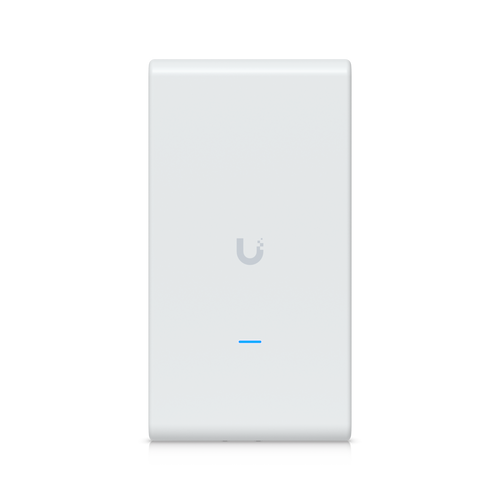
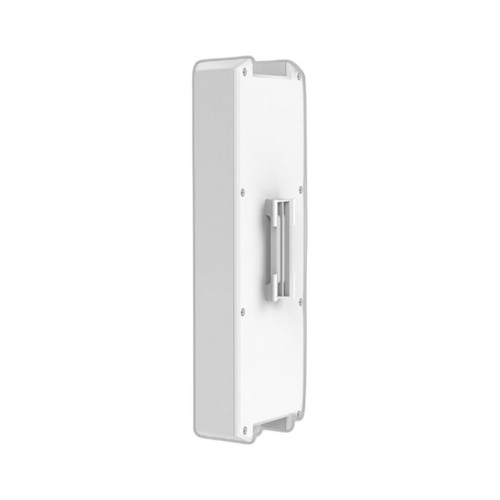
In This Guide
- Which AP delivers higher throughput and broader per-node coverage?
- How do the two APs compare on weatherproofing, operating temperature, and power input?
- Which management platform and ecosystem best fits a multi-site or mixed-hardware deployment?
- Which should you choose: the U6-MESH-US or the EAP610-OUTDOOR?
- Side-by-Side Specs
- FAQ
Which AP delivers higher throughput and broader per-node coverage?
The U6-MESH-US specifies 5.3 Gbps aggregate throughput across its 2.4 GHz and 5 GHz radios and a per-node coverage area of 140 m² (1,500 ft²). Its 5 GHz antenna gain is listed at 5 dBi; 2.4 GHz antenna gain is not stated in the provided specs.
The EAP610-OUTDOOR specifies AX1800-class performance: 574 Mbps on 2.4 GHz and 1,201 Mbps on 5 GHz, for a combined 1,775 Mbps. Per-node coverage area and antenna gain figures are not provided in the supplied specs beyond a note of four internal antennas.
The U6-MESH-US's stated aggregate of 5.3 Gbps is substantially higher than the EAP610-OUTDOOR's 1,775 Mbps combined figure. Buyers requiring maximum RF headroom per node should weigh this gap carefully, noting that real-world client throughput depends on client capabilities, channel width, and interference conditions not addressed by either spec sheet.
How do the two APs compare on weatherproofing, operating temperature, and power input?
The U6-MESH-US carries an IPX5 ingress-protection rating, meaning it is tested against water jets but is not rated as fully dust-tight. Its operating temperature range is -30 to 60°C (-22 to 140°F). It draws 13 W and accepts PoE 802.3at or higher (44–57 V DC); the spec sheet also lists 802.3af and 11 V AC as power entries, which are internally inconsistent — installers should verify the minimum PoE standard with Ubiquiti's datasheet before selecting an injector or switch port.
The EAP610-OUTDOOR carries an IP67 rating, meaning it is tested as fully dust-tight and capable of temporary immersion — a meaningfully higher environmental seal than IPX5. Its operating temperature range is 0–40°C, which is narrower on both ends compared to the U6-MESH-US. It draws 15.4 W and accepts 802.3at PoE (15.4 W) or 12 V/4.5 A DC; the spec data also references 802.3bt, which is inconsistent with the 15.4 W figure — installers should confirm the required PoE standard before deployment.
For installations subject to dust ingress, standing water, or submersion risk (e.g., under-eave mounts in high-rain environments), the EAP610-OUTDOOR's IP67 rating provides a higher specified seal. The U6-MESH-US's -30°C lower operating limit gives it a clear advantage in cold-climate deployments where ambient temperatures may fall below freezing.
Which management platform and ecosystem best fits a multi-site or mixed-hardware deployment?
The U6-MESH-US is managed exclusively through Ubiquiti's UniFi Network application, available as a web application or mobile app. It supports native mesh operation within the UniFi ecosystem. No third-party controller or cloud management option is listed in the provided specs. NDAA compliance is stated as Yes.
The EAP610-OUTDOOR is managed through TP-Link's Omada SDN platform and supports both Access Point and Mesh operating modes. Omada offers hardware controllers, software controllers, and a cloud-based option; however, the specific controller models compatible with this unit are not enumerated in the provided specs. WPA3 encryption support is explicitly listed. NDAA compliance status is not stated in the provided specs.
Existing UniFi infrastructure owners gain a direct integration path with the U6-MESH-US, while existing Omada deployments or new TP-Link network builds align naturally with the EAP610-OUTDOOR. Neither unit is cross-platform compatible. Buyers with mixed-vendor environments or federal/government procurement requirements should factor in Ubiquiti's stated NDAA compliance and verify TP-Link's status independently.
Which should you choose: the U6-MESH-US or the EAP610-OUTDOOR?
Our take: The U6-MESH-US is the stronger choice when maximum aggregate throughput, cold-climate operation, and UniFi ecosystem integration are the primary requirements. Its 5.3 Gbps aggregate throughput is approximately 3× the EAP610-OUTDOOR's 1,775 Mbps combined figure, and its -30°C lower operating limit versus 0°C gives it a decisive advantage in cold-weather deployments. It also carries a stated NDAA-compliant designation, which the EAP610-OUTDOOR spec data does not address. The EAP610-OUTDOOR holds a clear advantage in environmental sealing — IP67 versus IPX5 — making it the more appropriate choice for installations exposed to dust, heavy rain, or temporary water contact. The EAP610-OUTDOOR's Omada SDN platform suits buyers already invested in TP-Link infrastructure. Platform lock-in is a real constraint for both units: neither is cross-compatible with the other's controller ecosystem.
Side-by-Side Comparison
Spec-for-spec, from manufacturer data.
| Specification | Ubiquiti U6-MESH-US | TP-Link EAP610-OUTDOOR |
|---|---|---|
| Wi-Fi Generation | Wi-Fi 6 (802.11ax) | Wi-Fi 6 (802.11ax) |
| Aggregate Throughput | 5.3 Gbps | 1,775 Mbps (AX1800) |
| 2.4 GHz Throughput | — | 574 Mbps |
| 5 GHz Throughput | — | 1,201 Mbps |
| IP / Weatherproof Rating | IPX5 | IP67 |
| Operating Temperature | -30 to 60°C | 0 to 40°C |
| Power Input | PoE 802.3at or higher (44–57 V DC) | 802.3at PoE 15.4 W or 12 V/4.5 A DC |
| Power Consumption | 13 W | 15.4 W |
| Network Port | 1× GbE RJ45 | 1× RJ45 (listed as 10 Gbps in specs — verify with datasheet) |
| Antenna Gain (5 GHz) | 5 dBi | — |
| Coverage Area | 140 m² (1,500 ft²) | — |
| Mount Types | Wall, Pole | Wall, Ceiling, Rack |
| Enclosure Material | Polycarbonate, aluminum | — |
| Management Platform | UniFi Network (web / mobile) | Omada SDN |
| Mesh Support | Yes (UniFi mesh) | Yes (Omada mesh) |
| NDAA Compliant | Yes | — |
Frequently Asked Questions
Which should you choose: the U6-MESH-US or the EAP610-OUTDOOR?
The U6-MESH-US is the stronger choice when maximum aggregate throughput, cold-climate operation, and UniFi ecosystem integration are the primary requirements. Its 5.3 Gbps aggregate throughput is approximately 3× the EAP610-OUTDOOR's 1,775 Mbps combined figure, and its -30°C lower operating limit versus 0°C gives it a decisive advantage in cold-weather deployments. It also carries a stated NDAA-compliant designation, which the EAP610-OUTDOOR spec data does not address. The EAP610-OUTDOOR holds a clear advantage in environmental sealing — IP67 versus IPX5 — making it the more appropriate choice for installations exposed to dust, heavy rain, or temporary water contact. The EAP610-OUTDOOR's Omada SDN platform suits buyers already invested in TP-Link infrastructure. Platform lock-in is a real constraint for both units: neither is cross-compatible with the other's controller ecosystem.
Is the U6-MESH-US or EAP610-OUTDOOR better for cold-weather outdoor installs?
Based on the provided specs, the U6-MESH-US is rated down to -30°C, while the EAP610-OUTDOOR is rated only to 0°C. For any deployment where ambient temperatures may fall below freezing, the U6-MESH-US has a significantly wider specified operating range.
Which unit has better weatherproofing for rain and dust exposure?
The EAP610-OUTDOOR carries an IP67 rating — fully dust-tight and rated for temporary immersion — versus the U6-MESH-US's IPX5 rating, which covers water jets but is not a full dust-seal or immersion rating. For high-dust or high-rainfall environments, the EAP610-OUTDOOR offers a higher specified level of environmental protection.
Can I mix the U6-MESH-US and EAP610-OUTDOOR in the same wireless network?
No. The U6-MESH-US requires Ubiquiti's UniFi Network controller, and the EAP610-OUTDOOR requires TP-Link's Omada SDN controller. The two units cannot be managed from a single platform and cannot form a native mesh with each other. A deployment must standardize on one ecosystem or manage two separate controller environments.
More Wireless Access Point Comparisons
Get a Second Opinion on Your Camera Choice
Share your site layout, coverage goals, and budget. Our team will validate the camera selection, flag anything we would change, and recommend products that match the use case.