
Transition Networks SISPM1040-3248-L vs Transition Networks SISPM1040-3166-L: Specification Comparison
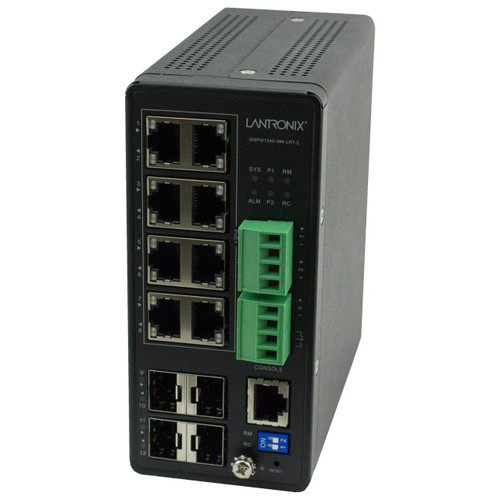
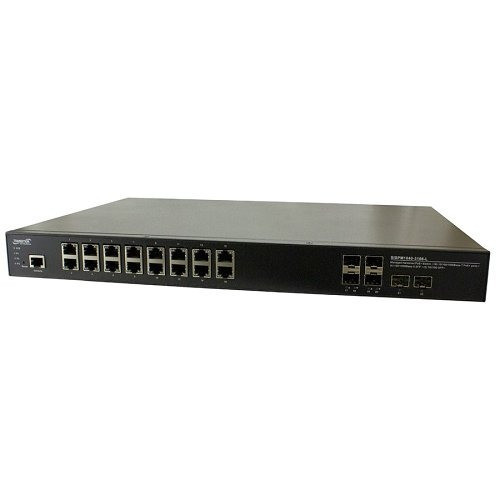
Both the SISPM1040-3248-L and SISPM1040-3166-L are Transition Networks 32-port managed Gigabit PoE+ switches targeting hardened, industrial security deployments. They share the same port count, management capability, form factor class, certifications baseline, and 5-year warranty. The primary decision axes are PoE power budget, physical weight, and protocol support — specifically the SISPM1040-3166-L's IEEE 1588 v2 PTP (TC) precision-timing capability, which is absent from the SISPM1040-3248-L's listed specs.
In This Guide
- Which switch delivers more PoE power — and does it matter for your endpoint count?
- Are these switches built to the same environmental and physical standard?
- What Layer 2 management and security capabilities do these switches provide?
- Which should you choose: the SISPM1040-3248-L or the SISPM1040-3166-L?
- Side-by-Side Specs
- FAQ
Which switch delivers more PoE power — and does it matter for your endpoint count?
The SISPM1040-3248-L carries a 370W aggregate PoE budget across all 32 Gigabit PoE+ ports. At the IEEE 802.3at maximum of 30W per port, this supports approximately 12–13 ports at full 30W draw simultaneously before the budget is exhausted.
The SISPM1040-3166-L provides a 250W aggregate PoE budget across the same 32 Gigabit PoE+ ports. Its own marketing copy notes 16–20 simultaneous 30W endpoints, though 16 × 30W = 480W exceeds the stated 250W budget; realistically, 250W ÷ 30W yields roughly 8 ports at full 30W draw. At typical camera draws of 10–15W, both switches support meaningfully more concurrent devices.
The 120W delta (370W vs. 250W) is significant when powering high-wattage endpoints such as PTZ cameras, access-control panels with electric locks, or high-output wireless APs. Deployments mixing many 25–30W devices should favor the SISPM1040-3248-L; lighter endpoint mixes bring the SISPM1040-3166-L within practical range.
Are these switches built to the same environmental and physical standard?
Both switches carry identical certification sets at their baseline: FCC Class A, CE, NEMA TS-2, and UL. NEMA TS-2 is a traffic-cabinet hardening standard widely accepted in transportation and outdoor security infrastructure, confirming industrial-grade shock, vibration, and temperature tolerance for both units.
The SISPM1040-3166-L additionally lists support for IEEE 1588 v2 PTP (Transparent Clock). This precision time protocol capability is not listed for the SISPM1040-3248-L. PTP matters in deployments requiring sub-microsecond time synchronization — physical access control systems, multi-sensor forensic video, or traffic-management networks where timestamped events must be correlated across nodes.
Physically, the SISPM1040-3248-L is slightly larger (17.4" × 1.73" × 11.81") and heavier (11.02 lb) versus the SISPM1040-3166-L (10.58 lb; rack dimensions not provided in specs). Both are rackmount form factor. The weight difference is minor and unlikely to be a rack-loading decision factor on its own.
What Layer 2 management and security capabilities do these switches provide?
Both switches are fully managed with a 32,000-entry MAC address table, supporting enterprise-grade Layer 2 segmentation at scale. The SISPM1040-3248-L specs call out VLAN segmentation and port-level security policies explicitly.
The SISPM1040-3166-L specs enumerate VLAN, QoS, and Port Mirroring. QoS enables traffic prioritization — ensuring video or access-control data is not starved by lower-priority traffic on shared links. Port mirroring supports network visibility and intrusion-detection appliance integration. These features are not explicitly listed for the SISPM1040-3248-L, though absence from listed specs does not confirm absence from the product; buyers should verify against the respective datasheets at /content/product-datasheets/SISPM1040-3248-L.pdf and /content/product-datasheets/SISPM1040-3166-L.pdf.
The SISPM1040-3166-L's IEEE 1588 v2 PTP Transparent Clock support also falls under the management and integration dimension, enabling the switch to pass PTP timing transparently without degrading synchronization accuracy across the network.
Which should you choose: the SISPM1040-3248-L or the SISPM1040-3166-L?
Our take: The SISPM1040-3248-L is the stronger choice when aggregate PoE power delivery is the primary constraint — its 370W budget outpaces the SISPM1040-3166-L's 250W by 120W, meaningfully increasing the number of high-draw (25–30W) endpoints that can run simultaneously without load-shedding. It also weighs slightly more (11.02 lb vs. 10.58 lb), consistent with the additional power circuitry. However, the SISPM1040-3166-L holds a distinct advantage for time-sensitive networks: it explicitly supports IEEE 1588 v2 PTP (Transparent Clock), a capability absent from the SISPM1040-3248-L's listed specs. The SISPM1040-3166-L's specs also enumerate QoS and Port Mirroring explicitly. Choose the SISPM1040-3248-L for dense high-wattage PoE deployments such as PTZ-heavy camera runs or multi-device access-control closets; choose the SISPM1040-3166-L where precision time synchronization or explicit QoS/mirroring documentation is required by the project spec.
Side-by-Side Comparison
Spec-for-spec, from manufacturer data.
| Specification | Transition Networks SISPM1040-3248-L | Transition Networks SISPM1040-3166-L |
|---|---|---|
| SKU | SISPM1040-3248-L | SISPM1040-3166-L |
| Device Type | Managed PoE+ Switch | Managed PoE+ Switch |
| Total Ports | 32 | 32 |
| Port Speed | Gigabit | Gigabit |
| PoE Standard | PoE+ (802.3at / 30W per port) | PoE+ (802.3at / 30W per port) |
| Aggregate PoE Budget | 370W | 250W |
| MAC Address Table | 32,000 entries | 32,000 entries |
| Management | Yes | Yes |
| VLAN Support | Yes (listed) | Yes (listed) |
| QoS | Not listed in specs | Yes (listed) |
| Port Mirroring | Not listed in specs | Yes (listed) |
| IEEE 1588 v2 PTP (TC) | Not listed in specs | Yes (listed) |
| Form Factor | Rackmount | Rackmount |
| Dimensions | 17.4" x 1.73" x 11.81" | Not provided in specs |
| Weight | 11.02 lb | 10.58 lb |
| Certifications | FCC Class A, CE, NEMA TS-2, UL | FCC Class A, CE, NEMA TS-2, UL, IEEE 1588 v2 PTP (TC) |
| Warranty | 5 Years | 5 Years |
Frequently Asked Questions
Which should you choose: the SISPM1040-3248-L or the SISPM1040-3166-L?
The SISPM1040-3248-L is the stronger choice when aggregate PoE power delivery is the primary constraint — its 370W budget outpaces the SISPM1040-3166-L's 250W by 120W, meaningfully increasing the number of high-draw (25–30W) endpoints that can run simultaneously without load-shedding. It also weighs slightly more (11.02 lb vs. 10.58 lb), consistent with the additional power circuitry. However, the SISPM1040-3166-L holds a distinct advantage for time-sensitive networks: it explicitly supports IEEE 1588 v2 PTP (Transparent Clock), a capability absent from the SISPM1040-3248-L's listed specs. The SISPM1040-3166-L's specs also enumerate QoS and Port Mirroring explicitly. Choose the SISPM1040-3248-L for dense high-wattage PoE deployments such as PTZ-heavy camera runs or multi-device access-control closets; choose the SISPM1040-3166-L where precision time synchronization or explicit QoS/mirroring documentation is required by the project spec.
Is the SISPM1040-3248-L or SISPM1040-3166-L better for larger PoE deployments?
The SISPM1040-3248-L is better suited for larger or higher-wattage PoE deployments. Its 370W budget is 120W greater than the SISPM1040-3166-L's 250W, allowing more simultaneous high-draw devices — such as PTZ cameras or powered access-control hardware drawing near the 30W 802.3at maximum — before the shared budget is exhausted.
Does either switch support precision time synchronization for forensic video or access control?
Yes — the SISPM1040-3166-L explicitly lists IEEE 1588 v2 PTP (Transparent Clock) support in its certifications and feature set. This allows it to pass precision timing across the network without degrading synchronization accuracy, which is valuable for multi-camera forensic timestamping or access-control event correlation. The SISPM1040-3248-L does not list PTP support in its provided specifications.
Are both switches suitable for outdoor cabinet or transportation infrastructure installations?
Both switches carry NEMA TS-2 certification alongside FCC Class A, CE, and UL marks. NEMA TS-2 is specifically designed for traffic-cabinet and roadside-infrastructure environments, confirming hardened tolerance for shock, vibration, and temperature extremes. Neither switch is differentiated on this point — both are equally qualified for industrial outdoor-cabinet deployments based on the provided specifications.
Get a Second Opinion on Your Camera Choice
Share your site layout, coverage goals, and budget. Our team will validate the camera selection, flag anything we would change, and recommend products that match the use case.