
TP-Link EAP610-OUTDOOR vs TP-Link EAP610: Specification Comparison
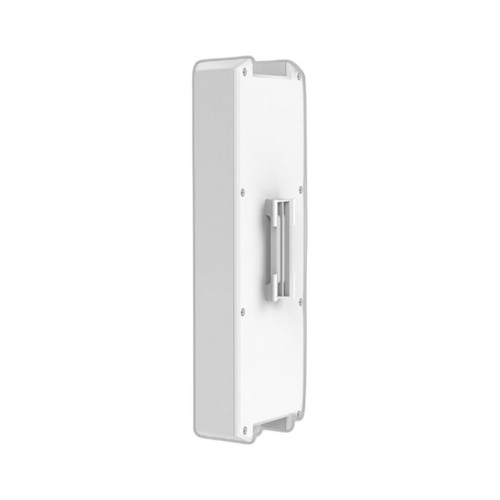
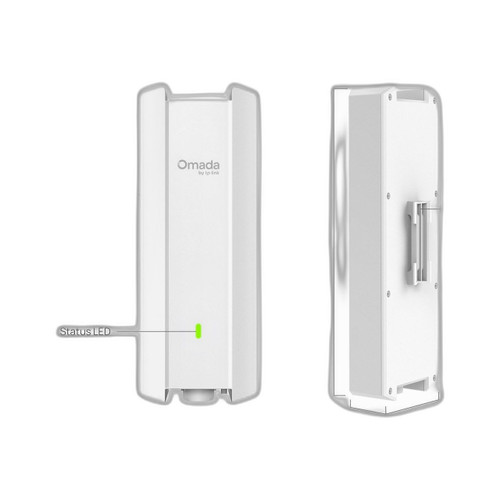
Both the TP-Link EAP610-OUTDOOR and the EAP610 are dual-band Wi-Fi 6 (AX1800) access points managed under the same Omada SDN platform, targeting installations where a single vendor's ecosystem is already in play. The core comparison turns on deployment environment: one unit is hardened for outdoor and perimeter use, the other is optimized for indoor ceiling or wall mounting. Buyers evaluating these two are typically deciding whether a single SKU can cover both an indoor office wing and an exterior parking lot or building facade within the same Omada-managed network.
In This Guide
- Are the RF speeds and throughput figures the same between these two AX1800 access points?
- How do the power input options and environmental ratings differ between these two models?
- Do these two access points share the same mounting options and Omada SDN management capabilities?
- Which should you choose: the EAP610-OUTDOOR or the EAP610?
- Side-by-Side Specs
- FAQ
Are the RF speeds and throughput figures the same between these two AX1800 access points?
Both units carry the AX1800 designation, but the available specs break down that figure differently depending on the model. The EAP610-OUTDOOR specs state the combined 1,775 Mbps figure explicitly and attribute 574 Mbps to the 2.4 GHz radio and 1,201 Mbps to the 5 GHz radio. The EAP610 indoor model lists its throughput only as 'AX1800' without a per-band breakdown in the provided spec data, so a direct per-band comparison cannot be made from the supplied specifications alone.
Both products support the same dual-band frequency plan (2.4 GHz and 5 GHz) and both are WPA3-capable. The EAP610 indoor unit lists a broader wireless protocol compatibility string — 802.11a/b/g/n/ac/ax — while the EAP610-OUTDOOR spec sheet does not enumerate legacy protocol support. The EAP610 also lists WPA3-Enhanced Open (OWE), WPA2-Personal/Enterprise, and WPA3-Personal/Enterprise explicitly; the EAP610-OUTDOOR spec lists only 'WPA3' without that granularity.
The EAP610-OUTDOOR specifies an internal 4-antenna configuration. No antenna specification is provided for the EAP610 in the supplied data.
How do the power input options and environmental ratings differ between these two models?
This is where the two units diverge most sharply. The EAP610-OUTDOOR carries an IP67 rating, meaning it is fully dust-tight and rated for temporary immersion in water — appropriate for outdoor mounting on building exteriors, under eaves, or on poles exposed to rain. The EAP610 indoor unit carries no IP rating in the provided specifications, confirming it is intended for controlled indoor environments only.
On the power side, the EAP610-OUTDOOR specs reference both 802.3at (15.4 W) and 802.3bt PoE as input options, with an alternative of 12 V/4.5 A DC. The EAP610 indoor unit's supplied specs reference 802.3af as a minimum PoE input and also list 802.3bt and 12 V/4.5 A DC in a secondary field — note that the EAP610 spec data contains some inconsistency (an 802.3af minimum alongside an 802.3bt field), so installers should verify the actual injector requirement against TP-Link's published datasheet before deploying.
Operating temperature range also differs: the EAP610-OUTDOOR is rated 0–40 °C per the provided specs, while the EAP610 indoor unit is rated 0–60 °C. The wider thermal ceiling on the indoor unit is notable and may reflect the heat-management constraints of the EAP610-OUTDOOR's sealed, weatherproof enclosure.
Do these two access points share the same mounting options and Omada SDN management capabilities?
Both units are managed through TP-Link's Omada SDN platform, providing a consistent management interface across a mixed indoor/outdoor deployment. Both also list Access Point and Mesh as operating modes in at least one model's spec set, though the EAP610 indoor unit lists its operating modes as the 802.11 protocol string rather than named modes — the Omada SDN compatibility is confirmed for both.
Mounting options differ somewhat. The EAP610-OUTDOOR lists wall, ceiling, and rack as mount types. The EAP610 indoor unit lists ceiling and wall mounting, with a kit included per the spec data; it also specifically notes junction box mounting compatibility. The EAP610-OUTDOOR's mount style is listed as wall-mount in one spec field, so buyers planning a ceiling-suspended outdoor deployment should verify the mounting hardware included.
The EAP610 indoor unit provides physical dimensions in the spec data (160 × 160 × 33.6 mm). No physical dimensions are provided for the EAP610-OUTDOOR in the supplied specifications. Both units carry a single Ethernet port; the EAP610-OUTDOOR lists it as 1 × 10 Gbps, while the EAP610's primary Ethernet Rate field lists 1 × Gigabit — note that the EAP610 also carries a secondary field listing 10 Gbps, which is internally inconsistent in the provided data and should be confirmed against TP-Link's published datasheet.
Which should you choose: the EAP610-OUTDOOR or the EAP610?
Our take: The EAP610-OUTDOOR is the stronger choice when the installation requires any exposure to weather, moisture, or dust — its IP67 rating makes it the only option of these two for exterior deployments, and no comparable rating is present for the EAP610. Three concrete spec differences drive the decision: (1) IP67 vs. no IP rating, making outdoor use viable only on the EAP610-OUTDOOR; (2) operating temperature ceiling of 40 °C on the EAP610-OUTDOOR vs. 60 °C on the EAP610, meaning the indoor unit actually tolerates a higher ambient temperature in a conditioned space; and (3) per-band throughput detail (574 + 1,201 Mbps) is confirmed on the EAP610-OUTDOOR but not broken out in the EAP610 spec data. For purely indoor ceiling or wall deployments, the EAP610 is the purpose-built option with explicit junction-box mount support and a broader confirmed wireless encryption list. Both units operate under Omada SDN, making them deployable side-by-side in a unified managed network.
Side-by-Side Comparison
Spec-for-spec, from manufacturer data.
| Specification | TP-Link EAP610-OUTDOOR | TP-Link EAP610 |
|---|---|---|
| Wi-Fi Generation | Wi-Fi 6 (802.11ax) | Wi-Fi 6 (802.11ax) |
| Speed Class | AX1800 | AX1800 |
| Combined Throughput | 1,775 Mbps | AX1800 (per-band breakdown not specified) |
| 2.4 GHz Throughput | 574 Mbps | — |
| 5 GHz Throughput | 1,201 Mbps | — |
| Frequency Bands | 2.4 GHz / 5 GHz | 2.4 GHz / 5 GHz |
| IP Rating | IP67 | — |
| Operating Temperature | 0–40 °C | 0–60 °C |
| PoE Input Standard | 802.3at / 802.3bt | 802.3af minimum (802.3bt also listed — verify against datasheet) |
| Alternate Power | 12 V / 4.5 A DC | 12 V / 4.5 A DC |
| Power Consumption | 15.4 W | — |
| Ethernet Port | 1 × Gigabit (10 Gbps field also listed — verify) | 1 × Gigabit (10 Gbps field also listed — verify) |
| Antenna | Internal (4 × antenna) | — |
| Encryption | WPA3 | WPA3-Personal/Enterprise, WPA3-Enhanced Open (OWE), WPA2-Personal/Enterprise, WPA-Personal/Enterprise, WEP |
| Mount Types | Wall, Ceiling, Rack | Ceiling, Wall, Junction Box |
| Management Platform | Omada SDN | Omada SDN |
Frequently Asked Questions
Which should you choose: the EAP610-OUTDOOR or the EAP610?
The EAP610-OUTDOOR is the stronger choice when the installation requires any exposure to weather, moisture, or dust — its IP67 rating makes it the only option of these two for exterior deployments, and no comparable rating is present for the EAP610. Three concrete spec differences drive the decision: (1) IP67 vs. no IP rating, making outdoor use viable only on the EAP610-OUTDOOR; (2) operating temperature ceiling of 40 °C on the EAP610-OUTDOOR vs. 60 °C on the EAP610, meaning the indoor unit actually tolerates a higher ambient temperature in a conditioned space; and (3) per-band throughput detail (574 + 1,201 Mbps) is confirmed on the EAP610-OUTDOOR but not broken out in the EAP610 spec data. For purely indoor ceiling or wall deployments, the EAP610 is the purpose-built option with explicit junction-box mount support and a broader confirmed wireless encryption list. Both units operate under Omada SDN, making them deployable side-by-side in a unified managed network.
Can I use the EAP610 outdoors if I mount it under a covered overhang?
The EAP610 carries no IP rating in the provided specifications, so TP-Link does not rate it for outdoor exposure. Only the EAP610-OUTDOOR carries an IP67 rating, which covers dust ingress and temporary water immersion. For any installation with exposure to humidity, rain splash, or condensation — even under a partial cover — the EAP610-OUTDOOR is the appropriate choice based on the available specs.
Do both access points work with the same Omada controller and switches?
Yes. Both the EAP610-OUTDOOR and the EAP610 are managed through TP-Link's Omada SDN platform, so they can coexist under the same Omada hardware or software controller, share the same SSID and policy configuration, and be monitored from a single dashboard. This makes them a practical pairing for a campus or facility deployment that spans indoor and outdoor zones.
Is the EAP610-OUTDOOR or EAP610 better for a high-density indoor conference room deployment?
Based on the provided specifications, the EAP610 is the purpose-designed indoor unit, with explicit ceiling-mount and junction-box mounting support and an operating temperature ceiling of 60 °C — wider than the EAP610-OUTDOOR's 40 °C limit. The EAP610-OUTDOOR's IP67 sealed enclosure adds cost and form-factor bulk not needed indoors. For a high-density indoor environment, the EAP610 is the better-matched product from what the specs disclose, though buyers should verify per-band throughput and PoE injector requirements against TP-Link's published datasheets, as some fields in the provided spec data are inconsistent.
More Wireless Access Point Comparisons
Get a Second Opinion on Your Camera Choice
Share your site layout, coverage goals, and budget. Our team will validate the camera selection, flag anything we would change, and recommend products that match the use case.