
Speco Technologies AWRR44 vs Speco Technologies APCR620L: Specification Comparison
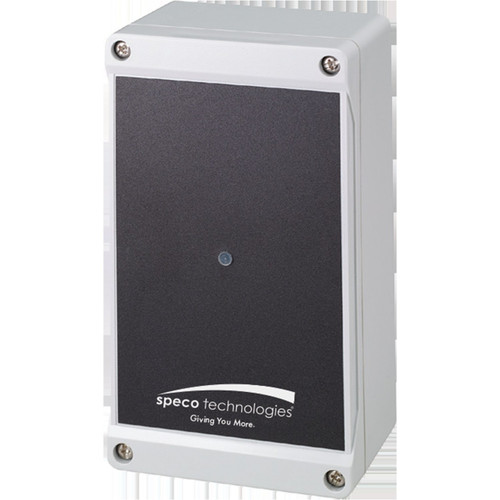
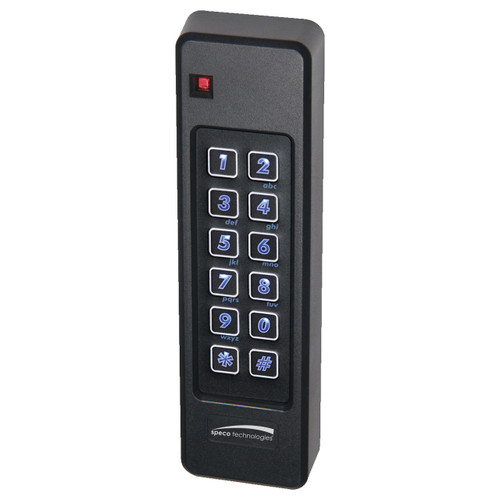
Both the Speco Technologies AWRR44 and APCR620L are access control reader devices that output Wiegand 26-bit signals and are rated for outdoor use — making them surface-level cross-shop candidates. However, they serve fundamentally different roles: the AWRR44 is a long-range UHF 433MHz wireless receiver designed to pick up signals from remote keyfobs or tags at up to 200 feet, while the APCR620L is a short-range mullion-mount proximity and Bluetooth reader intended for door-side credential presentation. A buyer choosing between them is choosing between long-range vehicular/perimeter access and conventional door-access reader applications.
In This Guide
- How do read range and supported credential types differ between the AWRR44 and APCR620L?
- Which protocols and access control integrations does each reader support?
- How do environmental ratings and power requirements compare for outdoor deployments?
- Which should you choose: the AWRR44 or the APCR620L?
- Side-by-Side Specs
- FAQ
How do read range and supported credential types differ between the AWRR44 and APCR620L?
The AWRR44 is engineered for long-range detection, delivering a specified read range of 200 feet using a 433MHz UHF operating frequency with 360-degree omnidirectional reception. It accepts no proximity cards or mobile credentials — it is purpose-built for wireless keyfob or tag-type transmitters over that extended distance. No Bluetooth capability is listed in its specifications.
The APCR620L takes a dual-credential approach optimized for door-side use: it reads standard proximity cards at approximately 4 inches and Bluetooth Low Energy (BLE) mobile credentials at up to 15 feet. It also integrates a PIN keypad for a third factor. The APCR620L's maximum 15-foot mobile read range is 13.3 times shorter than the AWRR44's 200-foot range, making range the most decisive differentiator between the two products.
Which protocols and access control integrations does each reader support?
Both devices share Wiegand 26-bit output, meaning either can connect to any access control panel that accepts the industry-standard Wiegand interface without additional adapters or converters.
The APCR620L goes further by also supporting OSDP (Open Supervised Device Protocol), which provides encrypted, bidirectional communication and is required by many modern enterprise and government access control platforms. The AWRR44 specifications list no OSDP support. Additionally, the AWRR44 specification notes ONVIF compliance and rolling code encryption on its RF link, which are relevant to how the wireless signal is secured but do not extend its wired integration options beyond Wiegand. Buyers deploying OSDP-capable panels will find only the APCR620L natively compatible.
How do environmental ratings and power requirements compare for outdoor deployments?
The AWRR44 carries an IP65 rating and an operating temperature range of -40°F to 149°F. IP65 indicates protection against dust ingress and low-pressure water jets from any direction.
The APCR620L specifies IP67 weather resistance, a one step higher ingress protection rating than the AWRR44, adding protection against temporary submersion up to 1 meter for 30 minutes. Its operating temperature range is -31°F to 150°F — a narrower cold-end tolerance than the AWRR44 by 9°F. On power, the AWRR44 specifies DC 12V input and also lists PoE (802.3af), while the APCR620L specifies AC/DC power supply without listing a specific voltage or PoE capability in the provided specifications. Installers needing single-cable PoE deployment will find that data available only for the AWRR44.
Which should you choose: the AWRR44 or the APCR620L?
Our take: The AWRR44 is the stronger choice when the deployment requires long-range, perimeter, or vehicular access detection — its 200-foot read range dwarfs the APCR620L's 15-foot Bluetooth maximum by a factor of more than 13, and its 360-degree omnidirectional reception eliminates line-of-sight constraints. Its IP65 rating and PoE 802.3af power input also simplify single-cable installation at gate or parking-lot posts. The APCR620L is the stronger choice for conventional door-side access control: it supports proximity cards and BLE mobile credentials simultaneously, adds an integrated keypad for PIN entry, achieves a higher IP67 ingress rating, and critically supports OSDP in addition to Wiegand — a protocol requirement on many modern enterprise and government panels that the AWRR44 does not meet. Buyers running OSDP-capable controllers or deploying mobile credential programs should specify the APCR620L; buyers controlling gate or parking access at distance should specify the AWRR44.
Side-by-Side Comparison
Spec-for-spec, from manufacturer data.
| Specification | Speco Technologies AWRR44 | Speco Technologies APCR620L |
|---|---|---|
| Device Role | Long-range UHF wireless receiver | Door-side proximity + BLE reader |
| Read Range | 200 feet (UHF wireless) | 15 ft (BLE mobile) / 4 in (proximity card) |
| Operating Frequency / Technology | 433MHz UHF | Proximity + Bluetooth Low Energy (BLE) |
| Wiegand Output | 26-bit | 26-bit |
| OSDP Support | — | Yes |
| Keypad | — | Yes (PIN entry) |
| LED / Audio Feedback | — | LED + audio beeper |
| Rolling Code Encryption | Yes | — |
| ONVIF Compliance | Yes | — |
| IP Rating | IP65 | IP67 |
| Operating Temperature | -40°F to 149°F | -31°F to 150°F |
| Power Input | DC 12V / PoE (802.3af) | AC/DC (voltage not specified) |
| Mount Type | Wall | Corner; Rack |
| Housing Color | White | White (black snap-on cover included) |
| Environment Rating | Outdoor | Outdoor |
| Warranty | 2-year | 2-year |
Frequently Asked Questions
Which should you choose: the AWRR44 or the APCR620L?
The AWRR44 is the stronger choice when the deployment requires long-range, perimeter, or vehicular access detection — its 200-foot read range dwarfs the APCR620L's 15-foot Bluetooth maximum by a factor of more than 13, and its 360-degree omnidirectional reception eliminates line-of-sight constraints. Its IP65 rating and PoE 802.3af power input also simplify single-cable installation at gate or parking-lot posts. The APCR620L is the stronger choice for conventional door-side access control: it supports proximity cards and BLE mobile credentials simultaneously, adds an integrated keypad for PIN entry, achieves a higher IP67 ingress rating, and critically supports OSDP in addition to Wiegand — a protocol requirement on many modern enterprise and government panels that the AWRR44 does not meet. Buyers running OSDP-capable controllers or deploying mobile credential programs should specify the APCR620L; buyers controlling gate or parking access at distance should specify the AWRR44.
Can either the AWRR44 or the APCR620L read standard proximity cards?
Only the APCR620L supports standard proximity card reading, at a specified range of approximately 4 inches. The AWRR44 specifications list no proximity card credential support; it is designed for UHF 433MHz wireless transmitters (keyfobs or tags) at ranges up to 200 feet.
Which reader is better suited for a gate or parking-lot access application?
The AWRR44 is the purpose-built choice for gate and parking access, with a 200-foot read range, 360-degree omnidirectional reception, and PoE 802.3af power — all specified features suited to vehicle detection at distance. The APCR620L's maximum read range is 15 feet (Bluetooth mobile), which is not designed for vehicular perimeter use.
Does either reader support OSDP for encrypted, supervised communication?
Yes — the APCR620L specifies both Wiegand 26-bit and OSDP protocol support. The AWRR44 specifications list only Wiegand 26-bit output; no OSDP support is documented for that model. Buyers deploying OSDP-mandatory access control systems should select the APCR620L.
More Access Control Reader Comparisons
- HID 5365EGP00 vs Comelit 909020116
- HID 5365EGP00 vs Speco Technologies AP500HA
- HID 5365EGP00 vs Comelit 909020113
- HID 5365EGP00 vs HID 20NKS-00-000000
- HID 5365EGP00 vs HID 40NKS-00-000000
- Comelit 909020116 vs Speco Technologies AP500HA
Access Control Reader Buying Guides
Get a Second Opinion on Your Camera Choice
Share your site layout, coverage goals, and budget. Our team will validate the camera selection, flag anything we would change, and recommend products that match the use case.