
Speco Technologies AP500HA vs SDC IPRW300: Specification Comparison
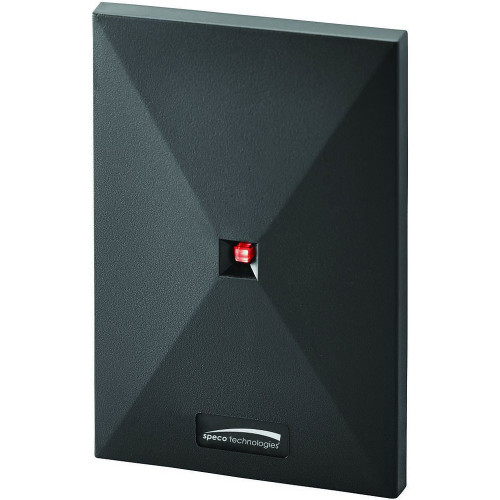
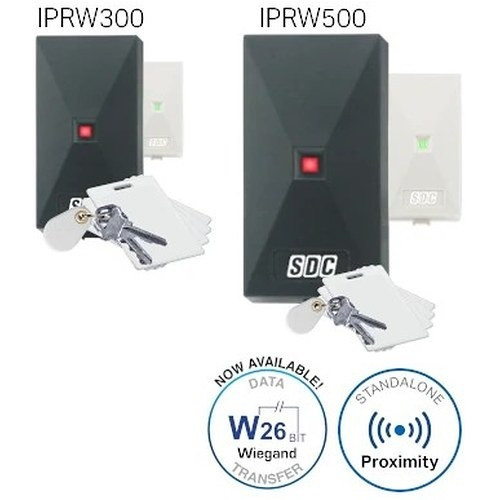
Both the Speco Technologies AP500HA and the SDC IPRW300 are 125kHz HID-compatible proximity card readers that output Wiegand protocol signals for integration with downstream access control panels. Installers evaluating either device are selecting a credential-reading front-end for a panel-based access control system — not a standalone controller — making these genuine cross-shop candidates. The comparison centers on three decision-relevant axes: credential and system scale support, physical installation and environmental resilience, and compliance, warranty, and ecosystem fit.
In This Guide
- Which reader supports larger credential populations and multi-door deployments?
- How do the two readers compare on physical form factor, power requirements, and weatherproofing?
- Which reader offers stronger compliance credentials and long-term coverage?
- Which should you choose: the AP500HA or the IPRW300?
- Side-by-Side Specs
- FAQ
Which reader supports larger credential populations and multi-door deployments?
The AP500HA's specifications do not list a maximum user credential count or a door-capacity figure. It is described as a Wiegand-output reader compatible with HID and AWID cards, intended for direct panel integration, but the specs are silent on how many credentials or doors the reader itself can serve — those limits would be set by the connected panel, not the reader.
The IPRW300's specifications explicitly state support for up to 250,000 user credentials and up to 63 doors, figures sourced from both the structured attributes and the datasheet fields. SDC also notes compatibility with the SDC IPPro Single Door Controller and 'most access control systems,' suggesting the 250,000/63-door ceiling is a system-level parameter tied to SDC's controller ecosystem rather than an inherent reader limit. Buyers specifying large enterprise deployments with SDC controllers have a published scale ceiling to plan against; buyers pairing the AP500HA with a third-party panel must consult that panel's datasheet for equivalent limits.
How do the two readers compare on physical form factor, power requirements, and weatherproofing?
Both readers carry an IP67 ingress protection rating and share an identical operating temperature range of -40°F to 149°F, making either suitable for unsheltered outdoor installations in extreme climates. Environmental resilience is a tie on published specs.
Power requirements diverge. The AP500HA accepts 5–16 VDC and draws 30mA at 12VDC, giving installers flexibility to run it from a wide range of panel auxiliary power supplies. The IPRW300 lists a single operating voltage of 16VDC with no current draw figure published, which requires verification that the panel's power output matches that specific voltage. Weight also differs: the AP500HA is 4 oz versus the IPRW300's 2 lbs, a meaningful difference when surface-mounting on hollow-core doors or glass. The IPRW300 specifies mullion or surface mounting; the AP500HA's mount type is listed as 'Rack' in one attribute field, which appears inconsistent for a proximity reader — installers should confirm mounting options against the physical datasheet. The AP500HA ships with an audio beeper and LED indicators as standard; the IPRW300 does not list included audio or LED indicators in the available specs.
Read range is published only for the AP500HA at 8 inches. No read range figure is present in the IPRW300's specifications.
Which reader offers stronger compliance credentials and long-term coverage?
The AP500HA carries ETL listing and NDAA Section 889 Part B compliance, the latter being a federal procurement requirement prohibiting covered telecommunications equipment. The structured attributes also list FCC, ICC, CE, and C-Tick certifications. NDAA compliance is a hard gate for U.S. federal, state, and many municipal government projects, and its presence on the AP500HA is a significant differentiator for those verticals. The IPRW300's specifications list no certifications and make no reference to NDAA compliance; buyers in government or federally funded projects must obtain compliance documentation from SDC independently before specifying this reader.
Warranty terms favor the IPRW300 decisively: SDC publishes a lifetime warranty, while Speco's AP500HA carries a 2-year warranty. For installations where long-term cost of ownership and replacement risk matter — particularly in hard-to-access or high-traffic locations — the IPRW300's lifetime coverage reduces lifecycle exposure.
Ecosystem compatibility also differs. The AP500HA is noted as ONVIF compliant and is positioned as panel-agnostic via standard Wiegand/ABA Track II output. The IPRW300 is explicitly compatible with SDC IPPro controllers and described as compatible with 'most access control systems,' but the published specs do not mention ONVIF.
Which should you choose: the AP500HA or the IPRW300?
Our take: The AP500HA is the stronger choice when the project requires NDAA Section 889 Part B compliance, a wide input-voltage range (5–16 VDC vs. a fixed 16VDC), or panel-agnostic deployment with a lightweight 4 oz form factor, and where a published 8-inch read range and ETL listing are required. The IPRW300 is the stronger choice when the deployment is within the SDC IPPro ecosystem, credential scale up to 250,000 users across 63 doors must be formally documented, or when a lifetime warranty is a project or procurement requirement versus the AP500HA's 2-year coverage. Both readers match on IP67 weatherproofing and operating temperature range. The AP500HA suits government, federal, or compliance-sensitive commercial projects; the IPRW300 suits large enterprise SDC-platform deployments where warranty longevity outweighs compliance certification requirements.
Side-by-Side Comparison
Spec-for-spec, from manufacturer data.
| Specification | Speco Technologies AP500HA | SDC IPRW300 |
|---|---|---|
| Reader Technology | 125kHz Proximity (HID/AWID) | 125kHz Proximity (HID) |
| Output Protocol | Wiegand / ABA Track II | Wiegand |
| Input Voltage | 5–16 VDC | 16VDC |
| Current Draw | 30mA @ 12VDC | — |
| Read Range | 8 inches | — |
| IP Rating | IP67 | IP67 |
| Operating Temperature | -40°F to 149°F | -40°F to 149°F |
| Weight | 4 oz | 2 lbs |
| Mount Type | — | Mullion / Surface |
| Max User Credentials | — | 250,000 |
| Door Capacity | — | 63 |
| Audio / LED Indicators | Beeper and LED included | — |
| NDAA Section 889 Compliance | Yes | — |
| Certifications | ETL, FCC, ICC, CE, C-Tick | — |
| ONVIF Compliant | Yes | — |
| Warranty | 2 years | Lifetime |
Frequently Asked Questions
Which should you choose: the AP500HA or the IPRW300?
The AP500HA is the stronger choice when the project requires NDAA Section 889 Part B compliance, a wide input-voltage range (5–16 VDC vs. a fixed 16VDC), or panel-agnostic deployment with a lightweight 4 oz form factor, and where a published 8-inch read range and ETL listing are required. The IPRW300 is the stronger choice when the deployment is within the SDC IPPro ecosystem, credential scale up to 250,000 users across 63 doors must be formally documented, or when a lifetime warranty is a project or procurement requirement versus the AP500HA's 2-year coverage. Both readers match on IP67 weatherproofing and operating temperature range. The AP500HA suits government, federal, or compliance-sensitive commercial projects; the IPRW300 suits large enterprise SDC-platform deployments where warranty longevity outweighs compliance certification requirements.
Is the AP500HA or IPRW300 better for larger deployments?
Based on published specifications, the IPRW300 explicitly supports up to 250,000 user credentials and 63 doors within its stated system parameters. The AP500HA publishes no credential count or door-capacity limit — those ceilings would be determined by the connected access control panel, not the reader itself. If a published scale ceiling is required for planning or procurement, the IPRW300 is the only one of the two that provides it.
Can either reader be used on a U.S. federal government project?
The AP500HA carries NDAA Section 889 Part B compliance per its published specifications, which is a common federal procurement requirement. The IPRW300's available specifications list no NDAA compliance status. Buyers specifying the IPRW300 for federal or federally funded projects should obtain written NDAA compliance documentation directly from SDC before proceeding.
Which reader has the better warranty?
The IPRW300 carries a lifetime warranty per its published specifications. The AP500HA carries a 2-year warranty. If long-term warranty coverage is a deciding factor — particularly in high-traffic or difficult-to-service locations — the IPRW300's lifetime warranty provides meaningfully greater protection than the AP500HA's 2-year term.
More Access Control Reader Comparisons
- HID 5365EGP00 vs Comelit 909020116
- HID 5365EGP00 vs Speco Technologies AP500HA
- HID 5365EGP00 vs Comelit 909020113
- HID 5365EGP00 vs HID 20NKS-00-000000
- HID 5365EGP00 vs HID 40NKS-00-000000
- Comelit 909020116 vs Speco Technologies AP500HA
Access Control Reader Buying Guides
Get a Second Opinion on Your Camera Choice
Share your site layout, coverage goals, and budget. Our team will validate the camera selection, flag anything we would change, and recommend products that match the use case.