
Socket Mobile CX3426-1872 vs Zebra DS3678: Specification Comparison
Cordless 2D handheld barcode scanners are a common crossover point between light-duty mobile data collection and demanding industrial scanning. This comparison examines two wireless 2D imagers: the Socket Mobile CX3426-1872, a Bluetooth handheld designed for mobile POS and climate-controlled warehouse use, and the Zebra DS3678-HP2F003VZWW, an ultra-rugged cordless area imager built for harsh factory and distribution-center environments. Both read a range of 1D and 2D symbologies without a tethering cable, but they differ substantially in durability ratings, scan performance specifications, and management capabilities.
In This Guide
- How do scan performance and symbology breadth compare between these two scanners?
- Which scanner offers superior ruggedness and environmental protection for demanding deployments?
- What are the differences in battery life, connectivity standards, and device management tools?
- Which should you choose: the CX3426-1872 or the DS3678?
- Side-by-Side Specs
- FAQ
How do scan performance and symbology breadth compare between these two scanners?
The Zebra DS3678 uses a 1280 x 800 pixel area imager capable of up to 100 scans per second, with a minimum resolution of 1 mil for 1D codes and 6.6 mil for 2D codes. It also supports multi-code capture of up to 20 barcodes in a single scan, and its feature set extends to OCR, photo capture, document scanning, and signature capture — capabilities not listed for the CX3426-1872.
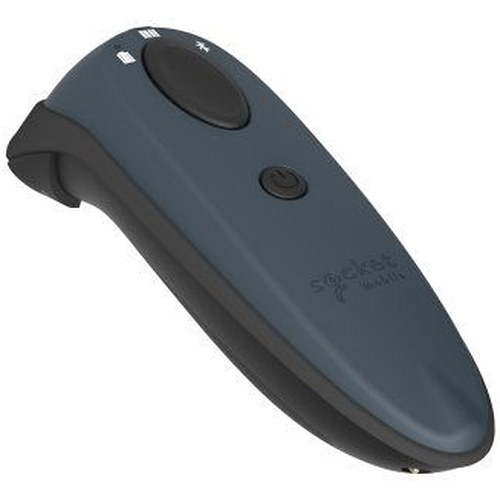
The Socket Mobile CX3426-1872 is described as a 2D linear imager supporting QR Code, Data Matrix, PDF417, Code 128, and Code 39. Scan rate, image sensor resolution, minimum resolution, and field of view figures are not published for the CX3426-1872, making a direct numeric comparison on throughput impossible. The Zebra DS3678's specified scanning range extends from near contact to 7 ft./2.1 m; no equivalent range figure is provided for the Socket Mobile unit.
Which scanner offers superior ruggedness and environmental protection for demanding deployments?
The Zebra DS3678 carries dual IP ratings of IP67 and IP65, meaning it is rated for complete dust ingress protection and immersion in water up to 1 m for 30 minutes (IP67), as well as protection against low-pressure water jets (IP65). It is drop-rated to 8 ft./2.4 m onto concrete and survives 5,000 tumbles from 3.3 ft./1 m — a standard metric for industrial conveyor and assembly-line abuse. Its operating temperature spans -20°C to 50°C (-4°F to 122°F), and storage temperature extends from -40°C to 70°C (-40°F to 158°F).
The Socket Mobile CX3426-1872 lists an operating temperature range of 0°C to 45°C (32°F to 113°F), appropriate for climate-controlled retail, light warehousing, and POS environments. No IP rating, drop specification, tumble specification, or storage temperature is published for the CX3426-1872, so its ability to withstand moisture, dust, or physical shock cannot be evaluated from available data. Buyers deploying in environments with temperature extremes, water exposure, or repeated drops should note the absence of these ratings for the Socket Mobile unit.
What are the differences in battery life, connectivity standards, and device management tools?
The Zebra DS3678 specifies a 3,000 mAh Li-Ion battery with up to 100 hours of operating life and a 2.5-hour charge time. It is managed via Zebra's 123Scan utility and Scanner Management Service (SMS), enabling remote configuration, firmware updates, and fleet monitoring without physical access to each device. It also carries FIPS 140-2 Level 1 compliance, a requirement in U.S. federal, defense, and regulated healthcare environments.
The Socket Mobile CX3426-1872 connects via Bluetooth and is classified as cordless/wireless, but no battery capacity, battery life hours, or charge time figures are listed in the available specifications. Management tooling for the CX3426-1872 is also not specified. For single-device or small-fleet POS and mobile retail deployments where centralized scanner management is not a priority, the absence of published management tools may be acceptable; for large enterprise rollouts requiring fleet visibility, the Zebra's documented management ecosystem is a meaningful differentiator.
Which should you choose: the CX3426-1872 or the DS3678?
Our take: The CX3426-1872 is the stronger choice when deploying a lightweight, Bluetooth-connected 2D scanner in climate-controlled retail or mobile POS environments where ruggedness ratings are not a procurement requirement. However, on every measurable specification delta, the Zebra DS3678 leads: it operates across a -20°C to 50°C range versus the Socket Mobile's 0°C to 45°C, delivers a published 100-hour battery life and 2.5-hour charge cycle against no published figures for the CX3426-1872, and is rated IP67/IP65 with an 8 ft. drop spec and 5,000-tumble certification where the Socket Mobile lists none of these. Additionally, the DS3678 adds multi-code capture of up to 20 barcodes simultaneously and FIPS 140-2 Level 1 compliance. Buyers in warehousing, manufacturing, or regulated federal environments should select the DS3678; the CX3426-1872 suits light-duty, indoor, small-fleet deployments on Bluetooth-centric mobile platforms.
Side-by-Side Comparison
Spec-for-spec, from manufacturer data.
| Specification | Socket Mobile CX3426-1872 | Zebra DS3678 |
|---|---|---|
| Product Type | Handheld 2D Barcode Scanner | Handheld 2D Barcode Scanner |
| Connectivity | Bluetooth | Cordless (protocol not specified in provided specs) |
| Scan Engine | 2D Linear Imager | Area Imager (1D/2D High Performance) |
| Image Sensor Resolution | — | 1280 x 800 pixels |
| Scan Rate | — | Up to 100 scans/second |
| Scanning Range | — | Near contact to 7 ft. / 2.1 m |
| Field of View | — | 42° H x 32° V |
| Minimum Resolution (1D / 2D) | — | 1 mil / 6.6 mil |
| Multi-Code Capture | — | Up to 20 barcodes |
| Symbologies Supported | QR Code, Data Matrix, PDF417, Code 128, Code 39 | 1D and 2D barcodes |
| Operating Temperature | 0°C to 45°C (32°F to 113°F) | -20°C to 50°C (-4°F to 122°F) |
| Storage Temperature | — | -40°C to 70°C (-40°F to 158°F) |
| Operating Humidity | — | 5% to 95% non-condensing |
| IP Rating | — | IP67 and IP65 |
| Drop Specification | — | 8 ft. / 2.4 m to concrete |
| Tumble Specification | — | 5,000 tumbles from 3.3 ft. / 1 m |
| Battery Capacity | — | 3,000 mAh Li-Ion |
| Battery Life | — | Up to 100 hours |
| Charge Time | — | 2.5 hours |
| FIPS Compliance | — | FIPS 140-2 Level 1 |
| Management Tools | — | 123Scan, Scanner Management Service (SMS) |
| Warranty | 1 year | — |
Frequently Asked Questions
Which should you choose: the CX3426-1872 or the DS3678?
The CX3426-1872 is the stronger choice when deploying a lightweight, Bluetooth-connected 2D scanner in climate-controlled retail or mobile POS environments where ruggedness ratings are not a procurement requirement. However, on every measurable specification delta, the Zebra DS3678 leads: it operates across a -20°C to 50°C range versus the Socket Mobile's 0°C to 45°C, delivers a published 100-hour battery life and 2.5-hour charge cycle against no published figures for the CX3426-1872, and is rated IP67/IP65 with an 8 ft. drop spec and 5,000-tumble certification where the Socket Mobile lists none of these. Additionally, the DS3678 adds multi-code capture of up to 20 barcodes simultaneously and FIPS 140-2 Level 1 compliance. Buyers in warehousing, manufacturing, or regulated federal environments should select the DS3678; the CX3426-1872 suits light-duty, indoor, small-fleet deployments on Bluetooth-centric mobile platforms.
Can the Socket Mobile CX3426-1872 handle outdoor or cold-storage environments?
Based on published specifications, the CX3426-1872 is rated for 0°C to 45°C (32°F to 113°F) operation. It carries no published IP rating, so moisture and dust resistance are unverified. Cold-storage environments that fall below 0°C or outdoor use with rain or dust exposure are outside the documented operating envelope for this unit. The Zebra DS3678, by contrast, is rated to -20°C and carries IP67/IP65 protection.
Does the Zebra DS3678 require a specific wireless protocol, and how does that compare to the Socket Mobile's Bluetooth?
The Zebra DS3678 is listed as cordless, but its specific wireless protocol (e.g., Bluetooth version or proprietary RF) is not detailed in the provided specifications. The Socket Mobile CX3426-1872 explicitly connects via Bluetooth. Buyers who need a confirmed Bluetooth pairing path — for tablet POS, smartphones, or Bluetooth dongles — should verify the DS3678's specific radio protocol with Zebra before purchase.
Which scanner is better suited for a high-volume distribution center scanning hundreds of packages per shift?
The Zebra DS3678 is the better-documented choice for high-volume throughput: it specifies up to 100 scans per second, multi-code capture of up to 20 barcodes per scan, a scanning range to 7 ft./2.1 m, and up to 100 hours of battery life per charge. Its ultra-rugged 8 ft. drop and 5,000-tumble ratings support continuous floor use. The Socket Mobile CX3426-1872 does not publish scan rate, range, or battery life figures, making throughput comparison impossible from available data.
More Barcode Scanner Comparisons
- Zebra DS3678 vs Honeywell 520-36/48-H3
- Zebra DS3678 vs CipherLab A2564S2BS0001
- Zebra DS3678 vs Honeywell 1962H-WC-CUP
- Zebra DS3678 vs Socket Mobile CX4238-3326
- Zebra DS3678 vs Zebra DS3678
- Zebra DS3678 vs Zebra DS8178-SRSF007ZZWW
Barcode Scanner Buying Guides
Get a Second Opinion on Your Camera Choice
Share your site layout, coverage goals, and budget. Our team will validate the camera selection, flag anything we would change, and recommend products that match the use case.