
Pelco EXP2230-66 vs Pelco P2230L-FW1: Specification Comparison
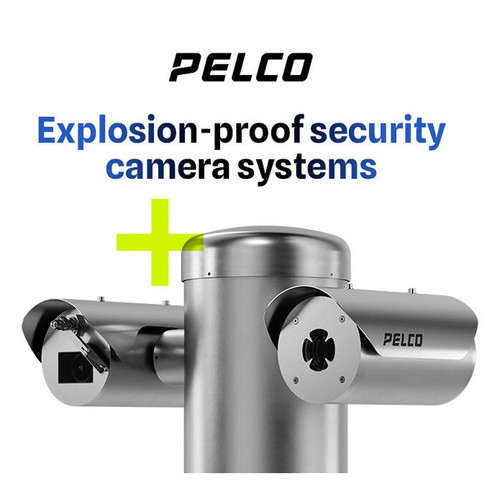
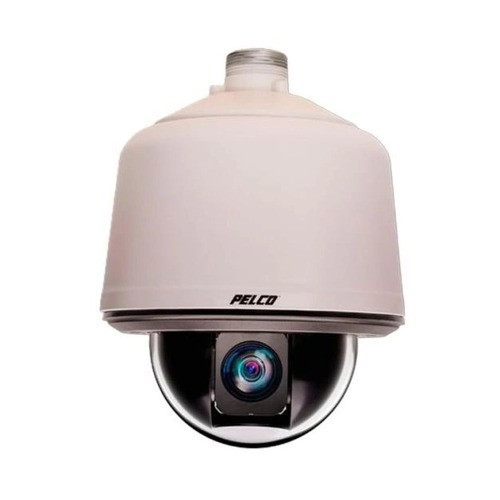
Both the Pelco EXP2230-66 and the Pelco P2230L-FW1 (Spectra Pro 2) are 2MP, 30x optical zoom PTZ cameras sharing identical focal-length ranges (4.3–129 mm), making them direct cross-shop candidates for integrators evaluating Pelco's PTZ lineup. The comparison covers imaging capability, environmental and installation requirements, and VMS/analytics integration — areas where the two models diverge meaningfully despite their shared resolution class and optical zoom ratio.
In This Guide
How do the imaging specs compare?
Both cameras deliver 2MP resolution and a 30x optical zoom spanning 4.3–129 mm at F1.6. The P2230L-FW1 specifies its sensor explicitly — a 1/2.8-inch progressive scan CMOS — and publishes a maximum frame rate of 60 fps at 1920×1080, along with a 120 dB SureVision WDR figure and an HFOV range of 77° (wide) to 2.6° (tele). The EXP2230-66 does not list a sensor size, frame rate, WDR value, or HFOV in the provided specifications.
For low-light performance, the EXP2230-66 lists IR as the Night Vision method and describes the camera as Day/Night, but provides no minimum illumination figure or IR range. The P2230L-FW1 specifies 120 dB WDR for high-contrast scenes but does not list an IR range or minimum illumination value in the provided specifications. Neither model's spec sheet as provided includes a minimum lux rating, so direct low-light sensitivity comparison cannot be made from available data.
What about installation and environment?
Both cameras carry IP66 and IP67 ingress ratings. The P2230L-FW1 adds an IK10 impact rating, which the EXP2230-66 does not list. The EXP2230-66 carries a NEMA TS2 para 2.2.7–2.2.9 rating; no equivalent NEMA rating is specified for the P2230L-FW1. Operating temperature ranges differ significantly: the EXP2230-66 is rated for −40 °C to +55 °C (−40 °F to +131 °F), making it suitable for extreme cold or heat environments, while the P2230L-FW1 is rated for −10 °C to +60 °C and is classified as an indoor unit.
Power input is only specified for the P2230L-FW1, which uses PoE+. No power input method is listed in the provided specs for the EXP2230-66. The EXP2230-66 provides dual network ports — a 10BASE-T/100BASE-TX RJ45 connector and an SFP slot — offering fiber or copper connectivity options. No equivalent dual-port or SFP detail is specified for the P2230L-FW1. Mounting options listed for the EXP2230-66 include wall, ceiling, pole, corner, and rack; the P2230L-FW1 is listed as a PTZ dome with a white housing, but specific mount types are not enumerated in the provided specifications. The EXP2230-66 has a listed weight of 58.42 (units not specified in the provided data); no weight is provided for the P2230L-FW1.
Which fits your VMS and analytics better?
The P2230L-FW1 specifies ONVIF Profile S, Profile T, Profile G, and Profile M compliance, providing broad interoperability across VMS platforms that leverage those profiles for streaming, recording, metadata, and management. The EXP2230-66 lists ONVIF compliance but does not specify which ONVIF profiles are supported in the provided specifications.
On-board analytics are explicitly listed only for the P2230L-FW1, which includes auto-tracker, Electronic Image Stabilization (EIS), and motion detection. The P2230L-FW1 also supports Motion JPEG compression in addition to H.265 and H.264. The EXP2230-66 supports H.265 and H.264 but no additional compression formats, and no edge analytics are listed in its provided specifications. Neither model lists audio input/output or on-board edge storage in the provided specifications.
Which should you choose: the EXP2230-66 or the P2230L-FW1?
Our take: The P2230L-FW1 is the stronger choice when the deployment is indoors or in moderate outdoor environments and requires rich VMS integration, high-frame-rate recording, and built-in analytics. It specifies 60 fps at 1920×1080 versus no frame rate listed for the EXP2230-66, adds IK10 impact protection absent from the EXP2230-66, and supports four named ONVIF profiles (S, T, G, M) plus auto-tracker and EIS where the EXP2230-66 lists only generic ONVIF compliance and no analytics. Conversely, the EXP2230-66 is the stronger choice for harsh outdoor environments: its −40 °C floor is 30 °C colder than the P2230L-FW1's −10 °C limit, and its dual RJ45/SFP ports support fiber uplinks unavailable on the P2230L-FW1. Select the EXP2230-66 for arctic, desert, or fiber-networked infrastructure deployments; select the P2230L-FW1 for temperature-moderate sites demanding frame-rate fidelity, analytics, and broad ONVIF profile support.
Side-by-Side Comparison
Spec-for-spec, from manufacturer data.
| Specification | Pelco EXP2230-66 | Pelco P2230L-FW1 |
|---|---|---|
| Resolution | 2 MP | 2 MP (1920×1080) |
| Image Sensor | — | 1/2.8" progressive scan CMOS |
| Max Frame Rate | — | 60 fps |
| Optical Zoom | 30x | 30x |
| Lens / Focal Length | 4.3–129 mm, F1.6 | 4.3–129 mm |
| HFOV Range | — | 77° (wide) to 2.6° (tele) |
| WDR | — | 120 dB SureVision |
| Night Vision / IR | IR (Day/Night) | — |
| Video Compression | H.265; H.264 | H.265; H.264; Motion JPEG |
| ONVIF Compliance | Yes (profiles not specified) | Profile S; T; G; M |
| Edge Analytics | — | Auto-tracker; EIS; Motion Detection |
| Pan / Tilt Range | — | 360° continuous pan; −90° to +1° tilt |
| Preset Positions | — | 256 |
| IP Rating | IP66 / IP67 | IP66 / IP67 |
| IK / Impact Rating | — | IK10 |
| NEMA Rating | TS2 para 2.2.7–2.2.9 | — |
| Operating Temperature | −40 °C to +55 °C | −10 °C to +60 °C |
| Environment Classification | — | Indoor |
| Power Input | — | PoE+ |
| Network Ports | RJ45 (10/100) + SFP slot | — |
| Housing Color | — | White |
| Warranty | 3-year limited (5-year extended available) | 5-year |
Frequently Asked Questions
Which should you choose: the EXP2230-66 or the P2230L-FW1?
The P2230L-FW1 is the stronger choice when the deployment is indoors or in moderate outdoor environments and requires rich VMS integration, high-frame-rate recording, and built-in analytics. It specifies 60 fps at 1920×1080 versus no frame rate listed for the EXP2230-66, adds IK10 impact protection absent from the EXP2230-66, and supports four named ONVIF profiles (S, T, G, M) plus auto-tracker and EIS where the EXP2230-66 lists only generic ONVIF compliance and no analytics. Conversely, the EXP2230-66 is the stronger choice for harsh outdoor environments: its −40 °C floor is 30 °C colder than the P2230L-FW1's −10 °C limit, and its dual RJ45/SFP ports support fiber uplinks unavailable on the P2230L-FW1. Select the EXP2230-66 for arctic, desert, or fiber-networked infrastructure deployments; select the P2230L-FW1 for temperature-moderate sites demanding frame-rate fidelity, analytics, and broad ONVIF profile support.
Is the EXP2230-66 or P2230L-FW1 better for low-light performance?
Neither model provides a minimum lux or minimum illumination figure in the specifications supplied, so a direct low-light sensitivity comparison cannot be made from available data. The EXP2230-66 lists IR Night Vision (Day/Night), and the P2230L-FW1 lists 120 dB SureVision WDR for high-contrast scene handling. If WDR range in high-contrast lighting is the primary concern, the P2230L-FW1's 120 dB figure is the only quantified spec available between the two.
Which camera handles colder temperatures — the EXP2230-66 or the P2230L-FW1?
The EXP2230-66 is rated to −40 °C (−40 °F), which is 30 °C colder than the P2230L-FW1's lower limit of −10 °C. For installations in northern climates, unheated enclosures, or any site where ambient temperatures can drop below −10 °C, the EXP2230-66 is the only option of the two with a specified operating range that covers those conditions.
Does the P2230L-FW1 integrate with more VMS platforms than the EXP2230-66?
Based on provided specifications, the P2230L-FW1 explicitly lists ONVIF Profile S, T, G, and M compliance, which covers live streaming, recording, metadata/analytics, and management functions across compatible VMS platforms. The EXP2230-66 states ONVIF compliance but does not specify which profiles are supported. Installers deploying to VMS platforms that require specific ONVIF profiles — particularly Profile G for on-camera recording or Profile T for H.265 and metadata — should confirm EXP2230-66 profile support directly with Pelco before specifying it.
Get a Second Opinion on Your Camera Choice
Share your site layout, coverage goals, and budget. Our team will validate the camera selection, flag anything we would change, and recommend products that match the use case.