
NETGEAR WAX210PA-100NAS vs TP-Link EAP610-OUTDOOR: Specification Comparison
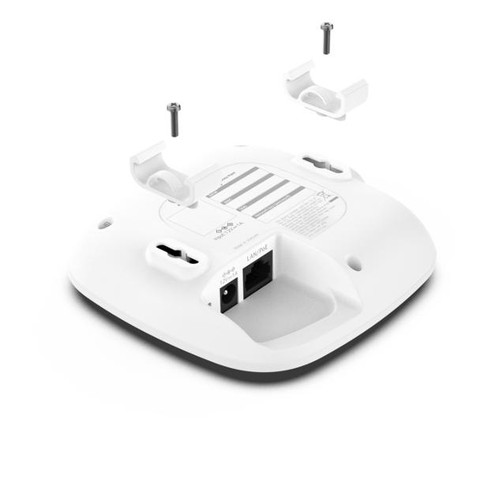
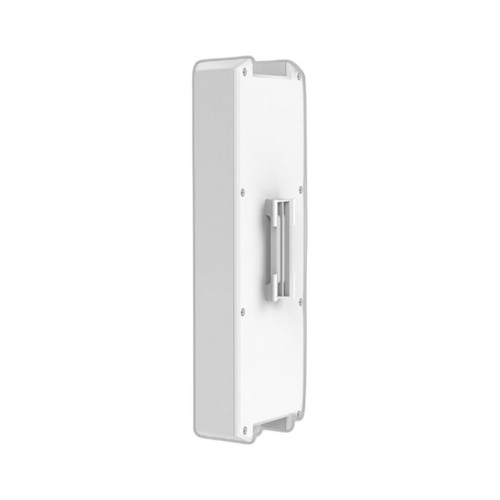
Both the NETGEAR WAX210PA-100NAS and the TP-Link EAP610-OUTDOOR are single-port, dual-band Wi-Fi 6 (802.11ax) access points targeting small-to-medium deployments. The comparison spans three decision-critical axes for this product class: radio throughput and Wi-Fi 6 feature set; physical environment ratings and power input requirements; and management platform, mounting flexibility, and deployment context. Buyers evaluating these units are typically choosing between an indoor-optimized ceiling/wall AP and an IP-rated unit suitable for outdoor or harsh-environment perimeter coverage.
In This Guide
- How do the two APs compare on radio throughput and Wi-Fi 6 performance?
- Which unit is better suited for harsh environments, and what are the power input differences?
- How do the management platforms and physical mounting options compare?
- Which should you choose: the WAX210PA-100NAS or the EAP610-OUTDOOR?
- Side-by-Side Specs
- FAQ
How do the two APs compare on radio throughput and Wi-Fi 6 performance?
Both units are rated AX1800 class with dual-band 802.11ax radios. The NETGEAR WAX210PA-100NAS is specified at 1.8 Gbps combined throughput, broken down as 600 Mbps on 2.4 GHz and 1,200 Mbps on 5 GHz. The TP-Link EAP610-OUTDOOR is specified at 1,775 Mbps combined, with 574 Mbps on 2.4 GHz and 1,201 Mbps on 5 GHz. The two units are within rounding distance of each other on aggregate throughput — fewer than 1.5% apart — meaning neither holds a material radio performance advantage over the other based on provided spec data.
Both support WPA3 encryption per the TP-Link spec; WPA3 support is not explicitly listed in the NETGEAR spec data provided. The TP-Link spec enumerates operating modes as Access Point and Mesh; the NETGEAR spec does not list supported operating modes beyond its Local Web GUI management. Antenna configuration is listed as 4x internal for the EAP610-OUTDOOR; no antenna detail is provided for the WAX210PA-100NAS in the supplied specs.
Which unit is better suited for harsh environments, and what are the power input differences?
This is the sharpest differentiator between the two products. The TP-Link EAP610-OUTDOOR carries an IP67 ingress-protection rating, meaning it is fully sealed against dust and rated for temporary immersion — qualifying it for outdoor perimeter, parking structure, loading-dock, and covered-exterior installs. The NETGEAR WAX210PA-100NAS carries no IP rating in the supplied spec data, placing it firmly in the indoor-only category.
On operating temperature, both units share an identical specified range of 0°C to 40°C (32°F to 104°F). Storage temperature for the WAX210PA-100NAS is listed at -40°C to 70°C; no storage temperature is provided for the EAP610-OUTDOOR in the supplied specs.
Power input requirements diverge meaningfully. The WAX210PA-100NAS accepts 802.3af PoE at a 13 W minimum — the lowest and most widely deployed PoE standard — or a 12 V/1.5 A (18 W) DC adapter. The EAP610-OUTDOOR requires 802.3at PoE (15.4 W) or 12 V/4.5 A DC, and the spec also references 802.3bt. Infrastructure buyers must verify the PoE budget and standard available at the switch port: an 802.3af-only switch port will not reliably power the EAP610-OUTDOOR.
How do the management platforms and physical mounting options compare?
The NETGEAR WAX210PA-100NAS is managed via a Local Web GUI according to the supplied spec. No cloud or controller management platform is listed in the provided spec data. This suits single-site installs where a standalone, browser-managed AP is acceptable, but limits centralized multi-site orchestration without additional NETGEAR infrastructure context not present in these specs.
The TP-Link EAP610-OUTDOOR is managed via TP-Link's Omada SDN platform, which supports hardware controllers, software controllers, and cloud-based management. Omada SDN is a documented multi-site controller ecosystem; installers already running Omada hardware can add the EAP610-OUTDOOR without introducing a second management plane. The EAP610-OUTDOOR also supports Mesh operating mode per specs, enabling wireless backhaul without a wired uplink at every node.
Mounting options listed for the WAX210PA-100NAS are Wall and Ceiling. The EAP610-OUTDOOR lists Wall, Ceiling, and Rack. Both ship as single-port units with one RJ-45 Ethernet port each. The EAP610-OUTDOOR's Ethernet port is specified at 10 Gbps in the provided spec data, while the WAX210PA-100NAS port is specified at 100/1000 Mbps (Gigabit). This is a notable discrepancy — a 10 Gbps uplink port on an AX1800-class radio would be unusual and may reflect a spec data entry error; buyers should verify against the product datasheet before specifying.
Which should you choose: the WAX210PA-100NAS or the EAP610-OUTDOOR?
Our take: The EAP610-OUTDOOR is the stronger choice when the install location is outdoors, semi-exposed, or subject to moisture and dust, as its IP67 rating — absent entirely from the WAX210PA-100NAS spec — is the single non-negotiable differentiator for perimeter and exterior deployments. On radio throughput the two units are effectively equivalent (1,800 Mbps vs 1,775 Mbps combined). The EAP610-OUTDOOR requires 802.3at PoE (15.4 W minimum) versus the WAX210PA-100NAS's lower 802.3af (13 W minimum), so switch-port compatibility must be confirmed before specifying the TP-Link unit. The EAP610-OUTDOOR also adds Omada SDN controller management and Mesh mode, benefiting multi-site or controller-managed deployments. Conversely, the WAX210PA-100NAS is the appropriate selection for indoor-only installs where existing infrastructure is limited to 802.3af PoE ports and a standalone web-managed AP is operationally sufficient.
Side-by-Side Comparison
Spec-for-spec, from manufacturer data.
| Specification | NETGEAR WAX210PA-100NAS | TP-Link EAP610-OUTDOOR |
|---|---|---|
| Wi-Fi Standard | Wi-Fi 6 (802.11ax) | Wi-Fi 6 (802.11ax) |
| Throughput (Combined) | 1,800 Mbps | 1,775 Mbps |
| 2.4 GHz Band | 600 Mbps | 574 Mbps |
| 5 GHz Band | 1,200 Mbps | 1,201 Mbps |
| Frequency Bands | Dual-band (2.4 / 5 GHz) | Dual-band (2.4 / 5 GHz) |
| PoE Standard (Input) | 802.3af (13 W minimum) | 802.3at (15.4 W) |
| DC Power Option | 12 V / 1.5 A (18 W) | 12 V / 4.5 A |
| Ethernet Port Speed | 100/1000 Mbps (Gigabit) | 10 Gbps (per spec — verify) |
| Ethernet Ports | 1 | 1 |
| IP Ingress Rating | — | IP67 |
| Operating Temp | 0°C to 40°C | 0°C to 40°C |
| Storage Temp | -40°C to 70°C | — |
| Encryption | — | WPA3 |
| Management Platform | Local Web GUI | Omada SDN |
| Operating Modes | — | Access Point, Mesh |
| Mount Types | Wall, Ceiling | Wall, Ceiling, Rack |
Frequently Asked Questions
Which should you choose: the WAX210PA-100NAS or the EAP610-OUTDOOR?
The EAP610-OUTDOOR is the stronger choice when the install location is outdoors, semi-exposed, or subject to moisture and dust, as its IP67 rating — absent entirely from the WAX210PA-100NAS spec — is the single non-negotiable differentiator for perimeter and exterior deployments. On radio throughput the two units are effectively equivalent (1,800 Mbps vs 1,775 Mbps combined). The EAP610-OUTDOOR requires 802.3at PoE (15.4 W minimum) versus the WAX210PA-100NAS's lower 802.3af (13 W minimum), so switch-port compatibility must be confirmed before specifying the TP-Link unit. The EAP610-OUTDOOR also adds Omada SDN controller management and Mesh mode, benefiting multi-site or controller-managed deployments. Conversely, the WAX210PA-100NAS is the appropriate selection for indoor-only installs where existing infrastructure is limited to 802.3af PoE ports and a standalone web-managed AP is operationally sufficient.
Can the NETGEAR WAX210PA-100NAS be installed outdoors?
No IP ingress-protection rating is listed in the provided spec data for the WAX210PA-100NAS. Without an IP rating, it cannot be confirmed suitable for outdoor or moisture-exposed environments. The TP-Link EAP610-OUTDOOR carries an IP67 rating per its specs, making it the specified option for outdoor installs.
Will either AP work with my existing 802.3af PoE switch?
The NETGEAR WAX210PA-100NAS specifies 802.3af PoE at 13 W minimum, so it will power from a standard 802.3af switch port. The TP-Link EAP610-OUTDOOR specifies 802.3at PoE at 15.4 W; 802.3af ports deliver only up to 15.4 W at the port but at a lower current spec — verify your switch's per-port output before connecting. If your switch supports only 802.3af, the WAX210PA-100NAS is the safer choice per the supplied specs.
Is the NETGEAR WAX210PA-100NAS or EAP610-OUTDOOR better for a multi-site managed deployment?
Based on the supplied specs, the EAP610-OUTDOOR integrates with TP-Link's Omada SDN platform, which supports centralized controller-based management across multiple sites and includes Mesh operating mode. The WAX210PA-100NAS is listed as Local Web GUI managed only in the provided spec data, with no controller or cloud management platform specified. For multi-site or centrally managed deployments, the EAP610-OUTDOOR has a documented management ecosystem advantage per available specs.
More Wireless Access Point Comparisons
Get a Second Opinion on Your Camera Choice
Share your site layout, coverage goals, and budget. Our team will validate the camera selection, flag anything we would change, and recommend products that match the use case.