
Janam XT3-STKJBMNW00 vs Zebra MC3390XR: Specification Comparison
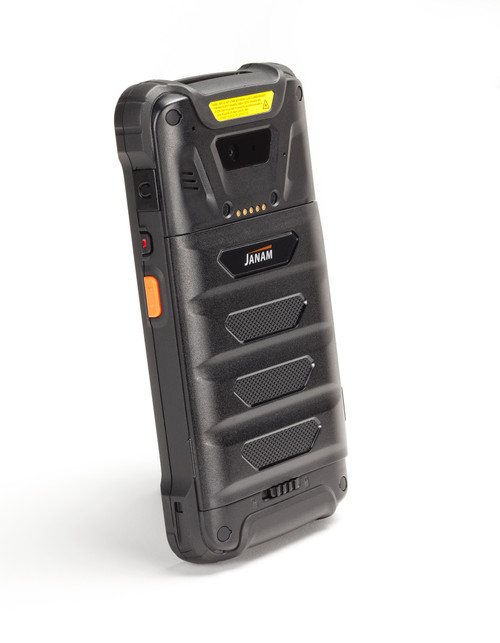
Both the Janam XT3-STKJBMNW00 and the Zebra MC3390XR (MC339U-GF4EG4FT) are enterprise-grade rugged Android handheld computers with integrated RFID and barcode scanning capabilities, targeting warehouse, logistics, retail, and field mobility deployments. The Janam is a touch-screen slab-style mobile computer with HF/NFC RFID and a 2D imager, while the Zebra is a pistol-grip UHF RFID reader with an integrated imager. Buyers comparing these are typically evaluating RFID frequency band, form factor, sealing, battery endurance, and OS recency against their existing infrastructure.
In This Guide
- Which device covers the RFID frequency and read-range requirements of your deployment?
- Which device is better protected and will last longer on a shift without recharging?
- Which device offers more current OS, connectivity options, and enterprise management compatibility?
- Which should you choose: the XT3-STKJBMNW00 or the MC3390XR?
- Side-by-Side Specs
- FAQ
Which device covers the RFID frequency and read-range requirements of your deployment?
The Janam XT3-STKJBMNW00 supports HF/NFC RFID operating at 13.56 MHz, compliant with NFC Forum Tag 1–5, ISO14443 Type A/B, ISO15693, and MIFARE variants including 1k/4k/Plus/UltraLight/DESFire and Sony FeliCa. This makes it well-suited for proximity applications such as access control, asset tagging with HF labels, patient identification, and smart-card transactions, typically at read ranges measured in centimeters.
The Zebra MC3390XR integrates a UHF RFID engine operating to EPC Class 1 Gen2, EPC Gen2 V2, and ISO-18000-63 standards, with a linear-polarized antenna rated for read ranges of 60+ ft (18.2+ m). This is purpose-built for long-range bulk inventory scanning, supply-chain receiving, and retail stockroom applications where reading tagged pallets or shelving at distance is required. The pistol-grip form factor with a 47-key alphanumeric keypad further reinforces its warehouse orientation.
Both devices incorporate a 2D imager—the Janam specifying a Honeywell 1D/2D engine reading QR Code, Data Matrix, Code 128, Code 39, UPC, EAN, and PDF417; the Zebra specifying a Zebra SE4770 Standard Range imager. Neither spec sheet discloses the imager decode distance or motion tolerance for comparison. For HF/NFC use cases the Janam is the only option here; for UHF long-range the Zebra MC3390XR is the only option.
Which device is better protected and will last longer on a shift without recharging?
The Janam XT3-STKJBMNW00 carries an IP67 rating, meaning it is fully dust-tight and rated for temporary immersion in water to 1 meter. It is drop-rated to 1.5 m (5 ft) to concrete on all sides. Its standard battery is 2,900 mAh Li-ion, with an optional 5,800 mAh extended battery noted in the specs. The device weighs 272 g (9.5 oz) including battery.
The Zebra MC3390XR carries an IP54 rating—splash and dust resistant but not sealed against immersion—and is also drop-rated to 1.5 m (5 ft) to concrete. However, its battery is 7,000 mAh Li-ion, more than 2.4× the Janam's standard capacity, reflecting the higher power draw of a UHF RFID engine and the expectation of extended warehouse shift use. The Zebra also notes FIPS and TAA compliance, which the Janam spec does not address.
For environments involving liquid exposure (food processing, outdoor, wash-down adjacency), the Janam's IP67 sealing is meaningfully superior to the Zebra's IP54. For extended shifts without access to charging, the Zebra's 7,000 mAh battery provides a significant endurance advantage. Weight and dimensions are not provided for the Zebra, so a direct ergonomic comparison cannot be made from the supplied specs.
Which device offers more current OS, connectivity options, and enterprise management compatibility?
The Janam XT3-STKJBMNW00 runs Android 11 with Google Mobile Services (GMS) and is Android Enterprise Recommended (AER). It supports Wi-Fi 802.11a/b/g/n/ac with the amendment set d/h/i/k/r/v, Bluetooth 5.0 BLE, and optional WWAN (cellular) via a micro SIM slot. It also provides two micro SAM slots for secure-element applications. Memory is 4 GB RAM / 64 GB flash (with a 3 GB/32 GB option). The interface set includes USB-C and Pogo Pin for charging and accessory connectivity.
The Zebra MC3390XR runs Android 10 GMS—one major Android version behind the Janam. Its Wi-Fi supports 802.11a/b/g/n/ac with amendments d/h/i/r/k/v2/w/mc2 and adds MU-MIMO 2×2, which the Janam spec does not mention. Bluetooth is v5.0 with BR/EDR and BLE. RAM is 4 GB; flash is 32 GB—half the Janam's standard storage. No WWAN option, SAM slots, or USB-C interface details are disclosed in the provided Zebra spec.
The Janam's Android 11 with AER designation provides a more current OS baseline and a longer forward security-patch runway at time of deployment. The Zebra's MU-MIMO 2×2 Wi-Fi may deliver higher throughput in dense access-point environments, though no throughput figures are provided to quantify this advantage. Both are GMS-certified and compatible with Android Enterprise MDM platforms such as VMware Workspace ONE, Microsoft Intune, and SOTI; neither spec identifies platform-specific restrictions.
Which should you choose: the XT3-STKJBMNW00 or the MC3390XR?
Our take: The XT3-STKJBMNW00 is the stronger choice when the deployment requires HF/NFC RFID (ISO14443/ISO15693/MIFARE), a newer OS baseline (Android 11 vs. Android 10), superior ingress protection (IP67 vs. IP54), or optional WWAN cellular connectivity. The MC3390XR is the stronger choice when UHF RFID at distances up to 60+ ft (18.2+ m) is required, shift-length battery endurance is critical (7,000 mAh vs. 2,900 mAh standard), or TAA and FIPS compliance is a procurement mandate. The Zebra also offers a 47-key physical alphanumeric keypad versus the Janam's 9 programmable buttons, which matters in applications requiring extensive manual data entry. Buyers should treat these as complementary rather than directly substitutable: RFID frequency band alone makes them non-interchangeable in most existing RFID infrastructure deployments.
Side-by-Side Comparison
Spec-for-spec, from manufacturer data.
| Specification | Janam XT3-STKJBMNW00 | Zebra MC3390XR |
|---|---|---|
| RFID Type | HF/NFC (13.56 MHz) — ISO14443/ISO15693/MIFARE/NFC Forum | UHF — EPC Class 1 Gen2, EPC Gen2 V2, ISO-18000-63 |
| RFID Read Range | Near-field (centimeters; not spec'd) | 60+ ft / 18.2+ m |
| RFID Antenna | — | Linear Polarized |
| 2D Imager | Honeywell 1D/2D (SE model not spec'd) | Zebra SE4770 Standard Range |
| Operating System | Android 11 GMS / AER | Android 10 GMS |
| Processor | Qualcomm Snapdragon octa-core 2.2 GHz | Qualcomm Snapdragon 660 octa-core 2.2 GHz |
| RAM / Flash | 4 GB / 64 GB (3 GB / 32 GB optional) | 4 GB / 32 GB |
| Battery Capacity | 2,900 mAh (5,800 mAh optional) | 7,000 mAh |
| IP Sealing | IP67 | IP54 |
| Drop Rating | 1.5 m (5 ft) to concrete | 1.5 m (5 ft) to concrete |
| Wi-Fi | 802.11 a/b/g/n/ac/d/h/i/k/r/v | 802.11 a/b/g/n/ac/d/h/i/r/k/v2/w/mc2; MU-MIMO 2×2 |
| Bluetooth | 5.0 BLE | 5.0 BR/EDR and BLE |
| WWAN / Cellular | Optional (micro SIM) | Not specified |
| Display | 5" HD 1280×720 IPS; 500 nits; Gorilla Glass | 4.0" WVGA capacitive; Gorilla Glass |
| Keypad | 9 programmable external buttons | 47-key alphanumeric |
| Compliance | Android Enterprise Recommended (AER) | FIPS and TAA Compliant |
Frequently Asked Questions
Which should you choose: the XT3-STKJBMNW00 or the MC3390XR?
The XT3-STKJBMNW00 is the stronger choice when the deployment requires HF/NFC RFID (ISO14443/ISO15693/MIFARE), a newer OS baseline (Android 11 vs. Android 10), superior ingress protection (IP67 vs. IP54), or optional WWAN cellular connectivity. The MC3390XR is the stronger choice when UHF RFID at distances up to 60+ ft (18.2+ m) is required, shift-length battery endurance is critical (7,000 mAh vs. 2,900 mAh standard), or TAA and FIPS compliance is a procurement mandate. The Zebra also offers a 47-key physical alphanumeric keypad versus the Janam's 9 programmable buttons, which matters in applications requiring extensive manual data entry. Buyers should treat these as complementary rather than directly substitutable: RFID frequency band alone makes them non-interchangeable in most existing RFID infrastructure deployments.
Can the Janam XT3-STKJBMNW00 read UHF RFID tags at long range like the Zebra MC3390XR?
No. The Janam XT3-STKJBMNW00 supports HF/NFC RFID at 13.56 MHz (ISO14443, ISO15693, MIFARE, NFC Forum) with near-field read ranges measured in centimeters. The Zebra MC3390XR uses a UHF RFID engine (EPC Class 1 Gen2, ISO-18000-63) with a linear-polarized antenna rated at 60+ ft (18.2+ m). These operate on different frequency bands and are not functionally interchangeable for RFID purposes.
Which device is better suited for wet or outdoor environments?
The Janam XT3-STKJBMNW00 is rated IP67, meaning it is fully dust-tight and rated for temporary water immersion. The Zebra MC3390XR is rated IP54, which covers dust ingress protection and splash resistance but not immersion. For environments with liquid exposure risk—outdoor field work, food processing adjacency, or wash-down areas—the Janam's IP67 rating provides meaningfully stronger protection.
Which device will last longer on a full warehouse shift without recharging?
Based on stated battery capacity, the Zebra MC3390XR has a significant advantage with its 7,000 mAh battery versus the Janam XT3-STKJBMNW00's standard 2,900 mAh (an optional 5,800 mAh battery is noted for the Janam but not confirmed as in-box). Actual runtime depends on workload, RFID scan duty cycle, screen brightness, and Wi-Fi activity—figures not provided in either spec sheet. The Janam's optional 5,800 mAh battery would narrow but not close the gap versus the Zebra's 7,000 mAh unit.
More Mobile Computer Comparisons
- Janam XT40-ATHKRMGW00 vs Zebra MC3390XR
- Janam XT40-ATHKRMGW00 vs Zebra MC3330XR
- Janam XT40-ATHKRMGW00 vs Janam XT3-STHGBMGW01
- Janam XT40-ATHKRMGW00 vs Janam XT3-STHJBMGW00
- Janam XT3-STHGBMGW01 vs Zebra MC3390XR
- Janam XT3-STHGBMGW01 vs Zebra MC3330XR
Mobile Computer Buying Guides
Get a Second Opinion on Your Camera Choice
Share your site layout, coverage goals, and budget. Our team will validate the camera selection, flag anything we would change, and recommend products that match the use case.