
Janam XR2-ATHKYMGWU0 vs Zebra MC3390XR: Specification Comparison
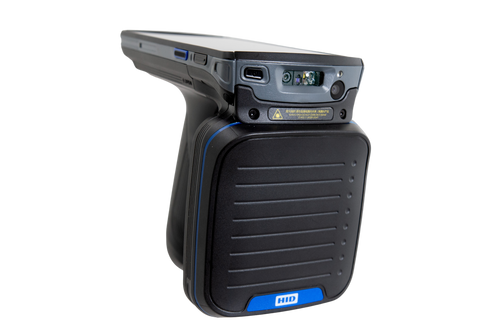
Both the Janam XR2-ATHKYMGWU0 and Zebra MC3390XR (MC339U-GF4EG4FT) are rugged Android UHF RFID handheld computers designed for inventory, asset tracking, and supply-chain workflows. Each integrates a UHF RFID reader with a 2D barcode imager in a single device, targeting warehouse, retail, and field-mobility buyers who need to eliminate a second dedicated reader. The comparison spans RFID and scan performance, rugged build and environmental resilience, and connectivity plus platform specifications — the three axes most relevant to enterprise handheld RFID procurement decisions.
In This Guide
- Which device delivers stronger RFID read performance and barcode scanning capability?
- Which unit is better sealed and rated for harsh physical environments?
- How do the two devices compare on wireless connectivity, OS platform, and cellular capability?
- Which should you choose: the XR2-ATHKYMGWU0 or the MC3390XR?
- Side-by-Side Specs
- FAQ
Which device delivers stronger RFID read performance and barcode scanning capability?
The Janam XR2-ATHKYMGWU0 specifies a UHF RFID scan rate of 1,300+ tags/second and supports EPC UHF RFID for the North American band. Its barcode engine is the Honeywell N5703 1D/2D imager, capturing GS1-128, Code 39, Code 128, QR, and Data Matrix symbologies. RFID read range is not stated in the provided specifications.
The Zebra MC3390XR specifies a UHF RFID read range of 60+ ft. (18.2+ m) with a Linear Polarized antenna, conforming to EPC Class 1 Gen2, EPC Gen2 V2, and ISO-18000-63 standards. Its barcode engine is the SE4770 Standard Range Imager. Tags-per-second throughput is not stated in the provided specifications.
Buyers prioritizing bulk simultaneous tag reads (e.g., pallet or conveyor workflows) will favor the XR2-ATHKYMGWU0's stated 1,300+ tags/sec rate. Buyers requiring confirmed long-range single-tag reads — such as dock-door or overhead asset tracking — will note the MC3390XR's explicit 60+ ft. read range, a figure absent from Janam's specs. Symbology breadth is comparable; RFID standards compliance detail is more explicit on the Zebra.
Which unit is better sealed and rated for harsh physical environments?
The Janam XR2-ATHKYMGWU0 carries an IP67 ingress protection rating, meaning it is fully dust-tight and rated for immersion in up to 1 meter of water for 30 minutes. Its drop specification is 1.2 m (4 ft.) to concrete. The display uses Corning Gorilla Glass on a 5.7-inch screen.
The Zebra MC3390XR carries an IP54 rating — protected against dust ingress (not dust-tight) and water spray from any direction, but not immersion. Its drop specification is 1.5 m (5 ft.) to concrete, exceeding the Janam by 0.3 m. The MC3390XR display is also Corning Gorilla Glass, on a 4.0-inch screen.
The XR2-ATHKYMGWU0 wins on liquid and dust sealing (IP67 vs. IP54), making it the stronger choice in wet processing, outdoor, or washdown environments. The MC3390XR withstands a higher drop height (1.5 m vs. 1.2 m), which may matter in elevated pick operations. Neither specification indicates temperature operating range, so cold-storage or extreme-heat suitability cannot be determined from the provided data.
How do the two devices compare on wireless connectivity, OS platform, and cellular capability?
The Janam XR2-ATHKYMGWU0 runs Android 13 (AOSP) with a stated upgrade path to Android 15. It offers 802.11a/b/g/n Wi-Fi, Bluetooth 5.1, and integrated dual-SIM GSM/LTE cellular (FDD-LTE B1/B2/B3/B4/B5/B7/B8/B12; TD-LTE B34/B38/B39/B40/B41; GSM). Processor is a 2.45 GHz Qualcomm octa-core with 4 GB RAM and 64 GB storage, expandable via microSD to 512 GB. Weight is 678 g.
The Zebra MC3390XR runs Android 10 GMS (Google Mobile Services), providing access to the Google Play Store and GMS-dependent enterprise MDM profiles. Wi-Fi is 802.11a/b/g/n/ac with 2x2 MU-MIMO and a broader amendment set (d/h/i/r/k/v2/w/mc2). Bluetooth is v5.0 with BR/EDR and BLE. No cellular option is listed in the provided specifications. Processor is a Qualcomm Snapdragon 660 octa-core at 2.2 GHz with 4 GB RAM and 32 GB flash. It includes a 47-key alphanumeric physical keypad. The device is FIPS and TAA compliant — specifications not present for the Janam.
The XR2-ATHKYMGWU0 offers a newer OS (Android 13 vs. 10), a faster-clocked processor (2.45 GHz vs. 2.2 GHz), double the base storage (64 GB vs. 32 GB), cellular connectivity absent from the MC3390XR spec sheet, and a larger battery (9,000 mAh vs. 7,000 mAh). The MC3390XR counters with GMS certification (critical for Google Play and many MDM platforms), 802.11ac Wi-Fi, 2x2 MU-MIMO for denser RF environments, a physical keypad for gloved or eyes-free entry, and explicit FIPS/TAA compliance required by U.S. federal and regulated-industry buyers.
Which should you choose: the XR2-ATHKYMGWU0 or the MC3390XR?
Our take: The XR2-ATHKYMGWU0 is the stronger choice when field mobility, cellular coverage, and high-throughput RFID tag reads are the primary requirements. It leads on OS currency (Android 13 AOSP vs. Android 10 GMS), battery capacity (9,000 mAh vs. 7,000 mAh), base storage (64 GB vs. 32 GB), liquid/dust sealing (IP67 vs. IP54), and is the only unit with integrated cellular (dual-SIM LTE). Its stated 1,300+ tags/sec RFID rate suits bulk-count workflows. However, buyers in GMS-dependent MDM environments, U.S. federal procurement (TAA/FIPS required), dense Wi-Fi deployments needing 802.11ac and 2x2 MU-MIMO, facilities with confirmed 60+ ft. RFID read-range requirements, or workflows demanding a physical alphanumeric keypad should evaluate the MC3390XR instead. Platform compliance — AOSP vs. GMS — is often the deciding constraint before any hardware spec is considered.
Side-by-Side Comparison
Spec-for-spec, from manufacturer data.
| Specification | Janam XR2-ATHKYMGWU0 | Zebra MC3390XR |
|---|---|---|
| Operating System | Android 13 (AOSP); upgradable to Android 15 | Android 10 GMS |
| Processor | Qualcomm octa-core 2.45 GHz | Qualcomm Snapdragon 660 octa-core 2.2 GHz |
| RAM | 4 GB | 4 GB |
| Storage | 64 GB (microSD up to 512 GB) | 32 GB flash (expansion not specified) |
| RFID Technology | UHF RFID (North America) | UHF RFID — EPC Class 1 Gen2 / Gen2 V2 / ISO-18000-63 |
| RFID Read Range | — | 60+ ft. / 18.2+ m |
| RFID Throughput | 1,300+ tags/sec | — |
| RFID Antenna | — | Linear Polarized |
| Barcode Imager | Honeywell N5703 1D/2D | SE4770 Standard Range Imager |
| Display | 5.7 in. 720×1440 Corning Gorilla Glass | 4.0 in. capacitive WVGA Corning Gorilla Glass |
| Wi-Fi | 802.11a/b/g/n | 802.11a/b/g/n/ac; 2x2 MU-MIMO |
| Bluetooth | 5.1 | 5.0 with BR/EDR and BLE |
| Cellular | Dual-SIM GSM/LTE (FDD-LTE + TD-LTE) | — |
| Battery | 9,000 mAh Li-ion | 7,000 mAh Li-ion |
| IP Rating | IP67 | IP54 |
| Drop Specification | 1.2 m (4 ft.) to concrete | 1.5 m (5 ft.) to concrete |
| Physical Keypad | — | 47-key alphanumeric |
| Compliance | RoHS; REACH SVHC | FIPS; TAA |
| Weight | 678 g (23.9 oz) | — |
Frequently Asked Questions
Which should you choose: the XR2-ATHKYMGWU0 or the MC3390XR?
The XR2-ATHKYMGWU0 is the stronger choice when field mobility, cellular coverage, and high-throughput RFID tag reads are the primary requirements. It leads on OS currency (Android 13 AOSP vs. Android 10 GMS), battery capacity (9,000 mAh vs. 7,000 mAh), base storage (64 GB vs. 32 GB), liquid/dust sealing (IP67 vs. IP54), and is the only unit with integrated cellular (dual-SIM LTE). Its stated 1,300+ tags/sec RFID rate suits bulk-count workflows. However, buyers in GMS-dependent MDM environments, U.S. federal procurement (TAA/FIPS required), dense Wi-Fi deployments needing 802.11ac and 2x2 MU-MIMO, facilities with confirmed 60+ ft. RFID read-range requirements, or workflows demanding a physical alphanumeric keypad should evaluate the MC3390XR instead. Platform compliance — AOSP vs. GMS — is often the deciding constraint before any hardware spec is considered.
Does either device support cellular connectivity for use outside warehouse Wi-Fi coverage?
Yes — the Janam XR2-ATHKYMGWU0 includes integrated dual-SIM GSM/LTE cellular (FDD-LTE and TD-LTE bands specified). The Zebra MC3390XR does not list any cellular option in its provided specifications, making the Janam the choice for field or yard deployments without reliable Wi-Fi.
Which device is better suited for U.S. government or regulated-industry buyers with TAA and FIPS requirements?
The Zebra MC3390XR is explicitly listed as FIPS and TAA Compliant in its specifications. No such compliance claims appear in the Janam XR2-ATHKYMGWU0 specifications provided. Federal, DoD, and regulated-sector buyers with mandatory TAA or FIPS requirements should verify Janam's compliance status directly with the manufacturer before specifying the XR2-ATHKYMGWU0.
Which handheld has a longer RFID read range for dock-door or overhead asset tracking?
The Zebra MC3390XR specifies a read range of 60+ ft. (18.2+ m) with a Linear Polarized antenna conforming to EPC Class 1 Gen2 and ISO-18000-63. The Janam XR2-ATHKYMGWU0 does not state a maximum read range in the provided specifications, though it does claim a throughput rate of 1,300+ tags/sec. Buyers whose use case depends on a confirmed distance figure should note that only the MC3390XR provides one in the available spec data.
More Mobile Computer Comparisons
- Janam XT40-ATHKRMGW00 vs Zebra MC3390XR
- Janam XT40-ATHKRMGW00 vs Zebra MC3330XR
- Janam XT40-ATHKRMGW00 vs Janam XT3-STHGBMGW01
- Janam XT40-ATHKRMGW00 vs Janam XT3-STHJBMGW00
- Janam XT3-STHGBMGW01 vs Zebra MC3390XR
- Janam XT3-STHGBMGW01 vs Zebra MC3330XR
Mobile Computer Buying Guides
Get a Second Opinion on Your Camera Choice
Share your site layout, coverage goals, and budget. Our team will validate the camera selection, flag anything we would change, and recommend products that match the use case.