
Janam XR2-ATHKYMGWU0 vs Janam XT3-STHGBMGW01: Specification Comparison
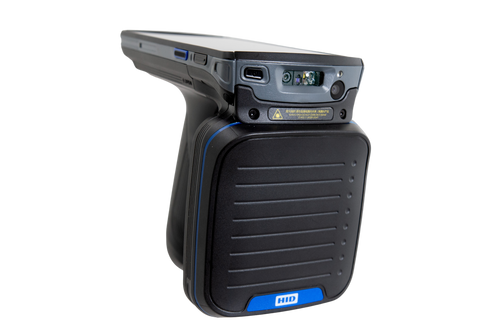
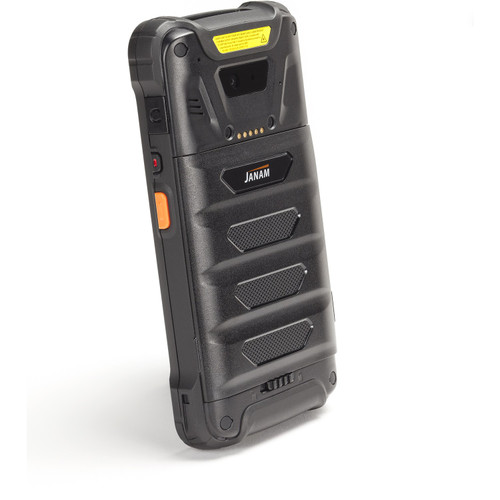
Both the Janam XR2-ATHKYMGWU0 and XT3-STHGBMGW01 are IP67-rated rugged Android handheld mobile computers targeting field and warehouse workflows that require barcode scanning, RFID, and cellular connectivity. The XR2 runs Android 13 AOSP with a dedicated UHF RFID engine capable of 1,300+ tags/sec, while the XT3 runs Android 9 GMS/AER with HF RFID/NFC and a hot-swappable battery design. Both carry Honeywell 1D/2D imagers and Bluetooth 5.x radios, making them genuine cross-shop candidates for mobile data-capture deployments.
In This Guide
- Which device delivers the right RFID and barcode capture capability for your workflow?
- How do the two devices compare on physical ruggedness, battery endurance, and portability?
- Which unit offers stronger OS currency, wireless connectivity, and enterprise management support?
- Which should you choose: the XR2-ATHKYMGWU0 or the XT3-STHGBMGW01?
- Side-by-Side Specs
- FAQ
Which device delivers the right RFID and barcode capture capability for your workflow?
The XR2-ATHKYMGWU0 integrates a UHF RFID engine rated at 1,300+ tags/sec for North America, enabling bulk pallet and inventory reads at distance — a capability the XT3-STHGBMGW01 does not offer. The XT3-STHGBMGW01 instead provides HF RFID via NFC (NFC Forum Tags 1–5, ISO 14443 Type A/B, ISO 15693, MIFARE 1k/4k/Plus/UltraLight/DESFire, Sony FeliCa), suited for tap-to-pair, access control, and short-range tag authentication at typical 0–10 cm range.
For barcode capture, the XR2 uses a Honeywell N5703 1D/2D imager; the XT3 uses a Honeywell N6703 Area Imager with omnidirectional scan pattern. Both read GS1-128, Code 39, Code 128, QR Code, and Data Matrix. The XT3 additionally lists UPC and EAN in its specified symbology set; the XR2 spec does not explicitly list those two. Buyers whose primary need is UHF bulk RFID should select the XR2; those needing NFC-based authentication or tap workflows should select the XT3.
How do the two devices compare on physical ruggedness, battery endurance, and portability?
Both units carry an IP67 ingress-protection rating, confirming dust-tight and 30-minute water-immersion resistance per IEC 60529. Drop ratings diverge: the XT3-STHGBMGW01 is rated to 1.5 m (5 ft) to concrete on all sides across a wide temperature range, versus 1.2 m (4 ft) to concrete for the XR2-ATHKYMGWU0 — a 25% drop-height advantage for the XT3.
Battery capacity swings significantly in the opposite direction. The XR2 ships with a 9,000 mAh 3.7 V Li-ion pack — more than three times the XT3's standard 2,900 mAh cell. The XT3 compensates with a hot-swappable battery design (a 5,800 mAh extended option is also specified) and a rated 8–10 hours of mixed cellular/WiFi usage; no equivalent runtime figure is provided in the XR2 spec. The XR2 is also substantially larger and heavier: 678 g (23.9 oz) and 143.3 × 169 × 90.5 mm versus the XT3's 272 g (9.5 oz) and 156 × 82 × 21 mm. The XT3's lighter, slimmer profile is meaningful for all-day carry; the XR2's mass reflects its integrated UHF antenna and larger power cell.
Which unit offers stronger OS currency, wireless connectivity, and enterprise management support?
The XR2-ATHKYMGWU0 ships with Android 13 AOSP and is specified as upgradable to Android 15, providing a longer forward OS runway. However, AOSP omits Google Mobile Services (GMS), so Google Play, Google APIs, and GMS-dependent MDM agents are unavailable without side-loading or an alternative app distribution mechanism. The XT3-STHGBMGW01 ships with Android 9 GMS/AER (Android Enterprise Recommended) — an older OS but one that carries full Google Play Services, GMS-based EMM/MDM compatibility, and the Android Enterprise Recommended certification for enterprise deployments.
On wireless, the XT3 adds 802.11ac (Wi-Fi 5) to its radio set (802.11a/b/g/n/ac/d/h/i/k/r/v), while the XR2 is limited to 802.11a/b/g/n (Wi-Fi 4). The XR2 specifies dual-SIM GSM/LTE with an extensive LTE band list (TD-LTE B34/B38/B39/B40/B41; FDD-LTE B1/B2/B3/B4/B5/B7/B8/B12); the XT3 supports WWAN via a microSIM model variant. The XT3 also exposes USB-C, Ethernet via dock/accessory, Pogo Pin industrial connector, a 3.5 mm headset jack, dual-microphone with noise cancellation, and 9 programmable external buttons — hardware I/O the XR2 spec does not enumerate. Bluetooth is 5.1 on the XR2 versus 5.0 BLE on the XT3.
Which should you choose: the XR2-ATHKYMGWU0 or the XT3-STHGBMGW01?
Our take: The XR2-ATHKYMGWU0 is the stronger choice when UHF RFID bulk-read performance, Android 13 OS currency, or high-capacity battery life without hot-swap are the primary requirements. Its 1,300+ tags/sec UHF engine and 9,000 mAh battery are not matched by the XT3, and its Android 13 AOSP path upgrades to Android 15. However, three spec deltas favor the XT3-STHGBMGW01: it carries a 1.5 m versus 1.2 m drop rating, it weighs 272 g versus 678 g (a 406 g difference critical for all-day wear), and it supports 802.11ac versus the XR2's 802.11a/b/g/n ceiling. Deployments requiring GMS-based MDM, Android Enterprise Recommended certification, NFC tap workflows, or a lighter form factor should select the XT3. The XR2 suits high-throughput RFID inventory environments; the XT3 suits enterprise-managed, mobile-worker deployments where device weight and Google ecosystem compatibility matter.
Side-by-Side Comparison
Spec-for-spec, from manufacturer data.
| Specification | Janam XR2-ATHKYMGWU0 | Janam XT3-STHGBMGW01 |
|---|---|---|
| Operating System | Android 13 (AOSP); upgradable to Android 15 | Android 9 (GMS/AER); upgradeable to Android 11 |
| Google Mobile Services (GMS) | No (AOSP) | Yes (GMS/AER, Android Enterprise Recommended) |
| RFID Technology | UHF RFID (North America), 1,300+ tags/sec | HF RFID via NFC (ISO 14443, ISO 15693, MIFARE, FeliCa) |
| Scan Engine | Honeywell N5703 1D/2D Imager | Honeywell N6703 1D/2D Area Imager (omnidirectional) |
| IP Rating | IP67 | IP67 |
| Drop Rating | 1.2 m (4 ft) to concrete | 1.5 m (5 ft) to concrete, all sides |
| Battery Capacity | 9,000 mAh Li-ion (non-swappable per spec) | 2,900 mAh Li-ion, hot-swappable; 5,800 mAh optional |
| Battery Runtime | Not specified | 8–10 hours mixed cellular/WiFi |
| Processor | 2.45 GHz Qualcomm octa-core | 2.2 GHz Qualcomm Snapdragon octa-core |
| RAM / Storage | 4 GB RAM / 64 GB storage | 4 GB RAM / 64 GB storage (3 GB/32 GB optional) |
| microSD Expansion | Up to 512 GB (ExFAT) | Up to 512 GB |
| WiFi | 802.11a/b/g/n (Wi-Fi 4) | 802.11a/b/g/n/ac (Wi-Fi 5) |
| Bluetooth | Bluetooth 5.1 | Bluetooth 5.0 BLE |
| Cellular | GSM/LTE dual-SIM (FDD/TD-LTE multi-band) | GSM/LTE (WWAN model, microSIM) |
| Display | 5.7 in., 720×1440, Corning Gorilla Glass | 5 in. HD 1280×720, IPS, 500 nits, Corning Gorilla Glass |
| Weight | 678 g (23.9 oz) | 272 g (9.5 oz) with battery |
| Dimensions | 143.3 × 169 × 90.5 mm | 156 × 82 × 21 mm |
| Camera (Rear / Front) | 13 MP rear with flash / 5 MP front | 13 MP rear autofocus with LED flash / 8 MP front |
Frequently Asked Questions
Which should you choose: the XR2-ATHKYMGWU0 or the XT3-STHGBMGW01?
The XR2-ATHKYMGWU0 is the stronger choice when UHF RFID bulk-read performance, Android 13 OS currency, or high-capacity battery life without hot-swap are the primary requirements. Its 1,300+ tags/sec UHF engine and 9,000 mAh battery are not matched by the XT3, and its Android 13 AOSP path upgrades to Android 15. However, three spec deltas favor the XT3-STHGBMGW01: it carries a 1.5 m versus 1.2 m drop rating, it weighs 272 g versus 678 g (a 406 g difference critical for all-day wear), and it supports 802.11ac versus the XR2's 802.11a/b/g/n ceiling. Deployments requiring GMS-based MDM, Android Enterprise Recommended certification, NFC tap workflows, or a lighter form factor should select the XT3. The XR2 suits high-throughput RFID inventory environments; the XT3 suits enterprise-managed, mobile-worker deployments where device weight and Google ecosystem compatibility matter.
Is the XR2-ATHKYMGWU0 or XT3-STHGBMGW01 better for large-scale RFID inventory scanning?
The XR2-ATHKYMGWU0 is the clear choice for UHF RFID inventory work — it carries a dedicated UHF RFID engine rated at 1,300+ tags/sec for North America, enabling bulk pallet and shelf reads at distance. The XT3-STHGBMGW01 provides only HF RFID via NFC, which operates at short range (typically under 10 cm) and is designed for tap-to-authenticate or single-tag interactions, not bulk inventory sweeps.
Which device is easier to manage across a fleet using standard MDM tools?
The XT3-STHGBMGW01 has the advantage here. It ships with Android 9 GMS/AER and carries Android Enterprise Recommended certification, meaning it is validated for GMS-based EMM and MDM platforms that rely on Google Play Services. The XR2-ATHKYMGWU0 runs Android 13 AOSP, which excludes GMS; MDM enrollment and app distribution require AOSP-compatible tools or manual side-loading, adding deployment complexity.
Which unit holds up better for workers doing full shifts without access to a charging station?
The XR2-ATHKYMGWU0 ships with a 9,000 mAh battery — more than three times the XT3's standard 2,900 mAh cell — making it the better option for extended shifts without charging infrastructure. The XT3-STHGBMGW01 counters with a hot-swappable battery design and an optional 5,800 mAh extended pack rated for 8–10 hours of mixed use, which suits environments where spare batteries can be pre-charged and swapped in the field. No equivalent runtime figure is provided in the XR2 spec.
More Mobile Computer Comparisons
- Janam XT40-ATHKRMGW00 vs Zebra MC3390XR
- Janam XT40-ATHKRMGW00 vs Zebra MC3330XR
- Janam XT40-ATHKRMGW00 vs Janam XT3-STHGBMGW01
- Janam XT40-ATHKRMGW00 vs Janam XT3-STHJBMGW00
- Janam XT3-STHGBMGW01 vs Zebra MC3390XR
- Janam XT3-STHGBMGW01 vs Zebra MC3330XR
Mobile Computer Buying Guides
Get a Second Opinion on Your Camera Choice
Share your site layout, coverage goals, and budget. Our team will validate the camera selection, flag anything we would change, and recommend products that match the use case.