
i-PRO S66600-Z3L vs i-PRO X66600-Z3K: Specification Comparison
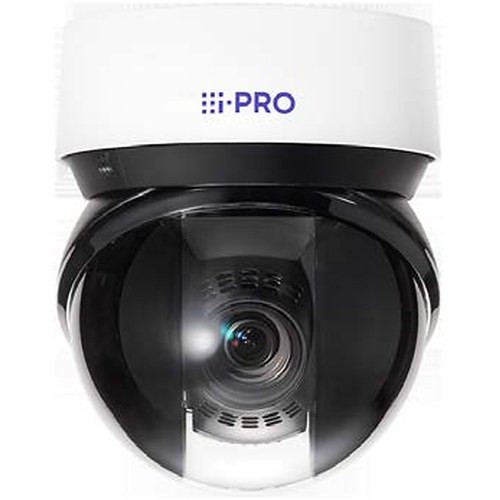
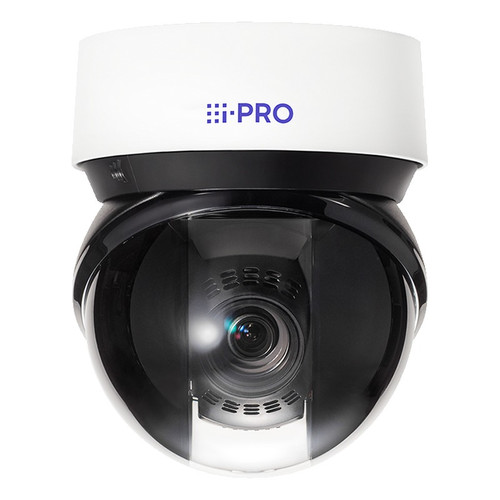
Both products are i-PRO 6MP outdoor PTZ dome cameras sharing the same sensor class, optical zoom range, and housing form factor, making them a direct cross-shop decision for installers evaluating AI-capable perimeter surveillance platforms. The WV-S66600-Z3L and WV-X66600-Z3K are built on the same Ambarella CV22 SoC and share ONVIF G/M/S/T compliance, but differ meaningfully in IR illumination range, AI analytics capacity, power draw, and audio I/O configuration — factors that will determine suitability by deployment scenario.
In This Guide
How do the imaging specs compare?
Both cameras use a 1/2.8-type CMOS sensor with a 3328×1872 maximum resolution (6MP), a 30x optical zoom (4.5–135mm, F1.8–F4.7), and an extended digital zoom ceiling of 78x at 1280×720. Minimum illumination is specified at 0.13 lux (Color, 30IRE) for the S66600-Z3L; the X66600-Z3K does not publish a lux figure in the provided specifications. The S66600-Z3L explicitly rates WDR at a maximum of 132 dB (Super Dynamic level 31), with granular controls for adaptive black stretch (0–255), BLC/HLC (0–31), fog compensation (0–8 levels), and AGC (0–11). The X66600-Z3K lists WDR as present but provides no dB rating or control-range detail in the available spec data.
IR illumination represents the sharpest divergence between the two models. The S66600-Z3L carries dual-range IR LED output rated at 280m (High) and 200m (Medium), with DORI detection distances reaching 3,050m at tele on the lens — figures consistent with long-range perimeter use. The X66600-Z3K lists IR distance as 3.0m in its spec tags, which is almost certainly a data anomaly (likely the minimum focus distance repurposed into an IR field), as no PTZ of this class ships with 3m IR. Buyers should request confirmation of actual IR range from the vendor before specifying the X66600-Z3K for any low-light application.
What about installation and environment?
Both cameras share the same physical envelope: 167mm diameter × 205mm height, approximately 3kg, IP66, IK10 (IEC 62262), NEMA 4X, and wind resistance to 40m/s (~89mph). Operating temperature range is identical at -50°C to 60°C (the S66600-Z3L notes power-on activation requires -30°C minimum). Both are PoE++ (IEEE 802.3bt) Class 6 with a DC 54V alternative. The S66600-Z3L draws up to 45.9W; the X66600-Z3K draws approximately 37.8W — an 8.1W difference that may matter on power-budget-constrained switches or midspans. Both are outdoor-rated and share the same pan (360° endless) and tilt (-20° to +90°) ranges with 256 preset positions.
Mounting options listed for the X66600-Z3K include wall, ceiling, and rack. The S66600-Z3L's spec sheet does not enumerate mount types explicitly but uses a standard PTZ dome pendant/surface interface. The S66600-Z3L carries additional certifications including UL/c-UL (UL62368-1), CE, IEC62368-1, NEMA-TS2, FCC Part 15 Class A, ICES-003, and EN55032/EN55035 — useful for DOT and roadway deployments. Equivalent certification detail is not provided for the X66600-Z3K in the available specifications.
Which fits your VMS and analytics better?
Both cameras are ONVIF Profile G/M/S/T compliant and run on the Ambarella CV22 SoC. The S66600-Z3L specifies 8 AI detection types plus AI Sound Classification (gunshot, yell, vehicle horn, glass break), supports 4-area VMD, 1-area SCD, up to 32 privacy zones, 8 VIQS zones, and 256 presets with auto-track, auto-pan, preset sequence, and patrol auto modes. It supports up to 14 simultaneous users and lists FIPS 140-2 Level 3 compliance alongside IEEE 802.1X. The X66600-Z3K specifies support for up to 3 concurrent edge AI application models but does not enumerate the detection types or sound classification categories in the provided data.
Audio I/O differs: the S66600-Z3L provides 4× 3.5mm stereo mini jack audio inputs plus a dedicated 3.5mm stereo output (600Ω, -20dBV), and supports G.726, G.711, and AAC-LC (16–128kbps) with half- and full-duplex modes. The X66600-Z3K provides one 3.5mm stereo input and one 3.5mm monaural output; codec and duplex detail are not listed in the available specifications. Both support microSD edge storage and mobile access (iOS/Android noted for the S66600-Z3L; not specified for the X66600-Z3K). The S66600-Z3L additionally includes a built-in gyro-based image stabilizer called out as a discrete feature, whereas the X66600-Z3K lists image stabilization as present without specifying the mechanism.
Which should you choose: the S66600-Z3L or the X66600-Z3K?
Our take: The S66600-Z3L is the stronger choice when long-range IR illumination, broader AI analytics depth, and rigorous regulatory certification matter. It delivers verified 280m IR range versus an unconfirmed 3.0m figure on the X66600-Z3K — a critical gap for any low-light or after-hours perimeter deployment. Its WDR is rated at a specific 132 dB maximum versus an unquantified WDR claim on the X66600-Z3K. It also specifies 8 AI detection types plus 4-category sound classification versus the X66600-Z3K's 3-model edge AI capacity with no type enumeration, giving it more onboard intelligence out of the box. The X66600-Z3K's lower 37.8W draw (versus 45.9W) may appeal on constrained PoE budgets, and its 3-concurrent-model AI architecture could suit sites deploying custom edge applications. Confirm IR range and AI detection types directly with i-PRO before finalizing the X66600-Z3K for low-light or analytics-intensive use cases.
Side-by-Side Comparison
Spec-for-spec, from manufacturer data.
| Specification | i-PRO S66600-Z3L | i-PRO X66600-Z3K |
|---|---|---|
| Resolution | 6MP (3328 × 1872) | 6MP (3328 × 1872) |
| Image Sensor | 1/2.8 type CMOS (5.57 × 3.13 mm) | 1/2.8 type CMOS |
| Optical Zoom | 30x motorized | 30x motorized |
| Extra / Digital Zoom | 78x (at 1280×720); digital to 480x not specified | 78x (at 1280×720); digital up to 480x |
| Focal Length | 4.5 mm – 135 mm | 4.5 mm – 135 mm |
| Minimum Illumination | 0.13 lux (Color, 30IRE) | — |
| IR Range | 280m (High) / 200m (Medium) | 3.0m listed (likely data error — confirm with vendor) |
| WDR | Max 132 dB (Super Dynamic On, Level 31) | WDR (no dB rating specified) |
| AI Analytics | 8 detection types + AI sound classification (4 categories) | Up to 3 concurrent edge AI models (types not specified) |
| IP Rating | IP66, NEMA 4X, Type 4X | IP66, NEMA 4X |
| Impact Rating | IK10 (IEC 62262) | IK10 |
| Operating Temperature | -50°C to 60°C (power-on: -30°C to +60°C) | -50°C to 60°C |
| Power Input / PoE Class | PoE++ (IEEE 802.3bt) Class 6 / DC 54V, 45.9W max | PoE++ (IEEE 802.3bt) Class 6 / DC 54V, 37.8W max |
| Audio I/O | 4× 3.5mm stereo in; 1× 3.5mm stereo out (600Ω, -20dBV); G.726/G.711/AAC-LC; full duplex | 1× 3.5mm stereo in; 1× 3.5mm monaural out; codecs not specified |
| Edge Storage | microSDXC | microSD |
| ONVIF Profiles | G / M / S / T | G / M / S / T |
| Certifications | UL/c-UL, CE, IEC62368-1, NEMA-TS2, FCC Part 15A, ICES-003, FIPS 140-2 Level 3 | Not specified in available data |
| Warranty | 3-year | Not specified in available data |
Frequently Asked Questions
Which should you choose: the S66600-Z3L or the X66600-Z3K?
The S66600-Z3L is the stronger choice when long-range IR illumination, broader AI analytics depth, and rigorous regulatory certification matter. It delivers verified 280m IR range versus an unconfirmed 3.0m figure on the X66600-Z3K — a critical gap for any low-light or after-hours perimeter deployment. Its WDR is rated at a specific 132 dB maximum versus an unquantified WDR claim on the X66600-Z3K. It also specifies 8 AI detection types plus 4-category sound classification versus the X66600-Z3K's 3-model edge AI capacity with no type enumeration, giving it more onboard intelligence out of the box. The X66600-Z3K's lower 37.8W draw (versus 45.9W) may appeal on constrained PoE budgets, and its 3-concurrent-model AI architecture could suit sites deploying custom edge applications. Confirm IR range and AI detection types directly with i-PRO before finalizing the X66600-Z3K for low-light or analytics-intensive use cases.
Is the WV-S66600-Z3L or WV-X66600-Z3K better for low-light and nighttime surveillance?
Based on available specifications, the WV-S66600-Z3L is clearly specified for low-light use, with a minimum illumination of 0.13 lux (Color, 30IRE) and IR LED illumination rated at 280m (High) or 200m (Medium). The WV-X66600-Z3K lists an IR distance of 3.0m in its spec tags, which appears to be a data error rather than the true IR range — that figure should be confirmed with i-PRO before specifying it for any nighttime application.
Do both cameras work with the same VMS and how many AI functions can they run simultaneously?
Both cameras are ONVIF Profile G/M/S/T compliant and built on the Ambarella CV22 SoC, so they integrate with any major ONVIF-compliant VMS. The WV-S66600-Z3L specifies 8 AI detection types plus 4-category AI sound classification. The WV-X66600-Z3K supports up to 3 concurrent edge AI models but does not enumerate which detection types are available in the provided specifications — verify the model list with i-PRO if specific analytics are required.
Which camera draws less power, and does it matter for PoE switch selection?
The WV-X66600-Z3K draws approximately 37.8W maximum versus 45.9W for the WV-S66600-Z3L. Both require PoE++ (IEEE 802.3bt) Class 6 ports. The 8.1W difference is meaningful on switches with per-port or total-budget power caps — check your switch's per-port PoE++ budget before deploying either model, and factor the lower draw of the X66600-Z3K if power headroom is tight.
Get a Second Opinion on Your Camera Choice
Share your site layout, coverage goals, and budget. Our team will validate the camera selection, flag anything we would change, and recommend products that match the use case.