
i-PRO S66300-Z4L vs i-PRO X66300-Z3LS: Specification Comparison
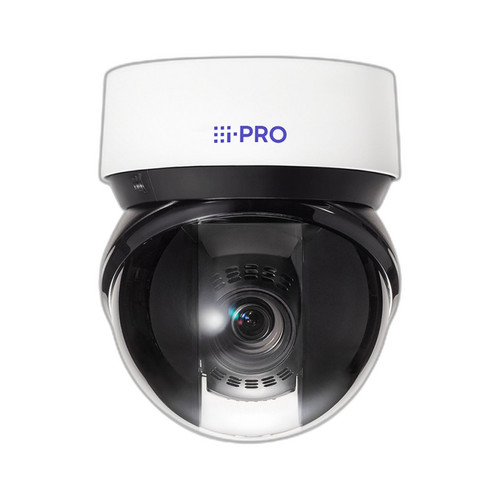
Both the i-PRO WV-S66300-Z4L and WV-X66300-Z3LS are 2MP outdoor PTZ dome cameras sharing the same sensor size, enclosure form factor, and core AI analytics engine. They occupy the same product tier and would commonly appear together on a shortlist for wide-area perimeter or critical-infrastructure PTZ deployments. The primary differentiators are optical zoom ratio, DORI reach, frame rate, and select I/O details — all of which carry real operational weight for long-range identification and forensic review use cases.

In This Guide
How do the imaging specs compare?
Both cameras use an approximately 1/2.8-type CMOS sensor with a 5.57 × 3.13 mm scanning area, a maximum aperture of F1.6 at wide end, and a minimum illumination rating of 0.006 lx in B&W at F1.6 and 1/30s. Dynamic range is identical at a maximum of 144 dB with Super Dynamic on at Level 31. The S66300-Z4L delivers a 40x optical zoom (4.25–170 mm, F1.6–F4.95) with a digital extra zoom extending to 60x at 1280×720. The X66300-Z3LS offers a 32x optical zoom (4.25–136 mm, F1.6–F4.4) with a digital extra zoom to 48x at 1280×720. The narrower tele aperture on the S66300-Z4L (F4.95 vs F4.4) reflects the longer focal length trade-off.
DORI performance diverges significantly at telephoto. At tele, the S66300-Z4L reaches 2,199.9 m detect / 440.0 m recognize / 220.0 m identify. The X66300-Z3LS reaches 1,833.2 m detect / 366.6 m recognize / 183.3 m identify — a difference of roughly 367 m at detect and 73 m at recognize. Both cameras provide 350 m IR illumination at 30IRE; the S66300-Z4L spec additionally notes 250 m at 50IRE, while the X66300-Z3LS spec does not separately state a 50IRE figure. The X66300-Z3LS is explicitly rated at 60 fps; the S66300-Z4L lists frame rate as 'Variable' without a maximum fps figure stated in the provided spec.
What about installation and environment?
The two cameras share nearly identical mechanical and environmental profiles. Both are housed in aluminum die cast / polycarbonate dome enclosures with stainless steel hardware, measuring φ167 mm × 205 mm (H) with a dome radius of SR 77.5 mm, and weighing approximately 3 kg without attachment. Both carry IP66 water and dust resistance, IK10 impact resistance per IEC 62262, and NEMA-TS2 compliance. The X66300-Z3LS additionally lists NEMA Type 4X explicitly in its IP rating field; the S66300-Z4L spec lists NEMA-TS2 under Other Standard but does not separately call out Type 4X in the IP rating field. Operating temperature is -50°C to +60°C and wind resistance up to 40 m/s (approx. 89 mph) on both models.
Both cameras are powered via PoE++ (802.3bt) at a maximum of 45.9 W on a single RJ45 10/100Base-TX connection, making cabling requirements identical. Both include 3 alarm I/O terminals. The X66300-Z3LS spec explicitly lists 3 Alarm IN, 1 Alarm OUT, and 1 AUX OUT as distinct terminals; the S66300-Z4L lists '3x alarm I/O terminals' without that breakdown. The S66300-Z4L lists 4 audio inputs (4× 3.5 mm stereo mini jack) versus a single 3.5 mm stereo mini jack on the X66300-Z3LS. Both include a 3.5 mm stereo audio output at 600 Ω / -20 dBV. Both carry UL/c-UL (UL62368-1 / CSA C22.2 No.62368-1), CE, IEC62368-1, FCC Part 15 Class A, ICES-003 Issue 7 Class A, EN55032 Class A, and EN55035 certifications. The S66300-Z4L additionally lists FIPS 140-2 Level 3 under its security certifications; this is not stated for the X66300-Z3LS.
Which fits your VMS and analytics better?
Both cameras support ONVIF Profiles G, M, S, and T, ensuring broad VMS compatibility. Edge analytics are functionally identical as specified: AI motion, face, people, vehicle, mask, and occupancy detection; AI sound classification for gunshot, yell, vehicle horn, and glass break; VMD (4 areas), Scene Change Detection (1 area), and audio detection. Pan/tilt mechanics are the same on both: 360° endless pan, -20° to +90° tilt, manual speed 0.065–150°/s, preset pan 700°/s, preset tilt 500°/s, 256 preset positions, and Auto Track / Auto Pan / Preset Sequence / Patrol modes. Active ClearSight and built-in gyro-based image stabilizer are present on both.
On-board storage differs in one specified dimension: the X66300-Z3LS spec explicitly states support for microSDXC up to 512 GB, and details both H.265/H.264 and JPEG recording modes including schedule recording and network-failure backup. The S66300-Z4L spec references microSDXC support without stating a maximum card capacity in the provided data. Audio compression (G.726, G.711, AAC-LC) and transmission modes (Off / Mic / Audio Out / Half Duplex / Full Duplex) are identical. Both cameras support up to 14 simultaneous users. The S66300-Z4L spec lists HTTPS and IEEE 802.1X under Secure alongside FIPS 140-2 Level 3; the X66300-Z3LS lists HTTPS and IEEE 802.1X but FIPS 140-2 Level 3 is not stated in its provided specs.
Which should you choose: the S66300-Z4L or the X66300-Z3LS?
Our take: The S66300-Z4L is the stronger choice when maximum telephoto reach and long-range identification are the primary requirements. Its 40x optical zoom (versus 32x) extends the DORI identify distance to 220 m versus 183.3 m, and the recognize distance to 440 m versus 366.6 m — a 20% advantage at tele that translates directly to actionable forensic coverage on large perimeters or critical-infrastructure sites. It also adds four audio inputs versus one and includes FIPS 140-2 Level 3 certification, relevant in government or high-security deployments. The X66300-Z3LS counters with an explicit 60 fps frame rate (the S66300-Z4L spec states only 'Variable'), explicit NEMA 4X labeling, an explicitly documented 512 GB microSDXC ceiling, and a more detailed alarm I/O breakdown. If smooth high-frame-rate tracking or Type 4X-rated coastal/industrial compliance documentation is the deciding factor, the X66300-Z3LS is the practical fit.
Side-by-Side Comparison
Spec-for-spec, from manufacturer data.
| Specification | i-PRO S66300-Z4L | i-PRO X66300-Z3LS |
|---|---|---|
| Resolution | 2MP (1920×1080) | 2MP (1920×1080) |
| Image Sensor | Approx. 1/2.8 type CMOS, 5.57×3.13 mm | Approx. 1/2.8 type CMOS, 5.57×3.13 mm |
| Optical Zoom / Focal Length | 40x / 4.25–170 mm | 32x / 4.25–136 mm |
| Extra (Digital) Zoom | Up to 60x at 1280×720 | Up to 48x at 1280×720 |
| Max Aperture (Wide / Tele) | F1.6 / F4.95 | F1.6 / F4.4 |
| Min Illumination | 0.006 lx (B&W, F1.6, 1/30s) | 0.006 lx (B&W, F1.6, 1/30s) |
| IR Range | 350m @ 30IRE / 250m @ 50IRE | 350m @ 30IRE (50IRE figure not stated in spec) |
| DORI Identify (Tele) | 220.0 m / 721.8 ft | 183.3 m / 601.4 ft |
| DORI Recognize (Tele) | 440.0 m / 1443.5 ft | 366.6 m / 1202.9 ft |
| Dynamic Range (WDR) | Max. 144 dB (Super Dynamic On, Level 31) | Max. 144 dB (Super Dynamic On, Level 31) |
| Max Frame Rate | Variable (max fps not stated in spec) | 60 fps |
| Video Compression | H.265 / H.264 / MJPEG | H.265 / H.264 / MJPEG |
| IP / Impact Rating | IP66 / IK10 | IP66 / NEMA 4X / IK10 |
| Operating Temperature | -50°C to +60°C | -50°C to +60°C |
| Power Input | PoE++ 802.3bt, 45.9 W | PoE++ 802.3bt, 45.9 W |
| Edge Storage | microSDXC (max capacity not stated in spec) | microSDXC up to 512 GB |
| Audio Inputs | 4× 3.5mm stereo mini jack | 1× 3.5mm stereo mini jack |
| Security Certifications | HTTPS, IEEE 802.1X, FIPS 140-2 Level 3 | HTTPS, IEEE 802.1X (FIPS not stated in spec) |
| ONVIF Profiles | G / M / S / T | G / M / S / T |
| Dimensions | φ167mm × 205mm (H) | φ167mm × 205mm (H) |
| Weight | Approx. 3 kg (without attachment) | Approx. 3 kg (without attachment) |
| Warranty | 5-year | 5-year |
Frequently Asked Questions
Which should you choose: the S66300-Z4L or the X66300-Z3LS?
The S66300-Z4L is the stronger choice when maximum telephoto reach and long-range identification are the primary requirements. Its 40x optical zoom (versus 32x) extends the DORI identify distance to 220 m versus 183.3 m, and the recognize distance to 440 m versus 366.6 m — a 20% advantage at tele that translates directly to actionable forensic coverage on large perimeters or critical-infrastructure sites. It also adds four audio inputs versus one and includes FIPS 140-2 Level 3 certification, relevant in government or high-security deployments. The X66300-Z3LS counters with an explicit 60 fps frame rate (the S66300-Z4L spec states only 'Variable'), explicit NEMA 4X labeling, an explicitly documented 512 GB microSDXC ceiling, and a more detailed alarm I/O breakdown. If smooth high-frame-rate tracking or Type 4X-rated coastal/industrial compliance documentation is the deciding factor, the X66300-Z3LS is the practical fit.
Is the S66300-Z4L or X66300-Z3LS better for long-range identification at night?
Both cameras share the same 0.006 lx minimum illumination rating and 350 m IR range at 30IRE. However, the S66300-Z4L's 40x optical zoom provides a DORI identify distance of 220 m at telephoto versus 183.3 m for the X66300-Z3LS's 32x zoom. For the longest possible identification range in low light, the S66300-Z4L has the optical advantage per the provided specs.
Do both cameras work with the same VMS platforms?
Yes. Both support ONVIF Profiles G, M, S, and T and have identical network interfaces (10/100Base-TX, RJ45). Both support up to 14 simultaneous users and identical browser clients (Edge, Firefox, Chrome). VMS compatibility is therefore functionally the same based on the provided specifications.
Which camera is better suited for government or high-security installations requiring FIPS compliance?
The S66300-Z4L explicitly lists FIPS 140-2 Level 3 certification in its provided security specifications. This certification is not stated for the X66300-Z3LS in the provided specs. Buyers with FIPS compliance mandates should verify current certification status directly with i-PRO, but based on the provided data, the S66300-Z4L is the specified choice.
Get a Second Opinion on Your Camera Choice
Share your site layout, coverage goals, and budget. Our team will validate the camera selection, flag anything we would change, and recommend products that match the use case.