
i-PRO S66300-Z4 vs i-PRO X66300-Z3S: Specification Comparison
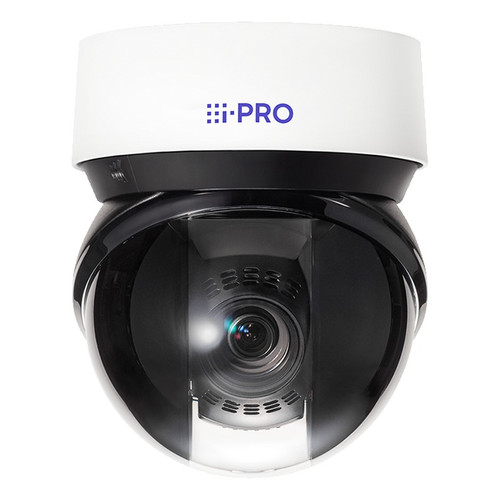
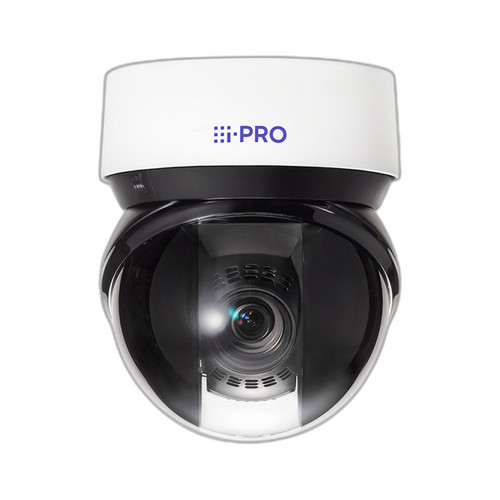
Both the i-PRO WV-S66300-Z4 and WV-X66300-Z3S are 2MP outdoor PTZ dome cameras sharing the same 1/2.8-type CMOS sensor, IP66/IK10-rated enclosure, PoE++ power, and Ambarella CV25m SoC. The key differentiators lie in optical zoom ratio, maximum frame rate, AI analytics breadth, and protocol support. This comparison examines imaging capability, installation requirements, and integration fit to help installers and IT buyers determine which model suits their wide-area surveillance deployment.
In This Guide
How do the imaging specs compare?
The WV-S66300-Z4 offers 40x optical zoom (4.25–170 mm) with an extra-zoom ceiling of 60x at 1280×720 resolution, yielding a DORI Identify range of 220 m telephoto. The WV-X66300-Z3S delivers 32x optical zoom (4.25–136 mm) with a 48x extra-zoom ceiling, and a DORI Identify range of 183.3 m telephoto — roughly 17% shorter reach. Both share identical minimum illumination of 0.006 lux (B&W, 50IRE, F1.6, 1/30s), the same 144 dB Super Dynamic range, identical BLC/HLC (0–31), fog compensation (0–8 levels), and the same DNR and AGC ranges. Wide-angle DORI performance is identical between both models across all four tiers.
The WV-X66300-Z3S explicitly specifies a 60fps maximum frame rate at 1920×1080 and adds a 4:3 resolution mode (up to 2048×1536). The WV-S66300-Z4 lists frame rate as 'Variable' without specifying a maximum fps in the provided specs. The X66300-Z3S also adds SRTP, MQTT, and NTCIP to its IPv4 protocol stack — protocols not listed for the S66300-Z4. Both cameras carry built-in gyro-based image stabilization, Active ClearSight, and identical pan/tilt speed specifications (700°/s preset pan, 500°/s preset tilt).
What about installation and environment?
Both cameras share an identical physical footprint: φ167 mm × 205 mm (H), dome radius SR 77.5 mm, and approximately 3 kg without attachment. Enclosure finish is aluminum die-cast with a polycarbonate dome on both. Both are rated IP66 and IK10 (IEC 62262), operate from -50°C to +60°C with 10–100% humidity (non-condensing), and resist wind up to 40 m/s. The WV-X66300-Z3S adds a NEMA 4X listing not stated in the S66300-Z4 specs. Both draw 37.8 W via PoE++ (IEEE 802.3bt, PoE Class 6) with a single RJ45 10/100Base-TX interface, so infrastructure requirements are identical. The S66300-Z4 specs list UL, c-UL, CE, IEC62368-1, FCC Part 15 Class A, ICES-003 Issue 7, EN55032, EN55035, and NEMA-TS2 certifications; the X66300-Z3S carries the same set.
Which fits your VMS and analytics better?
Both cameras support ONVIF Profiles G, M, S, and T, up to 14 simultaneous users, and the same browser support (Edge, Firefox, Chrome). Edge storage supports microSDXC/microSDHC on both; the X66300-Z3S explicitly lists a 64 GB–512 GB microSDXC and 4 GB–32 GB microSDHC range, while the S66300-Z4 states microSDXC compatibility without a capacity ceiling. Audio I/O is functionally equivalent: both provide a 3.5 mm stereo input (-51 to -38 dB) and 3.5 mm stereo output (600 Ω), with Off/Mic/Audio out/Half duplex/Full duplex modes. The S66300-Z4 specifies four alarm input terminals (3 in, 1 out) and 4× audio inputs; the X66300-Z3S lists three alarm I/O terminals.
On edge analytics, the WV-X66300-Z3S explicitly adds non-mask detection and occupancy detection to the listed AI analytics, alongside MQTT and NTCIP protocol support — relevant for traffic/smart-city VMS integrations. The S66300-Z4 lists AI Sound Classification for gunshot, yell, vehicle horn, and glass break, plus Face/People/Vehicle detection and AI Video Motion Detection; it is not specified whether non-mask or occupancy detection are included. Both share VMD (4 areas), SCD (1 area), audio detection, 32 privacy zones, and 8 VIQS zones.
Which should you choose: the S66300-Z4 or the X66300-Z3S?
Our take: The WV-S66300-Z4 is the stronger choice when maximum optical reach is the primary requirement: its 40x zoom (vs. 32x) extends telephoto DORI Identify range to 220 m versus 183.3 m, and its extra-zoom ceiling reaches 60x versus 48x — meaningful for perimeter surveillance across large open areas. Conversely, the WV-X66300-Z3S is the stronger fit for deployments requiring a confirmed 60fps capture rate at 1080p, NEMA 4X enclosure certification, or VMS/smart-city integrations relying on MQTT or NTCIP protocols — none of which are specified in the S66300-Z4 data sheet. Both cameras are otherwise near-identical in sensor, low-light sensitivity, WDR, PTZ mechanics, power, physical size, and environmental ratings. Choose the S66300-Z4 for distance; choose the X66300-Z3S where frame rate, NEMA 4X listing, or expanded protocol support drives the decision.
Side-by-Side Comparison
Spec-for-spec, from manufacturer data.
| Specification | i-PRO S66300-Z4 | i-PRO X66300-Z3S |
|---|---|---|
| Resolution | 2MP (1920×1080) | 2MP (1920×1080) |
| Image Sensor | 1/2.8-type CMOS | 1/2.8-type CMOS |
| Optical Zoom | 40x motorized (4.25–170 mm) | 32x motorized (4.25–136 mm) |
| Extra Zoom (720p) | 60x max | 48x max |
| DORI Identify – Tele | 220.0 m / 721.8 ft | 183.3 m / 601.4 ft |
| Min. Illumination (B&W) | 0.006 lux (50IRE, F1.6, 1/30s) | 0.006 lux (50IRE, F1.6, 1/30s) |
| Dynamic Range (WDR) | Max 144 dB (Super Dynamic) | Max 144 dB (Super Dynamic) |
| Max Frame Rate | Variable (not specified) | 60fps @ 1920×1080 |
| Video Compression | H.265, H.264, MJPEG | H.265, H.264, MJPEG |
| IP Rating | IP66 | IP66, NEMA 4X |
| Impact Rating | IK10 (IEC 62262) | IK10 (IEC 62262) |
| Operating Temperature | -50°C to +60°C | -50°C to +60°C |
| Power / PoE Class | PoE++ IEEE 802.3bt, 37.8W, Class 6 | PoE++ IEEE 802.3bt, 37.8W, Class 6 |
| Edge Storage | microSDXC | microSDXC (64GB–512GB) / microSDHC (4GB–32GB) |
| Audio I/O | 3.5mm in (-51 to -38 dB) / 3.5mm out (600Ω) | 3.5mm in (-51 to -38 dB) / 3.5mm out (600Ω) |
| AI Analytics | Face, people, vehicle detection; AI VMD; AI sound classification | Face, people, vehicle, non-mask, occupancy detection; AI VMD; AI sound classification |
| Additional Protocols | Not specified beyond standard set | SRTP, MQTT, NTCIP (IPv4) |
| Dimensions | φ167mm × 205mm (H), ~3 kg | φ167mm × 205mm (H), ~3 kg |
| Warranty | 5-year | 5-year |
Frequently Asked Questions
Which should you choose: the S66300-Z4 or the X66300-Z3S?
The WV-S66300-Z4 is the stronger choice when maximum optical reach is the primary requirement: its 40x zoom (vs. 32x) extends telephoto DORI Identify range to 220 m versus 183.3 m, and its extra-zoom ceiling reaches 60x versus 48x — meaningful for perimeter surveillance across large open areas. Conversely, the WV-X66300-Z3S is the stronger fit for deployments requiring a confirmed 60fps capture rate at 1080p, NEMA 4X enclosure certification, or VMS/smart-city integrations relying on MQTT or NTCIP protocols — none of which are specified in the S66300-Z4 data sheet. Both cameras are otherwise near-identical in sensor, low-light sensitivity, WDR, PTZ mechanics, power, physical size, and environmental ratings. Choose the S66300-Z4 for distance; choose the X66300-Z3S where frame rate, NEMA 4X listing, or expanded protocol support drives the decision.
Is the S66300-Z4 or X66300-Z3S better for long-range identification?
The WV-S66300-Z4 has the longer reach. Its 40x optical zoom achieves a DORI Identify distance of 220 m telephoto, compared to 183.3 m for the WV-X66300-Z3S at 32x zoom — a difference of approximately 37 meters at maximum telephoto.
Does either camera support 60fps, and does it matter for my application?
The WV-X66300-Z3S specifies 60fps at 1920×1080. The WV-S66300-Z4 lists frame rate as 'Variable' without a stated maximum fps in the provided specifications. If smooth tracking of fast-moving targets or high frame-rate forensic capture is required, the X66300-Z3S has an explicitly confirmed 60fps specification.
Are the two cameras interchangeable from a cabling and power standpoint?
Yes, for practical installation purposes. Both use a single RJ45 10/100Base-TX interface, draw 37.8 W via PoE++ (IEEE 802.3bt, Class 6), share identical physical dimensions (φ167 mm × 205 mm, ~3 kg), and carry the same IP66/IK10 environmental ratings and -50°C to +60°C operating range. No infrastructure changes are needed when substituting one for the other.
Get a Second Opinion on Your Camera Choice
Share your site layout, coverage goals, and budget. Our team will validate the camera selection, flag anything we would change, and recommend products that match the use case.