
i-PRO S66300-Z3 vs i-PRO X66300-Z3LS: Specification Comparison
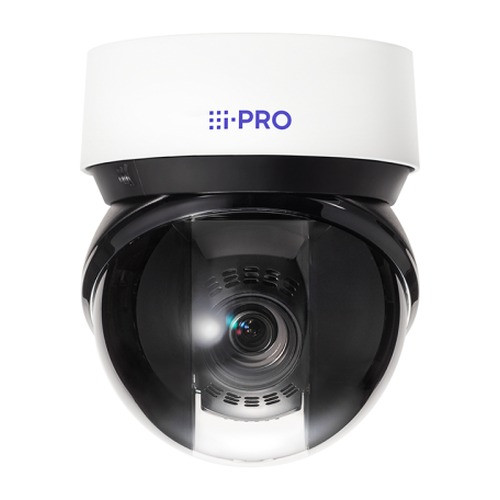
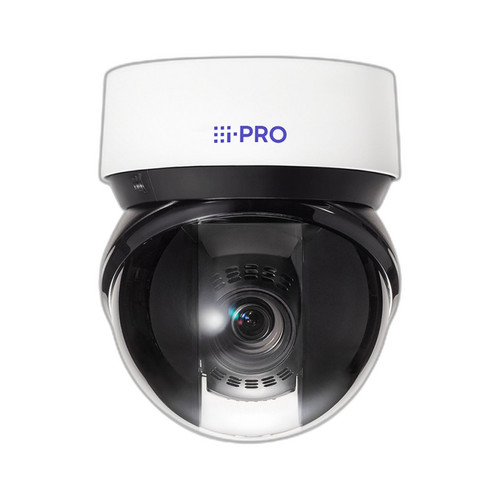
Both the i-PRO WV-S66300-Z3 and WV-X66300-Z3LS are 2MP outdoor PTZ dome cameras sharing the same 32x optical zoom lens, 1/2.8-inch CMOS sensor, and 60 fps frame rate. They are directly cross-shoppable by integrators evaluating an outdoor perimeter PTZ, with the primary differentiators being IR illumination range, finish materials, and precise power consumption. This comparison draws solely from the specifications provided for each model.
In This Guide
How do the imaging specs compare?
Both cameras use an identical 1/2.8-type CMOS sensor with a 5.57 × 3.13 mm scanning area, a 32x motorized optical zoom lens covering 4.25–136 mm (F1.6–F4.4), a minimum illumination of 0.006 lux, 144 dB Super Dynamic WDR, and a maximum frame rate of 60 fps at 1920×1080. DORI distances are identical across both models: Detect at 1,833.2 m (tele), Observe at 733.3 m (tele), Recognize at 366.6 m (tele), and Identify at 183.3 m (tele). Both support up to 48x extended zoom at 1280×720 resolution and share the same gyro-based image stabilizer and Ambarella CV25m SoC.
The most significant imaging differentiator is built-in IR illumination. The X66300-Z3LS specifies an IR LED range of 350 m at 30IRE, making it purpose-built for zero-ambient-light perimeter coverage. The S66300-Z3 lists its IR LED field as a dash (not specified), and its datasheet-derived IR distance is noted only as 3.0 m—consistent with a minimum focus distance reference rather than an illuminator range—suggesting it either lacks a long-range IR illuminator or that the IR performance is not specified in the provided data. The X66300-Z3LS also explicitly lists a 4:3 aspect ratio resolution mode (up to 2048×1536) alongside 16:9 modes, while the S66300-Z3 spec lists only 16:9 resolutions.
What about installation and environment?
Both cameras share an identical mechanical envelope: φ167 mm × 205 mm (H), dome radius SR 77.5 mm, approximate mass of 3 kg (without attachment), IP66/NEMA 4X water and dust resistance, IK10 impact resistance, and wind resistance up to 40 m/s (~89 mph). Operating temperature is –50°C to +60°C on both units, and both carry UL/c-UL (UL62368-1/CSA C22.2 No.62368-1), CE, IEC62368-1, FCC Part 15 Class A, ICES-003 Issue 7, EN55032/EN55035, and NEMA-TS2 certifications.
Power draw differs: the S66300-Z3 is specified at PoE++ 37.8 W, while the X66300-Z3LS is specified at PoE++ 802.3bt 45.9 W—a 8.1 W delta that is relevant when budgeting switch port power budgets for multi-camera deployments. Both are PoE Class 6. The X66300-Z3LS finish is listed as aluminum die cast, polycarbonate dome, and stainless steel; the S66300-Z3 finish is aluminum die cast and polycarbonate dome (stainless steel is not specified for that model).
Which fits your VMS and analytics better?
Both cameras are ONVIF Profile G/M/S/T compliant, support up to 14 simultaneous users, and are compatible with the same browser set (Edge, Firefox, Chrome) and mobile platforms (iOS 8.0+, Android). Both run the same AI analytics suite—AI Video Motion Detection, AI Face Detection, AI People Detection, AI Vehicle Detection, AI Non-Mask Detection, AI Occupancy Detection, and AI Scene Change Detection—on the Ambarella CV25m SoC. AI Sound Classification (Gunshot, Yell, Vehicle Horn, Glass Break) is listed on both. The S66300-Z3 explicitly lists FIPS 140-2 Level 3 security certification; this certification is not stated in the X66300-Z3LS spec sheet provided.
On-board storage: both support microSDXC. The X66300-Z3LS explicitly states support for cards up to 512 GB; the S66300-Z3 spec does not state a maximum card capacity. Both support the same recording modes (Manual, Alarm with pre/post, Schedule, and network-failure backup). Audio I/O is comparable on both: 3.5 mm stereo jack input and output, G.726/G.711/AAC-LC compression, and full-duplex capability. The S66300-Z3 lists 4 audio input terminals (3.5 mm stereo jack × 4 with plug-in power) versus the X66300-Z3LS which lists a single 3.5 mm stereo mini jack input—a meaningful distinction for multi-microphone or intercom wiring scenarios. Both support 3 alarm inputs and 1 alarm output; the X66300-Z3LS additionally lists 1 AUX OUT terminal.
Which should you choose: the S66300-Z3 or the X66300-Z3LS?
Our take: The X66300-Z3LS is the stronger choice when the deployment requires long-range IR illumination or operates in zero-ambient-light conditions: it specifies a 350 m IR range at 30IRE, whereas the S66300-Z3 provides no equivalent IR illuminator range in its specification data. The S66300-Z3 draws 37.8 W versus the X66300-Z3LS at 45.9 W—an 8.1 W saving per port that compounds across large switch deployments. The S66300-Z3 explicitly carries FIPS 140-2 Level 3 certification (not stated for the X66300-Z3LS) and lists four audio inputs versus one on the X66300-Z3LS, making it preferable for high-security or multi-microphone installations. Both cameras are otherwise specification-equivalent in sensor, lens, DORI, AI analytics, ONVIF, and environmental ratings. Select the X66300-Z3LS for dark-environment perimeter work; the S66300-Z3 for power-constrained or FIPS-mandated deployments.
Side-by-Side Comparison
Spec-for-spec, from manufacturer data.
| Specification | i-PRO S66300-Z3 | i-PRO X66300-Z3LS |
|---|---|---|
| Resolution | 2MP (1920×1080) | 2MP (1920×1080) |
| Image Sensor | 1/2.8-type CMOS, 5.57×3.13 mm | 1/2.8-type CMOS, 5.57×3.13 mm |
| Lens / Focal Length | 32x optical, 4.25–136 mm (F1.6–F4.4) | 32x optical, 4.25–136 mm (F1.6–F4.4) |
| Extended Zoom | Up to 48x at 1280×720 | Up to 48x at 1280×720 |
| Min. Illumination | 0.006 lux | 0.006 lux (B&W, 50IRE, F1.6, 1/30s) |
| IR Range | Not specified in provided data | 350 m at 30IRE |
| WDR (Dynamic Range) | Max. 144 dB (Super Dynamic On, Level 31) | Max. 144 dB (Super Dynamic On, Level 31) |
| Max Frame Rate | 60 fps @ 1920×1080 | 60 fps @ 1920×1080 |
| Video Compression | H.265, H.264, MJPEG | H.265, H.264, MJPEG |
| IP Rating | IP66, NEMA 4X | IP66, NEMA 4X |
| Impact Rating | IK10 (IEC 62262) | IK10 (IEC 62262) |
| Operating Temperature | –50°C to +60°C | –50°C to +60°C |
| Power / PoE Class | PoE++ 37.8 W / Class 6 | PoE++ 802.3bt 45.9 W / Class 6 |
| Edge Storage | microSDXC (max capacity not specified) | microSDXC up to 512 GB |
| Audio Inputs | 4× 3.5 mm stereo jack (plug-in power) | 1× 3.5 mm stereo mini jack |
| FIPS Certification | FIPS 140-2 Level 3 | Not stated in provided specifications |
| Finish | Aluminum die cast, polycarbonate dome | Aluminum die cast, polycarbonate dome, stainless steel |
| Dimensions | φ167 mm × 205 mm (H) | φ167 mm × 205 mm (H) |
| Weight | Approx. 3 kg (without attachment) | Approx. 3 kg (without attachment) |
| Warranty | 5-year | 5-year |
Frequently Asked Questions
Which should you choose: the S66300-Z3 or the X66300-Z3LS?
The X66300-Z3LS is the stronger choice when the deployment requires long-range IR illumination or operates in zero-ambient-light conditions: it specifies a 350 m IR range at 30IRE, whereas the S66300-Z3 provides no equivalent IR illuminator range in its specification data. The S66300-Z3 draws 37.8 W versus the X66300-Z3LS at 45.9 W—an 8.1 W saving per port that compounds across large switch deployments. The S66300-Z3 explicitly carries FIPS 140-2 Level 3 certification (not stated for the X66300-Z3LS) and lists four audio inputs versus one on the X66300-Z3LS, making it preferable for high-security or multi-microphone installations. Both cameras are otherwise specification-equivalent in sensor, lens, DORI, AI analytics, ONVIF, and environmental ratings. Select the X66300-Z3LS for dark-environment perimeter work; the S66300-Z3 for power-constrained or FIPS-mandated deployments.
Is the S66300-Z3 or X66300-Z3LS better for low-light and complete darkness?
Both cameras share an identical minimum illumination of 0.006 lux and 144 dB WDR. However, only the X66300-Z3LS specifies a built-in IR LED illuminator with a 350 m range at 30IRE. The S66300-Z3 does not list an equivalent IR illuminator range in the provided specifications, making the X66300-Z3LS the documented choice for zero-ambient-light operation at distance.
Does either camera have an advantage for cybersecurity-sensitive government or critical infrastructure projects?
The S66300-Z3 explicitly lists FIPS 140-2 Level 3 certification in addition to HTTPS and IEEE 802.1X. The X66300-Z3LS specification provided does not state FIPS 140-2 certification. Buyers with federal or FIPS-mandated requirements should verify FIPS status with i-PRO directly for the X66300-Z3LS before specifying either model.
Will my existing PoE++ switch support both cameras, and is there a power difference?
Both cameras require PoE++ (802.3bt) Class 6 infrastructure—a standard PoE or PoE+ switch will not power either unit. The S66300-Z3 draws 37.8 W and the X66300-Z3LS draws 45.9 W per port. On a 24-port deployment, the X66300-Z3LS would require approximately 194 W more total switch power budget than the S66300-Z3—a factor worth checking against your switch's per-port and total power specifications.
Get a Second Opinion on Your Camera Choice
Share your site layout, coverage goals, and budget. Our team will validate the camera selection, flag anything we would change, and recommend products that match the use case.