
i-PRO S4576LMA vs Pelco SRXF3-12360-ERS: Specification Comparison
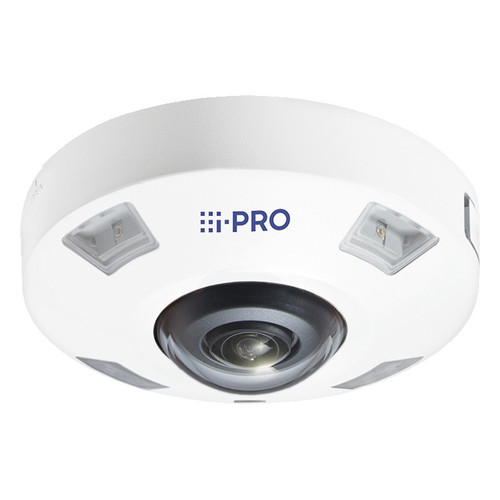
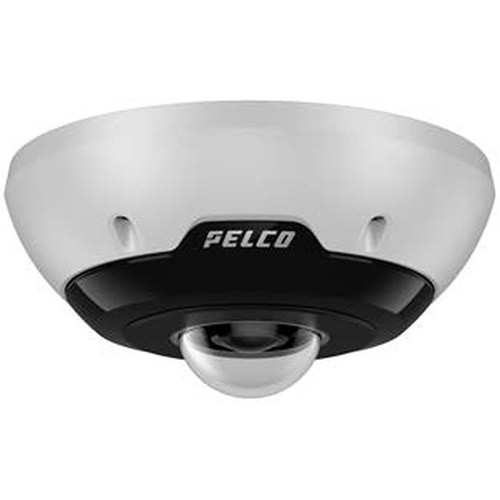
Both the i-PRO WV-S4576LMA and the Pelco SRXF3-12360-ERS are 12MP outdoor fisheye IP dome cameras designed for 360-degree panoramic surveillance. They share the same resolution class, the same fixed-camera type, and target the same perimeter and wide-area coverage use case. This comparison examines how their imaging capabilities, physical installation requirements, and VMS/analytics integration differ based strictly on published specifications, to help installers and IT buyers determine which unit better fits their deployment.
In This Guide
How do the imaging specs compare?
The i-PRO WV-S4576LMA uses an approximately 1/2-type 12MP CMOS sensor with a 1.4 mm focal length and f/1.9 maximum aperture, delivering a 183° horizontal and vertical fisheye field of view at a native resolution of 2992×2992 (fisheye) or 2560×1920 (PTZ mode), at up to 30 fps. The Pelco SRXF3-12360-ERS uses a 2.7 mm f/2.5 lens and outputs a maximum resolution of 3840×2160 (with an alternate spec of 3520×1920 referenced in field data), at 12.5 fps at full resolution. The i-PRO's wider aperture (f/1.9 vs. f/2.5) and lower minimum illumination—0.3 lx color and 0.04 lx B&W versus no minimum illumination figure published for the Pelco—indicates an advantage in low-light sensitivity for the i-PRO, though Pelco's minimum illumination spec is absent from the provided data.
The i-PRO specifies IR LED range of 14 m maximum with a dedicated anti-condensation system (Rosahl element). The Pelco provides integrated IR illumination at 850 nm, but no maximum IR range figure is stated in the provided specifications. The i-PRO's Wide Dynamic Range reaches a maximum of 84 dB (WDR level 31), while the Pelco's WDR is listed as 'Off Up to 83 dB'—a nearly identical ceiling. The i-PRO also cites an Ambarella CV22 SoC and supports up to 4x digital zoom in three steps; no SoC or digital zoom spec is published for the Pelco.
What about installation and environment?
Both cameras are rated IP66 and NEMA 4X for dust and water resistance, and both carry an IK10 impact resistance rating. Both are specified for an operating temperature range of -40°C to +60°C. The i-PRO adds wind resistance rated to 40 m/s (~89 mph), IEC 60068-2-75 shock resistance at 50J, and compliance with railway standards EN45545 and EN50155-TX—specs not published for the Pelco. The i-PRO also states an anti-condensation system (Rosahl element), which the Pelco does not reference.
The i-PRO WV-S4576LMA is powered by DC 12V or PoE IEEE 802.3af (PoE Class 0). The Pelco SRXF3-12360-ERS requires PoE+ (IEEE 802.3at, PoE Class 3), which demands a PoE+ capable switch port or injector—a meaningful infrastructure consideration. The i-PRO specifies mounting for ceiling and wall; the Pelco lists ceiling, wall, pole, pendant, and corner mounting options. The i-PRO dimensions are ø154 mm × 60.3 mm H with a 35 mm dome radius and a mass of approximately 880 g. The Pelco lists 153.5 mm × 153.5 mm × 71.3 mm and a weight of approximately 1.001 kg with wall mount.
Which fits your VMS and analytics better?
The i-PRO WV-S4576LMA supports ONVIF Profiles G, M, S, and T—the broadest ONVIF profile set of the two. The Pelco SRXF3-12360-ERS supports ONVIF Profile S and Profile T only; Profiles G and M are absent from the provided Pelco specifications. Profile G enables on-camera recording management, and Profile M covers metadata and analytics interoperability—gaps that may matter depending on VMS selection.
On-board edge analytics differ substantially. The i-PRO offers AI-VMD, AI People Counting for 360° fisheye, AI Privacy Guard, AI Scene Change Detection, and AI Sound Classification covering four event types (gunshot, yell, vehicle horn, glass break), plus Video Motion Detection across 4 zones and Scene Change Detection. The Pelco lists 'Pelco Smart Analytics; 8 behaviors' but does not enumerate those behaviors in the provided specifications. The i-PRO provides 3.5 mm audio input (stereo, plug-in power) and a 3.5 mm audio output (600Ω) with configurable volume; the Pelco notes microphone support but no audio output or line-in specifications are provided. Both cameras support microSD on-board storage. The i-PRO also lists 3 alarm inputs, 1 alarm output, and 1 AUX output on external I/O terminals; no equivalent terminal I/O count is published for the Pelco.
Which should you choose: the S4576LMA or the SRXF3-12360-ERS?
Our take: The S4576LMA is the stronger choice when AI-driven analytics depth, broader ONVIF interoperability, lower power infrastructure requirements, and harsh-environment certifications are priorities. Three concrete spec deltas stand out: first, the i-PRO runs on standard PoE 802.3af (Class 0), while the Pelco requires PoE+ 802.3at (Class 3), affecting switch selection and per-port power budgets. Second, the i-PRO delivers 30 fps at full fisheye resolution versus the Pelco's 12.5 fps—a significant difference in motion-capture smoothness. Third, the i-PRO supports ONVIF Profiles G, M, S, and T versus the Pelco's Profile S and T, adding on-camera recording management and analytics metadata integration. The Pelco's 3840×2160 max resolution output and five mounting options (including pole and pendant) may favor installations where pixel density at a specific distance or flexible mounting geometry is paramount. The i-PRO's railway-standard compliance (EN45545, EN50155-TX) and wind resistance rating make it more appropriate for transportation or exposed-infrastructure deployments.
Side-by-Side Comparison
Spec-for-spec, from manufacturer data.
| Specification | i-PRO S4576LMA | Pelco SRXF3-12360-ERS |
|---|---|---|
| Resolution | 12MP (2992×2992 fisheye) | 12MP (3840×2160 max) |
| Image Sensor | Approx. 1/2-type 12MP CMOS | — |
| Lens / Focal Length | 1.4 mm, f/1.9 | 2.7 mm, f/2.5 |
| Field of View | 183° H × 183° V | 180° / 360° |
| Min. Illumination | 0.3 lx color / 0.04 lx B&W | — |
| IR Range | 14 m max | Integrated IR 850 nm; range not specified |
| WDR | Max. 84 dB (level 31) | Up to 83 dB |
| Max Frame Rate | 30 fps | 12.5 fps at full resolution |
| Video Compression | H.265, H.264 | H.264 |
| IP Rating | IP66, NEMA 4X | IP66, NEMA 4X |
| Impact Rating | IK10 (IEC 62262) | IK10 |
| Operating Temperature | -40°C to +60°C | -40°C to +60°C |
| Power Input / PoE Class | PoE 802.3af (Class 0) or DC 12V | PoE+ 802.3at (Class 3) |
| ONVIF Profiles | G, M, S, T | S, T |
| Edge Storage | microSD | microSD |
| Audio | 3.5 mm stereo input + 3.5 mm output (600Ω) | Microphone supported; no output spec published |
| Dimensions | ø154 mm × 60.3 mm H | 153.5 mm × 153.5 mm × 71.3 mm |
| Weight | 880 g (1.94 lb) | 1.001 kg (2.21 lb) with wall mount |
| Warranty | 5-year | 5-year |
Frequently Asked Questions
Which should you choose: the S4576LMA or the SRXF3-12360-ERS?
The S4576LMA is the stronger choice when AI-driven analytics depth, broader ONVIF interoperability, lower power infrastructure requirements, and harsh-environment certifications are priorities. Three concrete spec deltas stand out: first, the i-PRO runs on standard PoE 802.3af (Class 0), while the Pelco requires PoE+ 802.3at (Class 3), affecting switch selection and per-port power budgets. Second, the i-PRO delivers 30 fps at full fisheye resolution versus the Pelco's 12.5 fps—a significant difference in motion-capture smoothness. Third, the i-PRO supports ONVIF Profiles G, M, S, and T versus the Pelco's Profile S and T, adding on-camera recording management and analytics metadata integration. The Pelco's 3840×2160 max resolution output and five mounting options (including pole and pendant) may favor installations where pixel density at a specific distance or flexible mounting geometry is paramount. The i-PRO's railway-standard compliance (EN45545, EN50155-TX) and wind resistance rating make it more appropriate for transportation or exposed-infrastructure deployments.
Is the i-PRO S4576LMA or the Pelco SRXF3-12360-ERS better for low-light performance?
Based on available specifications, the i-PRO S4576LMA has a published minimum illumination of 0.3 lx (color) and 0.04 lx (B&W), a wider maximum aperture of f/1.9 versus the Pelco's f/2.5, and a stated IR range of 14 m. The Pelco provides 850 nm integrated IR but does not publish a minimum illumination figure or a maximum IR range in the provided specifications, so a direct numerical low-light comparison cannot be completed for the Pelco.
Can both cameras run on a standard PoE switch, or do I need PoE+?
The i-PRO WV-S4576LMA operates on standard PoE (IEEE 802.3af, Class 0), so any 802.3af-compliant switch port or injector is sufficient. The Pelco SRXF3-12360-ERS is specified as PoE+ (IEEE 802.3at, Class 3) and requires a PoE+-capable switch port or injector rated for at least 30 W per port. If your existing infrastructure is standard PoE only, the i-PRO can be deployed without switch upgrades; the Pelco cannot.
Which camera offers better VMS integration through ONVIF?
The i-PRO WV-S4576LMA supports ONVIF Profiles G, M, S, and T. Profile G adds on-camera recording and playback interoperability; Profile M covers analytics metadata interoperability. The Pelco SRXF3-12360-ERS supports ONVIF Profile S and Profile T per the provided specifications, with no mention of Profile G or Profile M. For VMS platforms that leverage ONVIF G for edge recording management or ONVIF M for standardized analytics events, the i-PRO provides broader native compatibility.
Get a Second Opinion on Your Camera Choice
Share your site layout, coverage goals, and budget. Our team will validate the camera selection, flag anything we would change, and recommend products that match the use case.