
i-PRO S22500-F6L vs i-PRO X25500-V3LN: Specification Comparison
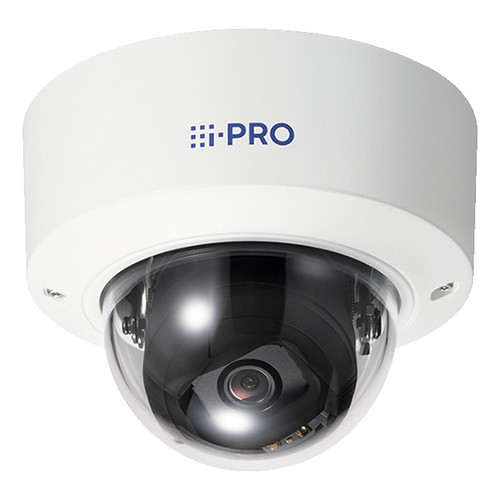
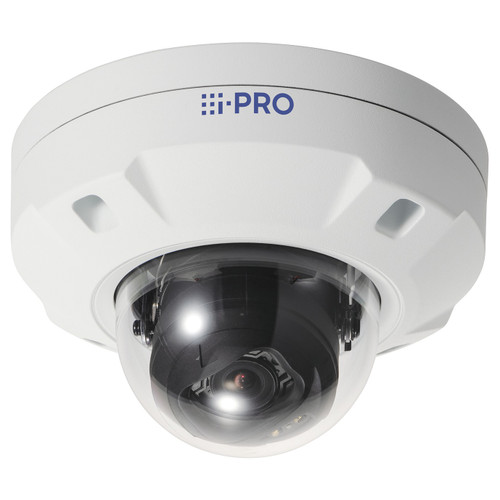
Both the i-PRO WV-S22500-F6L and WV-X25500-V3LN are 5MP fixed-lens dome cameras sharing the same 1/2.8-type CMOS sensor and 30fps frame rate, making them legitimate cross-shop candidates. The key differentiators are deployment environment (indoor IK10 vandal dome vs. outdoor-rated IP66/NEMA 4X dome), lens type (fixed 3.2mm vs. 3.1x motorized varifocal), IR range (25m vs. 70m), and power budget (PoE 802.3af vs. PoE+ 802.3at). Both carry a 5-year warranty and identical ONVIF Profile G/M/S/T support.
In This Guide
How do the imaging specs compare?
Both cameras deliver 5MP resolution at 3072×2304 (4:3) or 3072×1728 (16:9) at 30fps, and both share a 1/2.8-type CMOS sensor with a 5.12mm × 3.84mm scanning area and identical 132dB maximum Super Dynamic Range (WDR) at Level 31. Low-light performance differs meaningfully: the S22500-F6L specifies 0.08 lx (color, 30IRE, F1.6, 1/30s) and 0.07 lx (B&W), while the X25500-V3LN specifies 0.02 lx (B&W, IR LED) — the X25500-V3LN's published minimum illumination figure is lower, though the S22500-F6L spec includes a color figure the X25500-V3LN does not list. Both cameras reach 0 lx with IR active.
Lens and IR are where the two cameras diverge sharply. The S22500-F6L uses a fixed 3.2mm lens with a 48° horizontal field of view (16:9), F1.6 aperture, and integrated IR LED rated to 25m at 30IRE / 20m at 50IRE. The X25500-V3LN uses a 3.1x motorized varifocal lens covering 2.9–9mm with a 33–103° horizontal field of view range, F1.3 (wide) to F2.5 (tele) aperture, and IR LED rated to 70m at 30IRE — nearly three times the IR throw. At tele, the X25500-V3LN's DORI Detect range reaches 207.4m vs. the S22500-F6L's fixed 138m; at wide the X25500-V3LN narrows to 48.9m. The X25500-V3LN also adds an electronic image stabilizer (available at 30fps) and a newer Ambarella CV52 SoC vs. the S22500-F6L's CV22.
What about installation and environment?
The S22500-F6L is an indoor-rated camera with IK10 impact resistance (IEC 62262) and no published IP ingress rating. It operates from -10°C to +50°C (power-on: 0°C to +50°C) at 10–90% RH non-condensing. It draws power from DC 12V or PoE IEEE 802.3af (Class 0), making it compatible with standard PoE switches without budget concerns. Physical dimensions are ø129.5mm × 102.5mm (H), weighing approximately 800g. Its aluminum die-cast and polycarbonate dome construction is finished in white.
The X25500-V3LN is purpose-built for outdoor deployment: IP66/IP67 (IEC 60529), NEMA 4X (UL50E), IK10 (IEC 62262), and a 50J shock rating (IEC 60068-2-75) — significantly more robust than the S22500-F6L's 20J IK10 rating. It is rated for -40°C to +55°C (power-on: -30°C to +55°C) and up to 100% RH non-condensing, plus wind resistance to 40 m/s (~89 mph). It requires PoE+ IEEE 802.3at (Class 4) at up to 14.2W maximum — a PoE+ capable switch or injector is mandatory. It is larger at ø154mm × 105mm (H) and heavier at 1.1 kg. Its aluminum die-cast, stainless steel, and PC resin construction is also finished in white.
Which fits your VMS and analytics better?
Both cameras support ONVIF Profile G, M, S, and T, up to 14 simultaneous users, H.265/H.264/MJPEG compression with identical GOP/Smart Coding options, and up to 512GB microSDXC edge storage. Both support G.726, G.711, and full-duplex audio over a 3.5mm stereo mini jack (input and output). Both support the same IPv4 and IPv6 protocol stacks including RTSP, SRTP, MQTT, SFTP, SNMPv1/v2/v3, and IEEE 802.1X. The S22500-F6L adds FIPS 140-2 Level 3 certification and NXP SE050F hardware security element, which the X25500-V3LN spec does not list; the X25500-V3LN lists Secure Boot, which the S22500-F6L spec does not explicitly list under that label.
AI analytics on the S22500-F6L are specified as AI Motion, Face, and Vehicle Detection plus AI Sound Classification (Gunshot, Yell, Vehicle Horn, Glass Break). The X25500-V3LN lists AI Video Analytics with 8 detection types plus the same 4-category AI Sound Classification. Neither spec enumerates all 8 detection types for the X25500-V3LN beyond the named categories. The X25500-V3LN's newer CV52 SoC may underpin the broader analytics count, but the specific types beyond face/people/vehicle are not enumerated in the provided specs. VMD (4 areas), SCD (1 area), audio detection, 8 privacy zones, and 8 VIQS zones are identical on both models. Both list 3 alarm input/output terminals and 1 AUX output.
Which should you choose: the S22500-F6L or the X25500-V3LN?
Our take: The S22500-F6L is the stronger choice when the deployment is indoors, the PoE infrastructure is standard 802.3af, and hardware-root-of-trust security certification (FIPS 140-2 Level 3 / NXP SE050F) is a compliance requirement. The X25500-V3LN is the correct specification when the site is outdoors or exposed to weather, long IR throw is required, or lens flexibility matters: it delivers 70m IR vs. the S22500-F6L's 25m, a 3.1x motorized varifocal lens (2.9–9mm, 33–103° FOV) vs. the S22500-F6L's fixed 3.2mm / 48°, and an operating temperature floor of -40°C vs. -10°C. The X25500-V3LN's IP66/NEMA 4X/50J ratings vs. the S22500-F6L's indoor-only IK10 make the X25500-V3LN the only viable option for exterior or harsh environments. Budget a PoE+ switch port (802.3at, up to 14.2W) for the X25500-V3LN; the S22500-F6L runs on any 802.3af port.
Side-by-Side Comparison
Spec-for-spec, from manufacturer data.
| Specification | i-PRO S22500-F6L | i-PRO X25500-V3LN |
|---|---|---|
| Resolution | 5MP (3072×2304 max) | 5MP (3072×2304 max) |
| Image Sensor | 1/2.8-type CMOS | 1/2.8-type CMOS |
| Lens / Focal Length | Fixed, 3.2mm | Motorized varifocal, 2.9–9mm (3.1x) |
| Horizontal Field of View | 48° (16:9 fixed) | 33–103° (16:9, wide–tele) |
| Max Aperture | F1.6 | F1.3 (wide) / F2.5 (tele) |
| Min Illumination (B&W) | 0.07 lx | 0.02 lx (IR LED) |
| IR Range | 25m (30IRE) / 20m (50IRE) | 70m (30IRE) |
| Dynamic Range (WDR) | Max. 132 dB | Max. 132 dB |
| Max Frame Rate | 30fps | 30fps |
| Video Compression | H.265, H.264, MJPEG | H.265, H.264, MJPEG |
| IP Rating | — (indoor only) | IP66 / IP67 / NEMA 4X |
| IK / Impact Rating | IK10 (20J) | IK10 (50J, IEC 60068-2-75) |
| Operating Temperature | -10°C to +50°C | -40°C to +55°C |
| Power Input / PoE Class | PoE 802.3af, Class 0 | PoE+ 802.3at, Class 4 (14.2W max) |
| Edge Storage | Up to 512GB microSDXC | Up to 512GB microSDXC |
| ONVIF Profiles | G / M / S / T | G / M / S / T |
| AI Analytics | AI Motion / Face / Vehicle Detection + 4-type Sound | AI Video Analytics (8 types) + 4-type Sound |
| Hardware Security | FIPS 140-2 Level 3, NXP SE050F | Secure Boot (FIPS not listed in spec) |
| Image Stabilization | Not listed | Electronic (30fps mode) |
| Dimensions | ø129.5mm × 102.5mm (H) | ø154mm × 105mm (H) |
| Weight | approx. 800g (1.77 lbs) | approx. 1.1 kg (2.43 lbs) |
| Environment Rating | Indoor | Outdoor |
| Warranty | 5-Year | 5-Year |
Frequently Asked Questions
Which should you choose: the S22500-F6L or the X25500-V3LN?
The S22500-F6L is the stronger choice when the deployment is indoors, the PoE infrastructure is standard 802.3af, and hardware-root-of-trust security certification (FIPS 140-2 Level 3 / NXP SE050F) is a compliance requirement. The X25500-V3LN is the correct specification when the site is outdoors or exposed to weather, long IR throw is required, or lens flexibility matters: it delivers 70m IR vs. the S22500-F6L's 25m, a 3.1x motorized varifocal lens (2.9–9mm, 33–103° FOV) vs. the S22500-F6L's fixed 3.2mm / 48°, and an operating temperature floor of -40°C vs. -10°C. The X25500-V3LN's IP66/NEMA 4X/50J ratings vs. the S22500-F6L's indoor-only IK10 make the X25500-V3LN the only viable option for exterior or harsh environments. Budget a PoE+ switch port (802.3at, up to 14.2W) for the X25500-V3LN; the S22500-F6L runs on any 802.3af port.
Is the S22500-F6L or X25500-V3LN better for low-light performance?
Based on the published specs, the X25500-V3LN reaches a lower minimum illumination figure of 0.02 lx (B&W, IR LED) vs. the S22500-F6L's 0.07 lx (B&W). The X25500-V3LN also provides nearly three times the IR throw (70m vs. 25m at 30IRE). Both cameras achieve 0 lx with IR active. A color minimum illumination figure is provided for the S22500-F6L (0.08 lx) but is not listed in the X25500-V3LN spec sheet.
Can the X25500-V3LN be powered from a standard PoE switch?
No. The X25500-V3LN requires PoE+ (IEEE 802.3at, Class 4) with a maximum draw of 14.2W. A standard 802.3af PoE port delivers only 15.4W total budget at maximum and is typically not specified to meet PoE+ Class 4 requirements reliably. You must confirm your switch or injector supports IEEE 802.3at. The S22500-F6L, by contrast, operates on standard PoE IEEE 802.3af (Class 0).
Which camera is suitable for outdoor installation?
Only the X25500-V3LN is specified for outdoor use. It carries IP66/IP67 (IEC 60529), NEMA 4X (UL50E), a 50J shock rating (IEC 60068-2-75), and a -40°C to +55°C operating temperature range, plus wind resistance to 40 m/s. The S22500-F6L has no published IP ingress rating and is rated only for indoor environments (-10°C to +50°C, 10–90% RH non-condensing). Installing the S22500-F6L outdoors would place it outside its specified environmental parameters.
Get a Second Opinion on Your Camera Choice
Share your site layout, coverage goals, and budget. Our team will validate the camera selection, flag anything we would change, and recommend products that match the use case.