
i-PRO NX400/27000T3 vs i-PRO NX400/3000T3: Specification Comparison
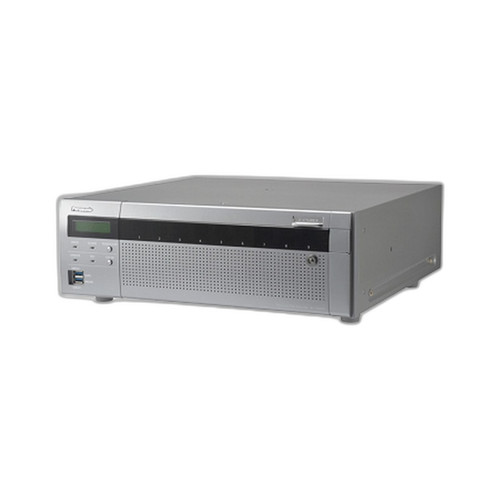
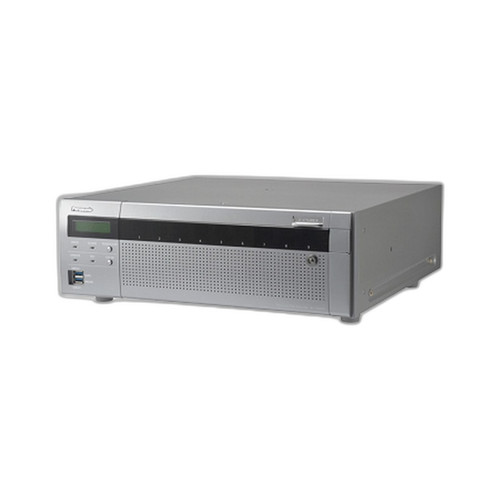
Both the WJ-NX400/27000T3 and WJ-NX400/3000T3 are i-PRO 64-channel network video recorders sharing the same NX400 platform, H.265/H.264 compression engine, ONVIF Profile S compatibility, and 12V DC power architecture. The primary differentiator is pre-installed storage: 27TB across nine drives versus 3TB across one drive. Buyers evaluating these two units are essentially choosing between a high-capacity, multi-drive deployment ready for long on-site retention and a lower-entry-cost unit sized for smaller sites or staged storage expansion.
In This Guide
- How much storage do you get out of the box, and how far can each unit scale?
- What RAID configurations are supported, and how does drive count affect redundancy options?
- What recording resolution, camera compatibility, and physical deployment options does each unit support?
- Which should you choose: the NX400/27000T3 or the NX400/3000T3?
- Side-by-Side Specs
- FAQ
How much storage do you get out of the box, and how far can each unit scale?
The WJ-NX400/27000T3 ships with 27TB of pre-installed HDD storage configured across nine 3TB drives (3TB×9), providing immediate high-retention capacity without additional procurement steps. The WJ-NX400/3000T3 ships with a single 3TB drive installed but the spec lists a maximum capacity of 324TB, indicating substantial expansion headroom through additional drives or external storage—though the spec does not detail how many drive bays are present or what expansion method achieves the 324TB ceiling.
For deployments requiring long continuous recording across all 64 channels at high resolution, the 27TB unit delivers nine times the baseline storage of the 3TB model. The 3TB model's 324TB max figure is notable for staged or budget-phased projects, but buyers should confirm drive bay count and expansion chassis compatibility with i-PRO before relying on that ceiling, as neither spec sheet documents the physical expansion path in detail.
What RAID configurations are supported, and how does drive count affect redundancy options?
Both units list identical RAID support: RAID 0, 1, 5, 6, and 10. However, the practical application of these modes differs significantly based on installed drive count. The WJ-NX400/27000T3, with nine drives pre-installed, can immediately be configured in RAID 5 (requiring a minimum of three drives), RAID 6 (minimum four drives), or RAID 10 (minimum four drives), enabling genuine fault-tolerant configurations without adding hardware at commissioning time.
The WJ-NX400/3000T3 ships with a single 3TB drive. RAID 1, 5, 6, and 10 all require at least two drives; a single-drive system can only run RAID 0 (no redundancy) or operate outside RAID altogether until additional drives are installed. Buyers requiring immediate RAID redundancy at installation must factor in the cost and lead time of additional drives for the 3TB model. The 27TB unit is operationally redundancy-ready on delivery.
What recording resolution, camera compatibility, and physical deployment options does each unit support?
The WJ-NX400/27000T3 spec explicitly documents 4K (3840×2160) recording resolution at up to 60 fps per camera channel, along with HDMI output, H.265/H.264/JPEG compression, PTZ camera control (pan, tilt, zoom, focus, brightness, up to 256 preset positions), audio support (G.711, G.726 ADPCM 32 kbps, −10 dBv RCA output), and alarm I/O of 32 alarm inputs and 4 alarm reset inputs. Physical dimensions are documented at 430mm (W) × 132mm (H) × 400mm (D) in a rack-mount form factor. ONVIF Profile S and standalone (non-VMS) operation are listed.
The WJ-NX400/3000T3 spec lists H.265/H.264/MJPEG compression and ONVIF Profile S, and notes compatibility with 'major VMS platforms'—a broader VMS integration claim not present in the 27000T3 spec. However, the 3000T3 spec lists a maximum resolution of only 2MP, and does not document 4K recording capability, PTZ control parameters, alarm I/O counts, audio specs, HDMI output, or physical dimensions. Buyers requiring confirmed 4K recording or detailed PTZ/alarm integration specs should note that these are only documented for the 27000T3. The 3000T3 mount type is listed as Rack or Shelf, while the 27000T3 is specified as an embedded rack-mount NVR.
Which should you choose: the NX400/27000T3 or the NX400/3000T3?
Our take: The WJ-NX400/27000T3 is the stronger choice when immediate high-capacity, fault-tolerant recording at 4K resolution is required at commissioning. Its 27TB pre-installed storage (versus 3TB on the 3000T3) eliminates upfront drive procurement for high-retention sites, and its nine-drive configuration allows RAID 5, 6, or 10 to be activated without additional hardware—whereas the single-drive 3000T3 cannot support any redundant RAID mode out of the box. The 27000T3 also has documented 4K/60fps recording, 32 alarm inputs, PTZ control for up to 256 presets, and audio I/O—none of which are confirmed in the 3000T3 spec. The WJ-NX400/3000T3 is better suited to budget-phased deployments or smaller sites where 3TB suffices initially and storage will be added over time; its 324TB maximum capacity and noted compatibility with major VMS platforms offer scalability and integration flexibility, though both the expansion path and VMS specifics require verification with i-PRO.
Side-by-Side Comparison
Spec-for-spec, from manufacturer data.
| Specification | i-PRO NX400/27000T3 | i-PRO NX400/3000T3 |
|---|---|---|
| Camera Channels | 64 | 64 |
| Pre-Installed Storage | 27TB (3TB×9) | 3TB (3TB×1) |
| Maximum Storage Capacity | — | 324TB |
| RAID Support | RAID 0, 1, 5, 6, 10 | RAID 0, 1, 5, 6, 10 |
| Recording Resolution | 4K (3840×2160) | 2MP (per spec) |
| Max Frame Rate | 60 fps per camera | — |
| Video Compression | H.265; H.264; JPEG | H.265; H.264; MJPEG |
| ONVIF | Profile S | Profile S |
| VMS Compatibility | Standalone (non-VMS) | Major VMS platforms |
| Alarm Inputs | 32 | — |
| Alarm Reset Inputs | 4 | — |
| PTZ Control | Pan/Tilt/Zoom/Focus/Brightness; up to 256 presets | — |
| Audio | G.711; G.726 ADPCM 32 kbps; −10 dBv RCA output | — |
| Local Storage | microSD | microSD |
| Power | 12V DC | 12V DC |
| Dimensions | 430mm (W) × 132mm (H) × 400mm (D) | — |
| Form Factor / Mount | Embedded NVR (rack-mount) | Rack; Shelf |
| Housing Color | White | White |
Frequently Asked Questions
Which should you choose: the NX400/27000T3 or the NX400/3000T3?
The WJ-NX400/27000T3 is the stronger choice when immediate high-capacity, fault-tolerant recording at 4K resolution is required at commissioning. Its 27TB pre-installed storage (versus 3TB on the 3000T3) eliminates upfront drive procurement for high-retention sites, and its nine-drive configuration allows RAID 5, 6, or 10 to be activated without additional hardware—whereas the single-drive 3000T3 cannot support any redundant RAID mode out of the box. The 27000T3 also has documented 4K/60fps recording, 32 alarm inputs, PTZ control for up to 256 presets, and audio I/O—none of which are confirmed in the 3000T3 spec. The WJ-NX400/3000T3 is better suited to budget-phased deployments or smaller sites where 3TB suffices initially and storage will be added over time; its 324TB maximum capacity and noted compatibility with major VMS platforms offer scalability and integration flexibility, though both the expansion path and VMS specifics require verification with i-PRO.
Is the WJ-NX400/27000T3 or WJ-NX400/3000T3 better for large-scale deployments requiring long video retention?
The WJ-NX400/27000T3 is better suited to large-scale, high-retention deployments. It ships with 27TB pre-installed across nine drives and supports RAID 5, 6, and 10 immediately at installation—providing both capacity and redundancy on day one. The WJ-NX400/3000T3 ships with only 3TB on a single drive, meaning RAID redundancy requires additional drives before it can be activated, and storage expansion to its listed 324TB maximum requires additional hardware whose configuration is not detailed in the provided spec.
Does the WJ-NX400/3000T3 support 4K recording like the WJ-NX400/27000T3?
Based on the provided specifications, 4K (3840×2160) recording at up to 60 fps is documented only for the WJ-NX400/27000T3. The WJ-NX400/3000T3 spec lists a maximum resolution of 2MP and does not document 4K capability. Buyers requiring confirmed 4K recording should verify the 3000T3's resolution ceiling directly with i-PRO before specifying it for 4K camera deployments.
Can both NVRs integrate with third-party cameras and external VMS software?
Both units list ONVIF Profile S compliance, which enables integration with ONVIF-compatible third-party IP cameras without proprietary gateways. The WJ-NX400/27000T3 spec notes standalone (non-VMS) operation and ONVIF Profile S. The WJ-NX400/3000T3 spec additionally notes compatibility with 'major VMS platforms,' suggesting broader third-party VMS support—though specific VMS names are not listed in either spec. Buyers with an existing enterprise VMS should confirm compatibility with i-PRO for the specific platform in use.
Get a Second Opinion on Your Camera Choice
Share your site layout, coverage goals, and budget. Our team will validate the camera selection, flag anything we would change, and recommend products that match the use case.