
Honeywell CW45-X0N-AND10SG vs Unitech HT730-LJ6142BG: Specification Comparison
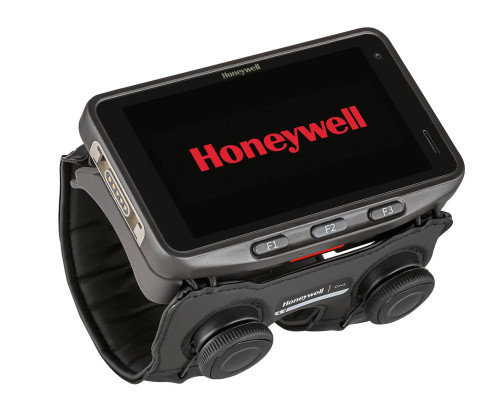
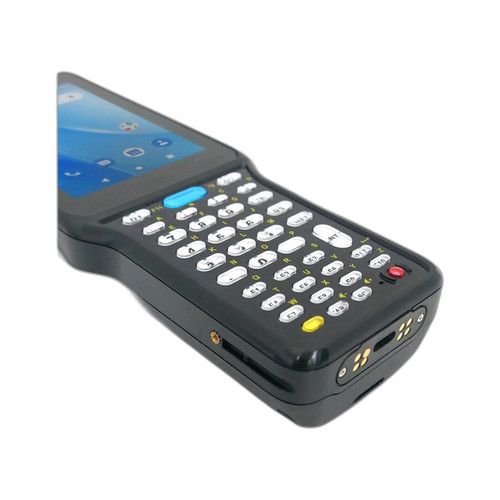
Both the Honeywell CW45-X0N-AND10SG and the Unitech HT730-LJ6142BG are Android-based wearable devices targeting hands-free warehouse and field operations, placing them in the same general cross-shop category. The CW45 is a full wearable mobile computer with a Qualcomm octa-core processor, 6 GB RAM, and WiFi 6, while the HT730 is a wearable 2D scanner with a 47-key keypad, 4G dual-SIM support, and a high-capacity 6700 mAh battery. This comparison evaluates processing and display capability, scanning and battery endurance, and wireless connectivity across both units.
In This Guide
- Which device offers more processing power and display capability for WMS and real-time data tasks?
- How do the two units compare on scanning capability and battery life for full-shift warehouse use?
- Which unit provides broader wireless connectivity and stronger drop and environmental protection?
- Which should you choose: the CW45-X0N-AND10SG or the HT730-LJ6142BG?
- Side-by-Side Specs
- FAQ
Which device offers more processing power and display capability for WMS and real-time data tasks?
The CW45-X0N-AND10SG is built around a Qualcomm QCS4290 Octa-Core 2.0 GHz processor paired with 6 GB RAM and 64 GB onboard flash storage, supplemented by microSD expansion. Its 4.7-inch HD display uses Corning Gorilla Glass 5. These specifications position it as a capable mobile computer for running warehouse management system (WMS) clients, voice-directed picking apps, or other compute-intensive applications directly on the device.
The HT730-LJ6142BG provides a 4-inch screen and runs Android 10. Its processor, RAM, and onboard storage are not stated in the available specifications. This makes a direct numerical comparison of processing capability impossible. Buyers evaluating the HT730 for WMS client tasks should verify CPU and RAM specifications directly with Unitech before deployment.
How do the two units compare on scanning capability and battery life for full-shift warehouse use?
The HT730-LJ6142BG carries a dedicated 2D imaging engine scanning at 60 fps, reading QR Code, Data Matrix, PDF417, Dot Code, Code 128, Code 39, UPC, EAN, and linear 1D barcodes. Its 30-degree tilt-down scan pattern is purpose-designed for wearable ergonomics. Battery capacity is 6700 mAh with a stated continuous-operation life of 20–26 hours. The battery is described as removable.
The CW45-X0N-AND10SG relies on a 13 MP side-mounted camera for barcode capture rather than a discrete scan engine; frame rate and decode depth across symbology sets are not specified. Its standard battery is 3400 mAh — roughly half the HT730's capacity — and is described as hot-swappable. Battery life in hours is not stated in the provided specifications. Buyers in high-volume scanning environments should note that the HT730's purpose-built 2D engine and nearly double battery capacity are concrete advantages for sustained scan-intensive workflows.
The CW45 additionally includes an 8 MP front camera and a 13 MP side camera, supporting use cases beyond barcode capture such as proof-of-delivery photography or video calling, which the HT730 specs do not address for the front-facing position.
Which unit provides broader wireless connectivity and stronger drop and environmental protection?
The CW45-X0N-AND10SG supports WiFi 6 (802.11 a/b/g/n/ac/ax), Bluetooth 5.1 BLE, NFC, and USB. It carries dual IP65/IP67 ratings and is tested to MIL-STD-810H. Operating temperature is rated at -20 to 50 °C (-4 to 122 °F) and storage temperature at -30 to 70 °C. A drop rating in meters is not stated in the provided specifications.
The HT730-LJ6142BG supports WiFi 2×2 MU-MIMO, 4G dual-SIM, and Bluetooth (standard; version not specified). The inclusion of 4G dual-SIM is a meaningful differentiator for deployments that require cellular connectivity in areas with poor Wi-Fi coverage, such as yard management or cross-dock operations. Drop rating is 1.8 m (6 ft) to concrete, extendable to 2.4 m with an optional bumper. IP rating, operating temperature range, and MIL-STD certification are not stated in the available specifications for the HT730.
NFC is confirmed only on the CW45. Bluetooth version is confirmed only on the CW45 (5.1 BLE). Buyers requiring NFC for asset tagging or access control must note the HT730's NFC support is unspecified.
Which should you choose: the CW45-X0N-AND10SG or the HT730-LJ6142BG?
Our take: The CW45-X0N-AND10SG is the stronger choice when the deployment demands a full mobile computing platform — running WMS clients, multi-app workflows, or voice-directed picking — combined with certified environmental ruggedness (IP65/IP67, MIL-STD-810H) and the latest wireless standard (WiFi 6, Bluetooth 5.1 BLE, NFC). Its Qualcomm Octa-Core 2.0 GHz / 6 GB RAM spec is confirmed; the HT730 does not disclose CPU or RAM. Conversely, the HT730-LJ6142BG holds three concrete advantages: a purpose-built 2D scan engine at 60 fps with a wider confirmed symbology set, a 6700 mAh battery rated for 20–26 hours of continuous use versus the CW45's 3400 mAh with no hour rating stated, and integrated 4G dual-SIM for cellular fallback the CW45 does not offer. For high-volume scan-only operations with cellular coverage requirements and full-shift battery demands, the HT730 is the more purpose-fit tool. For compute-heavy, multi-function wearable computing in Wi-Fi-covered facilities, the CW45 is better suited.
Side-by-Side Comparison
Spec-for-spec, from manufacturer data.
| Specification | Honeywell CW45-X0N-AND10SG | Unitech HT730-LJ6142BG |
|---|---|---|
| Product Type | Wearable Mobile Computer | Wearable 2D Scanner |
| Operating System | Android (non-GMS) | Android 10 |
| Processor | Qualcomm QCS4290 Octa-Core 2.0 GHz | — |
| RAM | 6 GB | — |
| Onboard Storage | 64 GB Flash + microSD | — |
| Display Size | 4.7 in HD Gorilla Glass 5 | 4 in |
| Scan Engine | 13 MP side camera (camera-based) | 2D Imager, 60 fps |
| Symbologies | — | QR, Data Matrix, PDF417, Code 128, Code 39, UPC, EAN, Dot Code |
| Battery Capacity | 3400 mAh (hot-swappable) | 6700 mAh (removable) |
| Battery Life (stated) | — | 20–26 hours continuous |
| Wi-Fi | WiFi 6 (802.11 a/b/g/n/ac/ax) | WiFi 2×2 MU-MIMO |
| Cellular | — | 4G dual-SIM |
| Bluetooth | 5.1 BLE | Bluetooth (version not specified) |
| NFC | Yes | — |
| Drop Rating | — | 1.8 m (2.4 m with bumper) |
| IP Rating | IP65 / IP67 | — |
| MIL-STD | MIL-STD-810H | — |
| Operating Temperature | -20 to 50 °C (-4 to 122 °F) | — |
| Keypad | — | 47-key |
| Camera | 8 MP front, 13 MP side | 13 MP |
| Weight | 263 g (9.3 oz) with standard battery | — |
| Mount Type | Arm Mount | Wearable Handheld |
Frequently Asked Questions
Which should you choose: the CW45-X0N-AND10SG or the HT730-LJ6142BG?
The CW45-X0N-AND10SG is the stronger choice when the deployment demands a full mobile computing platform — running WMS clients, multi-app workflows, or voice-directed picking — combined with certified environmental ruggedness (IP65/IP67, MIL-STD-810H) and the latest wireless standard (WiFi 6, Bluetooth 5.1 BLE, NFC). Its Qualcomm Octa-Core 2.0 GHz / 6 GB RAM spec is confirmed; the HT730 does not disclose CPU or RAM. Conversely, the HT730-LJ6142BG holds three concrete advantages: a purpose-built 2D scan engine at 60 fps with a wider confirmed symbology set, a 6700 mAh battery rated for 20–26 hours of continuous use versus the CW45's 3400 mAh with no hour rating stated, and integrated 4G dual-SIM for cellular fallback the CW45 does not offer. For high-volume scan-only operations with cellular coverage requirements and full-shift battery demands, the HT730 is the more purpose-fit tool. For compute-heavy, multi-function wearable computing in Wi-Fi-covered facilities, the CW45 is better suited.
Which device has a longer battery life for a full warehouse shift?
Based on available specifications, the HT730-LJ6142BG has a larger battery at 6700 mAh with a stated runtime of 20–26 hours of continuous operation. The CW45-X0N-AND10SG uses a 3400 mAh hot-swappable battery; a runtime figure in hours is not provided in the available specifications. The CW45's hot-swap capability can mitigate capacity differences if spare batteries are stocked, but the HT730's raw capacity is nearly double.
Is either device suitable for locations without Wi-Fi infrastructure, such as outdoor yards or loading docks?
The HT730-LJ6142BG supports 4G dual-SIM in addition to Wi-Fi, making it usable in areas without reliable wireless LAN coverage. The CW45-X0N-AND10SG specifications list Wi-Fi, Bluetooth, and USB connectivity; cellular capability is not stated, limiting it to Wi-Fi-covered environments.
Which unit is better for scanning a wide variety of barcode types at high speed?
The HT730-LJ6142BG uses a dedicated 2D imaging engine scanning at 60 fps and confirms support for QR Code, Data Matrix, PDF417, Dot Code, Code 128, Code 39, UPC, and EAN. The CW45-X0N-AND10SG uses a 13 MP side-mounted camera for barcode capture; scan frame rate and full symbology support are not specified in the available data. For high-volume, mixed-symbology scanning, the HT730's purpose-built engine and confirmed decode list offer a clearer specification basis.
More Mobile Computer Comparisons
- Honeywell CW45-X0N-AND10XG vs Unitech HT730-LJ6122BG
- Honeywell CW45-X0N-AND10XG vs Unitech HT730-LJ6142BG
- Honeywell CW45-X0N-AND10XG vs Unitech HT330-QA62TM3G-Z3
- Honeywell CW45-X0N-AND10XG vs Zebra TC2205-0G1250SS-US
- Honeywell CW45-X0N-AND10XG vs Honeywell CW45-X0N-AND10SG
- Honeywell CW45-X0N-AND10XG vs Honeywell CW45-X0N-BND10XG
Mobile Computer Buying Guides
Get a Second Opinion on Your Camera Choice
Share your site layout, coverage goals, and budget. Our team will validate the camera selection, flag anything we would change, and recommend products that match the use case.