
Hanwha XNP-8300RW vs i-PRO X66600-Z3S: Specification Comparison
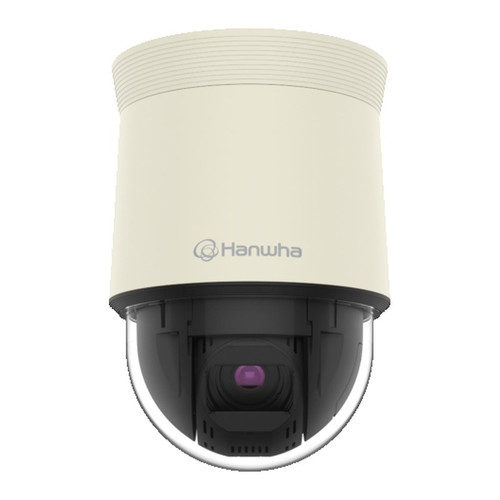
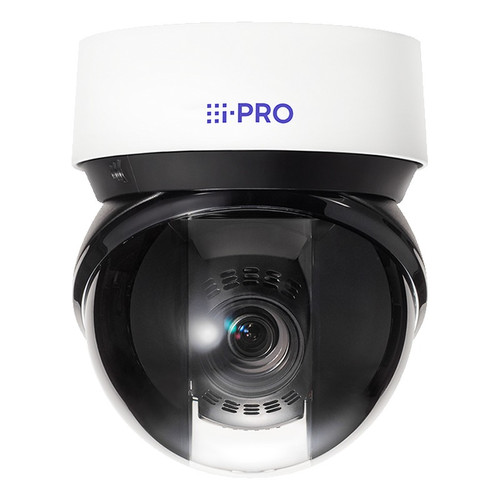
Both the Hanwha XNP-8300RW and the i-PRO WV-X66600-Z3S are 6MP outdoor PTZ network cameras designed for wide-area perimeter surveillance, each offering 30x optical zoom, AI-assisted analytics, and rugged weatherproof housings. This comparison examines how their imaging capabilities, installation requirements, and integration profiles differ across the specifications provided, giving installers and IT buyers a direct, data-driven basis for evaluating which unit better fits a given deployment scenario.
In This Guide
How do the imaging specs compare?
Both cameras share a 1/2.8-inch CMOS sensor at 6MP (3328×1872) and 30fps. The Hanwha XNP-8300RW uses a 5–150mm lens at F1.6 (wide) to F4.56 (tele), while the i-PRO WV-X66600-Z3S uses a 4.5–135mm lens at F1.8 (wide) to F4.7 (tele). The XNP-8300RW's wider maximum aperture (F1.6 vs F1.8) offers a marginal low-light advantage, and both cameras spec 0.1 Lux minimum illumination in color mode. The i-PRO spec lists 0.1 Lux only for BW mode at F1.8; a color-mode illumination figure is not stated in the provided specs. The XNP-8300RW additionally specifies 0 Lux with IR active.
On dynamic range, the XNP-8300RW is rated at Extreme WDR (120dB), while the i-PRO WV-X66600-Z3S claims up to 132dB Super Dynamic (at Level 31). The XNP-8300RW includes a built-in wiper for lens clearing and IR illumination to 200m (656ft). The i-PRO spec provides an IR distance listed as 3.0m in the provided data — this likely represents the minimum focus distance rather than an IR illumination range, and no maximum IR throw distance is given in the provided i-PRO specs. For DORI, the XNP-8300RW identifies at 348.2m (tele) vs the i-PRO's 305.0m (tele), a roughly 14% advantage at telephoto. Pan speed on the XNP-8300RW reaches 500°/sec (manual) versus the i-PRO's preset speed of 700°/sec, with the i-PRO's manual pan capped at 150°/sec compared to the Hanwha's 250°/sec.
What about installation and environment?
Both cameras carry IP66 and IK10 ratings and are rated for NEMA-TS2 traffic/transportation deployments. The XNP-8300RW adds NEMA4X certification and UL CAP cybersecurity compliance. Operating temperature for the XNP-8300RW is specified at −40°C to +55°C, while the i-PRO WV-X66600-Z3S specifies −50°C to +60°C (with power-on operation from −30°C to +60°C) — giving the i-PRO a broader storage and cold-storage range but a narrower powered operating floor. The i-PRO also specifies a wind resistance rating of up to 40 m/s (approx. 89 mph), a figure not provided in the Hanwha specs.
The XNP-8300RW is a larger unit at Ø184.9×318.8mm weighing 5.4kg, versus the i-PRO's Ø167×205mm at approximately 3.0kg — a meaningful difference for pole or parapet mounts. Both are PoE++ (IEEE 802.3bt, Class 6) powered. The XNP-8300RW specifies a maximum draw of 42W (typical 20W), while the i-PRO specifies 37.8W. The XNP-8300RW ships with an HPoE injector included; the i-PRO includes no such statement in the provided specs. The XNP-8300RW includes a built-in wiper; no wiper is noted in the i-PRO provided specs.
Which fits your VMS and analytics better?
The XNP-8300RW supports ONVIF Profile S/G/T, while the i-PRO WV-X66600-Z3S supports ONVIF Profile G/M/S/T — the i-PRO adds Profile M, which includes metadata streaming for AI analytics over ONVIF. Both support H.265, H.264, and MJPEG. The XNP-8300RW uses Hanwha WiseStream II smart codec; the i-PRO uses GOP-control-based smart coding. The XNP-8300RW supports up to 20 unicast users and 128 multicast users with up to 10 streaming profiles; the i-PRO supports up to 14 simultaneous users. The i-PRO adds MQTT and NTCIP protocol support (not present in Hanwha's stated protocol list), relevant for traffic management and IoT integrations.
For AI analytics, the XNP-8300RW provides directional detection, fog detection, face detection, appear/disappear, enter/exit, and object auto-tracking (person/vehicle) with target lock. The i-PRO WV-X66600-Z3S provides AI motion, privacy masking, face detection, people and vehicle detection, plus AI sound classification (gunshot, yell, vehicle horn, glass break) — a capability not present in the Hanwha's stated specs. Both offer audio I/O: the XNP-8300RW notes audio input capability; the i-PRO specifies a 3.5mm stereo audio input and mono audio output with full-duplex support. Edge storage on the XNP-8300RW supports up to 1TB across two microSD/SDHC/SDXC slots; the i-PRO supports a single card up to 512GB microSDXC. The i-PRO carries a stated 5-year warranty; no warranty duration is specified in the provided Hanwha specs.
Which should you choose: the XNP-8300RW or the X66600-Z3S?
Our take: The XNP-8300RW is the stronger choice when long-range IR illumination, built-in wiper operation, and high-concurrency streaming are primary requirements. Its 200m IR throw versus no stated IR range on the i-PRO, dual-slot edge storage up to 1TB versus the i-PRO's single-slot 512GB maximum, and support for up to 20 unicast/128 multicast streams versus the i-PRO's 14-user cap are concrete differentiators. Conversely, the i-PRO WV-X66600-Z3S edges ahead on dynamic range (132dB vs 120dB), preset pan speed (700°/sec vs 500°/sec), and adds AI sound classification, ONVIF Profile M metadata streaming, MQTT/NTCIP protocol support, and a stated 5-year warranty — advantages that matter for analytics-forward VMS integrations, traffic systems, and lifecycle cost planning. Choose the XNP-8300RW for IR-dependent wide-area sites; choose the WV-X66600-Z3S for analytics-rich or multi-protocol infrastructure deployments.
Side-by-Side Comparison
Spec-for-spec, from manufacturer data.
| Specification | Hanwha XNP-8300RW | i-PRO X66600-Z3S |
|---|---|---|
| Resolution | 6MP (3328×1872) | 6MP (3328×1872) |
| Image Sensor | 1/2.8" CMOS | Approx. 1/2.8" type CMOS |
| Lens / Focal Length | 5–150mm DC auto iris (30x optical) | 4.5–135mm motorized (30x optical) |
| Max. Aperture (Wide) | F1.6 | F1.8 |
| Min. Illumination | 0.1 Lux (color); 0 Lux (IR on) | 0.1 Lux (BW, F1.8, 1/30s); color not stated |
| IR Illumination Range | 200m (656ft) | Not stated in provided specs |
| Wide Dynamic Range | Extreme WDR — 120dB | Super Dynamic — up to 132dB |
| Max Frame Rate | 30fps | 30fps |
| Video Compression | H.265 / H.264 / MJPEG / WiseStream II | H.265 / H.264 / MJPEG / GOP Smart Coding |
| ONVIF Profiles | S / G / T | G / M / S / T |
| AI Analytics | Person/vehicle tracking, face, enter/exit, fog, directional | AI motion, face, people, vehicle; AI sound classification |
| Audio | Audio input | 3.5mm stereo in; mono out; full duplex |
| Pan Speed (Preset / Manual) | 500°/sec max / 0.024–250°/sec | 700°/sec / 0.065–150°/sec |
| IP / IK Rating | IP66 / IK10 | IP66 / IK10 |
| Operating Temperature | −40°C to +55°C | Power-on: −30°C to +60°C |
| Power Input | HPoE IEEE 802.3bt Class 6 (max 42W); injector included | PoE++ IEEE 802.3bt Class 6 (37.8W) |
| Edge Storage | 2× microSD/SDHC/SDXC slots; up to 1TB | 1× microSDXC slot; up to 512GB |
| Dimensions | Ø184.9 × 318.8mm | Ø167 × 205mm |
| Weight | 5.4kg (11.90lb) | Approx. 3.0kg |
| Warranty | Not stated in provided specs | 5-Year |
Frequently Asked Questions
Which should you choose: the XNP-8300RW or the X66600-Z3S?
The XNP-8300RW is the stronger choice when long-range IR illumination, built-in wiper operation, and high-concurrency streaming are primary requirements. Its 200m IR throw versus no stated IR range on the i-PRO, dual-slot edge storage up to 1TB versus the i-PRO's single-slot 512GB maximum, and support for up to 20 unicast/128 multicast streams versus the i-PRO's 14-user cap are concrete differentiators. Conversely, the i-PRO WV-X66600-Z3S edges ahead on dynamic range (132dB vs 120dB), preset pan speed (700°/sec vs 500°/sec), and adds AI sound classification, ONVIF Profile M metadata streaming, MQTT/NTCIP protocol support, and a stated 5-year warranty — advantages that matter for analytics-forward VMS integrations, traffic systems, and lifecycle cost planning. Choose the XNP-8300RW for IR-dependent wide-area sites; choose the WV-X66600-Z3S for analytics-rich or multi-protocol infrastructure deployments.
Is the XNP-8300RW or WV-X66600-Z3S better for low-light and nighttime surveillance?
Both cameras specify 0.1 Lux minimum illumination. The XNP-8300RW adds a 0 Lux rating with IR active and provides a stated IR illumination range of 200m (656ft); the i-PRO WV-X66600-Z3S does not specify a maximum IR throw distance in the provided specs. The XNP-8300RW also has a slightly wider maximum aperture (F1.6 vs F1.8). For sites requiring confirmed long-range IR coverage, the XNP-8300RW has the stronger documented specification.
Which camera is easier to integrate into an existing VMS or smart-city platform?
The i-PRO WV-X66600-Z3S supports ONVIF Profile M (metadata streaming for AI analytics) in addition to G/S/T, and adds MQTT and NTCIP protocol support — both absent from the XNP-8300RW's stated protocol list. For VMS platforms leveraging ONVIF metadata or IoT/traffic management infrastructure using MQTT or NTCIP, the i-PRO offers broader native protocol alignment. Both cameras support ONVIF Profile S/G/T for standard VMS integration.
Which PTZ is better suited for harsh outdoor environments with extreme temperatures?
The i-PRO WV-X66600-Z3S specifies a wider storage/ambient temperature range (−50°C to +60°C) and a wind resistance rating of up to 40 m/s (~89 mph), neither of which is matched by stated figures in the Hanwha specs. However, the XNP-8300RW specifies a powered operating floor of −40°C versus the i-PRO's −30°C power-on minimum, making it the documented choice for sites that must operate at extreme cold. Both carry IP66 and IK10 ratings.
Get a Second Opinion on Your Camera Choice
Share your site layout, coverage goals, and budget. Our team will validate the camera selection, flag anything we would change, and recommend products that match the use case.