
Hanwha XNP-8300RW vs i-PRO X66600-Z3K: Specification Comparison
Both the Hanwha XNP-8300RW and the i-PRO WV-X66600-Z3K are outdoor 6MP PTZ network cameras targeting perimeter and wide-area surveillance installations. They share the same resolution class (3328×1872), the same 30x optical zoom tier, and comparable pan/tilt ranges, making them direct cross-shop candidates for integrators evaluating AI-capable PTZ platforms. This comparison is drawn strictly from the manufacturer specifications provided for each unit.
In This Guide
How do the imaging specs compare?
Both cameras use a 1/2.8-inch CMOS sensor at 6MP (3328×1872) and deliver 30x optical zoom, but their lens ranges differ: the XNP-8300RW spans 5–150mm (F1.6 wide, F4.56 tele), while the X66600-Z3K spans 4.5–135mm (F1.8 wide, F4.7 tele). The XNP-8300RW's wider maximum aperture of F1.6 versus F1.8 gives it a modest light-gathering advantage at wide angle. Minimum illumination is specified at 0.1 lux color / 0 lux IR for the XNP-8300RW; the X66600-Z3K's minimum illumination figure is not provided in the available specifications. The XNP-8300RW also lists a total zoom of 960x (30x optical × 32x digital), whereas the X66600-Z3K lists 78x extra zoom (at 1280×720) and 78x–480x digital zoom.
For IR illumination, the XNP-8300RW specifies a 200m Wise IR range, a substantial reach for open-area perimeter work. The X66600-Z3K lists only 3.0m IR illumination — a figure that appears unusually short for a full outdoor PTZ and may represent a specification gap or an auxiliary IR source; buyers should verify directly with i-PRO. WDR is specified at Extreme WDR (120dB) for the XNP-8300RW; the X66600-Z3K lists WDR as a feature but no dB value is provided in the available specifications. Both cameras include digital image stabilization. The XNP-8300RW adds a built-in gyro sensor explicitly; the X66600-Z3K lists image stabilization support without specifying the implementation method.
What about installation and environment?
Both units carry IP66 and IK10 ratings. The XNP-8300RW additionally holds NEMA 4X and NEMA-TS 2 (2.2.8, 2.2.9) certifications, relevant for U.S. traffic and roadway deployments. The X66600-Z3K adds a wind resistance rating of up to 40 m/s, which the XNP-8300RW does not specify. Operating temperature for the XNP-8300RW is −40°C to +55°C; the X66600-Z3K extends the lower bound to −50°C and the upper bound to +60°C, an advantage in extreme cold or heat environments.
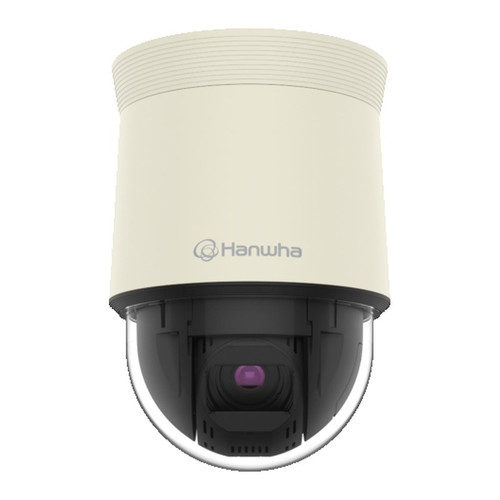
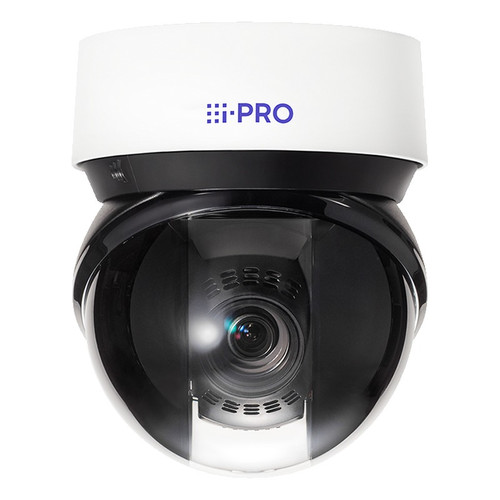
Power is HPoE/PoE++ (IEEE 802.3bt, Class 6, Type 3) for the XNP-8300RW, with a maximum draw of 42W and an injector included. The X66600-Z3K accepts PoE++ (IEEE 802.3bt) or DC 54V, with a maximum draw of approximately 37.8W — the lower ceiling may ease switch budget planning. The XNP-8300RW also includes a mechanical wiper for lens cleaning, a feature not listed for the X66600-Z3K. Form factor differs: the XNP-8300RW is a bullet/pod-style PTZ (Ø184.9×318.8mm, 5.4kg), while the X66600-Z3K is a dome-style PTZ (167mm diameter × 205mm height, approximately 3kg), making the i-PRO noticeably lighter and more compact.
Which fits your VMS and analytics better?
Both cameras support ONVIF Profile S, G, and T, ensuring broad VMS compatibility. The XNP-8300RW adds ONVIF Profile M and Wisenet SUNAPI (HTTP API) plus Wisenet open platform support. The X66600-Z3K also lists ONVIF Profile M. Edge analytics differ in architecture: the XNP-8300RW specifies on-board AI functions including directional detection, fog detection, face detection, appear/disappear, enter/exit, object auto-tracking (person/vehicle), and target lock tracking — all enumerated as built-in. The X66600-Z3K supports up to 3 concurrent edge AI applications on an Ambarella CV22 SoC, with facial recognition listed; the open-application architecture allows third-party AI models to be loaded, which may offer greater flexibility for specialized deployments.
For audio, the XNP-8300RW lists an audio input (full bidirectional spec requires the optional NW I/O Box per the alarm spec); the X66600-Z3K provides dedicated 3.5mm stereo mini-jack audio input and output terminals built in, with no external box required per the specifications. Alarm inputs: 3 terminals are specified for the X66600-Z3K; the XNP-8300RW lists alarm input and output as dependent on the optional NW I/O Box. On-board storage: the XNP-8300RW supports dual Micro SD/SDHC/SDXC slots up to 1TB total; the X66600-Z3K lists microSD storage support without specifying a slot count or capacity limit in the provided specifications. Security certifications: the XNP-8300RW holds UL CAP (UL 2900-1) cybersecurity certification; equivalent certification status is not stated for the X66600-Z3K.
Which should you choose: the XNP-8300RW or the X66600-Z3K?
Our take: The XNP-8300RW is the stronger choice when IR range, WDR depth, and wiper-equipped all-weather performance are primary requirements: it delivers a specified 200m IR reach versus the X66600-Z3K's stated 3.0m, an explicit 120dB Extreme WDR rating versus an unquantified WDR claim, and includes a built-in lens wiper the X66600-Z3K does not list. It also carries NEMA-TS 2 certification for traffic applications. The X66600-Z3K has the edge in extreme-temperature tolerance (−50°C to +60°C vs −40°C to +55°C), lower maximum power draw (37.8W vs 42W), a more compact and lighter dome form factor (3kg vs 5.4kg), built-in dual audio I/O without an accessory box, and an open edge-AI platform (Ambarella CV22, up to 3 concurrent models) that may suit deployments requiring custom or third-party analytics. Buyers requiring verified long-range IR illumination, U.S. traffic-standard certifications, or dual SD redundancy should favor the XNP-8300RW; those prioritizing a lighter dome, broader temperature range, or flexible edge-AI application loading should evaluate the X66600-Z3K.
Side-by-Side Comparison
Spec-for-spec, from manufacturer data.
| Specification | Hanwha XNP-8300RW | i-PRO X66600-Z3K |
|---|---|---|
| Resolution | 6MP (3328×1872) | 6MP (3328×1872) |
| Image Sensor | 1/2.8" CMOS | 1/2.8" CMOS |
| Lens / Focal Length | 5–150mm DC auto iris (30x optical) | 4.5–135mm (30x optical) |
| Max Aperture (Wide / Tele) | F1.6 (Wide) / F4.56 (Tele) | F1.8 (Wide) / F4.7 (Tele) |
| Minimum Illumination | 0.1 lux color; 0 lux IR | Not specified |
| IR Range | 200m (Wise IR) | 3.0m |
| WDR | Extreme WDR (120dB) | WDR (dB value not specified) |
| Max Frame Rate | 30fps | Not specified in provided specs |
| Video Compression | H.265 / H.264 / MJPEG / WiseStream II | H.265 / H.264 / JPEG |
| ONVIF Profiles | S / G / T / M | G / M / S / T |
| Edge AI | Built-in: object tracking, face, directional, fog, appear/disappear, enter/exit | Up to 3 concurrent apps on Ambarella CV22 SoC |
| Audio I/O | Audio input (alarm I/O requires NW I/O Box accessory) | 3.5mm stereo mini jack in + out (built-in) |
| Edge Storage | Dual Micro SD/SDHC/SDXC, up to 1TB | microSD (slot count and max capacity not specified) |
| IP Rating | IP66 | IP66 |
| Impact Rating | IK10 | IK10 |
| Additional Certifications | NEMA 4X; NEMA-TS 2 (2.2.8, 2.2.9); UL CAP (UL 2900-1) | Not specified in provided specs |
| Wind Resistance | Not specified | Up to 40 m/s |
| Operating Temperature | −40°C to +55°C | −50°C to +60°C |
| Power Input | HPoE IEEE 802.3bt Class 6 Type 3 (injector included) | PoE++ IEEE 802.3bt or DC 54V |
| Max Power Consumption | 42W | Approx. 37.8W |
| Wiper | Yes (mechanical) | Not specified |
| Form Factor | Pod/bullet-style PTZ | Dome PTZ |
| Dimensions | Ø184.9 × 318.8mm (7.28 × 12.55") | 167mm diameter × 205mm height |
| Weight | 5.4kg (11.90 lb) | Approx. 3kg |
Frequently Asked Questions
Which should you choose: the XNP-8300RW or the X66600-Z3K?
The XNP-8300RW is the stronger choice when IR range, WDR depth, and wiper-equipped all-weather performance are primary requirements: it delivers a specified 200m IR reach versus the X66600-Z3K's stated 3.0m, an explicit 120dB Extreme WDR rating versus an unquantified WDR claim, and includes a built-in lens wiper the X66600-Z3K does not list. It also carries NEMA-TS 2 certification for traffic applications. The X66600-Z3K has the edge in extreme-temperature tolerance (−50°C to +60°C vs −40°C to +55°C), lower maximum power draw (37.8W vs 42W), a more compact and lighter dome form factor (3kg vs 5.4kg), built-in dual audio I/O without an accessory box, and an open edge-AI platform (Ambarella CV22, up to 3 concurrent models) that may suit deployments requiring custom or third-party analytics. Buyers requiring verified long-range IR illumination, U.S. traffic-standard certifications, or dual SD redundancy should favor the XNP-8300RW; those prioritizing a lighter dome, broader temperature range, or flexible edge-AI application loading should evaluate the X66600-Z3K.
Is the XNP-8300RW or X66600-Z3K better for low-light performance?
The XNP-8300RW specifies a minimum illumination of 0.1 lux color / 0 lux (IR on) and a 200m Wise IR range. The X66600-Z3K's minimum illumination figure is not provided in the available specifications, and its listed IR distance is only 3.0m — verify this figure directly with i-PRO before specifying it for long-range low-light applications. Based solely on the provided data, the XNP-8300RW has a clear documented advantage in IR illumination reach.
Which camera handles colder installation sites better?
The X66600-Z3K is rated to operate down to −50°C versus −40°C for the XNP-8300RW, giving it a 10°C advantage at the cold extreme. The X66600-Z3K also extends to +60°C on the upper end versus +55°C for the XNP-8300RW. For installations in arctic or extreme-cold climates, the X66600-Z3K's broader operating range is the differentiator.
Can either camera run third-party AI analytics without an external server?
The X66600-Z3K is built on an Ambarella CV22 SoC and explicitly supports up to 3 concurrent edge AI applications on-camera, with an open architecture that can accommodate third-party analytics models. The XNP-8300RW includes a defined set of built-in AI functions (object tracking, face detection, directional detection, appear/disappear, enter/exit, fog detection) but does not specify an open third-party application platform in the provided specifications. Integrators needing custom or vendor-specific AI models should favor the X66600-Z3K.
Get a Second Opinion on Your Camera Choice
Share your site layout, coverage goals, and budget. Our team will validate the camera selection, flag anything we would change, and recommend products that match the use case.