
Hanwha XNP-6400RW vs i-PRO X66300-Z4LS: Specification Comparison
Both the Hanwha XNP-6400RW and the i-PRO WV-X66300-Z4LS are 2MP outdoor IP PTZ cameras targeting professional security installations where long-range optical zoom, AI-driven analytics, and all-weather durability are required. They share the same resolution class, 40x optical zoom range, identical focal length, PoE++ power class, and IP66/IK10 ratings, making them direct cross-shop candidates for integrators evaluating AI PTZ platforms from two established manufacturers.
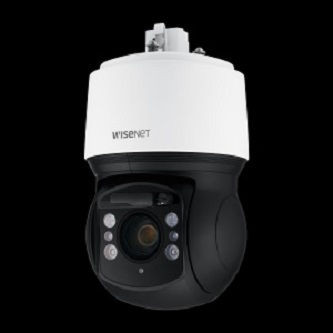
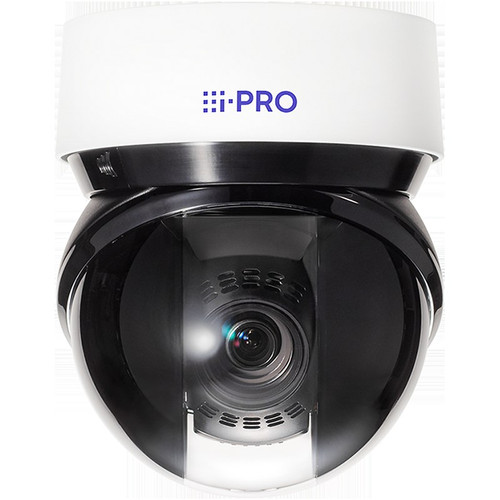
In This Guide
How do the imaging specs compare?
Both cameras use a 1/2.8-inch CMOS sensor and a 4.25–170 mm (40x optical) lens with identical maximum aperture ratios of F1.6 (wide) to F4.95 (tele) and the same angular field of view envelope. Frame rate is 60 fps on both. The key low-light divergence is significant: the i-PRO WV-X66300-Z4LS specifies a minimum illumination of 0.006 Lux (B&W with IR), while the Hanwha XNP-6400RW states 0.05 Lux color / 0 Lux IR. On paper, the i-PRO is approximately 8× more sensitive in the analog-lux color figure; both reach effective zero-lux performance with IR active.
IR illumination range is another clear differentiator: the i-PRO claims 350 m (at 30 IRE) and 250 m (at 50 IRE), versus the Hanwha's 200 m. WDR is specified at 150 dB (Extreme WDR/SSDR) for the Hanwha and 144 dB maximum (Super Dynamic level 31) for the i-PRO, giving Hanwha a slight stated WDR advantage. The i-PRO also offers an extra digital zoom mode extending to 60x at 1280×720 resolution, while Hanwha specifies 32x digital zoom for a combined 1280x total zoom. DORI figures are comparable at wide end; the Hanwha's tele detect distance (2,340 m) slightly exceeds the i-PRO's (2,200 m), likely a rounding artifact of differing PPM thresholds used. The Hanwha includes a built-in wiper for lens cleaning; the i-PRO lists Active ClearSight (optical self-cleaning) but does not specify a wiper.
What about installation and environment?
Both cameras carry IP66 (dust-tight, jet-water resistant), NEMA 4X, and IK10 impact ratings. Operating temperature ranges differ: the i-PRO is rated -50 °C to +60 °C, while the Hanwha is rated -40 °C to +55 °C, giving the i-PRO a 10 °C advantage at both cold and hot extremes. The i-PRO also adds a wind resistance rating of up to 40 m/s (~89 mph), which the Hanwha spec sheet does not state. Both require PoE++ (IEEE 802.3bt, Class 6). The i-PRO draws up to 45.9 W; the Hanwha specifies typical 20 W / max 42 W, and notes the HPoE injector is included.
Form factor and weight differ meaningfully for mounting decisions. The Hanwha measures Ø184.9 × 318.8 mm and weighs 5.4 kg (11.9 lb). The i-PRO is smaller at Ø167 mm × 205 mm (H) and weighs approximately 3 kg (without attachment), roughly 44% lighter. Both are aluminum/polycarbonate construction. The Hanwha carries NEMA-TS 2 (sections 2.2.8 and 2.2.9) highway/traffic certification in addition to IP66/NEMA 4X; the i-PRO also lists NEMA-TS2. Safety certifications differ: the i-PRO holds UL 62368-1, c-UL, CE, IEC 62368-1, FCC Part 15 Class A, and EN55032/55035; the Hanwha spec lists UL CAP (UL 2900-1) cybersecurity assurance but does not detail UL safety certifications in the provided spec data.
Which fits your VMS and analytics better?
ONVIF support overlaps substantially: both carry Profiles S, G, and T. The i-PRO adds Profile M (metadata/analytics); the Hanwha carries Profile G/S/T per spec. The Hanwha also exposes SUNAPI (HTTP API) and the Wisenet Open Platform SDK. The i-PRO's network interface is specified as 10Base-T / 100Base-TX; Hanwha specifies a metal-shielded RJ-45 at 10/100BASE-T — functionally the same. Protocol depth is broader on the Hanwha side (LLDP, Bonjour, PIM-SM, SRTP listed); the i-PRO adds MQTT and NTCIP, which is relevant for traffic/smart-city integrations. Hanwha supports up to 20 unicast users and 128 multicast users with up to 10 stream profiles; i-PRO specifies up to 14 simultaneous users.
AI analytics differ in scope and audio classification. The i-PRO specifies face, people, and vehicle detection plus AI Sound Classification covering gunshot, yell, vehicle horn, and glass break — with native audio I/O (3.5 mm stereo jack in and out, alarm IN ×3, alarm OUT, AUX OUT). The Hanwha lists directional detection, face detection, appear/disappear, enter/exit, loitering, tampering, virtual line, shock detection, and object auto-tracking (person/vehicle) with target lock — but notes audio detection and sound classification require an optional Network I/O Box; native audio I/O ports are absent on the XNP-6400RW. Edge storage on the Hanwha supports dual Micro SD/SDHC/SDXC slots up to 1 TB total; the i-PRO provides a single microSDXC slot up to 512 GB. Pan/tilt preset speed is 700°/s (i-PRO) versus 500°/s (Hanwha); manual pan speed is 250°/s (Hanwha) versus 150°/s (i-PRO). Hanwha specifies 300 preset positions (implied by spec context); the i-PRO explicitly states 256 preset positions.
Which should you choose: the XNP-6400RW or the X66300-Z4LS?
Our take: The XNP-6400RW is the stronger choice when on-board audio is not required, dual SD card redundancy matters, or the deployment benefits from the Wisenet/SUNAPI ecosystem and higher manual pan speed. The i-PRO WV-X66300-Z4LS is the stronger choice when native audio I/O and AI sound classification are mandatory without additional hardware, when the extended operating temperature range (-50 °C vs -40 °C lower bound) is critical for extreme-cold climates, or when a lighter mounting footprint (3 kg vs 5.4 kg) reduces structural loading requirements. IR reach decisively favors the i-PRO at 350 m versus 200 m — a 75% range advantage in tele mode. Hanwha counters with 150 dB WDR versus 144 dB and dual SD storage up to 1 TB versus a single 512 GB slot. Choose the i-PRO for audio-integrated deployments and extreme-temperature sites; choose the Hanwha where Wisenet VMS integration, higher WDR, or redundant edge storage take priority.
Side-by-Side Comparison
Spec-for-spec, from manufacturer data.
| Specification | Hanwha XNP-6400RW | i-PRO X66300-Z4LS |
|---|---|---|
| Resolution | 1920×1080 (2MP) | 1920×1080 (2MP) |
| Image Sensor | 1/2.8" CMOS | Approx. 1/2.8" CMOS |
| Focal Length / Optical Zoom | 4.25–170 mm / 40x optical | 4.25–170 mm / 40x optical (60x extra digital at 720p) |
| Min. Illumination | 0.05 Lux color / 0 Lux IR | 0.006 Lux B&W with IR |
| IR Illumination Range | 200 m (Wise IR) | 350 m (30 IRE) / 250 m (50 IRE) |
| Wide Dynamic Range | 150 dB (Extreme WDR) | 144 dB max (Super Dynamic level 31) |
| Max Frame Rate | 60 fps | 60 fps |
| Video Compression | H.265 / H.264 / MJPEG | H.265 / H.264 / MJPEG (JPEG) |
| IP Rating | IP66, NEMA 4X | IP66, NEMA 4X |
| Impact Rating | IK10 | IK10 |
| Operating Temperature | -40 °C to +55 °C | -50 °C to +60 °C |
| Power Input / PoE Class | PoE++ IEEE 802.3bt Class 6, max 42 W (injector included) | PoE++ IEEE 802.3bt, 45.9 W |
| Pan Speed (Preset / Manual) | 500°/s preset / 0.024–250°/s manual | 700°/s preset / 0.065–150°/s manual |
| Preset Positions | — | 256 |
| Audio I/O | None (NW I/O Box required) | 3.5 mm stereo in & out; G.711 / G.726 / AAC-LC |
| Edge Storage | Dual microSD/SDHC/SDXC, up to 1 TB | Single microSDXC up to 512 GB |
| ONVIF Profiles | S / G / T | G / M / S / T |
| Dimensions | Ø184.9 × 318.8 mm | Ø167 × 205 mm |
| Weight | 5.4 kg (11.9 lb) | Approx. 3 kg (without attachment) |
| Warranty | 5 years | 5 years |
Frequently Asked Questions
Which should you choose: the XNP-6400RW or the X66300-Z4LS?
The XNP-6400RW is the stronger choice when on-board audio is not required, dual SD card redundancy matters, or the deployment benefits from the Wisenet/SUNAPI ecosystem and higher manual pan speed. The i-PRO WV-X66300-Z4LS is the stronger choice when native audio I/O and AI sound classification are mandatory without additional hardware, when the extended operating temperature range (-50 °C vs -40 °C lower bound) is critical for extreme-cold climates, or when a lighter mounting footprint (3 kg vs 5.4 kg) reduces structural loading requirements. IR reach decisively favors the i-PRO at 350 m versus 200 m — a 75% range advantage in tele mode. Hanwha counters with 150 dB WDR versus 144 dB and dual SD storage up to 1 TB versus a single 512 GB slot. Choose the i-PRO for audio-integrated deployments and extreme-temperature sites; choose the Hanwha where Wisenet VMS integration, higher WDR, or redundant edge storage take priority.
Is the XNP-6400RW or WV-X66300-Z4LS better for low-light performance?
Based on specified IR illumination range, the i-PRO WV-X66300-Z4LS reaches 350 m (at 30 IRE) versus the Hanwha XNP-6400RW's 200 m — a 75% advantage at the tele end. The i-PRO also states a lower minimum color illumination figure (0.006 Lux versus 0.05 Lux). Both cameras reach 0 Lux effective performance with IR active. For long-distance IR coverage, the i-PRO has the specified edge; for high-contrast mixed-lighting scenes, the Hanwha's 150 dB WDR exceeds the i-PRO's 144 dB.
Can either camera record audio without extra hardware?
Only the i-PRO WV-X66300-Z4LS includes native audio input and output ports (3.5 mm stereo jack in and out) and supports G.711, G.726, and AAC-LC audio compression, along with AI sound classification (gunshot, yell, vehicle horn, glass break). The Hanwha XNP-6400RW has no built-in audio ports; audio detection and sound classification on that model require an optional Network I/O Box, which is not included.
Which camera is easier to mount on a pole or mast in demanding outdoor conditions?
The i-PRO WV-X66300-Z4LS is approximately 3 kg (without attachment bracket), compared to the Hanwha XNP-6400RW at 5.4 kg — a roughly 44% weight reduction that reduces bracket and pole loading. The i-PRO is also physically smaller (Ø167 × 205 mm vs Ø184.9 × 318.8 mm) and adds a wind resistance rating up to 40 m/s (~89 mph), which the Hanwha spec sheet does not state. Both carry IP66, NEMA 4X, and IK10 ratings, and both list NEMA-TS2 compliance.
Get a Second Opinion on Your Camera Choice
Share your site layout, coverage goals, and budget. Our team will validate the camera selection, flag anything we would change, and recommend products that match the use case.