
Hanwha QNV-8080R vs i-PRO S22500-F6L: Specification Comparison
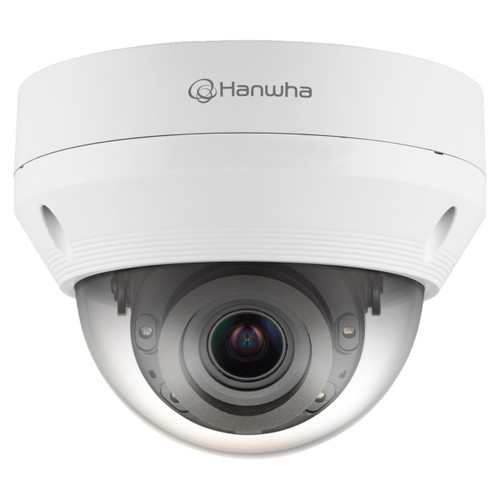
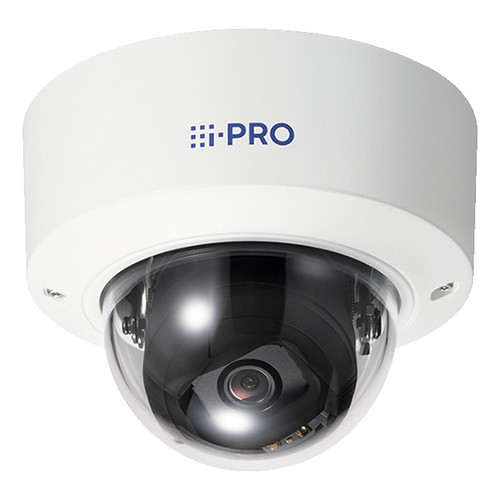
Both the Hanwha QNV-8080R and the i-PRO WV-S22500-F6L are 5MP IK10 vandal-resistant indoor dome cameras powered by PoE, targeting similar indoor enterprise and institutional deployments. The comparison centers on meaningful differences in lens flexibility (motorized varifocal vs. fixed), dynamic range figures, AI analytics depth, cybersecurity certification, audio capability, and operating temperature tolerance — all of which affect specification-writing, VMS integration, and long-term operational fit for installers and IT buyers.
In This Guide
How do the imaging specs compare?
Both cameras share an approximately 1/2.8" CMOS sensor at 5MP and 30fps. The QNV-8080R outputs a native 2592×1944 (5MP, 4:3) stream and delivers a motorized varifocal lens spanning 3.2–10mm (3.1× zoom) with a horizontal field of view that swings from 101° wide to a tighter tele position, giving installers flexibility during commissioning without physically repositioning the camera. The i-PRO WV-S22500-F6L uses a fixed 3.2mm lens at F1.6 with a 48° horizontal field of view (16:9), with a maximum native output of 3072×2304 — a higher pixel-count frame — and an extra digital zoom of up to 3× at 640×360 resolution. Lens choice is the primary optical trade-off: varifocal reach versus fixed-lens simplicity.
On low-light performance, the i-PRO edge is measurable: the WV-S22500-F6L specifies 0.08 lx color and 0.07 lx B&W minimum illumination (30IRE, F1.6, 1/30s), versus the QNV-8080R's 0.15 lx color / 0 lx IR. Both reach 0 lx in IR mode. Dynamic range also diverges: the i-PRO's Super Dynamic system reaches a specified maximum of 132dB at Level 31, while the Hanwha specifies 120dB WDR — a 12dB difference on paper, relevant in lobby or atrium scenes with mixed artificial and natural light. IR range is comparable: Hanwha specifies 30m; i-PRO specifies 25m (30IRE) / 20m (50IRE).
What about installation and environment?
Both cameras carry an IK10 vandal-resistance rating (IEC 62262) and are PoE-powered via IEEE 802.3af. However, PoE class differs: the QNV-8080R is Class 3 (max 8.90W draw, typical 6.60W), while the WV-S22500-F6L is Class 0. The Hanwha also supports DC12V input as an alternative — the i-PRO specifies DC12V 880mA or PoE. The QNV-8080R's operating temperature range is significantly wider at –30°C to +55°C, covering unheated spaces and harsh environments. The WV-S22500-F6L is rated –10°C to +50°C (with a power-on minimum of 0°C), limiting it to conditioned or semi-conditioned indoor spaces. Neither model is listed with an outdoor IP rating beyond IK10; the Hanwha carries IP66 while the i-PRO does not specify an IP ingress rating in the provided data. The QNV-8080R is physically slightly larger (ø137.0×106.1mm, 700g) versus the i-PRO (ø129.5×102.5mm, 800g).
Which fits your VMS and analytics better?
Both cameras support ONVIF Profile S, G, and T, ensuring broad VMS compatibility. The i-PRO WV-S22500-F6L adds ONVIF Profile M, which is the standard for AI metadata streaming — relevant if the VMS is designed to consume structured AI event data. The i-PRO also supports AI analytics on-chip (Ambarella CV22 SoC): AI Motion Detection, Face Detection, Vehicle Detection, and AI Sound Classification covering gunshot, yell, vehicle horn, and glass break. The Hanwha QNV-8080R provides rule-based video analytics (virtual line crossing, intrusion, enter/exit zones, defocus, tampering) via WiseStream II, but does not specify AI-class object classification or sound event detection in the provided specs.
Audio is a clear differentiator: the WV-S22500-F6L includes a 3.5mm stereo mic input, a 3.5mm audio output, and supports G.711/G.726 compression and half/full-duplex transmission — enabling two-way audio and sound classification. The QNV-8080R does not list audio input or output in the provided specifications. On edge storage, the i-PRO supports microSDXC cards up to 512GB; the Hanwha is limited to 128GB microSD. Both log alarms and support SD/NAS recording on event. Cybersecurity posture differs: the i-PRO lists FIPS 140-2 Level 3 certification and NXP SE050F secure element hardware; the Hanwha specifies firmware encryption, AES data encryption, 802.1X, HTTPS/SRTP, and a Hanwha Private Root CA device certificate — no FIPS rating is stated in the provided specs.
Which should you choose: the QNV-8080R or the S22500-F6L?
Our take: The QNV-8080R is the stronger choice when installation geometry is uncertain and optical flexibility matters: its 3.1× motorized varifocal lens (3.2–10mm, 101° to tele) eliminates remounting when coverage requirements shift post-installation, and its –30°C to +55°C operating range covers spaces the i-PRO cannot. The WV-S22500-F6L is the stronger choice for high-security controlled indoor environments requiring deeper AI analytics: it outperforms on minimum illumination (0.08 lx vs. 0.15 lx color), delivers a higher dynamic range specification (132dB vs. 120dB), adds FIPS 140-2 Level 3 hardware-rooted security, supports two-way audio with AI sound classification, offers ONVIF Profile M for AI metadata streaming, and doubles the edge storage ceiling (512GB vs. 128GB). Choose the QNV-8080R for flexible field installations or sub-zero environments; choose the WV-S22500-F6L for facilities requiring verifiable cybersecurity compliance, audio integration, or AI-driven event detection.
Side-by-Side Comparison
Spec-for-spec, from manufacturer data.
| Specification | Hanwha QNV-8080R | i-PRO S22500-F6L |
|---|---|---|
| Resolution (max native) | 2592×1944 (5MP, 4:3) | 3072×2304 (5MP, 4:3) |
| Image Sensor | 1/2.8" CMOS | Approx. 1/2.8" CMOS |
| Lens / Focal Length | 3.2–10mm motorized varifocal (3.1×) | 3.2mm fixed |
| Horizontal Field of View | 101° (wide) – tele | 48° (16:9) |
| Max Frame Rate | 30fps @ 5MP | 30fps |
| Min Illumination (Color) | 0.15 lx | 0.08 lx (30IRE, F1.6, 1/30s) |
| Min Illumination (B&W / IR) | 0 lx (IR) | 0.07 lx B&W / 0 lx (IR) |
| Wide Dynamic Range | 120dB | 132dB max (Super Dynamic Level 31) |
| IR Range | 30m (850nm LED) | 25m (30IRE) / 20m (50IRE) |
| Video Compression | H.265, H.264, MJPEG | H.265, H.264, MJPEG (JPEG) |
| IP Rating | IP66 | Not specified |
| IK / Impact Rating | IK10 | IK10 (IEC 62262) |
| Operating Temperature | -30°C to +55°C | -10°C to +50°C (power-on: 0°C min) |
| Power Input / PoE Class | PoE IEEE 802.3af, Class 3 (max 8.90W) | PoE IEEE 802.3af, Class 0; DC12V 880mA |
| ONVIF Profiles | S, G, T | G, M, S, T |
| Edge Storage | MicroSD/SDHC/SDXC up to 128GB | MicroSDXC up to 512GB |
| AI Analytics | Not specified | AI Motion, Face, Vehicle Detection; AI Sound Classification |
| Audio | Not specified | Mic input + audio output (3.5mm); G.711/G.726; half/full duplex |
| Cybersecurity Certification | Not specified (AES, HTTPS, 802.1X, Private CA) | FIPS 140-2 Level 3, NXP SE050F |
| Alarm I/O | 1 input / 1 output | 3 terminals (alarm IN/OUT), 1 AUX OUT |
| Dimensions | ø137.0×106.1mm | ø129.5×102.5mm |
| Weight | 700g (1.54 lb) | 800g (1.77 lb) |
| Warranty | 3 years | 5 years |
Frequently Asked Questions
Which should you choose: the QNV-8080R or the S22500-F6L?
The QNV-8080R is the stronger choice when installation geometry is uncertain and optical flexibility matters: its 3.1× motorized varifocal lens (3.2–10mm, 101° to tele) eliminates remounting when coverage requirements shift post-installation, and its –30°C to +55°C operating range covers spaces the i-PRO cannot. The WV-S22500-F6L is the stronger choice for high-security controlled indoor environments requiring deeper AI analytics: it outperforms on minimum illumination (0.08 lx vs. 0.15 lx color), delivers a higher dynamic range specification (132dB vs. 120dB), adds FIPS 140-2 Level 3 hardware-rooted security, supports two-way audio with AI sound classification, offers ONVIF Profile M for AI metadata streaming, and doubles the edge storage ceiling (512GB vs. 128GB). Choose the QNV-8080R for flexible field installations or sub-zero environments; choose the WV-S22500-F6L for facilities requiring verifiable cybersecurity compliance, audio integration, or AI-driven event detection.
Is the QNV-8080R or WV-S22500-F6L better for low-light performance?
Based on the provided specifications, the i-PRO WV-S22500-F6L has an edge in low-light color sensitivity: it specifies a minimum illumination of 0.08 lx color (30IRE, F1.6, 1/30s) and 0.07 lx B&W, compared to the Hanwha QNV-8080R's 0.15 lx color. Both reach 0 lx with IR active. The i-PRO also specifies a higher maximum dynamic range of 132dB versus Hanwha's 120dB. The Hanwha's IR range extends to 30m, compared to the i-PRO's 25m (30IRE).
Can I install the QNV-8080R or WV-S22500-F6L in an unheated warehouse or parking garage?
The Hanwha QNV-8080R is rated for operation from –30°C to +55°C and carries an IP66 ingress-protection rating, making it suitable for a much wider range of environments including unheated spaces and those subject to moisture. The i-PRO WV-S22500-F6L is rated –10°C to +50°C with a power-on minimum of 0°C, and no outdoor IP ingress rating is listed in the provided specifications — limiting it to conditioned or semi-conditioned indoor locations.
Which camera is better if my facility requires verified cybersecurity compliance?
The i-PRO WV-S22500-F6L specifies FIPS 140-2 Level 3 certification and an NXP SE050F hardware secure element — a meaningful differentiator for federal, healthcare, or financial environments with documented cybersecurity requirements. The Hanwha QNV-8080R specifies firmware encryption, AES data encryption, HTTPS/SRTP, 802.1X (EAP-TLS/LEAP/PEAP), and a Hanwha Private Root CA device certificate, but does not list FIPS 140-2 certification in the provided specifications.
Get a Second Opinion on Your Camera Choice
Share your site layout, coverage goals, and budget. Our team will validate the camera selection, flag anything we would change, and recommend products that match the use case.