
Hanwha QNV-8080R vs i-PRO S22500-F3L: Specification Comparison
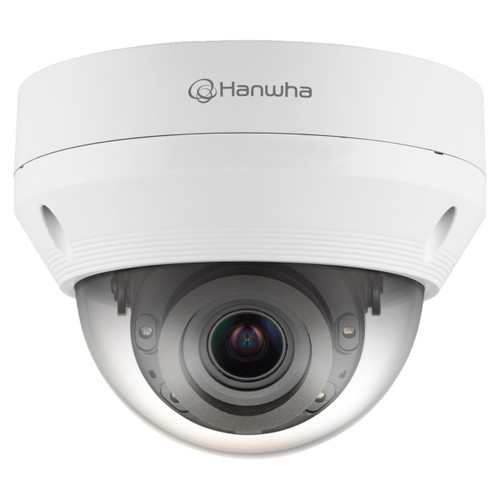
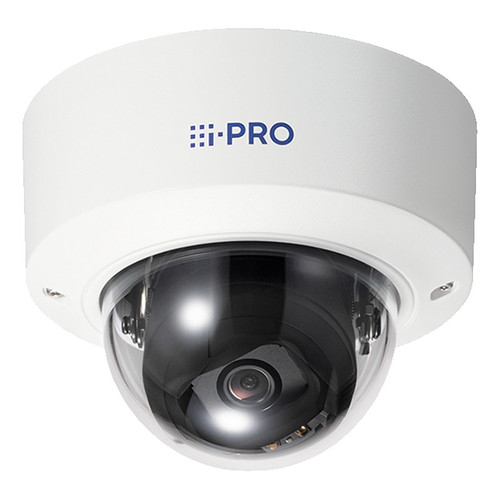
Both the Hanwha QNV-8080R and the i-PRO WV-S22500-F3L are 5MP IK10-rated vandal-resistant fixed indoor dome cameras powered by PoE, targeting the same mid-tier indoor surveillance segment. This comparison examines how they differ across imaging performance, installation requirements, and system integration—three dimensions that drive most specification-driven purchasing decisions for installers and IT security buyers evaluating indoor dome cameras in this resolution class.
In This Guide
How do the imaging specs compare?
Both cameras use an approximately 1/2.8" CMOS sensor and deliver 5MP at 30fps with H.265/H.264/MJPEG compression. The QNV-8080R produces a native 2592×1944 (4:3) frame, while the S22500-F3L tops out at 3072×2304 (4:3) or 3072×1728 (16:9), giving i-PRO a modest pixel-count edge when capturing wide-format scenes. Dynamic range separates these cameras more sharply: the QNV-8080R is rated at 120dB WDR (Hanwha SSDR/WDR), whereas the S22500-F3L claims up to 132dB with Super Dynamic at level 31—a 12dB advantage on paper that can matter in lobbies and atriums with mixed sunlight and shadow.
On the lens side, the QNV-8080R ships with a 3.2–10mm (3.1×) motorized varifocal lens (F1.6 wide / F2.9 tele), offering field-adjustable zoom without opening the housing—a meaningful installer convenience. The S22500-F3L uses a fixed 3.2mm f/2.0 lens with 1–3× digital (not optical) zoom; its brighter fixed aperture (f/2.0 vs F1.6–2.9) may marginally favor very low-light color performance, supported by its specified 0.12 lx color minimum illumination versus 0.15 lx for the QNV-8080R. Both cameras include IR LEDs rated to 0 lux in B&W mode; IR range is 30m for the QNV-8080R versus 25m for the S22500-F3L. DORI Detect distances reflect the optics: Hanwha Wide 43.3m / Tele 185.7m versus i-PRO's fixed 56.3m.
What about installation and environment?
Both cameras share an IK10 vandal rating and PoE 802.3af power, and both arrive in white aluminum housings. The QNV-8080R carries an IP66 rating and an operating range of −30°C to +55°C, making it suitable for unconditioned spaces such as parking structures or loading docks even when deployed indoors. The S22500-F3L is rated for indoor use only with an operating range of −10°C to +50°C and no stated IP ingress-protection class in its specifications—buyers deploying in environments subject to condensation, moisture, or wide temperature swings should note this gap. The S22500-F3L does specify dual-rated safety certifications (UL 62368-1, c-UL, CE, IEC 62368-1) and EMC marks (FCC Part 15 Class A, EN55032 Class B) explicitly; the QNV-8080R lists IP66 and IK10 but the provided specs do not enumerate equivalent safety certification marks.
Form factor is similar: the QNV-8080R measures ø137.0×106.1mm and weighs 700g (1.54 lb), while the S22500-F3L is slightly more compact at ø129.5×102.5mm but heavier at 800g (1.77 lb). The QNV-8080R's PoE Class 3 draw peaks at 8.9W; the S22500-F3L is PoE Class 0 and accepts DC12V 880mA as an alternative power source, which the QNV-8080R does not list. Pan/tilt/rotation adjustment ranges differ: QNV-8080R offers 0°–350° / 0°–67° / 0°–355°; S22500-F3L lists ±240° horizontal / ±85° vertical / ±100° yaw.
Which fits your VMS and analytics better?
Both cameras support ONVIF Profiles G, S, and T. The S22500-F3L additionally lists ONVIF Profile M, which covers metadata streaming for analytics events—relevant for VMS platforms that consume AI metadata natively. i-PRO also specifies FIPS 140-2 Level 3 hardware security (NXP SE050F secure element), a differentiator for government and regulated-industry deployments; the QNV-8080R lists AES encryption, HTTPS/SRTP, 802.1X, and firmware encryption but does not cite FIPS certification in the provided specs. On the protocol side, the S22500-F3L adds SFTP and MQTT (both IPv4 and IPv6) that are absent from the QNV-8080R's listed protocol stack.
Analytics capability diverges meaningfully. The S22500-F3L includes on-camera AI Video Motion Detection, Face Detection, Vehicle Detection, and AI Sound Classification (gunshot, yell, vehicle horn, glass break), plus Scene Change Detection and built-in audio detection with a 3.5mm audio input/output. The QNV-8080R's analytics cover motion detection, tampering, defocus detection, virtual line crossing/direction, and virtual area intrusion/enter/exit—solid for rules-based VMS triggers but without the AI object-class or audio classification layer. The QNV-8080R supports up to 128GB microSD edge storage; the S22500-F3L supports up to 512GB microSDXC—a meaningful difference for extended local recording without NAS. The S22500-F3L also supports up to 14 simultaneous streams versus 6 unicast users on the QNV-8080R.
Which should you choose: the QNV-8080R or the S22500-F3L?
Our take: The QNV-8080R is the stronger choice when installation flexibility, outdoor-grade environmental tolerance, and motorized varifocal optics matter most. Its 3.2–10mm (3.1×) optical zoom allows field-of-view adjustment without housing access, its IP66 rating and −30°C to +55°C range exceed the S22500-F3L's indoor-only, −10°C to +50°C envelope, and its 30m IR outreaches the S22500-F3L's 25m. Conversely, the S22500-F3L is the stronger choice when on-camera AI analytics, longer edge retention, and high-assurance cybersecurity architecture are the priority: it adds face, vehicle, and AI-VMD detection plus AI sound classification absent from the QNV-8080R, supports up to 512GB local storage versus 128GB, lists FIPS 140-2 Level 3 hardware security, and carries ONVIF Profile M for metadata streaming. Buyers on regulated-sector or enterprise projects with AI-VMS integration needs should weight the S22500-F3L; installers needing a versatile varifocal dome for mixed indoor/semi-outdoor environments should weight the QNV-8080R.
Side-by-Side Comparison
Spec-for-spec, from manufacturer data.
| Specification | Hanwha QNV-8080R | i-PRO S22500-F3L |
|---|---|---|
| Resolution | 2592×1944 (5MP, 4:3) | 3072×2304 (5MP, 4:3) / 3072×1728 (16:9) |
| Image Sensor | 1/2.8" CMOS | Approx. 1/2.8" CMOS |
| Lens / Focal Length | 3.2–10mm motorized varifocal (3.1× optical) | 3.2mm fixed (1–3× digital zoom only) |
| Max Aperture | F1.6 (wide) / F2.9 (tele) | f/2.0 (fixed) |
| Min. Illumination (Color) | 0.15 lux | 0.12 lux |
| Min. Illumination (B&W / IR) | 0 lux (IR) | 0.1 lux B&W / 0 lux (IR) |
| IR Range | 30m (98ft) | 25m (82ft) |
| Wide Dynamic Range | 120dB | 132dB (Super Dynamic, level 31) |
| Max Frame Rate | 30fps @ 5MP | 30fps @ 5MP |
| Video Compression | H.265, H.264, MJPEG | H.265, H.264, MJPEG |
| IP Rating | IP66 | Not specified (indoor only) |
| IK / Impact Rating | IK10 | IK10 |
| Operating Temperature | −30°C to +55°C | −10°C to +50°C |
| Power Input / PoE Class | PoE 802.3af, Class 3 (max 8.9W) | PoE 802.3af Class 0 or DC12V |
| Edge Storage | Up to 128GB microSDXC | Up to 512GB microSDXC |
| Audio | — | 3.5mm mic input + audio output; AI sound classification |
| AI / On-Camera Analytics | Motion, tamper, defocus, virtual line/area | AI VMD, face detection, vehicle detection, AI sound classification |
| ONVIF Profiles | S, G, T | S, G, T, M |
| Cybersecurity | AES, HTTPS, SRTP, 802.1X, firmware encryption, device certificate | FIPS 140-2 Level 3 (NXP SE050F), user/host auth, HTTPS, 802.1X, encryption |
| Alarm I/O | 1 input / 1 output | 3 inputs / 1 output + 1 AUX output |
| Dimensions | ø137.0 × 106.1mm | ø129.5 × 102.5mm |
| Weight | 700g (1.54 lb) | 800g (1.77 lb) |
| Warranty | 3 years | 5 years |
Frequently Asked Questions
Which should you choose: the QNV-8080R or the S22500-F3L?
The QNV-8080R is the stronger choice when installation flexibility, outdoor-grade environmental tolerance, and motorized varifocal optics matter most. Its 3.2–10mm (3.1×) optical zoom allows field-of-view adjustment without housing access, its IP66 rating and −30°C to +55°C range exceed the S22500-F3L's indoor-only, −10°C to +50°C envelope, and its 30m IR outreaches the S22500-F3L's 25m. Conversely, the S22500-F3L is the stronger choice when on-camera AI analytics, longer edge retention, and high-assurance cybersecurity architecture are the priority: it adds face, vehicle, and AI-VMD detection plus AI sound classification absent from the QNV-8080R, supports up to 512GB local storage versus 128GB, lists FIPS 140-2 Level 3 hardware security, and carries ONVIF Profile M for metadata streaming. Buyers on regulated-sector or enterprise projects with AI-VMS integration needs should weight the S22500-F3L; installers needing a versatile varifocal dome for mixed indoor/semi-outdoor environments should weight the QNV-8080R.
Is the QNV-8080R or WV-S22500-F3L better for low-light performance?
Both cameras reach 0 lux in IR mode. In color low-light, the S22500-F3L is specified at 0.12 lx versus 0.15 lx for the QNV-8080R—a marginal edge for i-PRO. However, the QNV-8080R's IR illuminator is rated to 30m versus 25m for the S22500-F3L, so it covers more distance in complete darkness. The QNV-8080R also uses a motorized varifocal lens (F1.6 wide), while the S22500-F3L's fixed f/2.0 lens is slightly brighter at its single focal length.
Which camera offers better cybersecurity for government or regulated deployments?
The S22500-F3L specifies FIPS 140-2 Level 3 certification backed by an NXP SE050F hardware secure element—a formal standard required in many federal and regulated environments. The QNV-8080R lists AES encryption, HTTPS/SRTP, 802.1X, firmware encryption, and a Hanwha Private Root CA device certificate but does not cite FIPS certification in the provided specifications. For deployments where FIPS 140-2 Level 3 is a hard requirement, the S22500-F3L is the specified-compliant option based on the data provided.
Can either camera record locally without a NAS or NVR, and for how long?
Both cameras support on-board microSD recording. The QNV-8080R supports up to 128GB microSDXC; the S22500-F3L supports up to 512GB microSDXC—four times the local capacity. Actual recording duration depends on resolution, frame rate, bitrate settings, and compression efficiency (both support H.265), but the S22500-F3L's higher storage ceiling makes it better suited for extended edge-only or NVR-failover recording scenarios without swapping cards.
Get a Second Opinion on Your Camera Choice
Share your site layout, coverage goals, and budget. Our team will validate the camera selection, flag anything we would change, and recommend products that match the use case.