
Hanwha QNV-6082R1 vs i-PRO S2236LA: Specification Comparison
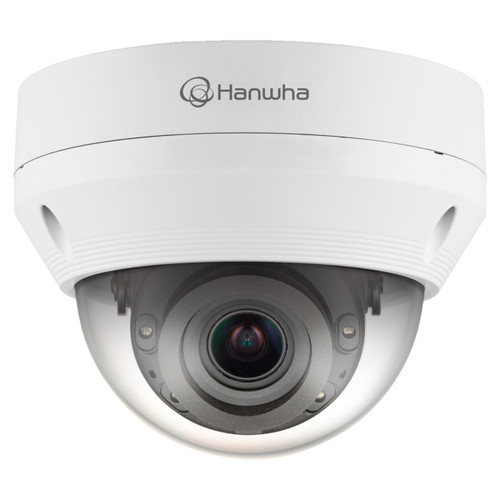
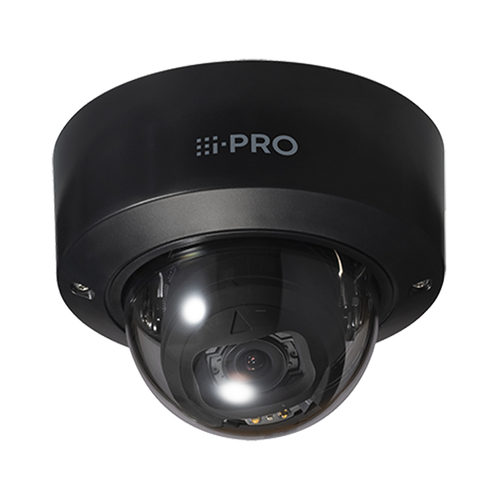
Both the Hanwha QNV-6082R1 and i-PRO WV-S2236LA are 2MP fixed vandal-resistant dome cameras with motorized varifocal lenses, IR illumination, IK10 impact ratings, and PoE power — a combination that places them squarely in the same cross-shop category for installers evaluating indoor/outdoor perimeter and interior high-security applications. The comparison covers imaging performance, environmental and installation suitability, and VMS/analytics integration, drawing exclusively from the specifications provided for each model.
In This Guide
How do the imaging specs compare?
Both cameras use an approx. 1/2.8" 2MP CMOS sensor delivering 1920×1080 resolution, but they diverge on several key imaging parameters. The i-PRO WV-S2236LA runs at up to 60fps versus the Hanwha QNV-6082R1's 30fps ceiling — a meaningful advantage in motion-critical applications such as retail checkout or transit corridors. The S2236LA also claims a significantly lower minimum color illumination of 0.007 lux at F1.3 (30IRE) versus the QNV-6082R1's 0.03 lux color, and its IR range extends to 70m (at 30IRE) / 50m (at 50IRE) compared to the QNV-6082R1's 30m IR range. Dynamic range also favors the i-PRO unit: 144dB (Super Dynamic on, Level 31) versus 120dB WDR on the Hanwha.
On the lens side, the QNV-6082R1 offers a 3.2–10mm motorized varifocal (3.1x zoom) with a DC auto iris and a maximum wide aperture of F1.6, while the S2236LA covers 2.9–9mm (3.1x zoom) with motorized focus and a maximum wide aperture of F1.3 — the faster aperture on the i-PRO unit directly supports its lower minimum illumination figure. DORI figures for wide-angle detection are marginally longer on the Hanwha (27.4m detect vs 24.9m on i-PRO); tele-end detection similarly favors the Hanwha (128.8m vs 118.2m), likely reflecting the slightly longer tele focal length (10mm vs 9mm). The i-PRO adds an extra digital zoom tier of 3.1x–9.3x at 640×360 resolution, which the Hanwha spec does not list.
What about installation and environment?
The most significant installation-environment difference is outdoor suitability. The Hanwha QNV-6082R1 is rated IP66 (dust-tight, protected against powerful water jets) and carries an operating temperature range of −30°C to +55°C, making it explicitly outdoor-rated. The i-PRO WV-S2236LA is listed as indoor-rated with no external IP rating stated in the provided specifications and an operating temperature range of −10°C to +50°C — both constraints limit it to sheltered interior deployments. Both cameras carry IK10 vandal resistance per IEC 62262. The Hanwha unit also provides a wider storage temperature range (−30°C to +60°C) against the i-PRO spec, which does not list a separate storage temperature in the provided data.
Both are powered via PoE 802.3af. The QNV-6082R1 is specified as PoE Class 3 with a maximum draw of 7.7W; the S2236LA is PoE Class 0 with a specified draw of 8.7W via PoE (or DC12V at 720mA / 8.6W). The Hanwha also accepts 12VDC as an alternative input, which the i-PRO spec does not list. Form factor dimensions are similar (Hanwha Ø137×106.1mm / 710g; i-PRO Ø129.5×102.5mm / 570g), with the i-PRO being slightly lighter. The Hanwha spec lists compatible conduit knockouts (single, double, 4" octagon) and optional accessories (hanging mount SBP-301HMW2, backbox SBV-136BW); the i-PRO spec does not enumerate compatible mounting accessories in the provided data.
Which fits your VMS and analytics better?
Both cameras support ONVIF Profiles G, S, and T. The i-PRO WV-S2236LA additionally lists ONVIF Profile M, which covers metadata for AI/analytics streams — relevant if the VMS leverages structured analytics data. The Hanwha QNV-6082R1 supports Wisenet SUNAPI (HTTP API) and the Wisenet open platform, useful in Hanwha-native VMS environments. On the analytics side, the i-PRO carries on-camera AI Video Motion Detection, Face Detection, People Detection, Vehicle Detection, and AI Sound Classification (gunshot, yell, vehicle horn, glass break) — a substantially richer on-camera analytics suite. The Hanwha offers defocus detection, directional detection, motion detection (polygonal zones), enter/exit, tampering, and virtual line analytics, but no listed face or sound classification. The S2236LA also supports Scene Change Detection and VMD audio detection as additional triggers.
For audio, the i-PRO WV-S2236LA includes both a 3.5mm stereo mic input and a 3.5mm stereo audio output jack, supporting half-duplex and full-duplex audio transmission, with G.726, G.711, and additional audio compression formats listed. The Hanwha QNV-6082R1 lists no audio input or output in its specifications. Edge storage is supported on both: the Hanwha lists a single microSD/SDHC/SDXC slot up to 128GB; the i-PRO lists microSDXC up to 512GB. For security compliance, the i-PRO specifies FIPS 140-2 Level 3 and device certificate support alongside IEEE 802.1X and alteration detection; the Hanwha lists 802.1X (EAP-TLS, EAP-LEAP) and HTTPS/digest authentication but does not cite FIPS 140-2 in the provided specifications.
Which should you choose: the QNV-6082R1 or the S2236LA?
Our take: The QNV-6082R1 is the stronger choice when the installation is outdoors or in a harsh environment requiring IP66 weatherproofing, a wider operating temperature range (−30°C to +55°C vs −10°C to +50°C), and a longer tele-end IR distance is acceptable at 30m. The WV-S2236LA is the stronger choice for indoor high-security or compliance-driven deployments: it delivers 60fps versus 30fps, a 70m IR range versus 30m, a lower minimum color illumination of 0.007 lux versus 0.03 lux, 144dB dynamic range versus 120dB, on-camera AI face/people/vehicle detection and sound classification absent from the Hanwha, two-way audio I/O versus none on the Hanwha, and edge storage up to 512GB versus 128GB. Buyers on a Hanwha/Wisenet VMS or requiring outdoor certification should favor the QNV-6082R1; those on an open-platform or i-PRO VMS needing richer AI analytics and 60fps in an indoor environment should evaluate the WV-S2236LA.
Side-by-Side Comparison
Spec-for-spec, from manufacturer data.
| Specification | Hanwha QNV-6082R1 | i-PRO S2236LA |
|---|---|---|
| Resolution | 1920×1080 (2MP) | 1920×1080 (2MP) |
| Image Sensor | 1/2.8" 2MP CMOS | Approx. 1/2.8" type CMOS |
| Max Frame Rate | 30fps | 60fps |
| Lens / Focal Length | 3.2–10mm motorized varifocal (3.1x) | 2.9–9mm motorized varifocal (3.1x) |
| Max Aperture (Wide) | F1.6 | F1.3 |
| Min Illumination (Color) | 0.03 lux | 0.007 lux @ 30IRE, F1.3 |
| IR Range | 30m (98.4ft) | 70m @ 30IRE / 50m @ 50IRE |
| Wide Dynamic Range | 120dB WDR | 144dB (Super Dynamic, Level 31) |
| Video Compression | H.265, H.264, MJPEG | H.265, H.264, MJPEG |
| IP Rating | IP66 | — (indoor-rated; none listed) |
| IK / Impact Rating | IK10 | IK10 |
| Operating Temperature | −30°C to +55°C | −10°C to +50°C |
| Power Input / PoE Class | PoE 802.3af Class 3 / 12VDC; max 7.7W | PoE 802.3af Class 0; max 8.7W (no 12VDC listed) |
| Edge Storage | microSD/SDHC/SDXC up to 128GB | microSDXC up to 512GB |
| Audio | — (none listed) | 3.5mm mic in + 3.5mm audio out; half/full duplex |
| On-Camera AI Analytics | Defocus, directional, enter/exit, virtual line, tampering | AI face, people, vehicle detection; AI sound classification |
| ONVIF Profiles | G, S, T | G, M, S, T |
| Weight | 710g (1.57 lb) | 570g (1.26 lb) |
| Warranty | 3-year | 5-year |
Frequently Asked Questions
Which should you choose: the QNV-6082R1 or the S2236LA?
The QNV-6082R1 is the stronger choice when the installation is outdoors or in a harsh environment requiring IP66 weatherproofing, a wider operating temperature range (−30°C to +55°C vs −10°C to +50°C), and a longer tele-end IR distance is acceptable at 30m. The WV-S2236LA is the stronger choice for indoor high-security or compliance-driven deployments: it delivers 60fps versus 30fps, a 70m IR range versus 30m, a lower minimum color illumination of 0.007 lux versus 0.03 lux, 144dB dynamic range versus 120dB, on-camera AI face/people/vehicle detection and sound classification absent from the Hanwha, two-way audio I/O versus none on the Hanwha, and edge storage up to 512GB versus 128GB. Buyers on a Hanwha/Wisenet VMS or requiring outdoor certification should favor the QNV-6082R1; those on an open-platform or i-PRO VMS needing richer AI analytics and 60fps in an indoor environment should evaluate the WV-S2236LA.
Is the QNV-6082R1 or WV-S2236LA better for low-light performance?
Based on the provided specifications, the i-PRO WV-S2236LA has a lower minimum color illumination (0.007 lux at F1.3 / 30IRE vs 0.03 lux for the Hanwha QNV-6082R1) and a longer IR range (70m at 30IRE vs 30m). On the numbers alone, the S2236LA has the edge in low-light sensitivity and IR reach — though the Hanwha's F1.6 wide aperture and DC auto iris also contribute to low-light performance in ways not fully captured by a single lux figure.
Can the QNV-6082R1 be installed outdoors where the WV-S2236LA cannot?
Yes. The Hanwha QNV-6082R1 carries an IP66 weatherproof rating and is rated for operation from −30°C to +55°C, making it suitable for outdoor installations. The i-PRO WV-S2236LA is listed in the provided specifications as indoor-rated with no external IP rating and an operating range of −10°C to +50°C, which limits it to sheltered interior environments. Both carry IK10 vandal resistance, but only the Hanwha is rated for outdoor exposure.
Which camera supports two-way audio and on-camera AI analytics?
The i-PRO WV-S2236LA supports both: it has a 3.5mm stereo mic input and audio output jack with half-duplex and full-duplex modes, and it includes on-camera AI analytics covering face detection, people detection, vehicle detection, and AI sound classification (gunshot, yell, vehicle horn, glass break). The Hanwha QNV-6082R1 does not list audio input or output in its specifications, and its on-camera analytics — while useful (enter/exit, virtual line, tampering, directional detection) — do not include AI-based face or sound classification per the provided spec data.
Get a Second Opinion on Your Camera Choice
Share your site layout, coverage goals, and budget. Our team will validate the camera selection, flag anything we would change, and recommend products that match the use case.