
Hanwha QNV-6022R vs i-PRO X35302-F2LM: Specification Comparison
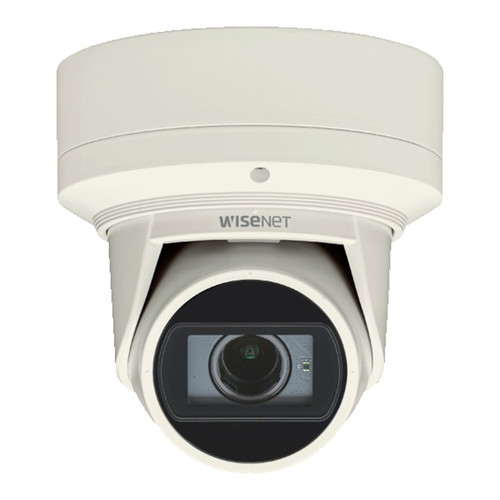
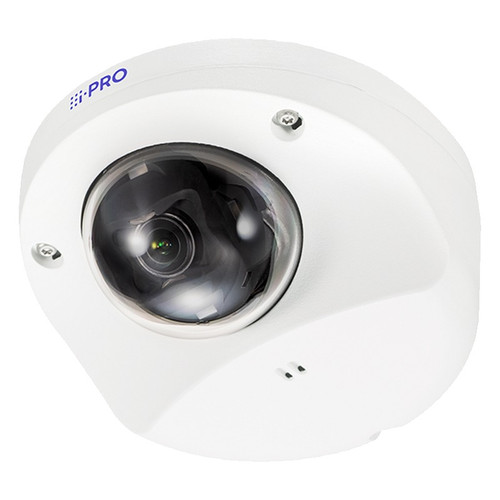
Both the Hanwha QNV-6022R and the i-PRO WV-X35302-F2LM are 2MP fixed outdoor vandal-dome IP cameras targeted at perimeter and surveillance installations requiring PoE power, IR night vision, and WDR imaging. The Hanwha delivers Full HD 1080p in a proven cost-effective package, while the i-PRO offers a wider-angle 2.4mm lens, a higher native resolution sensor output, deeper WDR performance, and an onboard AI analytics engine backed by a FIPS 140-2 Level 3 security certification. This comparison examines imaging, installation, and integration trade-offs based solely on published specifications.
In This Guide
How do the imaging specs compare?
The QNV-6022R uses a 1/2.8" CMOS sensor outputting 1920×1080 at 30fps with a 4.0mm fixed lens at F1.6, providing an 88° horizontal field of view and 25m IR illumination at 850nm. Its WDR is rated at 120dB. Minimum illumination is 0.03 lux color / 0 lux with IR. The i-PRO WV-X35302-F2LM also uses an approximately 1/2.8" CMOS sensor but outputs at 2048×1536 resolution (a higher-pixel native capture) through a 2.4mm lens at F2.1, yielding a 132° horizontal field of view — 44° wider than the QNV-6022R. Its Super Dynamic WDR reaches 144dB at maximum level, a 24dB advantage over the Hanwha. Minimum illumination is 0.02 lux color / 0 lux with IR.
For IR range, the QNV-6022R reaches 25m while the i-PRO's IR LED is rated at 21m at 30IRE / 15m at 50IRE — a shorter throw. The QNV-6022R's F1.6 aperture is faster than the i-PRO's F2.1, which partially compensates in low-light scenes without IR. The i-PRO includes fog compensation (adjustable 0–8, auto/manual) and AI Sound Classification (gunshot, yell, vehicle horn, glass break); neither feature appears in the QNV-6022R specification. The Hanwha supports frame rates up to 30fps; the i-PRO specifies a variable frame rate — a maximum figure is not stated in the provided specification.
What about installation and environment?
Both cameras share IP66 ingress protection and IK10 impact resistance, and both are PoE-powered. The QNV-6022R is PoE Class 3 (IEEE 802.3af) with a maximum draw of 7.40W; it also accepts 12VDC as an alternative input. The i-PRO is listed as PoE Class 0 with a maximum draw of 8.6W and uses an M12 connector rather than a standard RJ-45 — a critical installation detail for retrofit projects where standard patch cables are already run. The i-PRO adds NEMA 4X (UL50E) and wind resistance certification up to 40 m/s (~89 mph), plus railway/vehicle certifications (EN50155, EN50121, IEC61373, EN45545) not present in the QNV-6022R specification.
Operating temperature gives the i-PRO a clear advantage: -40°C to +60°C (power-on from -20°C) versus the QNV-6022R's -30°C to +55°C. Both are aluminum-bodied white housings. The QNV-6022R dimensions are ø120.3×91.7mm at 510g; the i-PRO is 109×53×119mm at approximately 475g. The Hanwha specifies pan/tilt/rotate ranges (0–350° / 0–67° / 0–355°) and lists compatible conduit/gangbox and mounting accessories (SBO-120GP, SBP-122HMW, SBV-120GW); equivalent mounting accessory data is not included in the i-PRO specification provided.
Which fits your VMS and analytics better?
Both cameras support ONVIF Profiles S, G, and T, and both carry H.265/H.264 compression with variable bitrate control. The QNV-6022R adds MJPEG and Hanwha's WiseStream II smart codec for bandwidth reduction, and supports up to 6 simultaneous unicast users across 3 streaming profiles. The i-PRO supports up to 14 simultaneous users, adds GOP control smart coding, SFTP, MQTT, and DHCPv6, and holds FIPS 140-2 Level 3 security certification — a requirement in certain federal, DoD, and critical-infrastructure deployments. The i-PRO also specifies ONVIF Profile M (in addition to G/S/T), which covers metadata streaming for AI events; the QNV-6022R specification does not list Profile M.
On-board analytics differ meaningfully. The QNV-6022R provides motion detection, tampering, defocus detection, and virtual line/area (intrusion, enter, exit, crossing, direction). The i-PRO adds AI-driven face, people, and vehicle detection, scene change detection, audio detection, and AI Sound Classification — all executed on the Ambarella CV25M SoC. Both cameras offer a microSD slot supporting up to 512GB (SDXC). The QNV-6022R specifies 512MB RAM / 256MB Flash; the i-PRO does not publish these figures in the provided spec. Both include audio input; the QNV-6022R specifies selectable mic-in/line-in with 2.5VDC phantom supply; the i-PRO lists a built-in microphone. The QNV-6022R carries a 3-year warranty; the i-PRO carries a 5-year warranty.
Which should you choose: the QNV-6022R or the X35302-F2LM?
Our take: The WV-X35302-F2LM is the stronger choice when wide-area coverage, maximum WDR headroom, onboard AI analytics, or hardened security certification are the primary requirements. Its 132° horizontal field of view is 44° wider than the QNV-6022R's 88°, its Super Dynamic WDR reaches 144dB versus 120dB, and its AI engine natively classifies faces, people, vehicles, and four audio event types on the Ambarella CV25M SoC without a separate server-side license. It also operates from -40°C and carries a 5-year warranty versus the QNV-6022R's 3-year coverage. Conversely, the QNV-6022R is the better fit when longer IR throw matters (25m vs. 21m at 30IRE), when the installation uses standard RJ-45 patch cabling (the i-PRO requires an M12 connector), when 12VDC dual-power is needed, or when Hanwha/Wisenet VMS integration and WiseStream II bandwidth savings are already part of the ecosystem.
Side-by-Side Comparison
Spec-for-spec, from manufacturer data.
| Specification | Hanwha QNV-6022R | i-PRO X35302-F2LM |
|---|---|---|
| Resolution | 1920×1080 (2MP) | 2048×1536 (3MP native sensor) |
| Image Sensor | 1/2.8" CMOS | Approx. 1/2.8" CMOS |
| Focal Length | 4.0mm fixed | 2.4mm fixed |
| Max Aperture | F1.6 | F2.1 |
| Horizontal Field of View | 88° | 132° (16:9) |
| Min. Illumination (Color) | 0.03 lux | 0.02 lux |
| IR Range | 25m (850nm LED) | 21m at 30IRE / 15m at 50IRE |
| Wide Dynamic Range | 120dB | 144dB (Super Dynamic, Level 31) |
| Max Frame Rate | 30fps @ 2MP | Variable — max not stated in spec |
| Video Compression | H.265, H.264, MJPEG | H.265, H.264 |
| Smart Codec | WiseStream II | GOP control (Off/Low/Mid/Advanced) |
| IP / NEMA Rating | IP66 | IP66, NEMA 4X |
| IK (Impact) Rating | IK10 | IK10 |
| Operating Temperature | -30°C to +55°C | -40°C to +60°C (-20°C power-on) |
| Power Input / PoE Class | PoE 802.3af Class 3 / 12VDC; 7.40W max | PoE Class 0; 8.6W max |
| Network Connector | RJ-45 (10/100BASE-T) | M12 (10BASE-T/100BASE-TX) |
| ONVIF Profiles | S, G, T | G, M, S, T |
| AI Analytics | Virtual line/area, defocus, tampering | Face, People, Vehicle detection; AI Sound Classification |
| Security Certification | — | FIPS 140-2 Level 3 |
| Edge Storage | microSD/SDHC/SDXC up to 128GB | microSD 2GB / SDHC 4–32GB / SDXC 64–512GB |
| Simultaneous Users | 6 (unicast) | Up to 14 |
| Audio Input | Selectable mic-in/line-in (2.5VDC phantom) | Built-in microphone |
| Weight | 510g (1.12 lbs) | Approx. 475g (1.05 lbs) |
| Warranty | 3 years | 5 years |
Frequently Asked Questions
Which should you choose: the QNV-6022R or the X35302-F2LM?
The WV-X35302-F2LM is the stronger choice when wide-area coverage, maximum WDR headroom, onboard AI analytics, or hardened security certification are the primary requirements. Its 132° horizontal field of view is 44° wider than the QNV-6022R's 88°, its Super Dynamic WDR reaches 144dB versus 120dB, and its AI engine natively classifies faces, people, vehicles, and four audio event types on the Ambarella CV25M SoC without a separate server-side license. It also operates from -40°C and carries a 5-year warranty versus the QNV-6022R's 3-year coverage. Conversely, the QNV-6022R is the better fit when longer IR throw matters (25m vs. 21m at 30IRE), when the installation uses standard RJ-45 patch cabling (the i-PRO requires an M12 connector), when 12VDC dual-power is needed, or when Hanwha/Wisenet VMS integration and WiseStream II bandwidth savings are already part of the ecosystem.
Is the QNV-6022R or WV-X35302-F2LM better for low-light performance?
Both reach 0 lux with IR active. Without IR, the i-PRO's minimum illumination is 0.02 lux color versus the QNV-6022R's 0.03 lux — a marginal difference. However, the QNV-6022R's faster F1.6 aperture (vs. F2.1) collects more light at the lens, which can offset the 0.01-lux gap in near-IR-off scenarios. The QNV-6022R also throws IR to 25m while the i-PRO reaches 21m at 30IRE, so the Hanwha covers a longer dark corridor or aisle without supplemental lighting.
Can I use the WV-X35302-F2LM on a standard PoE switch with RJ-45 ports?
The i-PRO WV-X35302-F2LM specifies an M12 connector for its network interface, not a standard RJ-45. You will need an M12-to-RJ-45 adapter cable or a switch with M12 ports. This is a firm installation constraint; confirm adapter compatibility with your switch and cabling budget before ordering. The QNV-6022R uses a standard RJ-45 port and connects directly to any 802.3af PoE switch.
Which camera is better for a government or critical-infrastructure site requiring security certification?
The i-PRO WV-X35302-F2LM specifies FIPS 140-2 Level 3 certification, which is a federally recognized cryptographic module standard required by many U.S. government, DoD, and critical-infrastructure procurement mandates. The QNV-6022R's specification does not list FIPS 140-2 certification. If your project requires FIPS compliance, the i-PRO is the only one of these two cameras that meets it per the provided specifications.
Get a Second Opinion on Your Camera Choice
Share your site layout, coverage goals, and budget. Our team will validate the camera selection, flag anything we would change, and recommend products that match the use case.