
Hanwha QNV-6022R vs i-PRO X35302-F2L: Specification Comparison
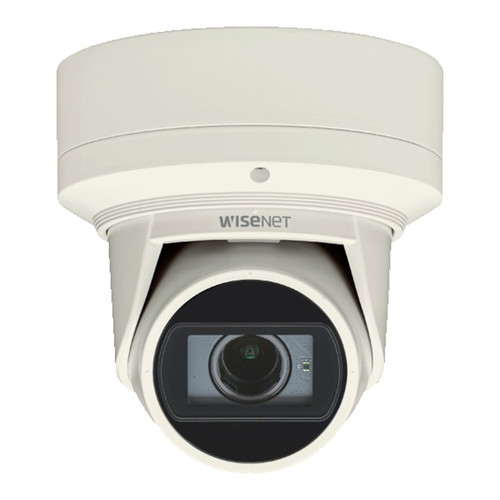
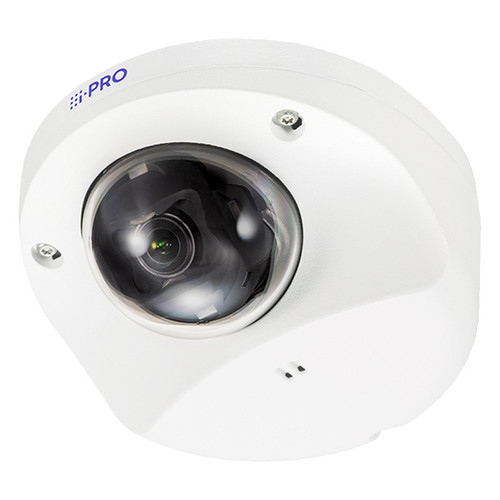
Both the Hanwha QNV-6022R and the i-PRO WV-X35302-F2L are 2MP fixed outdoor vandal dome cameras positioned for perimeter and general surveillance. The Hanwha delivers Full HD 1080p (1920×1080) while the i-PRO outputs a slightly higher 2048×1536 resolution, but both target the same 2MP class and share IP66/IK10 ratings, PoE power, and fixed-lens dome form factors — making them genuine cross-shop candidates for installers evaluating cost-versus-capability in outdoor fixed dome applications.
In This Guide
How do the imaging specs compare?
Both cameras use an approximately 1/2.8-inch CMOS sensor, but they diverge on resolution and dynamic range. The QNV-6022R outputs 1920×1080 at a fixed 30fps, while the WV-X35302-F2L outputs 2048×1536 (approximately 3MP effective pixel area despite the 2MP class label) at a variable frame rate. The i-PRO's Super Dynamic WDR is rated at 144dB (adjustable 0–31 levels), significantly exceeding the Hanwha's 120dB WDR — a meaningful delta in scenes with strong backlighting such as lobbies with exterior windows or parking lot entrances at sunrise/sunset.
In low light, the i-PRO edges ahead with a minimum illumination of 0.02 lux color / 0 lux with IR versus the Hanwha's 0.03 lux color / 0 lux IR. IR range slightly favors the i-PRO at 21m (30 IRE) versus the Hanwha's 25m — though the Hanwha's DORI 'Detect' range extends to 40m versus the i-PRO's 17.1m, reflecting the i-PRO's wider 132° horizontal field of view (2.4mm, F2.1) compared to the Hanwha's 88° horizontal (4.0mm, F1.6). The i-PRO also adds fog compensation (0–8 levels), HLC, and Adaptive Black Stretch, none of which are listed in the Hanwha spec. Both include IR cut filter (ICR) for day/night switching and digital noise reduction.
What about installation and environment?
Both cameras share IP66 weatherproofing and IK10 vandal resistance, making them equally qualified for exposed outdoor mounting. The i-PRO extends its environmental rating with NEMA 4X and Type 4X (UL50E) compliance — useful for North American industrial or utility sites requiring UL-listed enclosures. The i-PRO also carries wind resistance certification up to 40 m/s (~89 mph) and railway/vehicle application standards (EN50155, JIS E5006, IEC62236, EN50121); none of these are listed for the Hanwha.
On operating temperature, the i-PRO specifies -40°C to +60°C (power-on range -20°C to +60°C), versus the Hanwha's -30°C to +55°C — a 10°C cold-side advantage that matters in northern climates. Both are PoE-powered; the Hanwha specifies PoE IEEE 802.3af Class 3 at 7.4W max and also accepts 12VDC, giving a dual-power fallback. The i-PRO lists PoE at 8.6W max and is classified PoE Class 0, with no 12VDC input listed in the provided specs. The Hanwha includes a CVBS analog video output for installation alignment; the i-PRO does not list one. The i-PRO is lighter at ~475g versus the Hanwha's 510g.
Which fits your VMS and analytics better?
Both cameras support ONVIF Profiles G, S, and T. The i-PRO adds ONVIF Profile M, which supports metadata streaming for AI analytics events — relevant for VMS platforms that consume structured object metadata. The i-PRO's on-board AI analytics include AI Video Motion Detection, Face Detection, People Detection, and AI Sound Classification (gunshot, yell, vehicle horn, glass break); its SoC is specified as an Ambarella CV25M. The Hanwha's analytics cover motion detection, tampering, defocus detection, and virtual line/area rules (intrusion, enter, exit, crossing, direction) — no AI-class object detection is listed in the provided specs.
For audio, the Hanwha provides a selectable mic/line-in input with 2.5VDC supply; no built-in microphone is listed. The i-PRO spec notes audio detection and sound classification, implying a built-in microphone, though the spec does not list a separate audio input terminal. Edge storage on the i-PRO supports microSDXC up to 512GB, compared to the Hanwha's microSD/SDHC/SDXC up to 128GB. The i-PRO also lists FIPS 140-2 Level 3 compliance and SFTP/MQTT protocol support; the Hanwha lists firmware encryption, AES data encryption, SD card partition encryption, 802.1X (EAP-TLS/LEAP/PEAP), and device certificates via Hanwha Private Root CA. The i-PRO supports up to 14 simultaneous streams; the Hanwha supports 6 unicast users with up to 3 configurable profiles.
Which should you choose: the QNV-6022R or the X35302-F2L?
Our take: The WV-X35302-F2L is the stronger choice when the deployment demands AI-class object analytics, higher dynamic range, or harsher environmental certification. The i-PRO's 144dB Super Dynamic WDR outperforms the Hanwha's 120dB by 24dB, its AI analytics (face, people, sound classification) go well beyond the Hanwha's rule-based video analytics, and its operating range of -40°C to +60°C beats the Hanwha's -30°C to +55°C for cold-climate sites. The i-PRO also adds NEMA 4X, wind/railway certifications, FIPS 140-2 Level 3 security, 512GB edge storage support, ONVIF Profile M, and a 5-year warranty versus the Hanwha's 3-year. The QNV-6022R is the better fit where budget is tighter, a 12VDC backup power source is needed alongside PoE, a wider IR detection range at a narrower FOV is preferred, or the VMS ecosystem is already Wisenet-native with WiseStream II support.
Side-by-Side Comparison
Spec-for-spec, from manufacturer data.
| Specification | Hanwha QNV-6022R | i-PRO X35302-F2L |
|---|---|---|
| Resolution | 1920×1080 (1080p) | 2048×1536 |
| Image Sensor | 1/2.8" CMOS | Approx. 1/2.8" CMOS |
| Focal Length | 4.0mm fixed | 2.4mm fixed |
| Horizontal FOV | 88° | 132° (16:9) |
| Min. Illumination (Color) | 0.03 lux | 0.02 lux |
| Min. Illumination (IR) | 0 lux | 0 lux |
| IR Range | 25m | 21m (30 IRE) / 15m (50 IRE) |
| Wide Dynamic Range | 120dB | 144dB (Super Dynamic, level 0–31) |
| Max Frame Rate | 30fps @ 2MP | Variable (spec not fixed-number stated) |
| Video Compression | H.265 / H.264 / MJPEG | H.265 / H.264 / JPEG |
| IP Rating | IP66 | IP66 / NEMA 4X / Type 4X (UL50E) |
| Vandal / Impact Rating | IK10 | IK10 |
| Operating Temperature | -30°C to +55°C | -40°C to +60°C (power-on: -20°C to +60°C) |
| Power Input / PoE Class | PoE IEEE 802.3af Class 3 / 12VDC; 7.4W max | PoE Class 0; 8.6W max (no 12VDC listed) |
| Edge Storage | microSD/SDHC/SDXC up to 128GB | microSDXC up to 512GB |
| On-board Analytics | Rule-based: virtual line/area, tampering, defocus | AI: Face, People, VMD; Sound Classification |
| ONVIF Profiles | S / G / T | G / M / S / T |
| Audio | Selectable mic-in / line-in (external) | Audio detection / sound classification (built-in mic implied; external input not listed) |
| Weight | 510g (1.12 lbs) | approx. 475g (1.05 lbs) |
| Warranty | 3-year | 5-year |
Frequently Asked Questions
Which should you choose: the QNV-6022R or the X35302-F2L?
The WV-X35302-F2L is the stronger choice when the deployment demands AI-class object analytics, higher dynamic range, or harsher environmental certification. The i-PRO's 144dB Super Dynamic WDR outperforms the Hanwha's 120dB by 24dB, its AI analytics (face, people, sound classification) go well beyond the Hanwha's rule-based video analytics, and its operating range of -40°C to +60°C beats the Hanwha's -30°C to +55°C for cold-climate sites. The i-PRO also adds NEMA 4X, wind/railway certifications, FIPS 140-2 Level 3 security, 512GB edge storage support, ONVIF Profile M, and a 5-year warranty versus the Hanwha's 3-year. The QNV-6022R is the better fit where budget is tighter, a 12VDC backup power source is needed alongside PoE, a wider IR detection range at a narrower FOV is preferred, or the VMS ecosystem is already Wisenet-native with WiseStream II support.
Is the QNV-6022R or WV-X35302-F2L better for low-light performance?
The i-PRO WV-X35302-F2L has a slight edge in low light, with a minimum illumination of 0.02 lux color versus the Hanwha's 0.03 lux color — both reach 0 lux with IR active. The i-PRO's IR range is 21m (at 30 IRE), while the Hanwha reaches 25m. In practice, the i-PRO's 144dB WDR also handles mixed-lighting scenes more aggressively than the Hanwha's 120dB, and the i-PRO adds fog compensation not listed on the Hanwha.
Which camera is better suited for extreme cold environments?
The i-PRO WV-X35302-F2L is rated to operate down to -40°C (with power-on starting at -20°C), while the Hanwha QNV-6022R is rated to -30°C. For installations in northern climates, arctic warehouses, or outdoor sites subject to deep-freeze conditions, the i-PRO's -40°C lower bound is the deciding factor. The i-PRO also carries NEMA 4X and wind resistance up to 40 m/s; neither spec is listed for the Hanwha.
Does either camera support AI analytics like face or people detection on-board?
Yes — the i-PRO WV-X35302-F2L includes on-board AI analytics powered by an Ambarella CV25M SoC, covering AI Video Motion Detection, Face Detection, People Detection, and AI Sound Classification (gunshot, yell, vehicle horn, glass break). It also supports ONVIF Profile M for metadata streaming to compatible VMS platforms. The Hanwha QNV-6022R's listed analytics are rule-based (virtual line/area crossing, intrusion, enter/exit, tampering, defocus detection) with no AI-class object or sound classification listed in the provided specifications.
Get a Second Opinion on Your Camera Choice
Share your site layout, coverage goals, and budget. Our team will validate the camera selection, flag anything we would change, and recommend products that match the use case.