
Hanwha QNV-6012R vs i-PRO X35302-F2LM: Specification Comparison
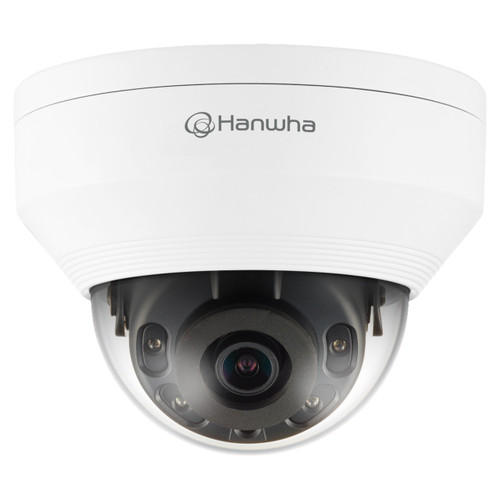
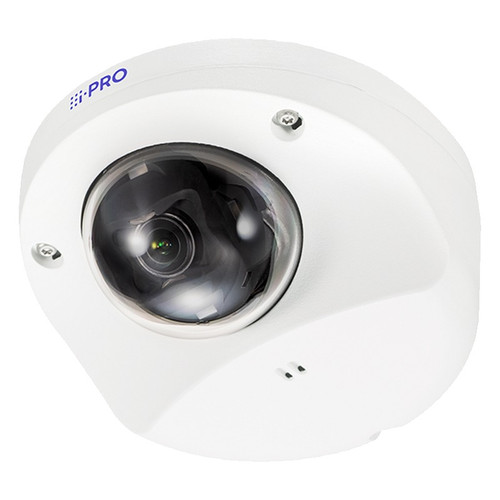
Both the Hanwha QNV-6012R and i-PRO WV-X35302-F2LM are 2MP fixed outdoor vandal-dome IP cameras targeting perimeter and general-surveillance applications where wide-angle coverage, IR night vision, and PoE deployment are requirements. The QNV-6012R is a cost-tier entry-level dome emphasizing broad protocol support and Hanwha's WiseStream II codec efficiency, while the WV-X35302-F2LM is i-PRO's AI-grade dome built around an Ambarella CV25M SoC with FIPS 140-2 Level 3 security and onboard AI classification. This comparison examines imaging performance, environmental suitability, and integration capabilities using manufacturer-published specifications only.
In This Guide
How do the imaging specs compare?
Resolution is not identical: the QNV-6012R outputs 1920×1080 (2MP, 16:9), while the WV-X35302-F2LM outputs 2048×1536 (3MP effective, 4:3), giving the i-PRO model roughly 60% more pixels and a taller aspect ratio that captures more vertical scene depth. The i-PRO's wider 2.4mm focal length delivers a 132° horizontal field of view versus the Hanwha's 2.8mm at 114° horizontal. Both use an approx. 1/2.8" CMOS sensor. Minimum illumination favors the i-PRO at 0.02 lux color versus the Hanwha's 0.03 lux color; both reach 0 lux in IR mode.
WDR performance diverges sharply: the QNV-6012R specifies 120 dB WDR, while the WV-X35302-F2LM specifies 144 dB Super Dynamic WDR (at maximum level 31). IR range is also meaningfully different: the Hanwha reaches 20 m at unspecified IRE; the i-PRO specifies 21 m at 30 IRE and 15 m at 50 IRE, providing a calibrated brightness reference. DORI detection distances at 25 ppm favor the Hanwha (25.1 m) over the i-PRO (17.1 m), indicating the Hanwha's narrower lens yields longer usable detection range despite the i-PRO's wider FOV. The Hanwha specifies 30 fps max; the i-PRO lists frame rate as variable and the provided spec sheet does not state a maximum fps figure at full resolution.
What about installation and environment?
Both cameras carry IP66 and IK10 ratings and are PoE-powered. The i-PRO additionally holds NEMA 4X and Type 4X (UL50E) certifications plus EN50155/IEC61373 railway/vehicle vibration ratings not listed for the Hanwha. Operating temperature range favors the i-PRO significantly: -40°C to +60°C (power-on from -20°C) versus the Hanwha's -30°C to +55°C. The i-PRO also adds a wind resistance spec of up to 40 m/s (≈89 mph), which is absent from the Hanwha spec sheet. The Hanwha also supports 12VDC input as an alternative to PoE; the i-PRO spec sheet lists only PoE.
Power draw differs: the Hanwha draws up to 7.4 W (PoE Class 3), while the i-PRO draws up to 8.6 W (PoE Class 0 per provided specs — Class 0 is ≤15.4 W). The i-PRO uses an M12 network connector rather than the Hanwha's standard RJ-45, which is a meaningful wiring consideration in transportation or outdoor-hardened conduit installations but adds connector cost in standard installations. The Hanwha includes a CVBS analog video output for installer alignment; no equivalent is listed for the i-PRO. Both are finished in white aluminum.
Which fits your VMS and analytics better?
Both cameras support ONVIF Profile S/G/T and H.265/H.264/MJPEG (the i-PRO spec sheet omits explicit MJPEG but lists JPEG). The i-PRO adds ONVIF Profile M. Simultaneous stream users: the i-PRO supports up to 14 users; the Hanwha supports 6 unicast users plus multicast. The i-PRO's AI analytics (onboard Ambarella CV25M) include AI Video Motion Detection, Face Detection, People Detection, and Vehicle Detection, plus AI Sound Classification (gunshot, yell, vehicle horn, glass break). The Hanwha provides rule-based video analytics (intrusion, enter, exit, line crossing, direction) but does not list deep-learning AI object classification in the provided specs.
Security posture differs: the i-PRO carries FIPS 140-2 Level 3 certification and lists signed firmware support; the Hanwha lists firmware encryption and a Hanwha Private Root CA device certificate but does not claim FIPS 140-2. Both support 802.1X, HTTPS, and SNMPv1/v2/v3. The i-PRO adds SFTP and MQTT protocol support not listed for the Hanwha. Edge storage is equivalent: both support microSD/SDHC/SDXC up to 512 GB (i-PRO) and 128 GB (Hanwha). Audio: both support audio input; the i-PRO spec lists a built-in microphone and AI sound classification, while the Hanwha lists selectable mic/line-in with 2.5 VDC supply. The Hanwha includes one alarm input and one alarm output; the i-PRO spec sheet does not explicitly list dry-contact alarm I/O terminals.
Which should you choose: the QNV-6012R or the X35302-F2LM?
Our take: The WV-X35302-F2LM is the stronger choice when the deployment demands certified AI object classification, high-contrast scene performance, or harsh environmental resilience. It delivers 144 dB WDR versus the QNV-6012R's 120 dB — a 24 dB advantage in dynamic range — and adds onboard deep-learning detection for faces, people, and vehicles that the Hanwha's rule-based analytics cannot match. Its operating range extends to -40°C versus -30°C, and its NEMA 4X/EN50155 ratings open transportation and industrial sites the Hanwha is not rated for. The QNV-6012R is the stronger choice when budget, standard RJ-45 infrastructure, dual-power flexibility (PoE + 12VDC), or a Hanwha/Wisenet VMS ecosystem are the primary constraints: it costs less to cable with standard connectors, supports 12VDC fallback, and achieves a longer DORI detection distance (25.1 m vs 17.1 m) due to its narrower 2.8mm lens. FIPS 140-2 Level 3 and MQTT requirements mandate the i-PRO; Wisenet SUNAPI integration mandates the Hanwha.
Side-by-Side Comparison
Spec-for-spec, from manufacturer data.
| Specification | Hanwha QNV-6012R | i-PRO X35302-F2LM |
|---|---|---|
| Resolution | 1920×1080 (2MP, 16:9) | 2048×1536 (approx. 3MP effective, 4:3) |
| Image Sensor | 1/2.8" CMOS | Approx. 1/2.8" CMOS |
| Lens / Focal Length | 2.8mm fixed | 2.4mm fixed |
| Horizontal Field of View | 114° | 132° (16:9) |
| Min. Illumination (Color / IR) | 0.03 lux / 0 lux | 0.02 lux / 0 lux |
| IR Range | 20 m (IRE not specified) | 21 m @ 30 IRE / 15 m @ 50 IRE |
| Wide Dynamic Range | 120 dB | 144 dB (Super Dynamic, level 31) |
| Max Frame Rate | 30 fps @ 2MP | Variable (max fps at full res not stated in spec) |
| Video Compression | H.265, H.264, MJPEG | H.265, H.264, JPEG |
| IP / Weather Rating | IP66 | IP66, NEMA 4X, Type 4X (UL50E) |
| Impact / Vandal Rating | IK10 | IK10 |
| Operating Temperature | -30°C to +55°C | -40°C to +60°C (power-on ≥ -20°C) |
| Power Input / PoE Class | PoE 802.3af Class 3 / 12VDC | PoE (Class 0 per spec) — no 12VDC listed |
| Max Power Draw | 7.4 W | 8.6 W |
| Network Connector | RJ-45 (10/100BASE-T) | M12 (10BASE-T/100BASE-TX) |
| ONVIF Profiles | S, G, T | S, G, T, M |
| AI / Edge Analytics | Rule-based (intrusion, line crossing, etc.) | AI VMD, Face, People, Vehicle detection; AI Sound Classification |
| Security Certification | Firmware encryption, Hanwha Private Root CA | FIPS 140-2 Level 3, signed firmware |
| Edge Storage | microSD/SDHC/SDXC up to 128 GB | microSD/SDHC/SDXC up to 512 GB |
| Alarm I/O | 1 input / 1 output | — (not listed in provided spec sheet) |
| Dimensions (W×H×D) | ø120.3 × 91.7 mm | 109 × 53 × 119 mm |
| Weight | 510 g (1.12 lb) | 475 g (1.05 lb) |
| Warranty | 3 years | 5 years |
Frequently Asked Questions
Which should you choose: the QNV-6012R or the X35302-F2LM?
The WV-X35302-F2LM is the stronger choice when the deployment demands certified AI object classification, high-contrast scene performance, or harsh environmental resilience. It delivers 144 dB WDR versus the QNV-6012R's 120 dB — a 24 dB advantage in dynamic range — and adds onboard deep-learning detection for faces, people, and vehicles that the Hanwha's rule-based analytics cannot match. Its operating range extends to -40°C versus -30°C, and its NEMA 4X/EN50155 ratings open transportation and industrial sites the Hanwha is not rated for. The QNV-6012R is the stronger choice when budget, standard RJ-45 infrastructure, dual-power flexibility (PoE + 12VDC), or a Hanwha/Wisenet VMS ecosystem are the primary constraints: it costs less to cable with standard connectors, supports 12VDC fallback, and achieves a longer DORI detection distance (25.1 m vs 17.1 m) due to its narrower 2.8mm lens. FIPS 140-2 Level 3 and MQTT requirements mandate the i-PRO; Wisenet SUNAPI integration mandates the Hanwha.
Is the QNV-6012R or WV-X35302-F2LM better for low-light performance?
Both cameras reach 0 lux in IR mode. In color (ambient) low light, the i-PRO WV-X35302-F2LM has a slight edge at 0.02 lux versus the QNV-6012R's 0.03 lux per their respective published specs. IR range is comparable: 20 m (Hanwha, IRE unspecified) versus 21 m at 30 IRE / 15 m at 50 IRE (i-PRO). The i-PRO's calibrated IRE figures allow more precise planning; the Hanwha's IRE threshold is not stated in the provided spec sheet.
Can I install either camera in a rail or transportation environment?
Only the i-PRO WV-X35302-F2LM carries the certifications required for railway or vehicle applications: EN50155, JIS E 5006, IEC62236, EN50121, IEC61373, and EN45545 are listed in its spec sheet. The QNV-6012R does not list any of those standards. The i-PRO also adds a wind resistance rating of up to 40 m/s and a wider operating temperature floor of -40°C. For standard building or perimeter installs both cameras' IP66/IK10 ratings are equivalent.
Which camera is easier to integrate with a third-party VMS?
Both cameras support ONVIF Profile S, G, and T, so they will work with any compliant VMS. The i-PRO WV-X35302-F2LM additionally supports ONVIF Profile M, which covers metadata streaming for AI object analytics — useful if your VMS consumes AI metadata natively. The Hanwha QNV-6012R offers SUNAPI (HTTP API) and the Wisenet Open Platform for deeper integration with Hanwha's own VMS ecosystem. The i-PRO supports up to 14 simultaneous stream users versus the Hanwha's 6 unicast, which may matter in multi-decoder monitoring centers.
Get a Second Opinion on Your Camera Choice
Share your site layout, coverage goals, and budget. Our team will validate the camera selection, flag anything we would change, and recommend products that match the use case.