
Hanwha QNF-9010 vs Pelco SRXF3-12360-ES: Specification Comparison
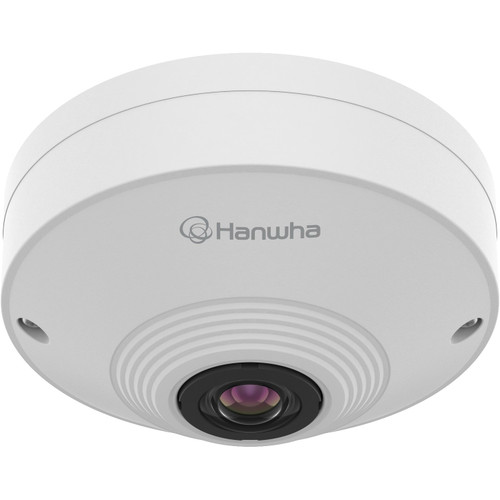
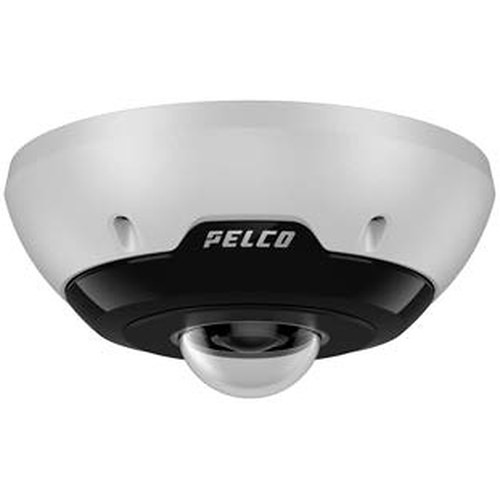
Both the Hanwha QNF-9010 and the Pelco SRXF3-12360-ES are 12MP 360-degree fisheye IP cameras targeting open-plan interior or large-area coverage applications. A buyer replacing multiple fixed cameras with a single ceiling-mounted fisheye unit would reasonably cross-shop these two products. The comparison covers imaging performance, installation requirements, and VMS/analytics integration to help integrators and IT buyers select the right unit for their specific deployment environment.
In This Guide
How do the imaging specs compare?
The Hanwha QNF-9010 uses a 1/2.3-inch 12MP CMOS sensor outputting a 3008×3008 pixel circular frame at up to 30fps, while the Pelco SRXF3-12360-ES produces a 3840×2160 (12MP) output at 12.5fps full resolution. The QNF-9010's native square fisheye resolution is better suited to circular dewarp workflows, whereas the Pelco outputs a standard 16:9 frame from its 180/360-degree fisheye lens. Frame rate is a clear differentiator: the Hanwha delivers 30fps versus Pelco's 12.5fps, which matters for people-counting accuracy and smooth dewarped streams.
On low-light performance, the Pelco SRXF3-12360-ES is specified at 0.10 lux, compared to the Hanwha QNF-9010 at 0.39 lux — giving the Pelco a roughly 4× sensitivity advantage in dimly lit environments. WDR is rated at 120dB on the Hanwha (explicitly quantified as SSDR/BLC/WDR); the Pelco spec lists WDR with a figure of up to 83dB noted in secondary spec data, though the primary specification does not publish a dB value. The Hanwha uses a 1.08mm f/2.2 fixed fisheye lens; the Pelco lists a 2.7mm f/2.5 lens in the primary spec (with a secondary reference to 1.4mm focal length — this inconsistency appears in the provided data and buyers should verify with Pelco). No IR illuminator distance is listed for either camera; the QNF-9010 specs note a 0.5m minimum object distance, not an IR throw distance.
What about installation and environment?
The Hanwha QNF-9010 is rated IP42 and is specified as an indoor-only camera, operating from -10°C to +40°C. Its compact dome housing measures Ø99×49mm and weighs 370g (0.82 lb). It is powered by PoE IEEE 802.3af (Class 3), drawing a maximum of 7.7W, so it works with standard PoE switches and injectors without upgrade.
The Pelco SRXF3-12360-ES carries IP66, IP67, and IK10 ratings, making it fully weatherproof and vandal-resistant for outdoor or harsh-indoor deployments. Its operating temperature range is -40°C to +60°C, far exceeding the Hanwha's range on both ends. It measures 6×6×2.81 inches and draws PoE+ (802.3at), requiring a PoE+ capable switch or injector — an infrastructure cost consideration not present with the Hanwha. Wall, ceiling, pole, pendant, and corner mounting options are noted for the Pelco; the Hanwha supports wall and ceiling mounting.
Which fits your VMS and analytics better?
Both cameras support ONVIF Profile S and Profile T, ensuring broad VMS compatibility. The Hanwha QNF-9010 additionally supports ONVIF Profile G (on-camera recording management), Hanwha's SUNAPI HTTP API, and the Wisenet open platform — providing deeper integration options within Hanwha/Wisenet VMS environments. The Pelco SRXF3-12360-ES is aligned with Pelco's VideoXpert and compatible VMSes via ONVIF S/T. Video compression on the Hanwha includes H.265, H.264 (CBR/VBR), and MJPEG with WiseStream II smart codec; the Pelco primary spec lists H.264, though secondary data references H.265 — buyers should confirm H.265 support with Pelco before specifying.
For edge analytics, the Hanwha QNF-9010 offers people counting, heatmap, defocus detection, motion detection (4 polygonal zones), and tampering — all documented in the provided specification. The Pelco SRXF3-12360-ES provides Pelco Smart Analytics with 8 behavior detection modes; specific behavior types are not enumerated in the provided spec data. Both cameras support microSD edge storage. The Hanwha supports up to 256GB microSD, includes 6 rectangular privacy mask zones, and offers unicast streaming to up to 6 simultaneous users across 3 profiles. Audio input/output is not listed in the Hanwha spec; the Pelco secondary data references microphone support, but this is not confirmed in the primary specification data provided.
Which should you choose: the QNF-9010 or the SRXF3-12360-ES?
Our take: The QNF-9010 is the stronger choice when the deployment is indoors, frame rate and WDR fidelity are priorities, and the infrastructure runs standard PoE. It delivers 30fps versus the Pelco's 12.5fps — a 2.4× frame-rate advantage critical for people-counting and dewarping accuracy — and its WDR is explicitly quantified at 120dB compared to the Pelco's unquantified (secondary-data: up to 83dB) figure. Its PoE 802.3af Class 3 draw (max 7.7W) avoids the switch-upgrade cost that the Pelco's PoE+ requirement introduces. Conversely, the SRXF3-12360-ES is the correct specification when the camera must survive outdoor or harsh environments: its IP66/IP67/IK10 ratings and -40°C to +60°C operating range far exceed the QNF-9010's IP42 indoor-only envelope. The Pelco also achieves 0.10 lux low-light sensitivity versus 0.39 lux on the Hanwha, making it preferable for poorly lit exterior zones. Choose the Hanwha for indoor analytics-rich deployments on standard PoE infrastructure; choose the Pelco for outdoor, vandal-prone, or extreme-temperature sites.
Side-by-Side Comparison
Spec-for-spec, from manufacturer data.
| Specification | Hanwha QNF-9010 | Pelco SRXF3-12360-ES |
|---|---|---|
| Resolution | 12MP (3008×3008) | 12MP (3840×2160) |
| Image Sensor | 1/2.3" 12MP CMOS | Not specified in provided data |
| Lens / Focal Length | 1.08mm fixed, f/2.2 | 2.7mm f/2.5 (secondary data: 1.4mm — verify with Pelco) |
| Angular Field of View | H: 187° / V: 187° / D: 187° | 180° / 360° |
| Min. Illumination | 0.39 lux (color) | 0.10 lux |
| Wide Dynamic Range | 120dB (SSDR/BLC/WDR) | WDR (dB value not specified in primary data; secondary: up to 83dB) |
| Max Frame Rate | 30fps @ 3008×3008 | 12.5fps full resolution |
| Video Compression | H.265 / H.264 (CBR/VBR) / MJPEG | H.264 (H.265 not confirmed in primary spec) |
| IP Rating | IP42 | IP66 / IP67 |
| IK / Impact Rating | — | IK10 |
| Operating Temperature | -10°C to +40°C | -40°C to +60°C |
| Power Input / PoE Class | PoE 802.3af, Class 3 (max 7.7W) | PoE+ 802.3at, Class 3 |
| Edge Storage | microSD/SDHC/SDXC up to 256GB | microSD (capacity not specified in provided data) |
| ONVIF Compliance | Profile S / G / T | Profile S / T |
| Analytics | People counting, heatmap, defocus, motion (4 zones), tampering | Pelco Smart Analytics, 8 behavior modes (types not enumerated in provided data) |
| Audio | Not specified in provided data | Microphone supported (secondary data only — verify with Pelco) |
| Environment Rating | Indoor only | Outdoor rated |
| Warranty | 3-year | 5-year |
Frequently Asked Questions
Which should you choose: the QNF-9010 or the SRXF3-12360-ES?
The QNF-9010 is the stronger choice when the deployment is indoors, frame rate and WDR fidelity are priorities, and the infrastructure runs standard PoE. It delivers 30fps versus the Pelco's 12.5fps — a 2.4× frame-rate advantage critical for people-counting and dewarping accuracy — and its WDR is explicitly quantified at 120dB compared to the Pelco's unquantified (secondary-data: up to 83dB) figure. Its PoE 802.3af Class 3 draw (max 7.7W) avoids the switch-upgrade cost that the Pelco's PoE+ requirement introduces. Conversely, the SRXF3-12360-ES is the correct specification when the camera must survive outdoor or harsh environments: its IP66/IP67/IK10 ratings and -40°C to +60°C operating range far exceed the QNF-9010's IP42 indoor-only envelope. The Pelco also achieves 0.10 lux low-light sensitivity versus 0.39 lux on the Hanwha, making it preferable for poorly lit exterior zones. Choose the Hanwha for indoor analytics-rich deployments on standard PoE infrastructure; choose the Pelco for outdoor, vandal-prone, or extreme-temperature sites.
Is the QNF-9010 or SRXF3-12360-ES better for low-light performance?
Based on the provided specifications, the Pelco SRXF3-12360-ES has a lower minimum illumination rating of 0.10 lux compared to the Hanwha QNF-9010 at 0.39 lux, giving it roughly a 4× sensitivity advantage in dim conditions. Neither camera lists a rated IR throw distance in the provided specs.
Can either camera be installed outdoors?
The Pelco SRXF3-12360-ES is rated IP66, IP67, and IK10 with an operating range of -40°C to +60°C, making it suitable for outdoor and harsh environments. The Hanwha QNF-9010 is rated IP42 and is specified for indoor use only, operating between -10°C and +40°C — it is not suitable for outdoor deployment.
Do both cameras work with third-party VMS platforms?
Yes. Both cameras support ONVIF Profile S and Profile T, which provides broad compatibility with most enterprise VMS platforms. The Hanwha QNF-9010 additionally supports ONVIF Profile G and Hanwha's SUNAPI HTTP API. The Pelco SRXF3-12360-ES does not list Profile G support in the provided specifications.
Get a Second Opinion on Your Camera Choice
Share your site layout, coverage goals, and budget. Our team will validate the camera selection, flag anything we would change, and recommend products that match the use case.