
Hanwha P-3104W vs Speco Technologies N64NR: Specification Comparison
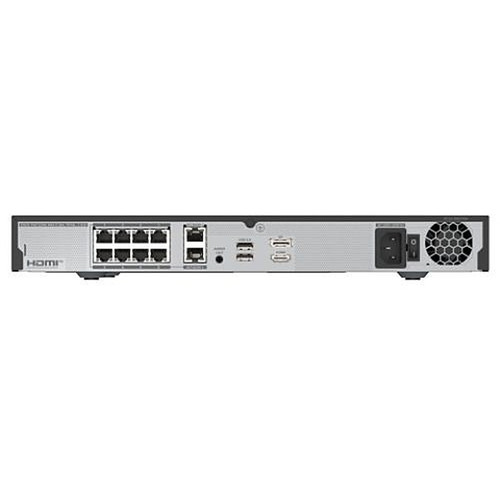
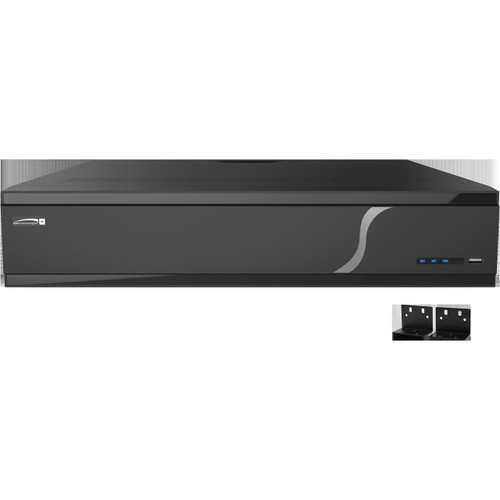
Both the Hanwha WRT-P-3104W-8TB and the Speco Technologies N64NR are 64-channel network video recorders aimed at mid-to-large commercial surveillance deployments. The Hanwha unit is a Windows/Linux-based mini-tower NVR built around a 14th-generation Intel Core i3 and bundled Wisenet WAVE VMS, while the Speco N64NR is a rack-mount appliance with integrated PoE, 4K H.265 recording, and embedded video analytics. The comparison covers recording capacity and throughput, physical deployment and storage architecture, and software ecosystem and analytics.
In This Guide
- Which NVR delivers higher recording capacity and sustained throughput across all 64 channels?
- How do the two units differ in form factor, power architecture, and operating environment?
- What software, analytics, and integration capabilities does each NVR include out of the box?
- Which should you choose: the P-3104W or the N64NR?
- Side-by-Side Specs
- FAQ
Which NVR delivers higher recording capacity and sustained throughput across all 64 channels?
The Hanwha WRT-P-3104W-8TB specifies a maximum video bandwidth of 170 Mbps sustained across all 64 channels, providing a concrete throughput ceiling for multi-stream ingest planning. Its installed storage is 8TB via three 3.5" SATA drive bays, expandable to a specified maximum of 16TB. A 256GB M.2 SSD serves as the OS/cache drive. Maximum resolution is not stated in the provided specifications.
The Speco N64NR specifies 64-channel recording at up to 16MP (3840×2160, 4K UHD) at 30 fps simultaneously across all channels. It provides 8 SATA HDD bays for storage; a maximum total storage figure is not stated in the provided specifications. No aggregate bandwidth figure in Mbps is provided for the N64NR. H.265 compression is supported alongside H.264, which directly reduces per-channel storage consumption relative to H.264-only systems.
For buyers who need a firm bandwidth budget for network planning, only the Hanwha provides that figure (170 Mbps). For buyers who need a stated maximum 4K resolution and frame rate guarantee across all 64 channels simultaneously, only the Speco N64NR provides that specification. The Speco's 8 SATA bays exceed the Hanwha's 3 SATA bays in raw drive-count capacity, though the Hanwha's 16TB maximum storage is the only expansion ceiling stated in the available specs.
How do the two units differ in form factor, power architecture, and operating environment?
The Hanwha WRT-P-3104W-8TB is a mini-tower measuring 14.68" × 6.81" × 16.54" (372.9mm × 173mm × 420mm) and weighing 24 lbs (10.68 kg). It requires dedicated space on a desk, shelf, or floor and is not rack-mount without additional hardware. It is powered by an internal 500W 80 Plus Platinum ATX-style supply. Its operating temperature range is 10–35°C (50–95°F). Housing color is stated as White in one field and Black/Metal in another field within the provided specs — this is an inconsistency in the source data.
The Speco N64NR is specified as rack-mount form factor. Physical dimensions and weight are not provided in the available specifications. It includes built-in PoE (802.3af, under 13W per port), eliminating the need for separate PoE switches to power cameras. Its operating temperature range is 14–122°F (approximately −10–50°C), which is a broader range than the Hanwha's 10–35°C. Power supply wattage and rating are not specified for the N64NR.
Deployments requiring rack installation in a server room or IDF closet favor the Speco N64NR's rack-mount form factor and its broader temperature tolerance. The Hanwha's mini-tower form factor suits control-room or back-office deployments where rack space is unavailable. The Speco's integrated PoE is a significant infrastructure advantage, consolidating camera power and data switching into the recorder itself.
What software, analytics, and integration capabilities does each NVR include out of the box?
The Hanwha WRT-P-3104W-8TB ships with Wisenet WAVE VMS and includes 4 Professional licenses pre-installed. It runs either Windows 11 IoT Enterprise 2024 or Ubuntu Linux 22.04 LTS, giving administrators flexibility in OS environment and the ability to install third-party software. ONVIF compliance is confirmed. No embedded video analytics are listed in the provided specifications for the Hanwha unit itself; analytics capabilities would depend on the WAVE VMS platform and connected cameras.
The Speco N64NR includes embedded video analytics at the recorder level: Line Crossing, People Counting, License Plate Recognition (LPR), and Vehicle Detection are all specified. Two-way audio is supported. ONVIF compliance is confirmed. The N64NR runs on an embedded OS (not specified); no general-purpose OS access or third-party software installation is indicated in the provided specifications. No VMS channel licenses are mentioned.
Buyers requiring LPR, vehicle detection, or people counting without relying on camera-side analytics will find the Speco N64NR's embedded analytics a direct specification advantage. Buyers who need a general-purpose OS, scripting access, or integration with broader enterprise software ecosystems will favor the Hanwha's Windows 11 IoT or Ubuntu Linux platform. The Hanwha's 4 included WAVE Professional licenses reduce initial VMS licensing cost; the N64NR's equivalent licensing terms are not stated in the provided specifications.
Which should you choose: the P-3104W or the N64NR?
Our take: The WRT-P-3104W-8TB is the stronger choice when the deployment requires a general-purpose OS environment, a defined 170 Mbps bandwidth ceiling for network planning, and bundled VMS licensing on a mini-tower footprint. The Speco N64NR is the stronger choice when the installation demands rack-mount form factor, integrated PoE camera power, broader operating temperature tolerance (−10–50°C vs. 10–35°C), and embedded analytics — LPR, vehicle detection, line crossing, and people counting — without additional software cost. The N64NR's 8 SATA bays provide more physical storage expansion slots than the Hanwha's 3, though the Hanwha states a 16TB maximum while the N64NR does not specify one. Buyers on a Wisenet/WAVE camera platform gain deeper integration with the Hanwha unit; ONVIF compliance on both units supports mixed-brand camera deployments for either system.
Side-by-Side Comparison
Spec-for-spec, from manufacturer data.
| Specification | Hanwha P-3104W | Speco Technologies N64NR |
|---|---|---|
| Max Channels | 64 | 64 |
| Max Resolution | — | 16MP (3840×2160) |
| Video Bandwidth | 170 Mbps | — |
| Frame Rate | — | 30 fps (all channels) |
| Video Compression | — | H.265, H.264 |
| Storage Installed | 8TB | — |
| Max Storage | 16TB | — |
| Drive Bays | 3 × 3.5" SATA + 1 × 256GB M.2 SSD | 8 × SATA HDD |
| Form Factor | Mini-tower | Rack-mount |
| Integrated PoE | — | 802.3af (<13W/port) |
| Operating Temp | 10–35°C (50–95°F) | −10–50°C (14–122°F) |
| OS / Platform | Windows 11 IoT Enterprise 2024 / Ubuntu Linux 22.04 LTS | Embedded (not specified) |
| Included VMS Licenses | 4 × Wisenet WAVE Professional | — |
| Embedded Analytics | — | LPR, Vehicle Detection, Line Crossing, People Counting |
| ONVIF | Yes | Yes |
| Warranty | 5-year | 2-year |
Frequently Asked Questions
Which should you choose: the P-3104W or the N64NR?
The WRT-P-3104W-8TB is the stronger choice when the deployment requires a general-purpose OS environment, a defined 170 Mbps bandwidth ceiling for network planning, and bundled VMS licensing on a mini-tower footprint. The Speco N64NR is the stronger choice when the installation demands rack-mount form factor, integrated PoE camera power, broader operating temperature tolerance (−10–50°C vs. 10–35°C), and embedded analytics — LPR, vehicle detection, line crossing, and people counting — without additional software cost. The N64NR's 8 SATA bays provide more physical storage expansion slots than the Hanwha's 3, though the Hanwha states a 16TB maximum while the N64NR does not specify one. Buyers on a Wisenet/WAVE camera platform gain deeper integration with the Hanwha unit; ONVIF compliance on both units supports mixed-brand camera deployments for either system.
Does either NVR include built-in PoE so I don't need a separate switch?
Yes — the Speco N64NR specifies built-in PoE (802.3af, under 13W per port), which can power connected cameras directly from the recorder. The Hanwha WRT-P-3104W-8TB does not list integrated PoE in its provided specifications; external PoE switches or injectors would be required for that unit.
Which unit gives me more storage expansion room for long-retention deployments?
The Speco N64NR provides 8 SATA HDD bays; no maximum total storage figure is stated in the available specs. The Hanwha WRT-P-3104W-8TB has 3 SATA drive bays with 8TB installed and a specified maximum of 16TB. The N64NR's 8-bay count offers more physical expansion slots, but buyers should confirm maximum supported capacity directly with Speco, as that figure is not present in the provided specifications.
Can I run third-party software or scripts on either of these NVRs?
The Hanwha WRT-P-3104W-8TB runs either Windows 11 IoT Enterprise 2024 or Ubuntu Linux 22.04 LTS, both of which support third-party application installation and scripting. The Speco N64NR runs an embedded operating system; no general-purpose OS access or third-party software installation is indicated in the provided specifications for that unit.
Get a Second Opinion on Your Camera Choice
Share your site layout, coverage goals, and budget. Our team will validate the camera selection, flag anything we would change, and recommend products that match the use case.