
Hanwha P-3104W vs i-PRO NX400/3000T3: Specification Comparison
Both the Hanwha WRT-P-3104W and the i-PRO WJ-NX400/3000T3 are 64-channel network video recorders intended for mid-to-large enterprise surveillance deployments. This comparison evaluates them across the dimensions that matter most to installers and IT buyers selecting a recorder: storage capacity and scalability, compute platform and throughput, and software ecosystem plus integration flexibility. Neither unit is a camera, switch, or accessory — both are standalone NVR appliances serving the same channel tier, making them direct cross-shop candidates.
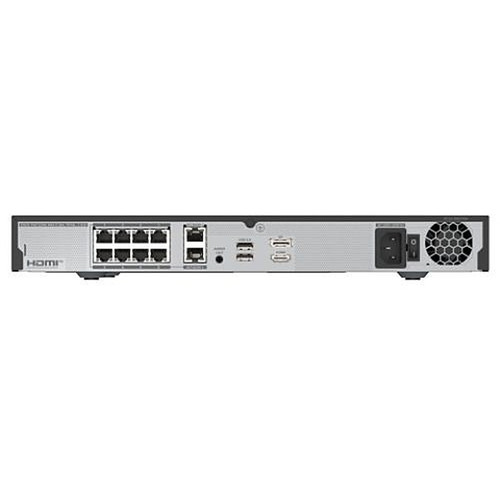
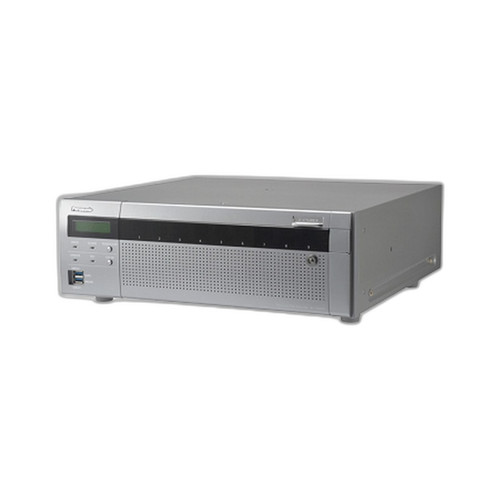
In This Guide
- How much storage do you get out of the box, and how far can each NVR scale?
- What compute resources and recording bandwidth does each unit provide, and how does each handle power and environment?
- Which cameras and VMS platforms does each NVR support, and what software is included?
- Which should you choose: the P-3104W or the NX400/3000T3?
- Side-by-Side Specs
- FAQ
How much storage do you get out of the box, and how far can each NVR scale?
The Hanwha WRT-P-3104W ships with 8TB installed across up to three 3.5-inch SATA drive bays, with a rated maximum of 16TB. One of those bays is occupied by a 256GB M.2 SSD used for the OS/cache layer, leaving the remaining bays for spinning media. The ceiling of 16TB reflects the three-bay physical limit of the mini-tower chassis.
The i-PRO WJ-NX400/3000T3 ships with 3TB installed (a single 3TB drive) but its specified maximum capacity is 324TB — a figure that implies support for external expansion enclosures beyond the base chassis. The WJ-NX400/3000T3 also specifies RAID modes 0, 1, 5, 6, and 10, giving administrators meaningful data-redundancy options. The Hanwha datasheet does not list any RAID support.
For deployments where long on-site retention or multi-drive redundancy is critical, the i-PRO's 324TB ceiling and native RAID support represent a substantial architectural advantage. For smaller sites satisfied with up to 16TB and no RAID requirement, the Hanwha ships with more usable storage day one (8TB vs. 3TB).
What compute resources and recording bandwidth does each unit provide, and how does each handle power and environment?
The Hanwha WRT-P-3104W is built on a 14th-generation Intel Core i3 processor with 16GB DDR4 RAM and a rated video recording bandwidth of 170 Mbps across all 64 channels. It is powered by a 500W 80 Plus Platinum PSU — an efficiency rating that reduces heat output and operating cost. The unit operates between 10°C and 35°C. It also includes dual 1GbE network interfaces (one on-board, one PCIe), providing link redundancy or network segmentation capability.
The i-PRO WJ-NX400/3000T3 specifies 12V DC power input. No CPU model, RAM capacity, or recording bandwidth figure is provided in the available specifications. Operating temperature range is likewise not stated in the provided spec data. The 12V DC supply and box form factor suggest a more appliance-oriented design, but without rated bandwidth or thermal specs, direct numerical comparisons on compute and environmental tolerance are not possible.
On the dimensions where numbers are available — bandwidth, CPU generation, RAM, and PSU efficiency — only the Hanwha provides quantified values. Buyers requiring a spec-verified throughput number for system design should note that the i-PRO's recording bandwidth is not specified in the provided data.
Which cameras and VMS platforms does each NVR support, and what software is included?
The Hanwha WRT-P-3104W runs Wisenet WAVE VMS and includes 4 Professional licenses in the box. Its operating system is buyer-selectable between Windows 11 IoT Enterprise 2024 and Ubuntu Linux 22.04 LTS, giving IT teams flexibility in OS management, patching, and Active Directory integration. ONVIF compliance is listed, and video output is via dual DisplayPort with HDMI adapters. USB 3.2 Gen 2 and USB 2.0 (including Type-C) ports are available for peripherals or local backup.
The i-PRO WJ-NX400/3000T3 specifies compatibility with i-PRO IP cameras and ONVIF-compliant cameras (ONVIF Profile S), and notes compatibility with major VMS platforms. No bundled VMS licenses are specified. The datasheet lists H.265, H.264, and MJPEG compression formats. The unit is noted as multi-site compatible. No operating system, software version, or specific VMS product is named in the provided specifications.
The Hanwha brings an explicit OS choice and 4 bundled WAVE Professional licenses, which can offset software procurement cost. The i-PRO's ONVIF Profile S and stated broad VMS compatibility suggest it is designed to integrate into existing third-party VMS environments rather than anchor a proprietary ecosystem — an advantage for sites already standardized on a non-Hanwha VMS. Buyers running mixed-brand camera fleets should verify ONVIF interoperability for both units independently.
Which should you choose: the P-3104W or the NX400/3000T3?
Our take: The WRT-P-3104W is the stronger choice when compute transparency, included software licenses, and OS flexibility are priorities — it specifies a 14th-gen Core i3, 16GB DDR4, 170 Mbps recording bandwidth, and ships with 4 Wisenet WAVE Professional licenses, all figures absent from the WJ-NX400/3000T3's provided specifications. It also arrives with 8TB installed versus the i-PRO's 3TB. However, the WJ-NX400/3000T3 holds a decisive edge on storage scalability (324TB max vs. 16TB) and is the only unit of the two that specifies RAID 0/1/5/6/10 redundancy. Buyers designing high-retention or mission-critical recording infrastructure where drive failure tolerance is non-negotiable should weight those i-PRO attributes heavily. Sites running a non-Wisenet VMS may also prefer the i-PRO's stated broad VMS compatibility over the Hanwha's WAVE-centric bundle.
Side-by-Side Comparison
Spec-for-spec, from manufacturer data.
| Specification | Hanwha P-3104W | i-PRO NX400/3000T3 |
|---|---|---|
| Max Camera Channels | 64 | 64 |
| Installed Storage | 8TB | 3TB |
| Max Storage Capacity | 16TB | 324TB |
| Drive Bays | 3 (3.5" SATA + 1x M.2 256GB SSD) | — |
| RAID Support | — | RAID 0, 1, 5, 6, 10 |
| Video Recording Bandwidth | 170 Mbps | — |
| Processor | 14th Gen Intel Core i3 | — |
| RAM | 16GB DDR4 | — |
| Network Interfaces | Dual 1GbE (on-board + PCIe) | — |
| Video Compression | — | H.265, H.264, MJPEG |
| Operating System | Windows 11 IoT Enterprise 2024 / Ubuntu Linux 22.04 LTS | — |
| Bundled VMS Licenses | 4 Wisenet WAVE Professional | — |
| ONVIF | Yes | Yes (Profile S) |
| Power Supply | 500W 80 Plus Platinum | 12V DC |
| Operating Temperature | 10°C to 35°C | — |
| Form Factor | Mini-tower | Box (Rack / Shelf) |
| Warranty | 5 years | — |
Frequently Asked Questions
Which should you choose: the P-3104W or the NX400/3000T3?
The WRT-P-3104W is the stronger choice when compute transparency, included software licenses, and OS flexibility are priorities — it specifies a 14th-gen Core i3, 16GB DDR4, 170 Mbps recording bandwidth, and ships with 4 Wisenet WAVE Professional licenses, all figures absent from the WJ-NX400/3000T3's provided specifications. It also arrives with 8TB installed versus the i-PRO's 3TB. However, the WJ-NX400/3000T3 holds a decisive edge on storage scalability (324TB max vs. 16TB) and is the only unit of the two that specifies RAID 0/1/5/6/10 redundancy. Buyers designing high-retention or mission-critical recording infrastructure where drive failure tolerance is non-negotiable should weight those i-PRO attributes heavily. Sites running a non-Wisenet VMS may also prefer the i-PRO's stated broad VMS compatibility over the Hanwha's WAVE-centric bundle.
Is the WRT-P-3104W or WJ-NX400/3000T3 better for large, long-retention deployments?
The WJ-NX400/3000T3 is specified to a 324TB maximum capacity and supports RAID 0, 1, 5, 6, and 10 — making it the better-documented option for high-retention or fault-tolerant deployments. The WRT-P-3104W tops out at 16TB across three drive bays and does not list RAID support in its specifications.
Does either NVR include VMS licenses, or do I need to budget for software separately?
The Hanwha WRT-P-3104W includes 4 Wisenet WAVE Professional licenses in the box. The i-PRO WJ-NX400/3000T3's provided specifications do not list any bundled VMS licenses; buyers should confirm software licensing requirements with the i-PRO vendor before budgeting.
Which unit is easier to integrate into a mixed-brand camera environment?
Both units list ONVIF compliance. The i-PRO WJ-NX400/3000T3 specifically states ONVIF Profile S and compatibility with major VMS platforms, suggesting a design intent around third-party integration. The Hanwha WRT-P-3104W lists ONVIF support but is bundled with Wisenet WAVE VMS, which is Hanwha's proprietary platform. Installers standardized on a non-Hanwha VMS should verify WAVE compatibility or consider whether the i-PRO's broader stated VMS support better fits their stack.
Get a Second Opinion on Your Camera Choice
Share your site layout, coverage goals, and budget. Our team will validate the camera selection, flag anything we would change, and recommend products that match the use case.