
Hanwha L7012R vs i-PRO X35402-F2L: Specification Comparison
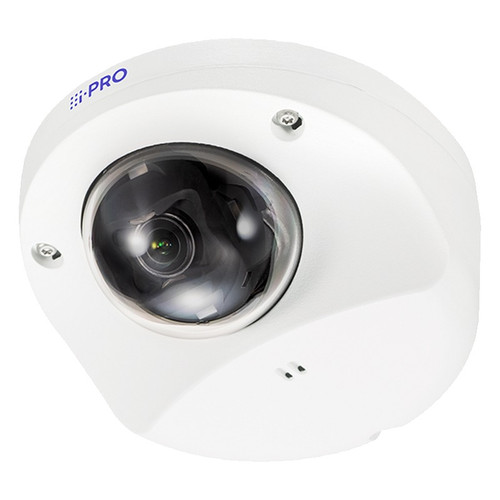
Both the Hanwha ANV-L7012R and the i-PRO WV-X35402-F2L are wired, fixed-lens, outdoor-rated 4MP IP dome cameras powered by PoE. Buyers comparing these two are typically evaluating an entry-level vandal dome against a transit/rail-certified compact dome at similar resolution. The comparison covers imaging capability, environmental and installation requirements, and VMS/analytics integration — areas where the two cameras diverge meaningfully despite sharing a headline resolution class.

In This Guide
How do the imaging specs compare?
The ANV-L7012R uses a 1/3" CMOS sensor with a 3mm fixed lens at F1.6, yielding a 99° horizontal field of view and a DORI detect range of 44.3m. Minimum illumination is rated at 0.13 lux (color) with IR-on reaching 0 lux; IR reach is 20m at 850nm. WDR is specified at 120dB. The WV-X35402-F2L uses a larger 1/2.8" CMOS sensor with a 2.4mm fixed lens at F2.1, delivering a wider 121° horizontal field of view (16:9). Minimum illumination is 0.07 lux (color) and 0.06 lux (B&W), and IR reach is specified at 14m (30IRE) / 10m (50IRE). WDR (Super Dynamic) is rated at 132dB max at level 31.
In low-light performance the i-PRO unit's 0.07 lux color minimum and larger sensor format edge out the Hanwha's 0.13 lux color spec, and its 132dB WDR ceiling exceeds the Hanwha's 120dB. However, the Hanwha's IR reach of 20m is notably longer than the i-PRO's 14m, making the L7012R better suited to longer unlit corridors or perimeter scenes. DORI figures reflect this: Hanwha detect at 44.3m vs i-PRO detect at 29.0m. Both cameras output H.265/H.264 at up to 30fps at 4MP (2560×1440).
What about installation and environment?
Both cameras carry IP66 and IK10 ratings. The Hanwha ANV-L7012R is rated for operation from -30°C to +55°C; the i-PRO WV-X35402-F2L extends that range to -40°C to +60°C, and additionally holds EN50155, JIS E 5006, IEC62236, and EN50121 certifications for railway and vehicle applications, plus NEMA 4X / Type 4X and a wind resistance rating of up to 40 m/s (~89 mph). The i-PRO unit is also UL/c-UL safety listed (UL62368-1). The Hanwha carries no equivalent transit or safety-agency certifications in the supplied specs.
Both cameras are PoE powered (IEEE 802.3af). Maximum power draw is 7.5W for the Hanwha vs 8.6W for the i-PRO. The Hanwha dome measures ø120.3×91.7mm and weighs 410g; the i-PRO measures 109×53×119mm and weighs approximately 475g. The Hanwha pan/tilt/rotate adjustment range is 0–350°/0–67°/0–355°; the i-PRO lists -45° to +45° pan, 0° to +90° tilt, and -90° to +90° yaw. Both use RJ-45 10/100BASE-T Ethernet.
Which fits your VMS and analytics better?
The Hanwha ANV-L7012R supports ONVIF Profile S, G, and T, plus Hanwha's SUNAPI (HTTP API). Its built-in analytics include motion detection (4 polygonal zones), defocus detection, directional detection, tampering detection, enter/exit, and WiseStream II smart codec. The camera title supports up to 85 characters. On-board edge storage is a single microSD/SDHC/SDXC slot up to 128GB. No audio input or output is listed in the supplied specifications for the Hanwha.
The i-PRO WV-X35402-F2L supports ONVIF Profile G, M, S, and T — adding Profile M for advanced AI metadata streaming over the Hanwha's set. Its AI analytics suite includes AI motion, face, people, vehicle, mask, and occupancy detection, plus AI Sound Classification (gunshot, yell, vehicle horn, glass break) with audio detection requiring its built-in microphone. Edge storage supports up to 512GB microSDXC. The i-PRO is FIPS 140-2 Level 3 certified via NXP EdgeLock SE050F and ships with a GlobalSign pre-installed device certificate; the Hanwha uses Hanwha Private Root CA device certificates and offers SD card partition encryption. The Hanwha additionally supports 802.1X EAP-TLS/LEAP/PEAP, SRTP, and WSS.
Which should you choose: the L7012R or the X35402-F2L?
Our take: The WV-X35402-F2L is the stronger choice when the deployment demands transit or vehicle certification, broader AI analytics, or operation at extreme temperatures. It holds EN50155/EN50121 railway ratings and a -40°C to +60°C operating range that the L7012R (-30°C to +55°C) does not match. Its 132dB WDR exceeds the L7012R's 120dB, and its 0.07 lux color minimum illumination betters the Hanwha's 0.13 lux. It also adds ONVIF Profile M, on-board AI face/people/vehicle/mask/occupancy analytics, audio detection with sound classification, and a 512GB microSDXC storage ceiling versus the L7012R's 128GB. The ANV-L7012R is the stronger choice where IR range is the priority — its 20m IR reach outpaces the i-PRO's 14m — or where a three-year budget-tier installation requires a wider DORI detect distance (44.3m vs 29.0m). The Hanwha carries a 3-year warranty; the i-PRO carries a 5-year warranty.
Side-by-Side Comparison
Spec-for-spec, from manufacturer data.
| Specification | Hanwha L7012R | i-PRO X35402-F2L |
|---|---|---|
| Resolution | 4MP (2560×1440) | 4MP (2560×1440) |
| Image Sensor | 1/3" CMOS | Approx. 1/2.8" CMOS |
| Lens / Focal Length | 3mm fixed, F1.6 | 2.4mm fixed, F2.1 |
| Horizontal Field of View | 99° | 121° (16:9) |
| Min. Illumination (Color) | 0.13 lux | 0.07 lux |
| Min. Illumination (B&W) | 0.013 lux | 0.06 lux |
| IR Range | 20m (850nm) | 14m (30IRE) / 10m (50IRE) |
| WDR | 120dB | 132dB max (Super Dynamic On, Level 31) |
| Max Frame Rate | 30fps @ 4MP | 25/30fps |
| Video Compression | H.265, H.264, MJPEG | H.265, H.264, JPEG |
| IP Rating | IP66 | IP66 / NEMA 4X / Type 4X |
| IK / Impact Rating | IK10 | IK10 |
| Operating Temperature | -30°C to +55°C | -40°C to +60°C |
| Power Input / PoE | PoE IEEE 802.3af (Max 7.5W) | PoE IEEE 802.3af (Max 8.6W) |
| Edge Storage | microSD/SDHC/SDXC up to 128GB | microSDXC up to 512GB |
| Audio | — | Built-in mic; AI Sound Classification |
| ONVIF Profiles | S, G, T | G, M, S, T |
| Transit Certification | — | EN50155, JIS E 5006, IEC62236, EN50121 |
| Dimensions | ø120.3×91.7mm | 109×53×119mm |
| Weight | 410g | Approx. 475g |
| Warranty | 3-year | 5-year |
Frequently Asked Questions
Which should you choose: the L7012R or the X35402-F2L?
The WV-X35402-F2L is the stronger choice when the deployment demands transit or vehicle certification, broader AI analytics, or operation at extreme temperatures. It holds EN50155/EN50121 railway ratings and a -40°C to +60°C operating range that the L7012R (-30°C to +55°C) does not match. Its 132dB WDR exceeds the L7012R's 120dB, and its 0.07 lux color minimum illumination betters the Hanwha's 0.13 lux. It also adds ONVIF Profile M, on-board AI face/people/vehicle/mask/occupancy analytics, audio detection with sound classification, and a 512GB microSDXC storage ceiling versus the L7012R's 128GB. The ANV-L7012R is the stronger choice where IR range is the priority — its 20m IR reach outpaces the i-PRO's 14m — or where a three-year budget-tier installation requires a wider DORI detect distance (44.3m vs 29.0m). The Hanwha carries a 3-year warranty; the i-PRO carries a 5-year warranty.
Is the ANV-L7012R or WV-X35402-F2L better for low-light performance?
On minimum illumination specs, the i-PRO WV-X35402-F2L rates lower (0.07 lux color vs the Hanwha's 0.13 lux color), indicating better passive low-light sensitivity. However, the Hanwha's IR reach of 20m exceeds the i-PRO's 14m (at 30IRE), so the Hanwha covers longer unlit distances using active IR illumination. Which matters more depends on the scene: passive low light favors the i-PRO; longer IR throw favors the Hanwha.
Can either camera be used in a rail or transit vehicle installation?
Only the i-PRO WV-X35402-F2L carries explicit railway and vehicle certifications: EN50155, JIS E 5006, IEC62236, and EN50121. It is also rated to -40°C and holds NEMA 4X / Type 4X and a wind resistance spec of up to 40 m/s. The Hanwha ANV-L7012R has no equivalent transit certifications listed in the supplied specifications.
Which camera offers more advanced on-board analytics?
The i-PRO WV-X35402-F2L offers a broader AI analytics suite: AI motion, face, people, vehicle, mask, and occupancy detection, plus AI Sound Classification (gunshot, yell, vehicle horn, glass break). The Hanwha ANV-L7012R includes motion detection (4 polygonal zones), defocus, directional, tampering, and enter/exit detection via WiseStream II, but does not list face, vehicle, occupancy, or audio-based classification in its specifications.
Get a Second Opinion on Your Camera Choice
Share your site layout, coverage goals, and budget. Our team will validate the camera selection, flag anything we would change, and recommend products that match the use case.