
Hanwha C9253R vs i-PRO X66700-Z3LS: Specification Comparison
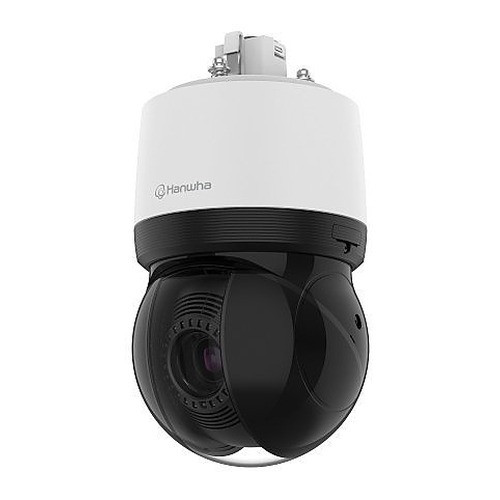
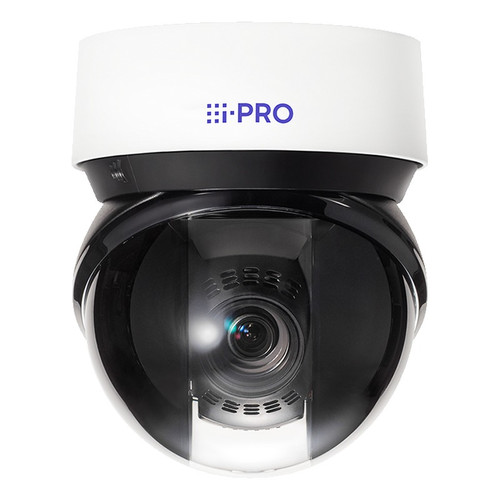
Both the Hanwha XNP-C9253R and the i-PRO WV-X66700-Z3LS are 8MP (4K) outdoor PTZ dome cameras designed for wide-area perimeter surveillance, powered via PoE++, and rated IP66/IK10. They compete directly in the professional integrator market for applications requiring long-range optical zoom, AI-driven analytics, and ruggedized deployment. This comparison evaluates their imaging capability, physical installation requirements, and platform integration characteristics strictly on published specifications.
In This Guide
How do the imaging specs compare?
Both cameras use an approximately 1/2.8" CMOS sensor and deliver 3840×2160 (8MP/4K) resolution. The Hanwha XNP-C9253R provides a 25x optical zoom (5–125mm focal length) with a maximum aperture of F1.6 (wide) to F3.73 (tele), while the i-PRO WV-X66700-Z3LS offers a 30x optical zoom (4.5–135mm focal length) with a maximum aperture of F1.8 (wide) to F4.7 (tele). The i-PRO also specifies an extra digital zoom up to 90x at 1280×720 resolution. At tele, the i-PRO's DORI Identify range is 352.0m vs. the Hanwha's 324.7m, giving the i-PRO a measurable edge in long-range identification. The Hanwha's wider maximum aperture (F1.6 vs. F1.8 at wide end) is a slight optical advantage in low-light wide-angle scenarios.
Minimum illumination is 0.1 lux color / 0 lux IR (Hanwha) vs. 0.13 lux color / 0 lux B/W with IR (i-PRO), a marginal difference favoring Hanwha in color low-light sensitivity. IR range diverges more significantly: the Hanwha specifies Wise IR at 200m, while the i-PRO specifies 280m at 30IRE (200m at 50IRE). The Hanwha claims Extreme WDR at 120dB; the i-PRO's Super Dynamic WDR is rated at a maximum of 132dB (at level 31). The Hanwha supports 30fps at 8MP with a frame rate spec of 60fps (at lower resolutions implied); the i-PRO's maximum shutter and frame rate at full 8MP is not explicitly stated beyond the resolution list. Both include built-in gyro-based image stabilization and defog/fog compensation.
What about installation and environment?
Both cameras are rated IP66 and IK10, and carry NEMA 4X ratings. The Hanwha XNP-C9253R operates from -40°C to +55°C, while the i-PRO WV-X66700-Z3LS operates from -30°C to +60°C — the Hanwha tolerates lower cold temperatures while the i-PRO tolerates a higher upper thermal limit. The i-PRO additionally specifies wind resistance up to 40 m/s (~89 mph), a spec not present in Hanwha's published data. Both are powered by PoE++ (IEEE 802.3bt, Class 6). Hanwha's typical consumption is 24W with a 40W maximum; the i-PRO specifies 45.9W, which may require verification against available PoE++ switch port budgets.
Physical dimensions differ slightly: the Hanwha is ø158×293.3mm at 3,200g (7.05 lb), and the i-PRO is ø167mm×205mm (H) at approximately 3,000g. The Hanwha includes an injector in the published spec; the i-PRO does not state this. The Hanwha lists an extensive compatible mounting accessory ecosystem (wall, pole, parapet, corner, in-ceiling, ceiling, cabinet mounts). The i-PRO's mounting accessories are not enumerated in the provided spec. The Hanwha also specifies a Spin Dry water-removal feature and lens heater; no equivalent feature is listed for the i-PRO. Both use an RJ-45 network interface, though the Hanwha specifies a metal-shielded connector while the i-PRO specifies 10Base-T/100Base-TX (100Mbps maximum stated vs. Hanwha's 10/100BASE-T).
Which fits your VMS and analytics better?
Both cameras support ONVIF Profiles S, G, T, and M, ensuring broad VMS compatibility. The Hanwha XNP-C9253R supports SUNAPI and Wisenet APIs in addition to ONVIF. The i-PRO WV-X66700-Z3LS supports NTCIP (IPv4 stack) and MQTT on both IPv4 and IPv6 stacks. The Hanwha supports up to 20 unicast users and 128 multicast users with up to 10 streaming profiles; the i-PRO supports up to 14 simultaneous users. Audio support: the i-PRO specifies 3.5mm stereo audio input and output jacks, G.726/G.711/AAC-LC compression, and half/full-duplex modes. The Hanwha's alarm events reference audio output but no dedicated audio I/O spec (mic/line jack) is present in the provided data. The i-PRO also specifies AI Sound Classification (gunshot, yell, vehicle horn, glass break), which has no equivalent in the Hanwha spec.
Edge analytics: the Hanwha classifies Person, Face, Vehicle (type: car/bus/truck/motorcycle/bicycle), and License Plate, with AI-powered auto-tracking for persons and vehicles, virtual line crossing/direction, and virtual area detection. The i-PRO specifies AI motion, privacy, face, people, and vehicle detection, plus AI Sound Classification and Scene Change Detection. The Hanwha offers 32 privacy mask zones (quadrangle + mosaic, multi-color); the i-PRO offers up to 32 privacy zones and up to 8 VIQS (variable image quality) zones. Edge storage: the Hanwha supports dual microSD/SDHC/SDXC slots up to 1TB (512GB × 2); the i-PRO supports a single microSDXC up to 512GB. Security: the Hanwha lists TPM with FIPS 140-2 Level 2 certification, secure boot, signed firmware, and firmware encryption; the i-PRO lists signed firmware. The Hanwha's 802.1X authentication supports EAP-TLS, EAP-LEAP, and EAP-PEAP MSCHAPv2; the i-PRO lists 802.1X without specifying EAP methods in the provided data.
Which should you choose: the C9253R or the X66700-Z3LS?
Our take: The XNP-C9253R is the stronger choice when cold-weather deployment, dual-slot edge storage redundancy, or hardened cybersecurity certification are primary requirements; the WV-X66700-Z3LS is the stronger choice when maximum IR throw, superior WDR headroom, or AI sound classification are the priority. Three concrete spec deltas: (1) IR range — i-PRO reaches 280m at 30IRE vs. Hanwha's 200m Wise IR; (2) WDR — i-PRO peaks at 132dB vs. Hanwha's 120dB Extreme WDR; (3) edge storage — Hanwha provides dual-slot capacity up to 1TB vs. i-PRO's single-slot 512GB maximum. Conversely, the Hanwha operates down to -40°C (i-PRO: -30°C), carries FIPS 140-2 Level 2 TPM certification, and includes license-plate classification in its AI engine. Warrant consideration: Hanwha offers 3 years; i-PRO offers 5 years, which affects TCO calculations for long-cycle deployments.
Side-by-Side Comparison
Spec-for-spec, from manufacturer data.
| Specification | Hanwha C9253R | i-PRO X66700-Z3LS |
|---|---|---|
| Resolution | 3840×2160 (8MP) | 3840×2160 (8MP) |
| Image Sensor | 1/2.8" CMOS | Approx. 1/2.8" type CMOS |
| Optical Zoom / Focal Length | 25x / 5–125mm | 30x / 4.5–135mm |
| Max Aperture (Wide / Tele) | F1.6 (Wide) / F3.73 (Tele) | F1.8 (Wide) / F4.7 (Tele) |
| Min Illumination (Color / IR) | 0.1 lux / 0 lux | 0.13 lux / 0 lux |
| IR Range | 200m (Wise IR) | 280m (30IRE) / 200m (50IRE) |
| WDR | Extreme WDR 120dB | Super Dynamic max 132dB |
| DORI Identify (Tele) | 324.7m / 1065.2ft | 352.0m / 1154.8ft |
| Video Compression | H.265, H.264, MJPEG | H.265, H.264, MJPEG |
| IP / Vandal Rating | IP66 / IK10 / NEMA 4X | IP66 / IK10 / NEMA 4X |
| Operating Temperature | -40°C to +55°C | -30°C to +60°C |
| Power / PoE Class | PoE++ IEEE 802.3bt Class 6, max 40W | PoE++ 45.9W |
| Edge Storage | Dual microSD/SDXC up to 1TB (512GB×2) | Single microSDXC up to 512GB |
| Audio I/O | Not specified in provided spec | 3.5mm stereo in/out; G.726, G.711, AAC-LC |
| AI Analytics | Person, Face, Vehicle type, License Plate, Auto-tracking | AI motion, face, people, vehicle, AI Sound Classification |
| Warranty | 3 years | 5 years |
Frequently Asked Questions
Which should you choose: the C9253R or the X66700-Z3LS?
The XNP-C9253R is the stronger choice when cold-weather deployment, dual-slot edge storage redundancy, or hardened cybersecurity certification are primary requirements; the WV-X66700-Z3LS is the stronger choice when maximum IR throw, superior WDR headroom, or AI sound classification are the priority. Three concrete spec deltas: (1) IR range — i-PRO reaches 280m at 30IRE vs. Hanwha's 200m Wise IR; (2) WDR — i-PRO peaks at 132dB vs. Hanwha's 120dB Extreme WDR; (3) edge storage — Hanwha provides dual-slot capacity up to 1TB vs. i-PRO's single-slot 512GB maximum. Conversely, the Hanwha operates down to -40°C (i-PRO: -30°C), carries FIPS 140-2 Level 2 TPM certification, and includes license-plate classification in its AI engine. Warrant consideration: Hanwha offers 3 years; i-PRO offers 5 years, which affects TCO calculations for long-cycle deployments.
Is the XNP-C9253R or WV-X66700-Z3LS better for low-light performance?
Based on published specs, the Hanwha XNP-C9253R has a marginally lower color minimum illumination (0.1 lux vs. 0.13 lux for the i-PRO) and a wider maximum aperture at the wide end (F1.6 vs. F1.8). However, the i-PRO WV-X66700-Z3LS has a longer IR throw at 280m (30IRE) compared to the Hanwha's 200m Wise IR, giving it an advantage in complete-darkness long-range scenarios. Neither advantage is dramatic; both reach 0 lux with IR active.
Which camera supports a longer zoom range for perimeter identification?
The i-PRO WV-X66700-Z3LS offers 30x optical zoom (4.5–135mm) with a DORI Identify range of 352m at tele. The Hanwha XNP-C9253R provides 25x optical zoom (5–125mm) with a DORI Identify range of 324.7m at tele — a difference of approximately 27m. The i-PRO also offers up to 90x extra digital zoom at reduced resolution (1280×720), which the Hanwha does not specify; the Hanwha specifies 32x digital zoom for a total 800x combined.
Which camera is a better fit for deployments requiring cybersecurity compliance?
The Hanwha XNP-C9253R specifies TPM with FIPS 140-2 Level 2 certification, secure boot, signed firmware, firmware encryption, Digest Authentication, brute-force attack prevention, 802.1X with EAP-TLS/LEAP/PEAP, SRTP, and SD card encryption. The i-PRO WV-X66700-Z3LS lists signed firmware and 802.1X but does not specify FIPS certification, EAP method details, or SD card encryption in the provided spec. For deployments with explicit FIPS 140-2 requirements, the Hanwha's published spec directly addresses that standard.
Get a Second Opinion on Your Camera Choice
Share your site layout, coverage goals, and budget. Our team will validate the camera selection, flag anything we would change, and recommend products that match the use case.