
Hanwha C9253 vs Hanwha C9303RW: Specification Comparison
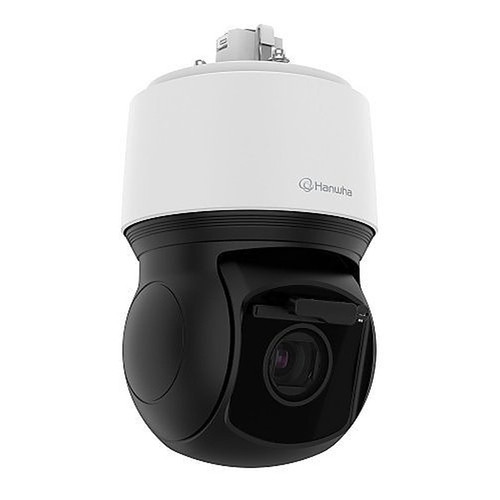
Both the Hanwha XNP-C9253 and XNP-C9303RW are 8MP (3840×2160) outdoor PTZ dome cameras from Hanwha's Wisenet lineup, aimed at wide-area perimeter surveillance. Both share a 1/2.8" CMOS sensor, AI auto-tracking, IP66/IK10 ratings, and ONVIF compatibility. The key differentiators are optical zoom range, IR illumination, power input, physical size, pan/tilt speed, and water-removal mechanism — factors that will drive the decision for most installers and IT buyers.
In This Guide
How do the imaging specs compare?
Both cameras share the same 1/2.8" CMOS sensor, 3840×2160 resolution, and 30fps maximum frame rate at full 8MP, with identical 120dB Extreme WDR and minimum color illumination of 0.1 Lux. The C9253 uses a 5–125mm lens delivering 25x optical zoom (800x total with 32x digital), while the C9303RW steps up to a 5–150mm lens with 30x optical zoom (960x total). In tele mode, this translates to a meaningful DORI advantage for the C9303RW: detection reaches 4,018m vs. 3,247m, recognition reaches 804m vs. 649m, and identification reaches 402m vs. 325m per the provided DORI figures.
For low-light performance, the C9303RW includes built-in Wise IR illumination rated at 200m (656ft), with a minimum IR illumination of 0 Lux. The C9253 specifies 0.01 Lux B/W as its low-light floor but lists no built-in IR illuminator in its specs — its datasheet note states 'None (external IR illuminator required).' Both cameras include WiseNR II AI-based noise reduction, DIS with a built-in gyro sensor, and defog support. Water removal differs: the C9253 uses spin-dry plus a lens heater, while the C9303RW uses a physical wiper plus a lens heater.
What about installation and environment?
Both units carry IP66, IK10, NEMA4X, and NEMA-TS 2 (2.2.7, 2.2.8, 2.2.9) environmental ratings and operate across the same temperature range of -40°C to +55°C. Power input is a significant divergence: the C9253 runs on PoE+ (IEEE 802.3at, Class 4) with a typical draw of 24W and max of 25.5W, making it compatible with any 802.3at-capable switch. The C9303RW requires PoE++ (IEEE 802.3bt, Class 6, Type 3) at a typical 26W and max 46W — a PoE++ injector is included per spec, but the switch infrastructure must support 802.3bt or the injector must be used. This is a meaningful installation cost and planning consideration.
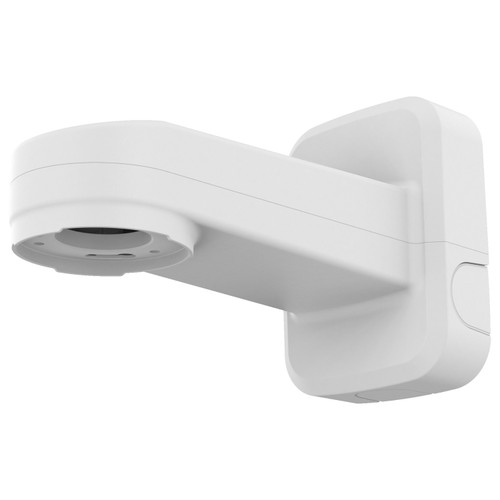
Physically, the C9303RW is larger and heavier: 184.9×318.8mm / 5,600g (12.34 lb) versus the C9253's 158×293.3mm / 3,200g (7.05 lb). Both cameras share a broad compatible mounting accessory set (SBP-156HMW, SBP-156WMW, SBP-390WMW2, SBP-300PMW2, SBP-156LMW/LMW1, SBP-300LMW, SBP-156KMW, SBP-300KMW1, SBP-300NBW). The C9253 additionally lists an in-ceiling mount (SHP-1563FPW, SHP-1563FW) and the SPB-PTZ85W accessory; these are not listed for the C9303RW in the provided specs. Pan speed is faster on the C9253 (max 700°/sec vs. 500°/sec) and tilt speed as well (max 500°/sec vs. 350°/sec), which matters for rapid subject acquisition across large scenes.
Which fits your VMS and analytics better?
Both cameras are fully aligned on network and VMS integration: ONVIF Profile S/G/T/M, SUNAPI, and Wisenet API are supported on both. Video compression is identical — H.265/H.264 (Main/Baseline/High) and MJPEG — as are WiseStream II and III smart codecs, CBR/VBR bitrate control, unicast (20 users), and multicast (128 users) with up to 10 streaming profiles. The full protocol suite (IPv4/v6, RTSP, SRTP, MQTT, NTCIP1205, SNMPv3, 802.1X with EAP-TLS/LEAP/PEAP, HTTPS, WSS) is identical across both models. Edge storage is 2-slot Micro SD/SDHC/SDXC up to 1TB (512GB×2) on both, with 4GB RAM and 512MB Flash on each.
AI analytics capabilities are spec-equivalent: both classify Person, Face, Vehicle (car/bus/truck/motorcycle/bicycle), and License Plate; support virtual line crossing/direction and virtual area analytics; include DetectionShot; and provide AI-based auto-tracking of persons and vehicles. Security posture is nearly identical — both carry TPM with FIPS 140-2 Level 2, secure boot, signed firmware, firmware encryption, and Hanwha Private Root CA device certificates. A minor spec difference: the C9303RW explicitly lists 'AES encryption, ZIP compression' under Data Protect, while the C9253 lists 'Authentication & data encryption' — the C9253 spec does not name AES explicitly. Audio output/input is listed as incomplete ('Audi...') in both specs and cannot be fully compared from the provided data.
Which should you choose: the C9253 or the C9303RW?
Our take: The C9303RW is the stronger choice when maximum detection range, built-in IR illumination, and all-weather wiper operation are the priorities. Its 30x optical zoom (vs. 25x) extends tele-mode identification range to 402m vs. 325m, its Wise IR reaches 200m at 0 Lux versus the C9253's external-IR-required 0.01 Lux B/W floor, and its physical wiper provides active lens clearing that spin-dry alone cannot match in persistent rain or dust. The trade-offs are real: the C9303RW is 2,400g heavier, requires PoE++ (802.3bt Class 6, max 46W) rather than the C9253's PoE+ (802.3at Class 4, max 25.5W), and its pan/tilt speeds are lower (500°/sec pan vs. 700°/sec). Choose the C9253 where existing PoE+ switch infrastructure must be preserved, faster PTZ movement is critical for tracking fast-moving subjects, or installation weight and size are constrained.
Side-by-Side Comparison
Spec-for-spec, from manufacturer data.
| Specification | Hanwha C9253 | Hanwha C9303RW |
|---|---|---|
| Resolution | 3840×2160 (8MP) | 3840×2160 (8MP) |
| Image Sensor | 1/2.8" CMOS | 1/2.8" CMOS |
| Focal Length / Optical Zoom | 5–125mm / 25x (800x total) | 5–150mm / 30x (960x total) |
| Min. Illumination | 0.1 Lux color / 0.01 Lux B/W | 0.1 Lux color / 0 Lux IR |
| Built-in IR / IR Range | No built-in IR (external required) | Wise IR / 200m (656ft) |
| Wide Dynamic Range | Extreme WDR 120dB | Extreme WDR 120dB |
| Max Frame Rate | 30fps @ 8MP | 30fps @ 8MP |
| Pan Speed (Max) | 700°/sec | 500°/sec |
| Tilt Speed (Max) | 500°/sec | 350°/sec |
| Water Removal | Spin dry + lens heater | Wiper + lens heater |
| Power Input / PoE Class | PoE+ IEEE 802.3at / Class 4 | PoE++ IEEE 802.3bt / Class 6 |
| Max Power Draw | 25.5W | 46W |
| IP / Impact Rating | IP66 / IK10 | IP66 / IK10 |
| Operating Temperature | -40°C to +55°C | -40°C to +55°C |
| Edge Storage | 2x microSD up to 512GB (1TB total) | 2x microSD up to 512GB (1TB total) |
| Dimensions (dia × H) | ø158 × 293.3mm (6.22 × 11.55") | ø184.9 × 318.8mm (7.28 × 12.55") |
| Weight | 3,200g (7.05 lb) | 5,600g (12.34 lb) |
| DORI Identify (Tele) | 324.7m (1,065ft) | 401.8m (1,318ft) |
| ONVIF Profile | S/G/T/M | S/G/T/M |
| Warranty | 3-year | 3-year |
Frequently Asked Questions
Which should you choose: the C9253 or the C9303RW?
The C9303RW is the stronger choice when maximum detection range, built-in IR illumination, and all-weather wiper operation are the priorities. Its 30x optical zoom (vs. 25x) extends tele-mode identification range to 402m vs. 325m, its Wise IR reaches 200m at 0 Lux versus the C9253's external-IR-required 0.01 Lux B/W floor, and its physical wiper provides active lens clearing that spin-dry alone cannot match in persistent rain or dust. The trade-offs are real: the C9303RW is 2,400g heavier, requires PoE++ (802.3bt Class 6, max 46W) rather than the C9253's PoE+ (802.3at Class 4, max 25.5W), and its pan/tilt speeds are lower (500°/sec pan vs. 700°/sec). Choose the C9253 where existing PoE+ switch infrastructure must be preserved, faster PTZ movement is critical for tracking fast-moving subjects, or installation weight and size are constrained.
Is the C9253 or C9303RW better for low-light and nighttime surveillance?
The C9303RW has a clear advantage for low-light use: it includes built-in Wise IR illumination rated to 200m (656ft) and achieves 0 Lux minimum illumination in IR mode. The C9253 specifies 0.01 Lux B/W as its low-light floor but does not include a built-in IR illuminator per its specs — an external IR illuminator would be required for true darkness. If nighttime IR coverage is a requirement, the C9303RW is the spec-supported choice.
Can I use my existing PoE+ switches for either camera?
Only the C9253 is compatible with standard PoE+ (IEEE 802.3at, Class 4) switches, drawing a maximum of 25.5W. The C9303RW requires PoE++ (IEEE 802.3bt, Class 6, Type 3) with a maximum draw of 46W; a PoE++ injector is included per spec, but your switch must support 802.3bt or the injector must be used in-line. Deploying the C9303RW on a PoE+-only switch without the injector is not supported by the spec.
Which camera has better zoom reach for license plate or facial identification at long range?
The C9303RW provides greater tele-mode reach across all DORI thresholds per the provided specifications. At the Identify tier (250PPM/76PPF), the C9303RW reaches 401.8m (1,318ft) in tele mode versus the C9253's 324.7m (1,065ft) — a difference of approximately 77m. This advantage comes from the C9303RW's 30x optical zoom (5–150mm) versus the C9253's 25x (5–125mm). Both cameras share identical wide-angle DORI figures.
Get a Second Opinion on Your Camera Choice
Share your site layout, coverage goals, and budget. Our team will validate the camera selection, flag anything we would change, and recommend products that match the use case.