
Hanwha C8303RW vs Hanwha XNP-8300RW: Specification Comparison
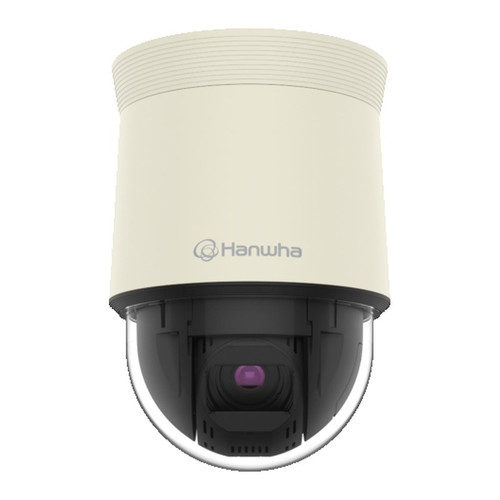
Both the Hanwha XNP-C8303RW and the XNP-8300RW are 6MP outdoor AI PTZ network cameras sharing the same 1/2.8" CMOS sensor, 30x optical zoom, 200m IR range, and IP66/IK10 enclosure. They target the same open-area and perimeter surveillance deployment type, making them a genuine cross-shop decision. The key differentiators lie in cybersecurity architecture, AI analytics depth, noise reduction engine, power budget, and wiper/heater configuration rather than resolution or optics, which are essentially identical.

In This Guide
How do the imaging specs compare?
Both cameras share identical core imaging hardware: a 1/2.8" CMOS sensor producing 3328×1872 (6MP) at 30fps, a 5–150mm DC auto-iris lens with 30x optical zoom (F1.6 wide, F4.56 tele) and 32x digital zoom for 960x total magnification, 0.1 Lux color / 0 Lux IR minimum illumination, Extreme WDR at 120dB, and Wise IR reaching 200m. The DORI performance table is identical across both models: Detect 121.5m wide / 3,482m tele, Observe 48.6m / 1,392m, Recognize 24.3m / 696m, Identify 12.2m / 348m.
Where the two diverge is noise reduction: the C8303RW specifies WiseNR II (AI-engine-based) plus SSNR V, while the XNP-8300RW lists only SSNR V. The C8303RW also explicitly lists a 60fps frame-rate capability in its feature set, though both models state 30fps at 6MP as max framerate in the sensor spec block. The XNP-8300RW's Day & Night spec includes Color/BW/Schedule modes explicitly; the C8303RW lists Auto(ICR) without enumerating those sub-modes. Privacy masking on the C8303RW supports quadrangle zones; the XNP-8300RW specifies rectangular zones only. Both support flip and mirror video rotation, electronic shutter 2–1/12,000s, defog, and DIS via built-in gyro.
What about installation and environment?
Both cameras carry identical environmental ratings — IP66, IK10, NEMA 4X, and NEMA-TS 2 — and share the same physical envelope: Ø184.9×318.8mm. Operating temperature range is identical at -40°C to +55°C. The C8303RW weighs 5,600g (12.34 lb) versus 5,400g (11.90 lb) for the XNP-8300RW, a 200g difference that is unlikely to affect mounting hardware selection. Both are powered by PoE++ / HPoE (IEEE 802.3bt, Class 6, Type 3) with injector included.
Power budget differs: the C8303RW draws Typical 26W / Max 46W, while the XNP-8300RW draws Typical 20W / Max 42W — the C8303RW consumes up to 4W more at peak. Both cameras include a wiper for water removal; the C8303RW additionally specifies a lens heater, which the XNP-8300RW spec does not mention. Mounting accessories are explicitly listed for the C8303RW (SBP-156HMW hanging, SBP-156WMW/SBP-390WMW2 wall, SBP-300PMW2 pole, SBP-156LMW/SBP-156LMW1/SBP-300LMW parapet, SBP-156KMW/SBP-300KMW1 corner, SBP-300NBW cabinet); the XNP-8300RW spec references optional SBP brackets without enumerating specific part numbers.
Which fits your VMS and analytics better?
Both cameras support ONVIF Profile S/G/T, SUNAPI, and Wisenet SDK. The C8303RW additionally lists ONVIF Profile M (metadata, analytics events) and NTCIP 1205 (traffic/ITS protocol), neither of which appears in the XNP-8300RW spec. The C8303RW's protocol list includes CDP and SRTP (TCP and UDP Unicast); the XNP-8300RW lists SRTP but omits CDP and NTCIP. Smart Codec on the C8303RW is WiseStream II/III; the XNP-8300RW specifies WiseStream II and Manual (5-area) only.
Analytics depth diverges significantly. The C8303RW specifies AI-engine-based classified object detection (Person, Face, Vehicle, License Plate), vehicle attribute detection (car/bus/truck/motorcycle/bicycle), DetectionShot, virtual line crossing/direction, and virtual area events. The XNP-8300RW lists directional detection, fog detection, face detection, motion detection, appear/disappear, enter/exit, and object auto-tracking — without explicit AI classification of vehicle sub-types or license plate attributes. Both support 200m IR auto-tracking for Person/Vehicle; the XNP-8300RW additionally specifies Target Lock Tracking by name. Edge storage is identical at 2-slot Micro SD/SDHC/SDXC up to 1TB (512GB×2) on both. Audio input is listed for the XNP-8300RW; the C8303RW spec notes alarm output and audio capability via the optional SPM-4210 I/O box rather than as a built-in input. Cybersecurity: the C8303RW specifies TPM 2.0, SD card encryption, secure boot, signed firmware, firmware encryption, FIPS 140-2 Level 2 TPM, and a Hanwha Private Root CA device certificate. The XNP-8300RW specifies UL CAP (UL 2900-1) cybersecurity certification and a Hanwha Techwin Root CA certificate but does not list TPM 2.0, SD encryption, secure boot, or FIPS 140-2 in its published spec.
Which should you choose: the C8303RW or the XNP-8300RW?
Our take: The XNP-C8303RW is the stronger choice when cybersecurity compliance, AI analytics depth, or traffic/ITS integration are decision criteria. Concretely: the C8303RW adds TPM 2.0 with FIPS 140-2 Level 2, secure boot, and SD card encryption absent from the XNP-8300RW spec; it extends ONVIF support to Profile M and adds NTCIP 1205 for ITS deployments; and its AI engine classifies vehicle sub-types (car/bus/truck/motorcycle/bicycle) and license plate attributes where the XNP-8300RW does not enumerate those classes. It also adds a lens heater for cold-climate wiper operation and WiseStream III. Trade-offs: the C8303RW draws up to 4W more at peak (46W vs 42W) and weighs 200g more. The XNP-8300RW carries UL CAP (UL 2900-1) cybersecurity certification not listed for the C8303RW and explicitly names Target Lock Tracking. Choose the C8303RW for AI-classified analytics, FIPS-grade security, or NTCIP-connected infrastructure; the XNP-8300RW where UL CAP certification is a procurement requirement.
Side-by-Side Comparison
Spec-for-spec, from manufacturer data.
| Specification | Hanwha C8303RW | Hanwha XNP-8300RW |
|---|---|---|
| Resolution | 6MP (3328×1872) | 6MP (3328×1872) |
| Image Sensor | 1/2.8" CMOS | 1/2.8" CMOS |
| Focal Length / Zoom | 5–150mm, 30x optical, 32x digital (960x total) | 5–150mm, 30x optical, 32x digital (960x total) |
| Min. Illumination | 0.1 Lux color / 0 Lux IR | 0.1 Lux color / 0 Lux IR |
| IR Range | 200m (Wise IR) | 200m (Wise IR) |
| WDR | Extreme WDR 120dB | Extreme WDR 120dB |
| Max Frame Rate | 30fps @ 6MP (60fps listed in features) | 30fps |
| Noise Reduction | WiseNR II (AI-based) + SSNR V | SSNR V |
| Video Compression | H.265, H.264 (Main/Baseline/High), MJPEG | H.265, H.264 (Main/Baseline/High), MJPEG |
| Smart Codec | WiseStream II / III | WiseStream II, Manual (5-area) |
| ONVIF Profiles | S / G / T / M | S / G / T |
| AI Analytics | Person, Face, Vehicle (type), License Plate, virtual line/area | Directional, Fog, Face, Motion, Appear/Disappear, Enter/Exit, Auto-tracking |
| IP Rating | IP66 | IP66 |
| IK Rating | IK10 | IK10 |
| NEMA Rating | NEMA 4X, NEMA-TS 2 (2.2.7, 2.2.8, 2.2.9) | NEMA 4X, NEMA-TS 2 (2.2.8, 2.2.9) |
| Operating Temperature | -40°C to +55°C | -40°C to +55°C |
| Power Input | PoE++ IEEE 802.3bt, Class 6, Type 3 (injector included) | HPoE IEEE 802.3bt, Class 6, Type 3 (injector included) |
| Power Consumption | Typical 26W, Max 46W | Typical 20W, Max 42W |
| Edge Storage | 2× Micro SD/SDHC/SDXC, up to 1TB (512GB×2) | 2× Micro SD/SDHC/SDXC, up to 1TB |
| RAM / Flash | 4GB RAM, 512MB Flash | 4GB RAM, 512MB Flash |
| Audio | Via optional SPM-4210 I/O box | Audio input (built-in per spec) |
| Cybersecurity | TPM 2.0 (FIPS 140-2 L2), secure boot, signed firmware, SD encryption | UL CAP (UL 2900-1) certified; Hanwha Techwin Root CA |
| Water Removal | Wiper + lens heater | Wiper (lens heater not listed in spec) |
| Privacy Masking | 32 zones, quadrangle support | 32 zones, rectangular only |
| Dimensions | Ø184.9×318.8mm (7.28×12.55") | Ø184.9×318.8mm (7.28×12.55") |
| Weight | 5,600g (12.34 lb) | 5,400g (11.90 lb) |
| Warranty | 3-year | Not stated in provided spec |
Frequently Asked Questions
Which should you choose: the C8303RW or the XNP-8300RW?
The XNP-C8303RW is the stronger choice when cybersecurity compliance, AI analytics depth, or traffic/ITS integration are decision criteria. Concretely: the C8303RW adds TPM 2.0 with FIPS 140-2 Level 2, secure boot, and SD card encryption absent from the XNP-8300RW spec; it extends ONVIF support to Profile M and adds NTCIP 1205 for ITS deployments; and its AI engine classifies vehicle sub-types (car/bus/truck/motorcycle/bicycle) and license plate attributes where the XNP-8300RW does not enumerate those classes. It also adds a lens heater for cold-climate wiper operation and WiseStream III. Trade-offs: the C8303RW draws up to 4W more at peak (46W vs 42W) and weighs 200g more. The XNP-8300RW carries UL CAP (UL 2900-1) cybersecurity certification not listed for the C8303RW and explicitly names Target Lock Tracking. Choose the C8303RW for AI-classified analytics, FIPS-grade security, or NTCIP-connected infrastructure; the XNP-8300RW where UL CAP certification is a procurement requirement.
Is the XNP-C8303RW or XNP-8300RW better for low-light performance?
Based on published specs, both cameras are identical in low-light hardware: same 1/2.8" CMOS sensor, same minimum illumination (0.1 Lux color / 0 Lux IR), same 200m Wise IR range, and same Extreme WDR at 120dB. The C8303RW adds WiseNR II (AI-based noise reduction) on top of SSNR V, while the XNP-8300RW lists only SSNR V — giving the C8303RW a potential processing advantage in noisy low-light scenes, though no published SNR or sensitivity test data is available to quantify the difference.
Which camera is easier to deploy on a PoE++ switch — the C8303RW or the XNP-8300RW?
Both require PoE++ (IEEE 802.3bt, Class 6, Type 3) and include an injector. The XNP-8300RW draws Typical 20W / Max 42W; the C8303RW draws Typical 26W / Max 46W. Both fall within Class 6 (max 51W), so either will work on a standard 802.3bt Class 6 port. The C8303RW's higher typical draw (26W vs 20W) should be budgeted when calculating switch port capacity across a multi-camera installation.
Does either camera support on-board audio recording without an add-on box?
The XNP-8300RW spec lists audio input as a feature. The XNP-C8303RW spec references audio capability in the context of alarm events but notes that alarm input and output require the optional SPM-4210 I/O box — the datasheet does not list a built-in audio input. If native on-board audio capture is required without additional hardware, the XNP-8300RW has the clearer published support based on available specs.
Get a Second Opinion on Your Camera Choice
Share your site layout, coverage goals, and budget. Our team will validate the camera selection, flag anything we would change, and recommend products that match the use case.