
Hanwha C8253R vs i-PRO X66600-Z3LS: Specification Comparison
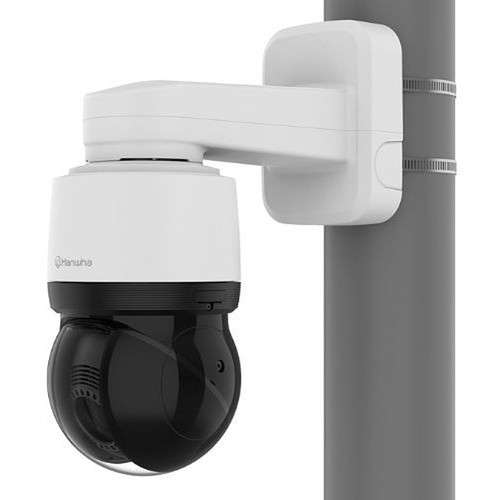
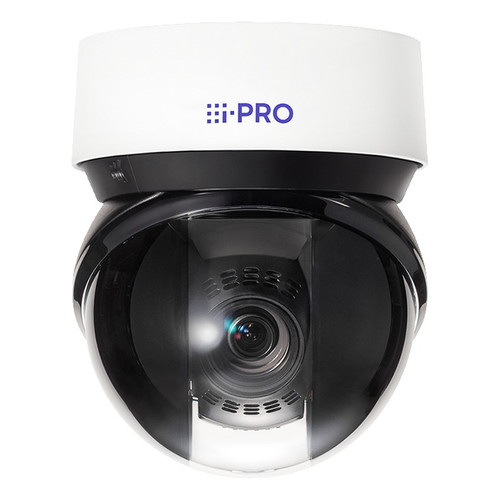
Both the Hanwha XNP-C8253R and the i-PRO WV-X66600-Z3LS are 6MP outdoor IP PTZ dome cameras targeting perimeter and wide-area surveillance. They share the same resolution class, PoE++ power, IP66/IK10 environmental ratings, and AI-assisted analytics. This comparison covers their imaging performance, installation requirements, and integration capabilities to help installers and IT buyers determine which unit best fits a given deployment scenario.
In This Guide
How do the imaging specs compare?
Both cameras use an approximately 1/2.8-inch CMOS sensor delivering 3328×1872 (6MP) at up to 60 fps. The Hanwha XNP-C8253R offers a 25x optical zoom spanning 5–125 mm with a wide-end aperture of F1.6, while the i-PRO WV-X66600-Z3LS provides a 30x optical zoom spanning 4.5–135 mm with a wider F1.8 aperture at the wide end. The i-PRO extends further with a digital extra-zoom mode up to 78x at 1280×720. In terms of DORI tele-detect, the i-PRO reaches 3,050 m versus the Hanwha's 2,814 m, giving it a modest reach advantage.
For low-light operation, both specify 0.1 Lux color minimum illumination; the i-PRO's BW minimum illumination is listed at 0.1 Lux (BW) while the Hanwha specifies 0 Lux with IR active. The Hanwha's Wise IR illuminator is rated at 200 m, whereas the i-PRO's IR LED is rated at 280 m at 30 IRE (or 200 m at 50 IRE), giving the i-PRO a meaningful IR distance advantage under 30 IRE measurement conditions. The Hanwha claims Extreme WDR at 120 dB; the i-PRO claims a maximum of 132 dB with Super Dynamic at level 31. Both include built-in gyro-based digital image stabilization and defog/fog compensation.
What about installation and environment?
Both cameras are rated IP66 and IK10, and both are powered via PoE++ (IEEE 802.3bt, Class 6). The Hanwha draws a typical 24 W with a maximum of 40 W; the i-PRO is specified at 45.9 W maximum, which may affect injector or switch port selection on power-limited infrastructure. The Hanwha's operating temperature range is –40°C to +55°C, while the i-PRO operates from –30°C (power-on) to +60°C, with a storage/ambient floor of –50°C. The Hanwha therefore tolerates colder ambient extremes by 10°C, relevant for northern or high-altitude installations.
The i-PRO additionally carries a NEMA 4X rating and a wind resistance specification of up to 40 m/s (~89 mph), neither of which appears in the Hanwha's spec sheet. The Hanwha carries NEMA TS 2 (sections 2.2.7, 2.2.8, 2.2.9) and NEMA 250 Type 4X certifications. The Hanwha's body is aluminum with a polycarbonate head and weighs 3,200 g; the i-PRO uses aluminum die cast with a polycarbonate dome and weighs approximately 3,000 g. The Hanwha publishes an extensive mounting accessory ecosystem (wall, pole, parapet, corner, in-ceiling mounts); the i-PRO's mounting accessory list is not detailed in the provided spec data.
Which fits your VMS and analytics better?
Both cameras support ONVIF Profiles S, G, T, and M, ensuring broad VMS compatibility. The Hanwha XNP-C8253R runs on the Wisenet 7 AI chipset and provides on-board analytics including person/face/vehicle/license-plate detection with attribute classification (vehicle type: car, bus, truck, motorcycle, bicycle), virtual line crossing with direction, virtual area loitering, and AI auto-tracking of persons and vehicles. It supports SUNAPI and Wisenet-native integration. The i-PRO WV-X66600-Z3LS is built on an Ambarella CV22 SoC and offers AI motion, face, people, and vehicle detection, plus AI sound classification (gunshot, yell, vehicle horn, glass break) — a capability not listed for the Hanwha.
For edge storage, the Hanwha provides two microSD/SDHC/SDXC slots supporting up to 1 TB total (512 GB × 2); the i-PRO has a single microSDXC slot supporting up to 512 GB. The i-PRO includes a 3.5 mm audio input and output jack and three alarm inputs plus one alarm output; the Hanwha's alarm I/O is noted as available via the optional SPM-4210 I/O box rather than built-in. The Hanwha lists SRTP, MQTT, NTCIP 1205, and TPM/HTPM secure storage with FIPS 140-2 Level 2 certification; the i-PRO lists signed firmware and HTTPS but FIPS 140-2 certification is not stated in the provided specs. The i-PRO supports up to 14 simultaneous users; the Hanwha supports 20 unicast and 128 multicast users.
Which should you choose: the C8253R or the X66600-Z3LS?
Our take: The XNP-C8253R is the stronger choice when cold-environment survivability, dual-slot edge redundancy, higher concurrent-user capacity, or FIPS 140-2 Level 2 security certification are project requirements. The Hanwha operates to –40°C versus the i-PRO's –30°C power-on floor, supports dual 512 GB SD slots (1 TB total) versus the i-PRO's single-slot 512 GB, and accommodates 20 unicast users versus the i-PRO's 14. Conversely, the WV-X66600-Z3LS is the stronger choice when maximum IR reach, wider dynamic range ceiling, built-in audio I/O without accessories, or AI sound classification (gunshot, glass break) are required: its IR is rated at 280 m at 30 IRE versus the Hanwha's 200 m, its WDR ceiling is 132 dB versus 120 dB, and audio ports are built-in. For i-PRO VMS ecosystems the CV22-based camera will integrate natively; for Wisenet/Wisenet WAVE deployments the C8253R is the native fit.
Side-by-Side Comparison
Spec-for-spec, from manufacturer data.
| Specification | Hanwha C8253R | i-PRO X66600-Z3LS |
|---|---|---|
| Resolution | 3328×1872 (6MP) | 3328×1872 (6MP) |
| Image Sensor | 1/2.8" CMOS | Approx. 1/2.8" CMOS |
| Optical Zoom / Focal Length | 25x / 5–125 mm | 30x / 4.5–135 mm |
| Extended Digital Zoom | 32x digital (total 800x) | 78x at 1280×720 |
| Max Aperture (Wide) | F1.6 | F1.8 |
| Min Illumination | 0.1 Lux color / 0 Lux IR | 0.1 Lux (BW) |
| IR Range | 200 m (Wise IR) | 280 m @ 30 IRE / 200 m @ 50 IRE |
| WDR | 120 dB (Extreme WDR) | Max 132 dB (Super Dynamic Level 31) |
| Max Frame Rate | 60 fps | 60 fps |
| Video Compression | H.265 / H.264 / MJPEG | H.265 / H.264 / MJPEG |
| IP Rating | IP66 | IP66 / NEMA 4X |
| Impact Rating | IK10 | IK10 (IEC 62262) |
| Operating Temperature | –40°C to +55°C | –30°C to +60°C (power-on) |
| Power Input / PoE Class | PoE++ IEEE 802.3bt Class 6 / Max 40 W | PoE++ 54 V / 45.9 W max |
| Edge Storage | 2× microSD up to 1 TB (512 GB × 2) | 1× microSDXC up to 512 GB |
| Built-in Audio I/O | Via optional SPM-4210 I/O box | 3.5 mm in + out, built-in |
| AI Analytics | Person / Face / Vehicle / License Plate; Auto-Tracking | AI Motion / Face / People / Vehicle; AI Sound Classification |
| ONVIF Profiles | S / G / T / M | S / G / T / M |
| Concurrent Users | 20 unicast / 128 multicast | Up to 14 (network-dependent) |
| Security Certification | TPM FIPS 140-2 Level 2 | Not stated in provided specs |
| Dimensions (max) | ø158 × 293.3 mm | ø167 × 205 mm (H) |
| Weight | 3,200 g (7.05 lb) | Approx. 3,000 g |
| Warranty | 3 years | 5 years |
Frequently Asked Questions
Which should you choose: the C8253R or the X66600-Z3LS?
The XNP-C8253R is the stronger choice when cold-environment survivability, dual-slot edge redundancy, higher concurrent-user capacity, or FIPS 140-2 Level 2 security certification are project requirements. The Hanwha operates to –40°C versus the i-PRO's –30°C power-on floor, supports dual 512 GB SD slots (1 TB total) versus the i-PRO's single-slot 512 GB, and accommodates 20 unicast users versus the i-PRO's 14. Conversely, the WV-X66600-Z3LS is the stronger choice when maximum IR reach, wider dynamic range ceiling, built-in audio I/O without accessories, or AI sound classification (gunshot, glass break) are required: its IR is rated at 280 m at 30 IRE versus the Hanwha's 200 m, its WDR ceiling is 132 dB versus 120 dB, and audio ports are built-in. For i-PRO VMS ecosystems the CV22-based camera will integrate natively; for Wisenet/Wisenet WAVE deployments the C8253R is the native fit.
Is the XNP-C8253R or WV-X66600-Z3LS better for low-light and long-range night coverage?
The i-PRO WV-X66600-Z3LS has a longer IR illuminator rated at 280 m at 30 IRE (versus the Hanwha's 200 m) and a higher WDR ceiling of 132 dB (versus 120 dB). For maximum IR reach and dynamic range, the i-PRO has the edge per spec. The Hanwha specifies 0 Lux with IR active; the i-PRO lists 0.1 Lux BW as its minimum illumination figure — the measurement methodologies differ, so direct lux comparison should be made with caution.
Does either camera include built-in audio, or do I need an external device?
The i-PRO WV-X66600-Z3LS includes built-in 3.5 mm stereo audio input and output jacks and supports G.726, G.711, and AAC-LC audio compression. The Hanwha XNP-C8253R's alarm I/O (including audio output) is routed through the optional SPM-4210 I/O box accessory rather than being built into the camera body. If built-in audio is a hard requirement, the i-PRO meets it without additional hardware.
Which camera is better suited for extreme cold environments such as northern installations or high-altitude sites?
The Hanwha XNP-C8253R operates from –40°C to +55°C. The i-PRO WV-X66600-Z3LS has a power-on operating floor of –30°C (ambient storage goes to –50°C). For sites that regularly reach below –30°C ambient, the Hanwha is the appropriate choice based on stated specifications.
Get a Second Opinion on Your Camera Choice
Share your site layout, coverage goals, and budget. Our team will validate the camera selection, flag anything we would change, and recommend products that match the use case.