
Hanwha C8253R vs i-PRO S66600-Z3N: Specification Comparison
Both the Hanwha XNP-C8253R and the i-PRO WV-S66600-Z3N are outdoor 6MP PTZ dome cameras targeting perimeter and wide-area surveillance installations requiring long-range optical zoom, AI analytics, and all-weather durability. They share the same sensor size, PoE++ power class, IP66/IK10 ratings, and H.265 compression, making them genuine cross-shop candidates for installers and IT buyers evaluating PTZ platforms at this resolution tier. The comparison below is drawn strictly from the provided specifications for each model.
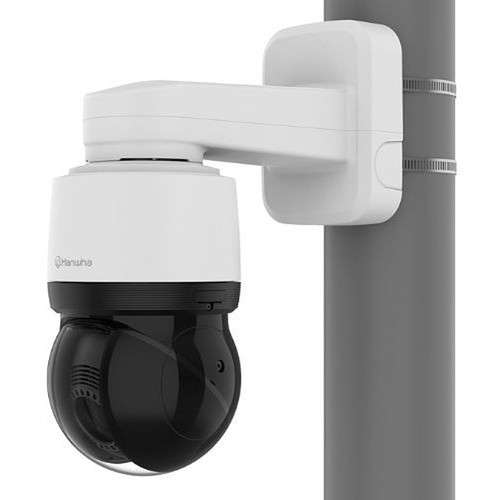
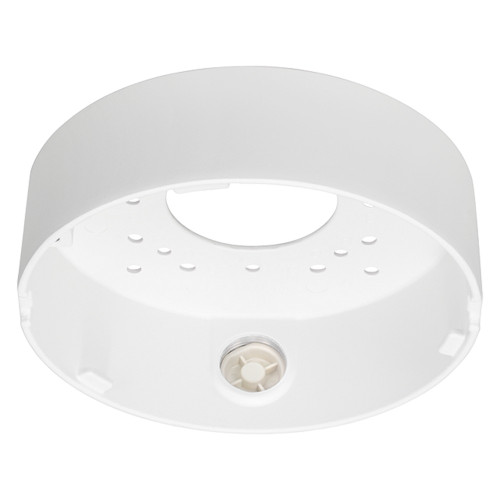
In This Guide
How do the imaging specs compare?
The XNP-C8253R delivers a native 3328×1872 pixel output from its 1/2.8" CMOS sensor, with a 25× optical zoom spanning 5–125mm (with 32× digital extension for 800× combined), a wide-end aperture of F1.6, and minimum color illumination of 0.1 lux backed by Wise IR rated to 200m (656ft). WDR is specified at 120dB Extreme WDR. On-board digital image stabilization is confirmed via a built-in gyro sensor. DORI distances at 25× tele reach 2,813.9m detect / 562.8m recognize / 281.4m identify, giving installers a precise deployment envelope.
The WV-S66600-Z3N also uses a 1/2.8" CMOS sensor and is listed at 6MP resolution, but the pixel array dimensions are not provided in the supplied specifications. Its 30× optical zoom offers a 5× wider zoom ratio than the Hanwha, with a stated minimum focal length of 4.5mm; the maximum focal length at full tele is not specified. Minimum color illumination is cited at approximately 0.13 lux—slightly higher (less sensitive) than the Hanwha's 0.1 lux. WDR reaches 132dB, 12dB above the Hanwha. IR range is listed at only 3.0m in the provided specs, a figure that appears inconsistent with an outdoor PTZ at this class; no supplemental IR distance data is provided. Image stabilization is confirmed. DORI data is absent for the i-PRO.
What about installation and environment?
Both cameras carry IP66 and IK10 ratings and are designated outdoor-ready, accepting PoE++ (IEEE 802.3bt, Class 6) power. The XNP-C8253R specifies typical draw of 24W and maximum of 40W, and includes a PoE++ injector in the box per the spec listing. The i-PRO WV-S66600-Z3N confirms PoE++ (802.3bt) but does not enumerate typical or maximum wattage in the supplied specifications. The Hanwha's housing is described as white aluminum body with black polycarbonate head; the i-PRO uses aluminum die-cast with a polycarbonate dome.
Operating temperature for the XNP-C8253R is –40°C to +55°C with storage down to –50°C; the WV-S66600-Z3N lists an operating range of –50°C to +60°C per the supplied spec field, which is a notably wider envelope. The Hanwha also carries NEMA 4X and NEMA-TS 2 certifications in addition to IP66/IK10, relevant for roadway and traffic deployments. The i-PRO spec does not list equivalent NEMA certifications. The XNP-C8253R dimensions are ø158×293.3mm at 3,200g (7.05lb); the i-PRO is listed at approximately 3kg with no outer dimensions provided. Hanwha publishes an extensive compatible mount ecosystem (SBP-156HMW, SBP-156WMW, SBP-390WMW2, SBP-300PMW2, SHP-1563FPW, SBP-156LMW, SBP-156KMW, SBP-300NBW); i-PRO mounting options are listed generically as wall, ceiling, and rack in the supplied data.
Which fits your VMS and analytics better?
The XNP-C8253R declares ONVIF Profile S/G/T/M compliance, SUNAPI, and the Wisenet SDK, providing broad VMS compatibility. Its AI analytics engine—built on the Wisenet 7 platform—performs on-board object detection classifying persons, faces, vehicles (car/bus/truck/motorcycle/bicycle), and license plates, with virtual line crossing, directional detection, virtual area intrusion, and auto-tracking of persons and vehicles. Up to 32 privacy masks (quadrangle or mosaic) and 8 motion detection zones (8-point polygonal) are configurable. Security features include TPM with FIPS 140-2 Level 2, secure boot, signed firmware, AES encryption, 802.1X (EAP-TLS/LEAP/PEAP), SRTP, and device certificate via Hanwha Private Root CA. Edge storage supports dual microSD/SDHC/SDXC slots up to 1TB (512GB×2). Audio output capability is not confirmed in the provided Hanwha specifications.
The WV-S66600-Z3N supports ONVIF and H.265/H.264/MJPEG compression. Its edge AI framework accommodates up to 3 simultaneously running analytic applications, with facial recognition noted in the supplied spec. The open app architecture may allow operators to deploy third-party AI apps beyond the factory defaults, though the specific app catalog is not enumerated in the provided data. Audio input is confirmed; audio output is not specified. Signed firmware is confirmed. On-board storage is confirmed (microSD). The i-PRO spec lists Android as the operating system, which may relate to the open app platform but is not further clarified in the supplied data. 802.1X, encryption standards, and specific ONVIF profile levels are not enumerated in the provided i-PRO specifications.
Which should you choose: the C8253R or the S66600-Z3N?
Our take: The XNP-C8253R is the stronger choice when long-range identification, rich on-board AI classification, and a fully documented security posture are the primary requirements. On optics, the Hanwha's 25× zoom delivers published DORI distances reaching 281m identify at tele while the i-PRO's 30× zoom provides a wider range ratio but lacks any DORI data in the supplied specs, making field planning harder. On low light, the Hanwha edges out with 0.1 lux color versus 0.13 lux for the i-PRO, and its IR illuminator is rated to 200m versus only 3.0m listed for the i-PRO—a figure that warrants factory clarification before specifying. The i-PRO counters with 132dB WDR (vs. 120dB Hanwha) and an open AI app framework that suits operators who need to swap analytic payloads over the camera's lifetime. Choose the i-PRO where high-contrast scene performance and analytic flexibility matter more than IR range; choose the Hanwha where long-range IR coverage, FIPS 140-2 security compliance, and detailed classification analytics are mandatory.
Side-by-Side Comparison
Spec-for-spec, from manufacturer data.
| Specification | Hanwha C8253R | i-PRO S66600-Z3N |
|---|---|---|
| Resolution | 3328×1872 (6MP) | 6MP (pixel array not specified) |
| Image Sensor | 1/2.8" CMOS | 1/2.8" CMOS |
| Optical Zoom | 25× (5–125mm) | 30× (4.5mm wide; tele FL not specified) |
| Min. Illumination (Color) | 0.1 lux | ~0.13 lux |
| IR Range | 200m (656ft) Wise IR | 3.0m (per supplied spec — verify with mfr) |
| WDR | 120dB Extreme WDR | 132dB |
| Max Pan Speed | 700°/s | 700°/s |
| Max Tilt Speed | 500°/s | 500°/s |
| Video Compression | H.265, H.264, MJPEG | H.265, H.264, MJPEG |
| IP Rating | IP66 | IP66 |
| Impact Rating | IK10 | IK10 |
| Operating Temperature | –40°C to +55°C | –50°C to +60°C |
| Power Input / PoE Class | PoE++ IEEE 802.3bt Class 6 (max 40W) | PoE++ 802.3bt Class 6 (wattage not specified) |
| Edge Storage | Dual microSD/SDHC/SDXC up to 1TB (512GB×2) | microSD (capacity not specified) |
| Audio | Not specified in provided specs | Audio input confirmed |
| Weight | 3,200g (7.05lb) | ~3kg |
| ONVIF Profiles | S, G, T, M | ONVIF (profile levels not specified) |
| Warranty | 3-year | Not specified in provided specs |
Frequently Asked Questions
Which should you choose: the C8253R or the S66600-Z3N?
The XNP-C8253R is the stronger choice when long-range identification, rich on-board AI classification, and a fully documented security posture are the primary requirements. On optics, the Hanwha's 25× zoom delivers published DORI distances reaching 281m identify at tele while the i-PRO's 30× zoom provides a wider range ratio but lacks any DORI data in the supplied specs, making field planning harder. On low light, the Hanwha edges out with 0.1 lux color versus 0.13 lux for the i-PRO, and its IR illuminator is rated to 200m versus only 3.0m listed for the i-PRO—a figure that warrants factory clarification before specifying. The i-PRO counters with 132dB WDR (vs. 120dB Hanwha) and an open AI app framework that suits operators who need to swap analytic payloads over the camera's lifetime. Choose the i-PRO where high-contrast scene performance and analytic flexibility matter more than IR range; choose the Hanwha where long-range IR coverage, FIPS 140-2 security compliance, and detailed classification analytics are mandatory.
Is the XNP-C8253R or WV-S66600-Z3N better for low-light and IR performance?
Based on the provided specifications, the XNP-C8253R has a slight edge in minimum illumination (0.1 lux color vs. 0.13 lux for the i-PRO) and a dramatically longer specified IR range—200m (656ft) vs. 3.0m listed for the WV-S66600-Z3N. The i-PRO's 3.0m IR figure appears atypical for an outdoor PTZ at this class; buyers should request clarification from i-PRO before specifying for low-light or long-range IR applications.
Which camera offers stronger cybersecurity for government or critical-infrastructure deployments?
The XNP-C8253R provides more detailed security documentation in the supplied specs: TPM with FIPS 140-2 Level 2 certification, secure boot, signed firmware, AES encryption, 802.1X (EAP-TLS/LEAP/PEAP), SRTP, HTTPS, and a device certificate via Hanwha Private Root CA. The WV-S66600-Z3N confirms signed firmware and HTTPS, but 802.1X support, encryption standards, and certification levels are not enumerated in the provided specifications, limiting a direct comparison.
Does either camera support third-party AI analytics apps, and how do they differ?
The WV-S66600-Z3N is specified to support up to 3 simultaneous edge AI analytic applications, with what appears to be an open-app framework (Android OS is noted), making it well-suited for operators who anticipate changing analytic workloads over time. The XNP-C8253R runs a fixed Wisenet 7 AI engine that delivers on-board person/face/vehicle/license-plate detection and auto-tracking without requiring additional app licensing, but the analytic set is not user-extensible per the provided specifications. Neither model's analytic app marketplace or pricing is defined in the supplied data.
Get a Second Opinion on Your Camera Choice
Share your site layout, coverage goals, and budget. Our team will validate the camera selection, flag anything we would change, and recommend products that match the use case.