
Hanwha C8253R vs i-PRO S66600-Z3L: Specification Comparison
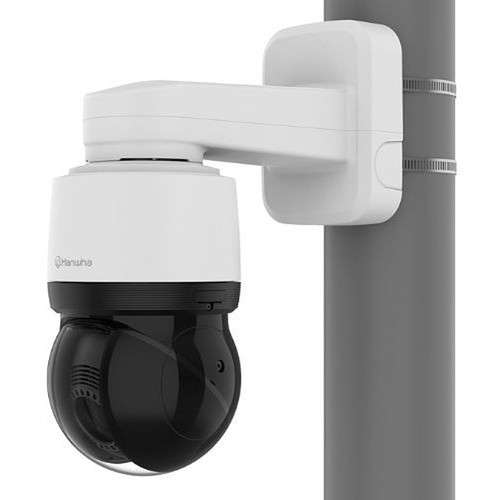
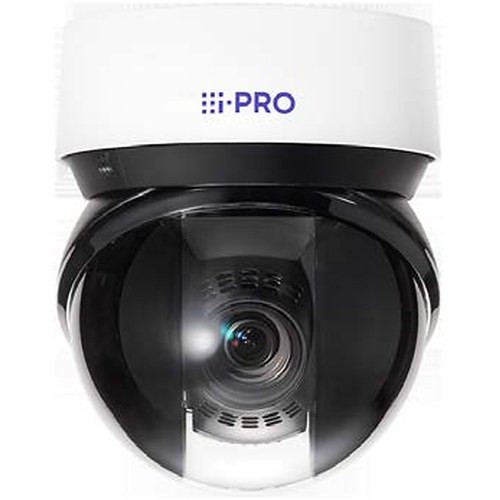
Both the Hanwha XNP-C8253R and the i-PRO WV-S66600-Z3L are 6MP outdoor IP PTZ dome cameras targeting large-area surveillance with AI analytics, IR night vision, and PoE++ power — making them genuine cross-shop candidates for integrators specifying perimeter or traffic-monitoring systems. This comparison evaluates their imaging hardware, environmental ratings, installation requirements, and platform integration strictly from manufacturer-published specifications, without declaring an overall winner in advance.
In This Guide
How do the imaging specs compare?
Both cameras share a 1/2.8" CMOS sensor and 3328×1872 (6MP) maximum resolution. The i-PRO WV-S66600-Z3L offers a 30x optical zoom (4.5–135mm, F1.8–F4.7) versus the Hanwha XNP-C8253R's 25x optical zoom (5–125mm, F1.6–F3.73). On minimum illumination, the i-PRO specifies 0.13 lux color at 30IRE; the Hanwha specifies 0.1 lux color / 0 lux with IR active. IR reach differs materially: the i-PRO reaches 280m (high mode) / 200m (medium), while the Hanwha's Wise IR is rated at 200m. The i-PRO's dynamic range is specified at 132 dB (Super Dynamic On, Level 31); the Hanwha claims 120 dB Extreme WDR.
At the tele end, DORI detection distances differ slightly: the i-PRO reaches 3,050m detect vs. the Hanwha's 2,814m, reflecting the 30x vs. 25x zoom advantage. The Hanwha specifies a combined 800x total zoom (25x optical × 32x digital); the i-PRO specifies up to 78x extra zoom at reduced resolution (1280×720). The Hanwha supports up to 60fps (frame rate spec listed), while the i-PRO datasheet specifies 30fps at maximum resolution — note that the Hanwha's own spec sheet also states '30fps @ 6MP,' so the 60fps figure applies at sub-6MP profiles. Both include built-in gyro-based digital image stabilization and auto-ICR day/night switching.
What about installation and environment?
Both cameras carry IP66, IK10, NEMA 4X ratings and are powered by PoE++ (IEEE 802.3bt, Class 6). The Hanwha draws a typical 24W / max 40W; the i-PRO is specified at 45.9W maximum. Operating temperature for the Hanwha is –40°C to +55°C; the i-PRO specifies a power-on range of –30°C to +60°C (storage to –50°C). The i-PRO additionally publishes a wind resistance rating of up to 40 m/s (~89 mph), which the Hanwha spec does not mention. The i-PRO also lists a tamper-resistant enclosure designation.
Form factor dimensions differ: the Hanwha measures ø158×293.3mm and weighs 3,200g; the i-PRO is ø167×205mm at approximately 3,000g — the i-PRO is shorter but slightly wider, which can affect pendant or parapet arm selection. The Hanwha datasheet enumerates specific compatible mounting accessories (SBP-156HMW, SBP-156WMW, SBP-300PMW2, etc.). The i-PRO spec does not list compatible mount part numbers in the provided specification data.
Which fits your VMS and analytics better?
Both cameras support ONVIF Profiles G, M, S, and T, and both encode H.265, H.264, and MJPEG. The Hanwha adds WiseStream II/III smart codec and supports up to 20 unicast / 128 multicast users with up to 10 simultaneous stream profiles; the i-PRO supports up to 14 simultaneous users and offers Variable GOP smart coding. Audio: the i-PRO specifies four 3.5mm stereo audio inputs and one output, plus two alarm inputs, one alarm output, and one AUX output on its I/O terminal block; AI sound classification covers gunshot, yell, vehicle horn, and glass break. The Hanwha lists alarm I/O only via an optional external box (SPM-4210) — built-in audio I/O terminals are not specified in the provided data.
On-board AI analytics: the Hanwha specifies person, face, vehicle (car/bus/truck/motorcycle/bicycle), and license plate classification via the Wisenet 7 AI engine, with auto-tracking of persons and vehicles, plus virtual line and virtual area rules. The i-PRO specifies 8 AI detection types including AI sound classification; specific detection categories beyond motion/face/people/vehicle are not fully enumerated in the provided spec. The Hanwha offers dual microSD slots (up to 512GB each, 1TB total) with SD card encryption and TPM (FIPS 140-2 Level 2). The i-PRO offers a single microSD slot and specifies FIPS 140-2 Level 3 — a higher cryptographic assurance level. Both support HTTPS, 802.1X, and SRTP/TLS secure communications. The Hanwha also supports NTCIP 1205 and MQTT natively; MQTT is not listed in the i-PRO's provided protocol stack.
Which should you choose: the C8253R or the S66600-Z3L?
Our take: The XNP-C8253R is the stronger choice when vehicle/license-plate AI classification, dual SD redundancy, native MQTT/NTCIP 1205 support, and a lower operating temperature floor (–40°C vs. –30°C power-on) are priorities. The WV-S66600-Z3L is the stronger choice when maximum IR range (280m high vs. 200m), wider dynamic range (132 dB vs. 120 dB), higher zoom reach (30x / 3,050m tele-detect vs. 25x / 2,814m), FIPS 140-2 Level 3 security certification, built-in quad-channel audio I/O with AI sound classification, and published wind resistance (40 m/s) are the deciding factors. Integrators on Hanwha's Wisenet platform will benefit from native SUNAPI and WiseStream codecs; those on i-PRO or Panasonic-heritage VMS platforms will have tighter native integration with the S66600-Z3L. Both carry 3-year warranties and identical ONVIF profile support.
Side-by-Side Comparison
Spec-for-spec, from manufacturer data.
| Specification | Hanwha C8253R | i-PRO S66600-Z3L |
|---|---|---|
| Resolution | 3328×1872 (6MP) | 3328×1872 (6MP) |
| Image Sensor | 1/2.8" CMOS | Approx. 1/2.8" type CMOS |
| Optical Zoom / Focal Length | 25x / 5–125mm | 30x / 4.5–135mm |
| Max Aperture (Wide / Tele) | F1.6 / F3.73 | F1.8 / F4.7 |
| Min. Illumination (Color) | 0.1 lux | 0.13 lux (30IRE) |
| IR Range | 200m (Wise IR) | 280m (High) / 200m (Medium) |
| Wide Dynamic Range | 120 dB Extreme WDR | 132 dB (Super Dynamic On, Level 31) |
| Max Frame Rate @ 6MP | 30fps | 30fps (60fps not specified at 6MP) |
| Video Compression | H.265 / H.264 / MJPEG | H.265 / H.264 / MJPEG |
| IP / Vandal Rating | IP66 / IK10 / NEMA 4X | IP66 / IK10 / NEMA 4X |
| Operating Temperature | –40°C to +55°C | –30°C to +60°C (power-on) |
| Power Input / PoE Class | PoE++ IEEE 802.3bt / Class 6 / Max 40W | PoE++ IEEE 802.3bt / Class 6 / 45.9W |
| Edge Storage | Dual microSD up to 1TB (2×512GB), encrypted | Single microSD (capacity not specified) |
| Audio I/O | Not built-in (requires optional SPM-4210) | 4× audio in / 1× audio out; AI sound classification |
| FIPS Certification | FIPS 140-2 Level 2 (TPM) | FIPS 140-2 Level 3 |
| Dimensions / Weight | ø158×293.3mm / 3,200g | ø167×205mm / approx. 3,000g |
| ONVIF Profiles | G / M / S / T | G / M / S / T |
| Warranty | 3 years | 3 years |
Frequently Asked Questions
Which should you choose: the C8253R or the S66600-Z3L?
The XNP-C8253R is the stronger choice when vehicle/license-plate AI classification, dual SD redundancy, native MQTT/NTCIP 1205 support, and a lower operating temperature floor (–40°C vs. –30°C power-on) are priorities. The WV-S66600-Z3L is the stronger choice when maximum IR range (280m high vs. 200m), wider dynamic range (132 dB vs. 120 dB), higher zoom reach (30x / 3,050m tele-detect vs. 25x / 2,814m), FIPS 140-2 Level 3 security certification, built-in quad-channel audio I/O with AI sound classification, and published wind resistance (40 m/s) are the deciding factors. Integrators on Hanwha's Wisenet platform will benefit from native SUNAPI and WiseStream codecs; those on i-PRO or Panasonic-heritage VMS platforms will have tighter native integration with the S66600-Z3L. Both carry 3-year warranties and identical ONVIF profile support.
Is the XNP-C8253R or WV-S66600-Z3L better for low-light and IR performance?
The i-PRO WV-S66600-Z3L has a slight edge in specified low-light sensitivity (0.13 lux color at 30IRE vs. Hanwha's 0.1 lux color) and a significantly longer high-mode IR reach (280m vs. 200m). The i-PRO also specifies a higher dynamic range at 132 dB versus the Hanwha's 120 dB. However, the Hanwha reaches 0 lux with IR active, and both cameras include auto day/night ICR switching.
Which camera has better AI analytics for traffic or parking applications?
The Hanwha XNP-C8253R explicitly classifies vehicles by sub-type (car, bus, truck, motorcycle, bicycle) and supports license plate detection via its Wisenet 7 AI engine, along with auto-tracking of both persons and vehicles. The i-PRO WV-S66600-Z3L specifies 8 AI detection types including AI sound classification (gunshot, yell, vehicle horn, glass break) but does not enumerate vehicle sub-type or license plate classification in the provided specification data. For traffic/parking, the Hanwha's documented classification depth is more specific.
Do both cameras support on-board recording, and is there a meaningful difference?
Yes, both support microSD recording. The Hanwha XNP-C8253R provides two microSD slots supporting up to 512GB each (1TB total) with SD card encryption and TPM secured at FIPS 140-2 Level 2. The i-PRO WV-S66600-Z3L provides a single microSD slot (capacity not specified in the provided data) and achieves FIPS 140-2 Level 3 certification — a higher cryptographic assurance level. The Hanwha's dual-slot configuration offers redundancy and greater total capacity; the i-PRO's higher FIPS level may matter in government or regulated deployments.
Get a Second Opinion on Your Camera Choice
Share your site layout, coverage goals, and budget. Our team will validate the camera selection, flag anything we would change, and recommend products that match the use case.