
Hanwha C8253R vs Hanwha XNP-8300RW: Specification Comparison
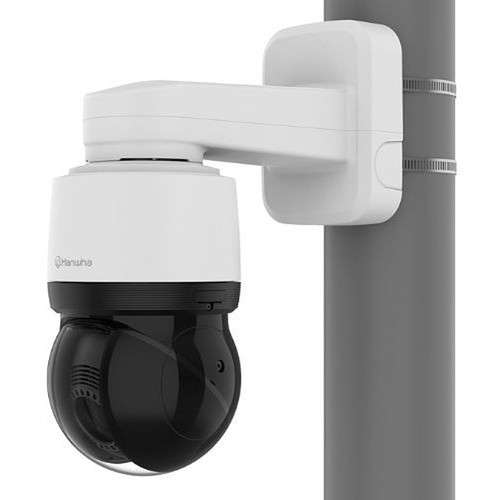
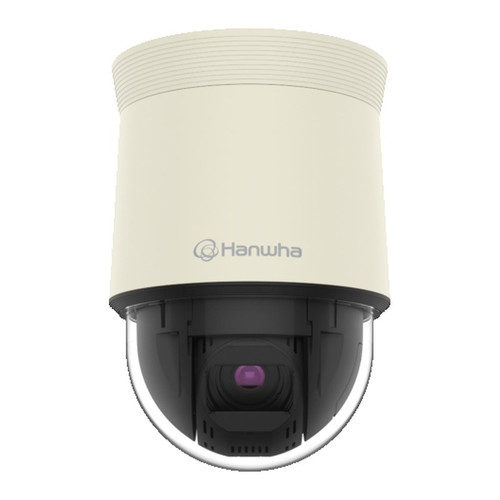
Both the Hanwha XNP-C8253R and XNP-8300RW are 6MP outdoor PTZ network cameras sharing the same 1/2.8" CMOS sensor, 360° endless pan, IP66/IK10 ratings, and 200m IR range — making them direct cross-shop candidates for large-area PTZ deployments. The comparison centers on optical zoom range, pan/tilt speed, water-removal method, AI analytics depth, and cybersecurity certification tier, all drawn strictly from the provided specifications.
In This Guide
How do the imaging specs compare?
Both cameras deliver 6MP (3328×1872) resolution from a 1/2.8" CMOS sensor with identical minimum illumination: 0.1 Lux color and 0 Lux with IR active, and both carry 120dB Extreme WDR. The XNP-C8253R offers a 5–125mm lens at 25x optical zoom (digital 32x, total 800x), while the XNP-8300RW extends to 5–150mm at 30x optical zoom (digital 32x, total 960x). For tele-end detection at 25PPM, the 8300RW reaches 3,482m vs. the C8253R's 2,813m — a meaningful advantage for very long-range identification tasks. Both cameras cap at 30fps at full 6MP.
PTZ speed favors the C8253R: maximum pan speed is 700°/sec versus 500°/sec on the 8300RW, and maximum tilt speed is 500°/sec versus 350°/sec. This gives the C8253R a faster response in AI auto-tracking scenarios where rapid target acquisition matters. Minimum object distance is 5m on the C8253R versus 3m on the 8300RW, giving the 8300RW a slight close-focus advantage. Both support DC auto iris, Oneshot AF, focus save, gyro-based digital image stabilization, and defog. Noise reduction differs: the C8253R adds WiseNR II (AI-based) on top of SSNR V, while the 8300RW lists SSNR V only.
What about installation and environment?
Both cameras carry IP66, IK10, NEMA 4X, and NEMA-TS 2 ratings and operate across an identical -40°C to +55°C range. Power input is PoE++ / HPoE (IEEE 802.3bt Class 6, Type 3) on both, with injector included. Typical power draw differs: the C8253R is rated 24W typical / 40W max, while the 8300RW is 20W typical / 42W max — both within 802.3bt Class 6 budget. Water removal is a key differentiator: the C8253R uses a spin-dry mechanism plus lens heater, while the 8300RW uses a physical wiper. Buyers in heavy-rain or snow environments should evaluate which mechanism suits their maintenance tolerance.
The C8253R is physically lighter and more compact: Ø158×293.3mm at 3,200g (7.05 lb), versus the 8300RW at Ø184.9×318.8mm at 5,400g (11.90 lb). This can affect pole-loading calculations and bracket selection. Both cameras ship with a dual Micro SD/SDHC/SDXC slot supporting up to 1TB (512GB×2). The C8253R specs list alarm I/O via optional SPM-4210 box; the 8300RW lists alarm I/O via optional NW I/O Box — neither has integrated alarm I/O terminals per provided specs. The C8253R also specifies MQTT protocol support and NTCIP 1205, which the 8300RW spec does not list.
Which fits your VMS and analytics better?
The C8253R supports ONVIF Profile S/G/T/M, while the 8300RW supports Profile S/G/T — the C8253R adds Profile M, which covers AI metadata streaming. Smart codec on the C8253R includes WiseStream II and WiseStream III; the 8300RW lists WiseStream II only. Both support SUNAPI and Wisenet open platform. The 8300RW carries a UL CAP (UL 2900-1) cybersecurity certification per its spec; the C8253R lists TPM with FIPS 140-2 Level 2 and a broader secure-boot/signed-firmware/AES-encryption stack but does not list UL CAP in the provided specs. 802.1X authentication on the C8253R covers EAP-TLS, EAP-LEAP, and EAP-PEAP MSCHAPv2; the 8300RW spec lists EAP-TLS and EAP-LEAP only.
AI analytics depth is broader on the C8253R: it lists object detection with classified types (Person, Face, Vehicle, License Plate), vehicle sub-type attributes (car/bus/truck/motorcycle/bicycle), DetectionShot, virtual line crossing with direction, and virtual area loitering — all described as AI-engine based. The 8300RW lists directional detection, fog detection, face detection, motion detection, appear/disappear, enter/exit, and object auto-tracking (Person/Vehicle) with target lock tracking, but does not specify an AI engine for these analytics. Audio input is listed for the 8300RW in the provided specs; the C8253R spec references audio output capability in alarm events but does not explicitly list an audio input spec in the provided data.
Which should you choose: the C8253R or the XNP-8300RW?
Our take: The XNP-C8253R is the stronger choice when AI analytics depth, faster PTZ slew speed, and ONVIF Profile M metadata streaming are priorities. Its pan speed advantage of 700°/sec versus 500°/sec and tilt speed of 500°/sec versus 350°/sec meaningfully improves auto-tracking response. The C8253R also adds WiseStream III, WiseNR II AI-based noise reduction, FIPS 140-2 Level 2 TPM, EAP-PEAP MSCHAPv2, NTCIP 1205, and MQTT — none listed for the 8300RW. Conversely, the XNP-8300RW is the stronger choice when maximum tele-range reach is critical: its 30x / 960x total zoom and 3,482m detection range at 25PPM exceed the C8253R's 25x / 800x and 2,813m. Its physical wiper may also be preferred over spin-dry in sustained heavy precipitation. Choose the C8253R for AI-driven tracking and VMS metadata integration; choose the 8300RW for maximum optical reach.
Side-by-Side Comparison
Spec-for-spec, from manufacturer data.
| Specification | Hanwha C8253R | Hanwha XNP-8300RW |
|---|---|---|
| Resolution | 6MP (3328×1872) | 6MP (3328×1872) |
| Image Sensor | 1/2.8" CMOS | 1/2.8" CMOS |
| Lens / Focal Length | 5–125mm, 25x optical (800x total) | 5–150mm, 30x optical (960x total) |
| Min. Illumination | 0.1 Lux color / 0 Lux IR | 0.1 Lux color / 0 Lux IR |
| IR Range | 200m (Wise IR) | 200m (Wise IR) |
| Wide Dynamic Range | Extreme WDR (120dB) | Extreme WDR (120dB) |
| Max Frame Rate | 30fps @ 6MP | 30fps @ 6MP |
| Max Pan Speed | 700°/sec | 500°/sec |
| Max Tilt Speed | 500°/sec | 350°/sec |
| Water Removal | Spin dry + lens heater | Physical wiper |
| Video Compression | H.265, H.264, MJPEG; WiseStream II & III | H.265, H.264, MJPEG; WiseStream II |
| IP Rating | IP66 | IP66 |
| IK / Impact Rating | IK10 | IK10 |
| Operating Temperature | -40°C to +55°C | -40°C to +55°C |
| Power Input / PoE Class | PoE++ IEEE 802.3bt Class 6 Type 3 (Typical 24W, Max 40W) | HPoE IEEE 802.3bt Class 6 Type 3 (Typical 20W, Max 42W) |
| ONVIF Profiles | S / G / T / M | S / G / T |
| Edge Storage | Dual Micro SD/SDHC/SDXC up to 1TB (512GB×2) | Dual Micro SD/SDHC/SDXC up to 1TB |
| Cybersecurity Certification | FIPS 140-2 Level 2 (TPM) | UL CAP (UL 2900-1) |
| Dimensions | Ø158×293.3mm (6.22×11.55") | Ø184.9×318.8mm (7.28×12.55") |
| Weight | 3,200g (7.05 lb) | 5,400g (11.90 lb) |
| Warranty | 3-year | Not specified in provided specs |
Frequently Asked Questions
Which should you choose: the C8253R or the XNP-8300RW?
The XNP-C8253R is the stronger choice when AI analytics depth, faster PTZ slew speed, and ONVIF Profile M metadata streaming are priorities. Its pan speed advantage of 700°/sec versus 500°/sec and tilt speed of 500°/sec versus 350°/sec meaningfully improves auto-tracking response. The C8253R also adds WiseStream III, WiseNR II AI-based noise reduction, FIPS 140-2 Level 2 TPM, EAP-PEAP MSCHAPv2, NTCIP 1205, and MQTT — none listed for the 8300RW. Conversely, the XNP-8300RW is the stronger choice when maximum tele-range reach is critical: its 30x / 960x total zoom and 3,482m detection range at 25PPM exceed the C8253R's 25x / 800x and 2,813m. Its physical wiper may also be preferred over spin-dry in sustained heavy precipitation. Choose the C8253R for AI-driven tracking and VMS metadata integration; choose the 8300RW for maximum optical reach.
Is the XNP-C8253R or XNP-8300RW better for tracking fast-moving targets?
Based on the provided specs, the XNP-C8253R has a higher maximum pan speed (700°/sec vs. 500°/sec) and tilt speed (500°/sec vs. 350°/sec), which gives it a mechanical advantage when tracking fast-moving subjects. Both cameras support auto-tracking of persons and vehicles, but the C8253R's faster slew rate means it can reacquire targets that change direction quickly.
Which camera has better long-range zoom for perimeter surveillance?
The XNP-8300RW offers 30x optical zoom (5–150mm, 960x total) versus the XNP-C8253R's 25x optical zoom (5–125mm, 800x total). At the tele end, the 8300RW's specified detection range at 25PPM is 3,482m versus 2,813m for the C8253R. For very long perimeter lines where identifying distant subjects is the priority, the 8300RW's optical reach is the spec-supported advantage.
Do both cameras work with standard VMS platforms via ONVIF?
Yes, both support ONVIF. The XNP-8300RW is listed as ONVIF Profile S/G/T compliant. The XNP-C8253R adds Profile M, which supports AI metadata streaming to compatible VMS platforms. If your VMS leverages ONVIF Profile M for analytics event data, only the C8253R is listed as Profile M compliant in the provided specifications.
Get a Second Opinion on Your Camera Choice
Share your site layout, coverage goals, and budget. Our team will validate the camera selection, flag anything we would change, and recommend products that match the use case.