
Hanwha C8083R vs i-PRO S22500-F3L: Specification Comparison
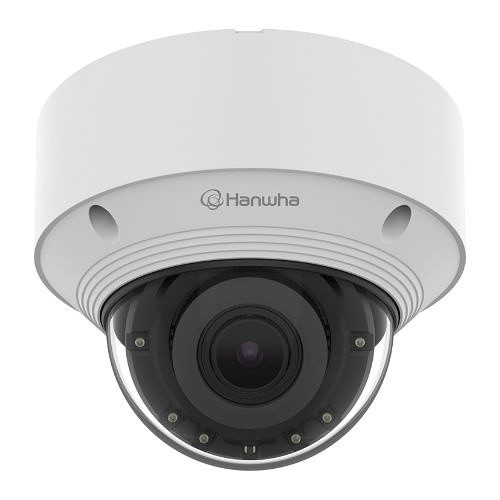
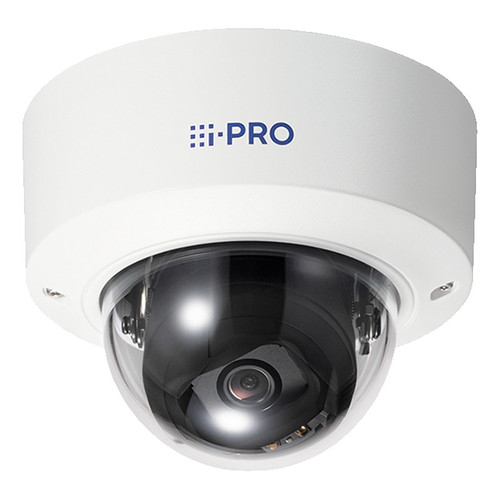
Both the Hanwha QNV-C8083R and the i-PRO WV-S22500-F3L are 5-megapixel, fixed-dome, PoE-powered cameras with IK10 vandal resistance, IR illumination, and ONVIF Profile S/G/T/M compliance. The Hanwha is rated for outdoor deployment; the i-PRO is an indoor unit. This comparison examines imaging capability, installation and environmental fit, and VMS/analytics integration strictly on published specifications, without endorsing either product as universally superior.
In This Guide
How do the imaging specs compare?
The Hanwha QNV-C8083R uses a 1/2.8" CMOS sensor at 2592×1944 and achieves a minimum color illumination of 0.07 Lux against the i-PRO WV-S22500-F3L's 0.12 Lux, meaning the Hanwha requires less ambient light before switching to color mode. Both cameras reach 0 Lux in IR mode. The i-PRO's WDR rating is specified at up to 132 dB (Super Dynamic, Level 31), while the Hanwha is rated at 120 dB — a 12 dB difference on paper that can matter in high-contrast lobby or atrium scenes. The Hanwha's motorized varifocal lens covers 3.2–10.2 mm (3.2× optical zoom) with F1.6 at wide end; the i-PRO uses a fixed 3.2 mm f/2.0 lens with 1× optical and up to 3× digital zoom only at 640×360 resolution, which is a material limitation for coverage flexibility.
IR reach also differs: the Hanwha delivers 30 m of illumination versus the i-PRO's 25 m at 30 IRE (20 m at 50 IRE). The i-PRO supports an additional native 16:9 mode at 3072×1728 alongside the 4:3 5MP mode, whereas the Hanwha's 2592×1944 is a 4:3 native. The Hanwha applies AI-based noise reduction (WiseNRII) and AI-based smart codec (WiseStreamIII); the i-PRO uses adjustable DNR (0–255) and variable GOP (1–60 s) for bandwidth management. Both support H.265, H.264, and MJPEG compression.
What about installation and environment?
The Hanwha QNV-C8083R carries an IP66 outdoor rating and is rated for operation from -30°C to +55°C, making it suitable for exposed exterior mounting in cold climates. The i-PRO WV-S22500-F3L does not carry an IP ingress rating and is specified for indoor use only, with an operating range of -10°C to +50°C. Neither camera should be substituted for the other based on environment without confirming site conditions. The Hanwha weighs 875 g (ø140×110.2 mm); the i-PRO is slightly smaller and lighter at 800 g (ø129.5×102.5 mm). The Hanwha's pan/tilt/rotate adjustment range is 0–350°/−35–70°/0–355°; the i-PRO offers H ±240°, V ±85°, Yaw ±100°, plus a composite monitor output port (VBS 1.0 V) for on-camera aiming without a live VMS view.
Edge storage capacity differs noticeably: the Hanwha supports microSD/SDHC/SDXC up to 256 GB, while the i-PRO supports microSDXC up to 512 GB — relevant for sites with intermittent network connectivity requiring extended local buffering. The Hanwha is PoE Class 3 (max 12.95 W, typical 5.3 W); the i-PRO is PoE Class 0 and also accepts DC12V at 880 mA. Alarm I/O favors the i-PRO: 3 alarm inputs, 1 alarm output, and 1 AUX output versus the Hanwha's 1 alarm input and 1 alarm output. Both require optional cabling for audio; the Hanwha specifies optional cable SPP-C7400 for audio input, while the i-PRO uses standard 3.5 mm stereo jacks on-body.
Which fits your VMS and analytics better?
Both cameras conform to ONVIF Profile S, G, T, and M, so either will integrate with compliant VMS platforms. The Hanwha's AI analytics include person and vehicle detection with vehicle-type attribute classification (car, bus, truck, motorcycle, bicycle), virtual line and virtual area crossing, plus business intelligence features covering people counting, vehicle counting, queue detection, and heatmap — a broader on-camera analytics set than the i-PRO. The i-PRO's edge analytics cover AI-based VMD, face detection, vehicle detection, and scene change detection, and add AI sound classification for gunshot, yell, vehicle horn, and glass break events, which is not present on the Hanwha.
On cybersecurity posture, the i-PRO carries FIPS 140-2 Level 3 certification backed by an NXP SE050F hardware security element, a differentiator for deployments that must meet federal or regulated-industry security standards. The Hanwha's security feature set is extensive — secure boot, signed firmware, firmware encryption, 802.1X (EAP-TLS/LEAP/PEAP), SRTP, WSS, SD card partition encryption, and a Hanwha Private Root CA device certificate — but FIPS compliance is not stated. The Hanwha supports up to 32 privacy masking zones (4-point quadrangle) versus the i-PRO's 8 zones, and offers 8-zone polygonal motion detection. The i-PRO adds VIQS (Variable Image Quality on Specified area, up to 8 zones) for targeted bitrate allocation, which the Hanwha does not list. The Hanwha allows up to 20 simultaneous unicast users; the i-PRO supports up to 14.
Which should you choose: the C8083R or the S22500-F3L?
Our take: For outdoor installations where IR range, lens flexibility, and broad AI analytics matter, the Hanwha QNV-C8083R is the appropriate choice; for regulated indoor environments requiring FIPS 140-2 Level 3 cybersecurity certification, the i-PRO WV-S22500-F3L is the qualified option. Three concrete spec differences: the Hanwha's motorized varifocal spans 3.2–10.2 mm versus the i-PRO's fixed 3.2 mm with only digital zoom beyond 1×, the i-PRO's WDR is rated at 132 dB versus the Hanwha's 120 dB, and the i-PRO supports up to 512 GB edge storage versus the Hanwha's 256 GB. The Hanwha carries IP66 and operates to -30°C; the i-PRO is indoor-only with no stated IP rating and a -10°C lower limit. Platform qualifier: select the Hanwha for exterior or temperature-extreme sites, the i-PRO for indoor regulated environments where FIPS 140-2 Level 3 compliance or AI sound classification is a procurement requirement.
Side-by-Side Comparison
Spec-for-spec, from manufacturer data.
| Specification | Hanwha C8083R | i-PRO S22500-F3L |
|---|---|---|
| Camera Type | Dome, outdoor | Dome, indoor |
| Sensor Size | 1/2.8" CMOS | Approx. 1/2.8" CMOS |
| Resolution | 2592×1944 (5MP, 4:3) | 3072×2304 (5MP, 4:3); also 3072×1728 (16:9) |
| Frame Rate | 30fps @ 5MP | 30fps |
| Min Illumination (Color) | 0.07 Lux | 0.12 Lux |
| Min Illumination (IR) | 0 Lux | 0 Lux |
| WDR | 120 dB | Up to 132 dB (Super Dynamic, Level 31) |
| Lens | 3.2–10.2mm motorized varifocal, F1.6–F3.1 | 3.2mm fixed, f/2.0; 1× optical, up to 3× digital (at 640×360 only) |
| IR Range | 30m (850nm) | 25m at 30IRE / 20m at 50IRE |
| IP Rating | IP66 | — |
| IK Rating | IK10 | IK10 |
| Operating Temperature | -30°C to +55°C | -10°C to +50°C |
| PoE Standard / Class | IEEE 802.3af, Class 3 (max 12.95W) | 802.3af, Class 0; also DC12V 880mA |
| Edge Storage | microSD/SDHC/SDXC up to 256GB | microSDXC up to 512GB |
| Alarm I/O | 1 IN / 1 OUT | 3 IN / 1 OUT / 1 AUX OUT |
| Warranty | 3 years | 5 years |
Frequently Asked Questions
Which should you choose: the C8083R or the S22500-F3L?
For outdoor installations where IR range, lens flexibility, and broad AI analytics matter, the Hanwha QNV-C8083R is the appropriate choice; for regulated indoor environments requiring FIPS 140-2 Level 3 cybersecurity certification, the i-PRO WV-S22500-F3L is the qualified option. Three concrete spec differences: the Hanwha's motorized varifocal spans 3.2–10.2 mm versus the i-PRO's fixed 3.2 mm with only digital zoom beyond 1×, the i-PRO's WDR is rated at 132 dB versus the Hanwha's 120 dB, and the i-PRO supports up to 512 GB edge storage versus the Hanwha's 256 GB. The Hanwha carries IP66 and operates to -30°C; the i-PRO is indoor-only with no stated IP rating and a -10°C lower limit. Platform qualifier: select the Hanwha for exterior or temperature-extreme sites, the i-PRO for indoor regulated environments where FIPS 140-2 Level 3 compliance or AI sound classification is a procurement requirement.
Does either camera support outdoor installation?
Only the Hanwha QNV-C8083R is rated for outdoor use, carrying an IP66 ingress-protection rating and an operating temperature range of -30°C to +55°C. The i-PRO WV-S22500-F3L has no stated IP rating and is specified as an indoor camera with a -10°C lower operating limit.
Which camera offers stronger cybersecurity compliance credentials?
The i-PRO WV-S22500-F3L holds FIPS 140-2 Level 3 certification and incorporates an NXP SE050F hardware security element. The Hanwha QNV-C8083R includes secure boot, signed firmware, firmware encryption, 802.1X with EAP-TLS/LEAP/PEAP, SRTP, WSS, and SD card partition encryption, but FIPS compliance is not stated in its published specifications.
Can either camera detect audio events at the edge?
The i-PRO WV-S22500-F3L includes AI sound classification for gunshot, yell, vehicle horn, and glass break events. The Hanwha QNV-C8083R does not list audio-based AI event detection in its published specifications, though it does support audio input and output connections.
Get a Second Opinion on Your Camera Choice
Share your site layout, coverage goals, and budget. Our team will validate the camera selection, flag anything we would change, and recommend products that match the use case.