
Geovision TVD8710-0010 vs Geovision TVD881W-0010: Specification Comparison
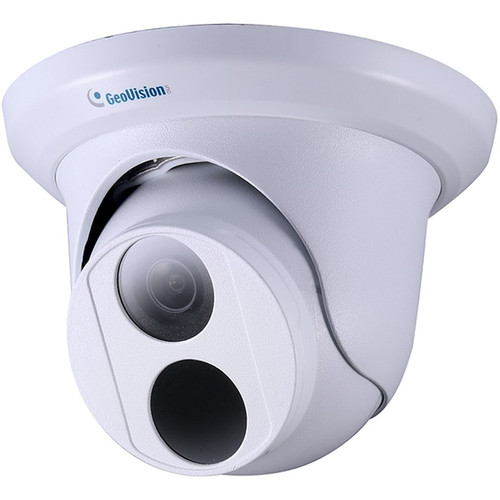
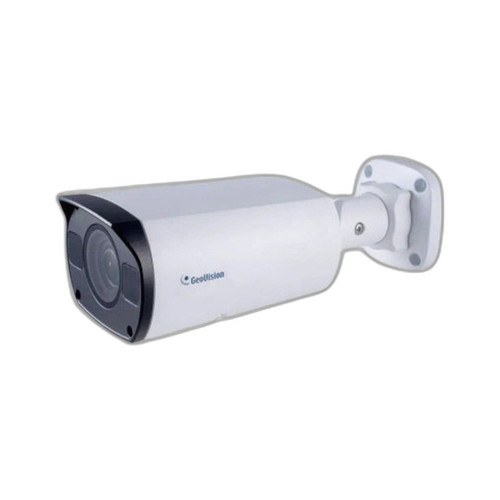
Both the Geovision TVD8710-0010 and TVD881W-0010 are 8MP H.265 vandal dome cameras targeting commercial and high-security fixed-camera deployments over Ethernet/PoE. They share the same resolution class and form factor, making them direct cross-shop candidates for installers choosing between a traditional IR dome with WDR Pro and a newer AI-capable varifocal dome with deep-learning analytics. The comparison below is drawn strictly from the provided specification data for each model.
In This Guide
How do the imaging specs compare?
Both cameras deliver 8MP resolution and H.265 compression, so raw pixel count and bandwidth efficiency are equivalent. The TVD8710-0010 uses a fixed 4.3mm lens (described as 4.3× optical zoom, though this appears to reference optical scope rather than a true zoom mechanism on a fixed lens — the specification does not clarify further). It carries a WDR Pro designation, which per Geovision's product line indicates a higher-grade wide dynamic range implementation than standard WDR. The TVD881W-0010, by contrast, specifies a varifocal 2.8–12mm lens with confirmed 4.3× zoom range, giving installers field-of-view flexibility without ladder visits. Its WDR spec is listed simply as 'WDR,' without the 'Pro' qualifier noted on the TVD8710-0010.
Both cameras are rated Super Low Lux for minimum illumination and include IR night vision with Day/Night switching. The TVD881W-0010 explicitly lists Day/Night in its IR/low-light field and provides sensor size data (1/2.8"), which the TVD8710-0010 does not. IR range figures are not provided for either model in the supplied specifications, so a direct range comparison cannot be made.
What about installation and environment?
Neither model's provided specifications include an IP ingress-protection rating, IK impact rating, or operating temperature range, so environmental suitability cannot be compared from the data at hand. Installers should consult the linked datasheets for these values before specifying either camera for outdoor or harsh-environment use.
On power, the TVD881W-0010 explicitly states PoE 802.3af compliance, which defines a maximum of 15.4W draw — useful for switch port planning. The TVD8710-0010 lists PoE as its power input but does not specify the 802.3af or 802.3at class. Mounting flexibility differs materially: the TVD881W-0010 supports Wall, Ceiling, Pole, Pendant, Corner, and Rack mounting options, while the TVD8710-0010 specifies Ceiling only. The TVD881W-0010 also provides physical dimensions (Φ120 × 334 mm / Φ4.72" × 13.15") and weight (0.74 kg / 1.63 lb); these figures are absent for the TVD8710-0010. The TVD8710-0010 cable category is tagged IPPTZCam versus the TVD881W-0010's IPCAM, which may reflect internal catalog classification rather than a performance distinction.
Which fits your VMS and analytics better?
The TVD881W-0010 carries confirmed ONVIF compliance and additionally supports Geovision native protocols, providing dual integration paths. It also includes on-board AI deep learning analytics — Motion Detection, Line Crossing, Intrusion Detection, and Object Classification — which offload event processing from the VMS server. The TVD8710-0010 specifies compatibility with 'ONVIF-compliant NVR/VMS platforms' but does not carry an explicit ONVIF certification field in its specs. It lists no edge analytics beyond basic camera functionality. Neither model's specifications mention audio input/output or onboard SD card storage, so those capabilities cannot be confirmed or compared from the provided data.
Which should you choose: the TVD8710-0010 or the TVD881W-0010?
Our take: The TVD881W-0010 is the stronger choice when installation flexibility, AI edge analytics, and confirmed PoE class matter to the deployment. Its varifocal 2.8–12mm lens (versus the TVD8710-0010's fixed 4.3mm) eliminates the need for multiple fixed-lens SKUs to cover varying scene depths. It adds six mounting configurations against the TVD8710-0010's ceiling-only option, directly reducing installation constraints. Confirmed 802.3af PoE classification aids switch budget planning, whereas the TVD8710-0010 lists PoE without specifying class. On the analytics side, the TVD881W-0010 delivers AI deep learning with Line Crossing, Intrusion, and Object Classification at the edge — capabilities entirely absent from the TVD8710-0010 spec sheet. The TVD8710-0010's advantage is its WDR Pro designation, which suggests a higher-grade dynamic range implementation; if high-contrast lighting is the primary concern and analytics are handled server-side, it remains a valid option. IP/IK and temperature specs are missing for both; verify datasheets before outdoor specification.
Side-by-Side Comparison
Spec-for-spec, from manufacturer data.
| Specification | Geovision TVD8710-0010 | Geovision TVD881W-0010 |
|---|---|---|
| Resolution | 8 MP | 8 MP |
| Image Sensor Size | — | 1/2.8" |
| Lens / Focal Length | Fixed 4.3mm | Varifocal 2.8–12mm (4.3× zoom) |
| Min Illumination | Super Low Lux | Super Low Lux |
| IR Night Vision | IR | IR; Day/Night |
| WDR | WDR Pro | WDR |
| Video Compression | H.265 | H.265 |
| ONVIF | ONVIF-compliant platforms (field unconfirmed) | Yes |
| Edge Analytics | — | AI Deep Learning; Motion Detection; Line Crossing; Intrusion; Object Classification |
| Power Input / PoE Class | PoE (class not specified) | PoE 802.3af |
| Mount Type | Ceiling | Wall; Ceiling; Pole; Pendant; Corner; Rack |
| Dimensions | — | Φ120 × 334 mm (Φ4.72" × 13.15") |
| Weight | — | 0.74 kg (1.63 lb) |
Frequently Asked Questions
Which should you choose: the TVD8710-0010 or the TVD881W-0010?
The TVD881W-0010 is the stronger choice when installation flexibility, AI edge analytics, and confirmed PoE class matter to the deployment. Its varifocal 2.8–12mm lens (versus the TVD8710-0010's fixed 4.3mm) eliminates the need for multiple fixed-lens SKUs to cover varying scene depths. It adds six mounting configurations against the TVD8710-0010's ceiling-only option, directly reducing installation constraints. Confirmed 802.3af PoE classification aids switch budget planning, whereas the TVD8710-0010 lists PoE without specifying class. On the analytics side, the TVD881W-0010 delivers AI deep learning with Line Crossing, Intrusion, and Object Classification at the edge — capabilities entirely absent from the TVD8710-0010 spec sheet. The TVD8710-0010's advantage is its WDR Pro designation, which suggests a higher-grade dynamic range implementation; if high-contrast lighting is the primary concern and analytics are handled server-side, it remains a valid option. IP/IK and temperature specs are missing for both; verify datasheets before outdoor specification.
Is the TVD8710-0010 or TVD881W-0010 better for low light?
Both cameras are rated Super Low Lux and include IR night vision, so the provided specs do not give a clear low-light advantage to either. The TVD881W-0010 discloses its 1/2.8" sensor size, which is relevant context, but the TVD8710-0010 does not list sensor size. IR range figures are absent for both. Consult the individual datasheets for minimum illumination lux values and IR distance before making a low-light decision.
Can I use either camera with a third-party VMS?
The TVD881W-0010 carries confirmed ONVIF compliance and also supports Geovision native protocols. The TVD8710-0010 specifies compatibility with ONVIF-compliant NVR/VMS platforms, though its specification does not include an explicit ONVIF certification field. Both should integrate with ONVIF-based VMS platforms, but installers integrating with strict ONVIF Profile conformance requirements should verify the TVD8710-0010's profile level against the datasheet.
Does the TVD881W-0010's varifocal lens justify the upgrade over the TVD8710-0010?
For sites where the correct field of view cannot be determined before installation — or where a single SKU must cover multiple scene depths — the TVD881W-0010's 2.8–12mm varifocal lens (4.3× range) provides on-site adjustment that the TVD8710-0010's fixed 4.3mm lens does not. Add AI edge analytics and six mounting options versus one, and the TVD881W-0010 offers meaningfully broader deployment flexibility. If the scene depth is fixed, lighting is high-contrast, and analytics run server-side, the TVD8710-0010's WDR Pro may be the deciding factor.
Get a Second Opinion on Your Camera Choice
Share your site layout, coverage goals, and budget. Our team will validate the camera selection, flag anything we would change, and recommend products that match the use case.