
Geovision TDR885W-2F10 vs Geovision TVD881W-0010: Specification Comparison
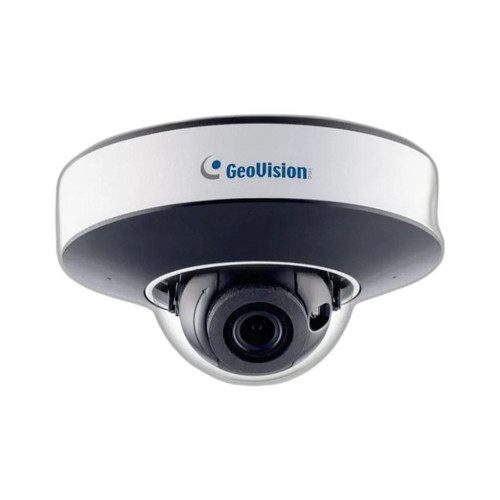
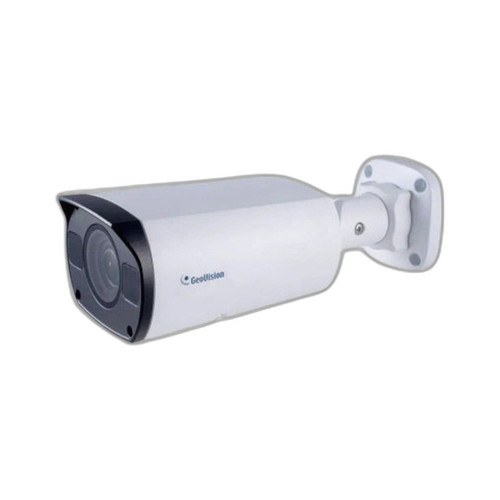
Both the Geovision TDR885W-2F10 and TVD881W-0010 are 8MP fixed IP dome cameras from the same manufacturer, designed for professional surveillance deployments over a single Ethernet/PoE cable. The TDR885W-2F10 is a compact mini dome with a fixed 2.8mm lens aimed at close-range identification tasks, while the TVD881W-0010 is a full-size AI vandal dome with a varifocal 2.8–12mm lens and deep-learning analytics targeting high-security perimeter and area monitoring. Buyers cross-shopping these two are typically choosing between simplicity and flex-focal intelligence.
In This Guide
How do the imaging specs compare?
Both cameras deliver 8MP resolution and IR night vision over a 1/2.8" sensor class. The TVD881W-0010 explicitly states a 1/2.8" sensor size and Super Low Lux minimum illumination, and offers a varifocal 2.8–12mm lens with 4.3× optical zoom, allowing installers to frame scenes precisely at commissioning without physical repositioning. The TDR885W-2F10 specifies a fixed 2.8mm lens only; sensor size and minimum illumination figures are not published in the provided specifications.
On dynamic range, the TDR885W-2F10 lists WDR Pro—a higher processing tier than the plain WDR listed for the TVD881W-0010. For scenes with severe backlight or mixed artificial/natural lighting, that distinction matters. The TVD881W-0010 adds Day/Night mode alongside IR, while the TDR885W-2F10 spec sheet lists IR night vision only. Video compression is not stated for the TDR885W-2F10; the TVD881W-0010 specifies H.265, which typically reduces storage and bandwidth by approximately 50% compared with H.264.
What about installation and environment?
Both cameras are PoE 802.3af powered over a single Ethernet run, simplifying cabling. The TVD881W-0010 supports six mounting configurations—wall, ceiling, pole, pendant, corner, and rack—and ships with published dimensions of Φ120 × 334 mm (Φ4.72" × 13.15") and a weight of 0.74 kg (1.63 lb). The TDR885W-2F10 is ceiling-mount only per its provided specifications, and no physical dimensions or weight are stated in the data supplied.
Neither IP ingress rating nor IK impact rating is listed in the provided specifications for either model. The TVD881W-0010 is described as an 'AI Vandal Dome,' which implies mechanical hardening, but no IK rating is confirmed in the supplied data. Operating temperature ranges are absent for both models. Buyers requiring certified weatherproofing or vandal resistance should consult the manufacturer datasheets directly before specifying either unit for outdoor or exposed locations.
Which fits your VMS and analytics better?
Both cameras declare ONVIF compliance, making them broadly compatible with third-party VMS platforms. The TDR885W-2F10 additionally lists Geovision GV VMS by name; the TVD881W-0010 lists Geovision native protocols alongside ONVIF. On-board edge storage, audio input/output, and alarm I/O are not specified for either model in the provided data.
The TVD881W-0010 distinguishes itself with AI Deep Learning analytics including motion detection, line crossing, intrusion detection, and object classification—capabilities that reduce server-side processing load and enable rule-based alerting without a dedicated analytics server. No edge analytics of any kind are listed for the TDR885W-2F10. For deployments requiring perimeter rules or object-type filtering at the edge, the TVD881W-0010 is the only option between the two based on available specifications.
Which should you choose: the TDR885W-2F10 or the TVD881W-0010?
Our take: The TVD881W-0010 is the stronger choice when the installation requires flexible framing, AI-based edge analytics, or H.265 compression across a multi-camera recording system. Its 2.8–12mm varifocal lens eliminates the need to stock multiple fixed-focal units, its AI Deep Learning engine supports line crossing, intrusion, and object classification without additional server licenses, and H.265 compression materially reduces NVR storage expenditure at scale. The TDR885W-2F10 holds a specific advantage in scenes dominated by harsh backlight or mixed artificial lighting, where its WDR Pro processing tier outclasses the plain WDR on the TVD881W-0010—a meaningful distinction for retail checkout lanes or building entrances with direct sun exposure. Sensor size, minimum illumination, IP/IK ratings, operating temperature, and compression standard are not published for the TDR885W-2F10, limiting direct verification of those parameters. Specify the TDR885W-2F10 where a discreet mini-dome profile and superior WDR performance are the primary requirements; choose the TVD881W-0010 for perimeter, wide-area, or high-security scenes demanding edge intelligence and varifocal reach.
Side-by-Side Comparison
Spec-for-spec, from manufacturer data.
| Specification | Geovision TDR885W-2F10 | Geovision TVD881W-0010 |
|---|---|---|
| Resolution | 8 MP | 8 MP |
| Image Sensor Size | — | 1/2.8" |
| Lens / Focal Length | 2.8mm fixed | 2.8–12mm varifocal (4.3× zoom) |
| Min Illumination | — | Super Low Lux |
| IR Night Vision | IR | IR; Day/Night |
| WDR | WDR Pro | WDR |
| Video Compression | — | H.265 |
| Edge Analytics | — | AI Deep Learning; Motion Detection; Line Crossing; Intrusion; Object Classification |
| ONVIF | Yes | Yes |
| VMS Compatibility | ONVIF; Geovision GV VMS | ONVIF; Geovision native protocols |
| Power Input | PoE 802.3af | PoE 802.3af |
| Mount Type | Ceiling | Wall; Ceiling; Pole; Pendant; Corner; Rack |
| Form Factor | Mini Dome | Vandal Dome |
| Dimensions | — | Φ120 × 334 mm (Φ4.72" × 13.15") |
| Weight | — | 0.74 kg (1.63 lb) |
Frequently Asked Questions
Which should you choose: the TDR885W-2F10 or the TVD881W-0010?
The TVD881W-0010 is the stronger choice when the installation requires flexible framing, AI-based edge analytics, or H.265 compression across a multi-camera recording system. Its 2.8–12mm varifocal lens eliminates the need to stock multiple fixed-focal units, its AI Deep Learning engine supports line crossing, intrusion, and object classification without additional server licenses, and H.265 compression materially reduces NVR storage expenditure at scale. The TDR885W-2F10 holds a specific advantage in scenes dominated by harsh backlight or mixed artificial lighting, where its WDR Pro processing tier outclasses the plain WDR on the TVD881W-0010—a meaningful distinction for retail checkout lanes or building entrances with direct sun exposure. Sensor size, minimum illumination, IP/IK ratings, operating temperature, and compression standard are not published for the TDR885W-2F10, limiting direct verification of those parameters. Specify the TDR885W-2F10 where a discreet mini-dome profile and superior WDR performance are the primary requirements; choose the TVD881W-0010 for perimeter, wide-area, or high-security scenes demanding edge intelligence and varifocal reach.
Is the TDR885W-2F10 or TVD881W-0010 better for low-light performance?
Based on available specifications, the TVD881W-0010 has the edge on documented low-light credentials: it lists Super Low Lux minimum illumination and a combined IR plus Day/Night mode. The TDR885W-2F10 lists IR night vision but does not publish a minimum illumination figure or sensor size, so a direct lux comparison cannot be made from the provided data alone.
Can I adjust the field of view on either camera without changing the lens?
Only the TVD881W-0010 offers field-of-view adjustment without a lens swap. Its 2.8–12mm varifocal lens provides 4.3× optical zoom, letting installers dial in the coverage angle at commissioning. The TDR885W-2F10 has a fixed 2.8mm lens, so the field of view is set at the factory.
Do both cameras support the same VMS platforms?
Both cameras declare ONVIF compliance, which provides broad compatibility with most IP VMS platforms. The TDR885W-2F10 also explicitly lists Geovision GV VMS, while the TVD881W-0010 lists Geovision native protocols. For non-Geovision VMS environments, ONVIF support on both models should provide a common integration path, though feature depth via ONVIF versus native drivers will vary by VMS vendor.
Get a Second Opinion on Your Camera Choice
Share your site layout, coverage goals, and budget. Our team will validate the camera selection, flag anything we would change, and recommend products that match the use case.