
Geovision PTZ580W-IR00 vs Geovision QSD5731-IR: Specification Comparison
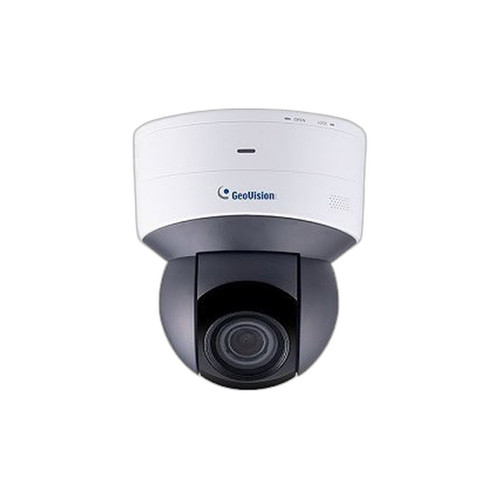
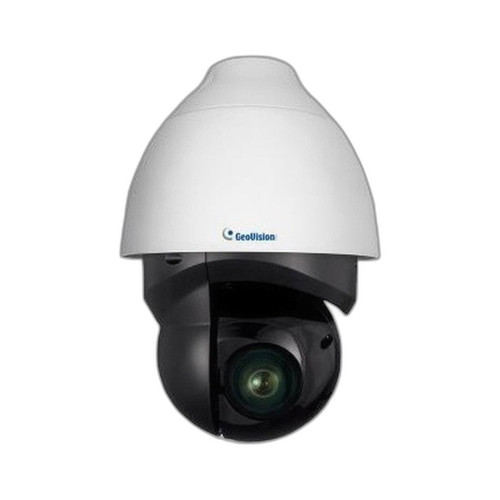
Both the Geovision PTZ580W-IR00 and the Geovision QSD5731-IR are outdoor PTZ-class IP cameras offering pan/tilt/zoom capability, IR night vision, and PoE power delivery over standard Ethernet—making them genuine cross-shop candidates for perimeter surveillance and wide-area tracking installations. The PTZ580W-IR00 is a 2880×1620 (≈5MP) PTZ while the QSD5731-IR is a 5MP (2592×1944) speed dome. This comparison evaluates their imaging performance, physical installation requirements, and VMS/integration fit across the specifications provided.
In This Guide
How do the imaging specs compare?
The PTZ580W-IR00 delivers a 2880×1620 resolution at 30 fps across three simultaneous streams, using a 1/2.7" sensor and a 5× optical zoom lens covering a 2.7–13.5 mm focal range. The QSD5731-IR outputs 2592×1944 at 30 fps with a substantially wider 33× optical zoom. In raw pixel count both cameras are close—PTZ580W-IR00 is approximately 4.67MP versus the QSD5731-IR's 5.03MP (2592×1944)—but the QSD5731-IR's 33× zoom range gives it a decisive reach advantage for identifying subjects at distance while maintaining forensic resolution.
The QSD5731-IR spec includes WDR (Wide Dynamic Range), which mitigates high-contrast lighting conditions such as backlit entrances or mixed indoor/outdoor scenes. WDR is not listed in the PTZ580W-IR00 specifications. Both cameras feature built-in IR illumination for low-light and full-darkness operation. Minimum illumination figures, IR range, and color/mono switching thresholds are not provided in the available specifications for either model, so a direct low-light sensitivity comparison cannot be made from these specs alone.
What about installation and environment?
The QSD5731-IR carries an IP66 weatherproof rating and an IK10 vandal-impact rating, making it suited for fully exposed outdoor mounting on ceilings, walls, or poles where weather and tampering are concerns. No IP or IK rating is listed in the PTZ580W-IR00 specifications, so its environmental protection level cannot be confirmed from the data provided. The PTZ580W-IR00 supports a broader mount type list—Wall, Pole, Pendant, Corner, and Rack—versus the QSD5731-IR's Ceiling, Wall, and Pole. Operating temperature range is absent for both models.
Both cameras are PoE-powered over standard Ethernet, eliminating the need for separate power runs. The PTZ580W-IR00 is specified at PoE 802.3af (maximum 15.4 W budget). The QSD5731-IR lists 5.8 W power consumption, though its exact PoE class is not enumerated—only 'PoE' is stated, and 5.8 W falls within the 802.3af Class 2 envelope. The PTZ580W-IR00's physical dimensions are Φ120 × 334 mm (Φ4.72" × 13.15") weighing 0.74 kg (1.63 lb); equivalent dimension and weight data are not provided for the QSD5731-IR.
Which fits your VMS and analytics better?
Both cameras declare ONVIF compatibility, supporting mixed-manufacturer VMS deployments without proprietary drivers. The PTZ580W-IR00 specification explicitly lists three simultaneous streams, which is beneficial for multi-client or redundant recording architectures. The QSD5731-IR lists H.265 video compression, which reduces storage and bandwidth consumption significantly versus older codecs; the PTZ580W-IR00's compression standard is not specified in the provided data. Edge analytics, on-board storage, audio input/output, and alarm I/O are not documented in the available specifications for either camera, so those integration factors cannot be compared.
Which should you choose: the PTZ580W-IR00 or the QSD5731-IR?
Our take: The QSD5731-IR is the stronger choice when zoom reach, environmental hardening, and bandwidth efficiency are the primary drivers. Its 33× optical zoom vastly outpaces the PTZ580W-IR00's 5× zoom for identifying subjects at range—a critical delta for perimeter and parking applications. Its IP66 and IK10 ratings confirm rated resistance to weather and vandalism, whereas the PTZ580W-IR00 carries no listed IP or IK rating from the specs provided. H.265 compression on the QSD5731-IR will measurably reduce storage and network load compared to an unspecified codec on the PTZ580W-IR00. Conversely, the PTZ580W-IR00 supports five mount types (including Pendant and Corner) versus three for the QSD5731-IR, and its 802.3af PoE class is explicitly confirmed. Buyers needing a verified PoE standard, flexible mounting geometry, and three simultaneous streams in a lower-zoom deployment may prefer the PTZ580W-IR00. Both cameras require further datasheet review to confirm IR range, minimum illumination, and compression format before finalizing a specification.
Side-by-Side Comparison
Spec-for-spec, from manufacturer data.
| Specification | Geovision PTZ580W-IR00 | Geovision QSD5731-IR |
|---|---|---|
| Resolution | 2880×1620 (~4.7MP) | 2592×1944 (5MP) |
| Image Sensor | 1/2.7" | — |
| Lens / Focal Length | 5× optical zoom (2.7–13.5 mm) | 33× optical zoom |
| WDR | — | WDR |
| IR Night Vision | Yes | Yes |
| Max Frame Rate | 30 fps | 30 fps |
| Video Compression | — | H.265 |
| IP Rating | — | IP66 |
| Impact Rating | — | IK10 |
| Power / PoE Standard | PoE 802.3af | PoE (5.8 W; class not enumerated) |
| VMS Compatibility | ONVIF | ONVIF |
| Mount Types | Wall; Pole; Pendant; Corner; Rack | Ceiling; Wall; Pole |
| Dimensions / Weight | Φ120×334 mm / 0.74 kg (1.63 lb) | — |
Frequently Asked Questions
Which should you choose: the PTZ580W-IR00 or the QSD5731-IR?
The QSD5731-IR is the stronger choice when zoom reach, environmental hardening, and bandwidth efficiency are the primary drivers. Its 33× optical zoom vastly outpaces the PTZ580W-IR00's 5× zoom for identifying subjects at range—a critical delta for perimeter and parking applications. Its IP66 and IK10 ratings confirm rated resistance to weather and vandalism, whereas the PTZ580W-IR00 carries no listed IP or IK rating from the specs provided. H.265 compression on the QSD5731-IR will measurably reduce storage and network load compared to an unspecified codec on the PTZ580W-IR00. Conversely, the PTZ580W-IR00 supports five mount types (including Pendant and Corner) versus three for the QSD5731-IR, and its 802.3af PoE class is explicitly confirmed. Buyers needing a verified PoE standard, flexible mounting geometry, and three simultaneous streams in a lower-zoom deployment may prefer the PTZ580W-IR00. Both cameras require further datasheet review to confirm IR range, minimum illumination, and compression format before finalizing a specification.
Is the PTZ580W-IR00 or QSD5731-IR better for low light?
Both cameras include built-in IR illumination for low-light and full-darkness operation, and both are rated at 30 fps. However, minimum illumination values and IR range are not listed in the available specifications for either model, so a definitive low-light ranking cannot be made from the specs provided. The QSD5731-IR additionally lists WDR, which helps in high-contrast mixed-light scenes; WDR is not specified for the PTZ580W-IR00.
Which camera has better zoom for identifying people or vehicles at distance?
The QSD5731-IR offers 33× optical zoom versus the PTZ580W-IR00's 5× optical zoom (2.7–13.5 mm). For tracking or identifying subjects at significant range—such as across a parking lot or along a perimeter fence—the QSD5731-IR's zoom range is substantially greater based on the specifications provided.
Can both cameras be used with my existing ONVIF-compatible VMS?
Yes. Both the PTZ580W-IR00 and the QSD5731-IR are listed as ONVIF compatible in their specifications, meaning they should integrate with any ONVIF-conformant video management system. The PTZ580W-IR00 specification also explicitly lists three simultaneous streams. Edge analytics, audio, and alarm I/O support are not documented in the available specs for either camera and should be confirmed directly with Geovision before deployment.
Get a Second Opinion on Your Camera Choice
Share your site layout, coverage goals, and budget. Our team will validate the camera selection, flag anything we would change, and recommend products that match the use case.