
Geovision MFD4700-0F10 vs Geovision TDR4703-4F10: Specification Comparison
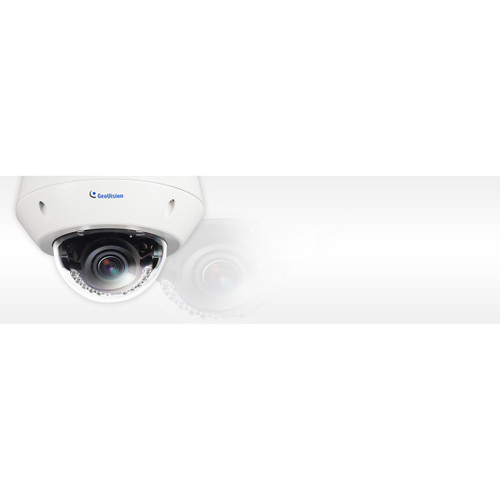
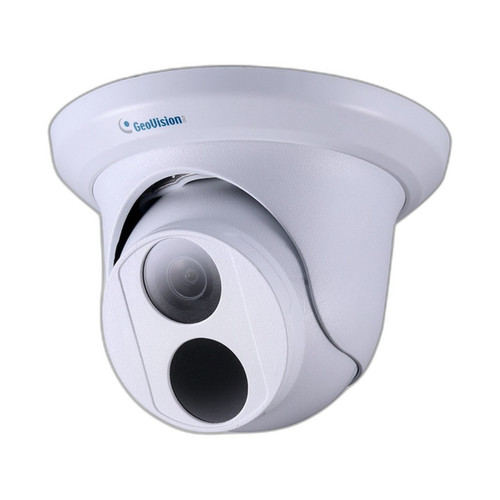
Both the Geovision MFD4700-0F10 and TDR4703-4F10 are 4MP mini dome IP cameras positioned for indoor and discreet fixed-camera deployments. They share the same resolution class, dome form factor, and Geovision branding, making them genuine cross-shop candidates for integrators choosing between a lens-specified IR-equipped model and a PoE-explicit ONVIF-Profile-G-capable model. This comparison draws exclusively from the provided specifications; where a spec is absent for one model, that is noted explicitly.
In This Guide
How do the imaging specs compare?
Both cameras deliver 4MP resolution (the MFD4700-0F10 is explicitly rated 2560×1920). The MFD4700-0F10 specifies a fixed 2.8 mm lens and lists IR night vision with Super Low Lux minimum illumination, giving installers concrete optical and low-light data points. WDR is listed as 'WDR Pro' for both models, though the MFD4700-0F10 also carries a second 'WDR' tag in its spec set; no quantified WDR range (in dB) is provided for either unit.
The TDR4703-4F10 does not specify a lens focal length, minimum illumination level, or any IR / night-vision capability in the provided specifications. Buyers requiring confirmed low-light or IR performance cannot validate the TDR4703-4F10 against those criteria from available data. H.265 compression is confirmed only for the MFD4700-0F10; the TDR4703-4F10's compression standard is not stated in the provided specs.
What about installation and environment?
The MFD4700-0F10 specifies an operating temperature range of 0–50°C and is rated for indoor use, with ceiling or wall mounting. Power input is not explicitly listed as PoE in the spec set — connectivity is noted as Ethernet, leaving the power delivery method unconfirmed from available data. No IP or IK rating is provided for this model.
The TDR4703-4F10 explicitly supports 802.3af PoE, simplifying single-cable installation and eliminating a separate power run. It is rated for ceiling or wall mounting and is described as suited for discreet deployments. Operating temperature, IP rating, and IK rating are absent from the provided specifications for this model as well, so environmental hardening cannot be compared between the two.
Which fits your VMS and analytics better?
The MFD4700-0F10 is certified to ONVIF Profile S, which covers live streaming and basic PTZ control interoperability with standard VMS platforms. The TDR4703-4F10 is certified to ONVIF Profile S, T, and G — Profile T adds H.265 and metadata streaming support, and Profile G adds on-device recording and playback retrieval, meaningful for edge-recording workflows and broader VMS compatibility.
Neither camera's provided specifications include edge storage (SD card), audio input/output, or onboard analytics details. No frame rate, bitrate, or streaming channel count data is supplied for either model. Integrators requiring confirmation of those features will need to consult the manufacturer datasheets directly.
Which should you choose: the MFD4700-0F10 or the TDR4703-4F10?
Our take: The TDR4703-4F10 is the stronger choice when PoE infrastructure and broad VMS integration are the primary requirements. It explicitly supports 802.3af PoE for clean single-cable runs and carries ONVIF Profile S/T/G certification versus the MFD4700-0F10's Profile S only — a concrete interoperability advantage for Milestone, GV-NVR, and edge-recording VMS platforms. Conversely, the MFD4700-0F10 is the better-documented option for low-light and night-vision applications: it specifies a 2.8 mm fixed lens, IR illumination, and Super Low Lux minimum illumination — none of which appear in the TDR4703-4F10's available specs. H.265 compression is confirmed only on the MFD4700-0F10. If the deployment is indoor with defined lighting and IR is a requirement, the MFD4700-0F10 offers more verifiable imaging specs; if PoE simplicity and multi-profile ONVIF matter more, the TDR4703-4F10 has the documented edge.
Side-by-Side Comparison
Spec-for-spec, from manufacturer data.
| Specification | Geovision MFD4700-0F10 | Geovision TDR4703-4F10 |
|---|---|---|
| Resolution | 4 MP (2560×1920) | 4 MP |
| Lens / Focal Length | 2.8 mm fixed | — |
| Min Illumination | Super Low Lux | — |
| IR / Night Vision | IR | — |
| WDR | WDR Pro | WDR Pro |
| Video Compression | H.265 | — |
| ONVIF Profile | Profile S | Profile S / T / G |
| Power Input | Ethernet (PoE not confirmed) | 802.3af PoE |
| Form Factor | Mini Dome | Dome |
| Mount Type | Ceiling / Wall | Ceiling / Wall |
| Intended Environment | Indoor | Discreet |
| Operating Temperature | 0–50°C | — |
Frequently Asked Questions
Which should you choose: the MFD4700-0F10 or the TDR4703-4F10?
The TDR4703-4F10 is the stronger choice when PoE infrastructure and broad VMS integration are the primary requirements. It explicitly supports 802.3af PoE for clean single-cable runs and carries ONVIF Profile S/T/G certification versus the MFD4700-0F10's Profile S only — a concrete interoperability advantage for Milestone, GV-NVR, and edge-recording VMS platforms. Conversely, the MFD4700-0F10 is the better-documented option for low-light and night-vision applications: it specifies a 2.8 mm fixed lens, IR illumination, and Super Low Lux minimum illumination — none of which appear in the TDR4703-4F10's available specs. H.265 compression is confirmed only on the MFD4700-0F10. If the deployment is indoor with defined lighting and IR is a requirement, the MFD4700-0F10 offers more verifiable imaging specs; if PoE simplicity and multi-profile ONVIF matter more, the TDR4703-4F10 has the documented edge.
Is the MFD4700-0F10 or TDR4703-4F10 better for low-light or night-vision use?
Based on available specifications, the MFD4700-0F10 is the only model with confirmed IR night vision and a Super Low Lux minimum illumination rating. The TDR4703-4F10 provides no IR or low-light spec in the data provided, so it cannot be validated for night-vision performance from current documentation.
Which camera is easier to wire — does either support PoE?
The TDR4703-4F10 explicitly lists 802.3af PoE as its power input, enabling single-cable installation without a separate power supply. The MFD4700-0F10 lists Ethernet connectivity but does not specify PoE support in its available specifications, so its power delivery method is unconfirmed from provided data.
Which model integrates with more VMS platforms?
The TDR4703-4F10 holds ONVIF Profile S, T, and G certification. Profile T extends H.265 and metadata streaming support, while Profile G enables on-device recording retrieval — both widen VMS compatibility. The MFD4700-0F10 is certified to ONVIF Profile S only, which covers live-streaming interoperability but not the extended metadata or edge-recording profiles.
Get a Second Opinion on Your Camera Choice
Share your site layout, coverage goals, and budget. Our team will validate the camera selection, flag anything we would change, and recommend products that match the use case.