
Geovision ADR4701 vs Geovision TDR4704-002: Specification Comparison
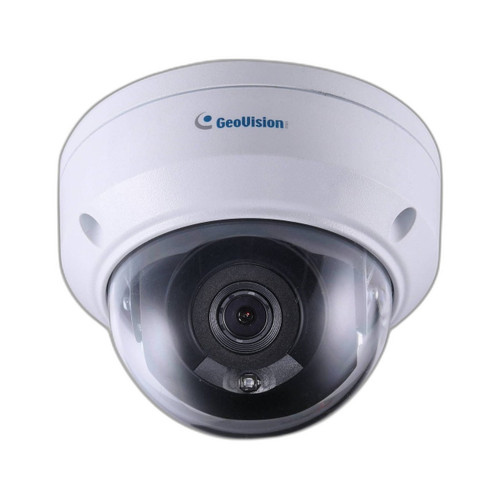
Both the Geovision GV-ADR4701 and the Geovision 125-TDR4704-002 are 4MP fixed mini dome cameras from the same manufacturer, positioned for indoor/outdoor IP surveillance deployments. Both use H.265 compression, a 2.8mm fixed lens, and IR night vision—making them genuine cross-shop candidates for installers evaluating a compact dome at the same resolution tier. The comparison centers on differences in WDR implementation, low-light capability, environmental ratings, power specification, and VMS integration documentation.
In This Guide
How do the imaging specs compare?
Both cameras deliver 4MP resolution with H.265 compression and a 2.8mm fixed lens, so framing and storage efficiency are equivalent on paper. The ADR4701 is specified with standard WDR, while the TDR4704-002 carries WDR Pro—indicating a more advanced dynamic range processing pipeline that the manufacturer distinguishes from its baseline WDR. In mixed-lighting environments such as lobbies with bright windows and dim corridors, the TDR4704-002's WDR Pro designation suggests greater headroom for highlight and shadow detail, though no quantified dB figure is provided in the supplied specs for either model.
For low-light performance, both cameras list IR and night-vision capability. The TDR4704-002 additionally specifies 'Super low-lux' sensitivity, implying a lower minimum illumination threshold in the color or monochrome modes before IR cuts in. The ADR4701 does not carry a super low-lux claim in the provided specs. No minimum illumination lux values or IR range distances are given for either unit, so a direct numerical comparison on night performance cannot be made from available data.
What about installation and environment?
The ADR4701 carries explicit IP66 and IK10 ratings, confirming dust-tight and water-jet resistance alongside a certified vandal-impact tolerance of 20 joules. It also specifies an operating temperature range of 0°C to 50°C and a power draw of 11W, compatible with standard PoE. Ceiling and wall mounting options are documented. These ratings make it a defined fit for semi-exposed or vandal-prone environments such as stairwells, parking structures, or retail back-of-house.
The TDR4704-002 does not include IP rating, IK rating, operating temperature, power consumption, or mounting type data in the provided specifications. Installers cannot confirm outdoor suitability, vandal resistance, or PoE budget requirements for that model from the available spec set. This is a material gap when evaluating deployments beyond controlled indoor environments.
Which fits your VMS and analytics better?
The ADR4701 explicitly lists ONVIF compliance and compatibility with NVR/DVR systems, giving integrators a documented interoperability baseline for third-party VMS platforms. The TDR4704-002's provided specs do not state ONVIF compliance or list compatible VMS platforms. Neither camera has edge analytics, audio input/output, or on-board SD card storage documented in the supplied specifications, so those capabilities cannot be compared. Installers requiring confirmed ONVIF support for a multi-vendor VMS environment have a documented basis only with the ADR4701 from the data provided.
Which should you choose: the ADR4701 or the TDR4704-002?
Our take: The ADR4701 is the stronger choice when environmental durability, confirmed ONVIF integration, and a documented power budget are required—while the TDR4704-002 holds a specified imaging advantage in dynamic range and low-light sensitivity for controlled indoor deployments. Concretely: the ADR4701 carries IP66 and IK10 ratings absent from the TDR4704-002's specs, documents an 11W PoE power draw enabling precise switch planning, and explicitly confirms ONVIF compliance for third-party VMS integration. The TDR4704-002 counters with WDR Pro versus the ADR4701's standard WDR, and adds a super low-lux specification not claimed by the ADR4701. Buyers installing in outdoor or vandal-exposed locations, or integrating into a mixed-vendor NVR environment, should favor the ADR4701. Buyers prioritizing image quality in challenging interior lighting with a single-vendor Geovision system may find the TDR4704-002's imaging specs more relevant—provided they confirm environmental and integration requirements directly with Geovision.
Side-by-Side Comparison
Spec-for-spec, from manufacturer data.
| Specification | Geovision ADR4701 | Geovision TDR4704-002 |
|---|---|---|
| Resolution | 4 MP | 4 MP |
| Compression | H.265 | H.265 |
| Lens / Focal Length | 2.8 mm fixed | 2.8 mm fixed |
| WDR | WDR | WDR Pro |
| Low-Light / IR | IR | IR; Super low-lux |
| Night Vision | IR | IR |
| IP Rating | IP66 | — |
| IK / Impact Rating | IK10 | — |
| Operating Temperature | 0°C to 50°C | — |
| Power / PoE | 11 W | — |
| Mount Type | Ceiling; Wall | — |
| ONVIF | Yes | — |
| VMS Compatibility | ONVIF; NVR/DVR systems | — |
Frequently Asked Questions
Which should you choose: the ADR4701 or the TDR4704-002?
The ADR4701 is the stronger choice when environmental durability, confirmed ONVIF integration, and a documented power budget are required—while the TDR4704-002 holds a specified imaging advantage in dynamic range and low-light sensitivity for controlled indoor deployments. Concretely: the ADR4701 carries IP66 and IK10 ratings absent from the TDR4704-002's specs, documents an 11W PoE power draw enabling precise switch planning, and explicitly confirms ONVIF compliance for third-party VMS integration. The TDR4704-002 counters with WDR Pro versus the ADR4701's standard WDR, and adds a super low-lux specification not claimed by the ADR4701. Buyers installing in outdoor or vandal-exposed locations, or integrating into a mixed-vendor NVR environment, should favor the ADR4701. Buyers prioritizing image quality in challenging interior lighting with a single-vendor Geovision system may find the TDR4704-002's imaging specs more relevant—provided they confirm environmental and integration requirements directly with Geovision.
Is the ADR4701 or TDR4704-002 better for low light?
Based on the provided specs, the TDR4704-002 has the edge: it lists both IR night vision and a 'Super low-lux' sensitivity rating, whereas the ADR4701 specifies IR only with no super low-lux claim. Neither datasheet provides a minimum lux figure, so buyers should request those numbers from Geovision before specifying either camera for critical low-light coverage.
Can I use either camera outdoors?
Only the ADR4701 has documented outdoor suitability in the provided specs—it carries an IP66 rating (dust-tight, water-jet resistant) and an IK10 vandal-impact rating. The TDR4704-002 has no IP or IK rating listed in its available specifications, so outdoor or vandal-exposed use cannot be confirmed from the data provided. Verify with Geovision before deploying the TDR4704-002 in unprotected exterior locations.
Will either camera work with my third-party VMS?
The ADR4701 explicitly lists ONVIF compliance and NVR/DVR system compatibility, giving a documented interoperability baseline for most major VMS platforms. The TDR4704-002's provided specs do not mention ONVIF or any VMS compatibility. Integrators working with non-Geovision VMS environments should treat the ADR4701 as the safer choice based on available data, and confirm TDR4704-002 protocol support with Geovision directly.
Get a Second Opinion on Your Camera Choice
Share your site layout, coverage goals, and budget. Our team will validate the camera selection, flag anything we would change, and recommend products that match the use case.