
Geovision 84-TMEB58W-0010 vs Geovision VD57000-0020: Specification Comparison
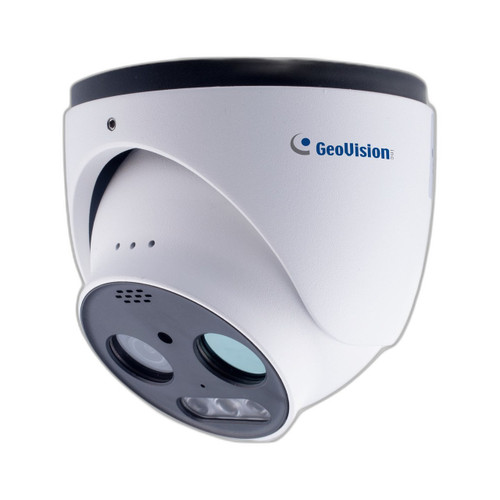
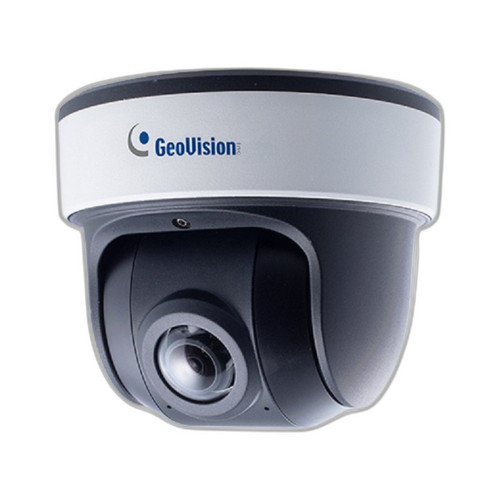
Both the Geovision 84-TMEB58W-0010 and the 88-VD57000-0020 are 5MP dome cameras from Geovision, making them nominally comparable on resolution and form factor. However, they target meaningfully different deployment scenarios: the 84-TMEB58W-0010 is a dual-sensor thermal-optical unit aimed at perimeter and critical-infrastructure detection, while the 88-VD57000-0020 is a conventional IR vandal dome suited to standard indoor and semi-outdoor surveillance runs. This comparison examines where each camera's specified capabilities diverge across imaging, installation, and integration.
In This Guide
How do the imaging specs compare?
Both cameras share a 5MP optical resolution, but the similarity largely ends there. The 84-TMEB58W-0010 pairs its 5MP optical sensor with a secondary thermal sensor in a single dome housing, delivering dual-modality detection that the 88-VD57000-0020 cannot replicate. Low-light performance on the 84-TMEB58W-0010 is described as 'Super low lux' via optical means, while WDR is handled through WDR Pro — a higher-grade dynamic range implementation. The 88-VD57000-0020 lists standard WDR, which is a lower tier of dynamic range processing. No minimum illumination figure in lux is provided for either model in the supplied specifications.
The 88-VD57000-0020 specifies a fixed 4.8mm lens, providing a defined field of view useful for layout planning; no lens focal length is listed for the 84-TMEB58W-0010. Night-time illumination on the VD57000-0020 is delivered by built-in IR, a conventional and cost-effective approach for low-light optical imaging. The 84-TMEB58W-0010 does not list IR as a low-light method — its thermal sensor inherently detects heat signatures in total darkness, which is a fundamentally different capability. Video compression standard is specified only for the 88-VD57000-0020 (H.265); the 84-TMEB58W-0010's compression format is not stated in the provided specs.
What about installation and environment?
Both cameras are dome form-factor and support ceiling mounting, simplifying like-for-like ceiling replacements. The 84-TMEB58W-0010 additionally lists wall mounting as a supported mount type, offering more deployment flexibility. Power for both units is PoE; the 88-VD57000-0020 specifies PoE to the 802.3af standard (maximum 15.4W delivery), which gives installers a concrete budgeting figure for switch port planning. The 84-TMEB58W-0010 does not specify a PoE class in the supplied data, so switch compatibility should be confirmed against the full datasheet before procurement.
Neither camera's IP rating, IK impact rating, operating temperature range, dimensions, nor weight are present in the provided specifications for either model. Buyers evaluating suitability for outdoor, semi-outdoor, or vandal-resistant installations must consult the manufacturer's full datasheets — a link is provided for the 88-VD57000-0020 (/content/product-datasheets/88-VD57000-0020.pdf) but not for the 84-TMEB58W-0010.
Which fits your VMS and analytics better?
The 84-TMEB58W-0010 carries explicit ONVIF compliance and lists VMS compatibility with Milestone and Axis Camera Station in addition to ONVIF, giving integrators three verified software integration paths. It also specifies AI analytics, meaning on-camera processing for tasks such as intrusion detection or object classification without requiring server-side compute. The 88-VD57000-0020 does not list ONVIF compliance, AI analytics, or named VMS compatibility in the provided specifications, leaving VMS support unconfirmed from supplied data alone.
Neither camera lists audio input/output capability or on-board edge storage (e.g., SD card slot) in the provided specifications. Installers requiring local recording redundancy or two-way audio should verify these features directly with the manufacturer datasheet before finalizing design.
Which should you choose: the 84-TMEB58W-0010 or the VD57000-0020?
Our take: The 84-TMEB58W-0010 is the stronger choice when a deployment demands thermal detection, confirmed VMS compatibility, or AI-based edge analytics. Its dual optical-thermal sensor architecture, AI analytics, and WDR Pro dynamic range processing are absent from the 88-VD57000-0020 — these are not incremental differences but distinct capability tiers. Conversely, the 88-VD57000-0020 is the better-specified choice for straightforward IR-illuminated coverage: it states a concrete 4.8mm lens focal length, PoE 802.3af power class, and H.265 compression — three installation-critical figures that are unspecified for the 84-TMEB58W-0010. Buyers equipping standard indoor corridors or parking areas on a tighter per-port power budget will find the VD57000-0020 easier to plan and deploy. Sites requiring perimeter protection, detection in zero-light conditions via thermal, or named-VMS assurance should specify the 84-TMEB58W-0010, budget and full-datasheet PoE confirmation permitting.
Side-by-Side Comparison
Spec-for-spec, from manufacturer data.
| Specification | Geovision 84-TMEB58W-0010 | Geovision VD57000-0020 |
|---|---|---|
| Resolution | 5 MP | 5 MP |
| Camera Type | Thermal & Optical Dome | IR Vandal Dome |
| Sensor Count | Dual (optical + thermal) | Single (optical) |
| Lens / Focal Length | — | 4.8mm |
| Low-Light Method | Super low lux (optical) + thermal | IR |
| WDR | WDR Pro | WDR |
| Video Compression | — | H.265 |
| AI / Edge Analytics | AI analytics | — |
| ONVIF | Yes | — |
| VMS Compatibility | ONVIF; Milestone; Axis Camera Station | — |
| Power Input | PoE | PoE (802.3af) |
| Form Factor | Dome | Dome |
| Mount Type | Ceiling; Wall | Ceiling |
Frequently Asked Questions
Which should you choose: the 84-TMEB58W-0010 or the VD57000-0020?
The 84-TMEB58W-0010 is the stronger choice when a deployment demands thermal detection, confirmed VMS compatibility, or AI-based edge analytics. Its dual optical-thermal sensor architecture, AI analytics, and WDR Pro dynamic range processing are absent from the 88-VD57000-0020 — these are not incremental differences but distinct capability tiers. Conversely, the 88-VD57000-0020 is the better-specified choice for straightforward IR-illuminated coverage: it states a concrete 4.8mm lens focal length, PoE 802.3af power class, and H.265 compression — three installation-critical figures that are unspecified for the 84-TMEB58W-0010. Buyers equipping standard indoor corridors or parking areas on a tighter per-port power budget will find the VD57000-0020 easier to plan and deploy. Sites requiring perimeter protection, detection in zero-light conditions via thermal, or named-VMS assurance should specify the 84-TMEB58W-0010, budget and full-datasheet PoE confirmation permitting.
Is the 84-TMEB58W-0010 or the VD57000-0020 better for low-light performance?
They use different technologies. The 84-TMEB58W-0010 is specified as 'Super low lux' optically and adds a thermal sensor that detects heat regardless of visible light, making it more capable in true darkness. The 88-VD57000-0020 relies on built-in IR illumination, which is effective in darkness but requires IR light to reach the scene. Minimum illumination figures in lux are not provided for either model in the available specs.
Will both cameras work with my existing VMS?
The 84-TMEB58W-0010 lists ONVIF compliance plus verified compatibility with Milestone and Axis Camera Station. The 88-VD57000-0020 does not list ONVIF or any named VMS compatibility in the provided specifications, so VMS support for that model should be confirmed directly with Geovision before purchase.
Which camera is easier to install from a power and cabling standpoint?
Both run on PoE, so no separate power supply is required. The 88-VD57000-0020 specifies PoE 802.3af (up to 15.4W), giving installers a definitive switch-port budget figure. The 84-TMEB58W-0010 does not state a PoE class in the supplied data — given its dual-sensor and AI processing load, the PoE class should be verified against the full datasheet to ensure existing switch infrastructure can support it.
Get a Second Opinion on Your Camera Choice
Share your site layout, coverage goals, and budget. Our team will validate the camera selection, flag anything we would change, and recommend products that match the use case.