
Digital Watchdog V6563WTIR vs Hanwha XNV-8081Z: Specification Comparison
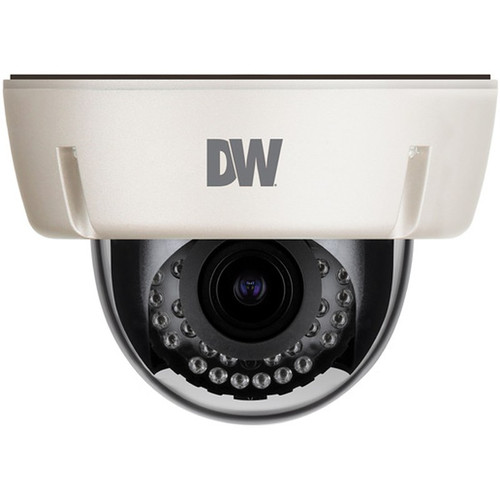
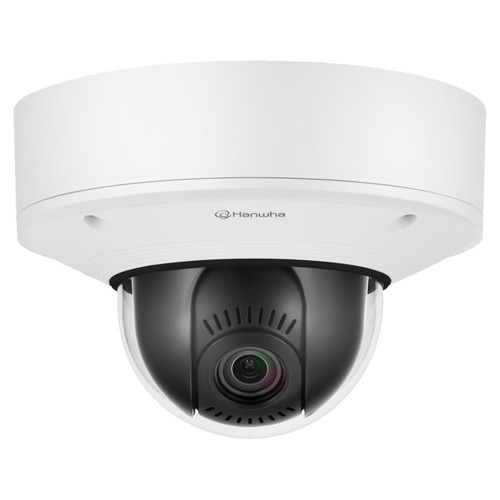
Both the Digital Watchdog DWC-V6563WTIR and the Hanwha XNV-8081Z are 5MP outdoor vandal-resistant dome cameras targeting the same perimeter and general surveillance market. The DWC-V6563WTIR is a hybrid analog/IP coax-compatible model with a vari-focal lens and 100-foot IR, while the XNV-8081Z is a pure IP PTZ dome with motorized varifocal zoom, deep analytics, and dual SD card slots. Installers replacing analog infrastructure or mixing coax and IP runs will find real differences in signal technology, analytics depth, temperature tolerance, and VMS integration.
In This Guide
How do the imaging specs compare?
Both cameras deliver 5MP resolution, but the sensors differ meaningfully. The DWC-V6563WTIR uses a 1/2.8" CMOS producing 2608×1960 pixels, while the XNV-8081Z uses a larger 1/1.8" CMOS at 2560×1920. The larger sensor in the Hanwha typically captures more light per pixel. Low-light performance reflects this: the XNV-8081Z reaches 0.07 lux (color) and 0.007 lux (B/W), versus 0.08 lux (color) and 0.0 lux (B/W) for the DWC-V6563WTIR. Both cameras specify 120dB Wide Dynamic Range. The DWC-V6563WTIR achieves 0.0 lux B/W via its Smart IR illuminator rated at 100 feet; the XNV-8081Z lists a minimum object distance of 0.5m for its IR but does not specify a maximum IR range in the provided specs.
On the lens side, the DWC-V6563WTIR covers a wider zoom span: 2.7–13.5mm vari-focal delivering 102°–31.4° HFOV and 73.9°–23.3° VFOV. The XNV-8081Z offers a 3.6–9.4mm motorized varifocal with 2.6× zoom ratio at 102.5° HFOV wide-end; HFOV at tele is not stated in the provided specs. The Digital Watchdog unit also adds P-iris control and supports Star-Light sense-up (×2–×32). The XNV-8081Z provides Digital Image Stabilization and Lens Distortion Correction (LDC), which the DWC-V6563WTIR specs do not list. Maximum frame rate is specified at 30fps for the XNV-8081Z; the DWC-V6563WTIR lists only "Variable" with no numeric cap stated.
What about installation and environment?
The DWC-V6563WTIR is rated IP66 and IK10, built in aluminum die-cast, and operates from -20°C to +50°C (-4°F to +122°F). The XNV-8081Z carries IP67, IP6K9K, NEMA 4X, and IK10+ ratings — a measurably higher impact and ingress specification — and operates across a wider thermal envelope of -50°C to +60°C (-58°F to +140°F), a meaningful advantage in extreme-cold deployments. Both housings are aluminum.
Power options differ in class. The DWC-V6563WTIR accepts 24VAC or 12VDC and is listed as PoE Class 2 at 5.3W max. The XNV-8081Z accepts PoE (IEEE 802.3af, Class 3), 12VDC, or 24VAC (optional) at 5.4W max. Both are wired, dome-form-factor cameras. The DWC-V6563WTIR uniquely supports multi-format coax signal technology (CVBS, 960H, HD-Analog, HD-CVI, HD-TVI, HD over Coax) plus a CVBS test output, making it backward-compatible with analog infrastructure. The XNV-8081Z is IP-only with RJ-45 (10/100BASE-T). The DWC-V6563WTIR also includes built-in camera control for Pelco C, UTC, and UTP protocols. Mounting accessories are sold separately for the Digital Watchdog unit; the Hanwha specs do not address mounting accessories.
Which fits your VMS and analytics better?
The XNV-8081Z is the substantially deeper platform for IP VMS and analytics integration. It declares ONVIF Profile S/G/T compliance, SUNAPI (HTTP API), and Wisenet open platform support. Video compression includes H.265, H.264 (Main/Baseline/High), and MJPEG with CBR/VBR bitrate control, WiseStream II smart codec, up to 10 streaming profiles, and unicast support for 20 simultaneous users. Analytics are extensive: defocus detection, directional detection, fog detection, face detection, motion detection, digital auto tracking, appear/disappear, enter/exit, loitering, tampering, virtual line, audio detection, sound classification, and shock detection. Business intelligence features include people counting, queue management, and heatmap. The DWC-V6563WTIR's specs list motion detection, 24 programmable privacy zones, and de-fog; no ONVIF declaration, video compression standard, or streaming protocol list appears in the provided specs.
On audio, the XNV-8081Z provides selectable mic/line input (2.5VDC, 2K Ohm) and line output (1Vrms), with G.711 and G.726 compression; the DWC-V6563WTIR specs do not list audio capabilities. For edge storage, the XNV-8081Z has two Micro SD/SDHC/SDXC slots supporting up to 512GB total and 1024MB RAM / 256MB Flash onboard; the DWC-V6563WTIR specs do not mention edge storage. Security features on the Hanwha include HTTPS/SSL, digest authentication, IP filtering, user access logging, and 802.1X (EAP-TLS, EAP-LEAP); equivalent security specs are not provided for the Digital Watchdog unit. The DWC-V6563WTIR lists 1 alarm output; the XNV-8081Z lists 1 alarm input and 1 alarm output.
Which should you choose: the V6563WTIR or the XNV-8081Z?
Our take: The XNV-8081Z is the stronger choice when the installation is pure IP, demands deep analytics, and must survive extreme temperatures or high-impact environments. Its 1/1.8" sensor achieves 0.007 lux B/W versus 0.0 lux B/W on the Digital Watchdog — though the DWC-V6563WTIR's 0.0 lux figure is IR-assisted at a rated 100-foot range while the Hanwha's IR range is not specified. The XNV-8081Z's IK10+ / NEMA 4X / IP67 ratings exceed the DWC-V6563WTIR's IK10 / IP66, and its -50°C to +60°C operating range is substantially wider than the Digital Watchdog's -20°C to +50°C. The DWC-V6563WTIR is the stronger choice for hybrid coax/IP retrofits: it supports CVBS, HD-CVI, HD-TVI, and HD-TVI over coax — capabilities the XNV-8081Z entirely lacks. Choose the XNV-8081Z for new IP infrastructure with Wisenet VMS or ONVIF-compliant platforms requiring edge analytics; choose the DWC-V6563WTIR for analog-to-IP migration projects where coax reuse is a priority.
Side-by-Side Comparison
Spec-for-spec, from manufacturer data.
| Specification | Digital Watchdog V6563WTIR | Hanwha XNV-8081Z |
|---|---|---|
| Resolution | 5MP (2608×1960) | 5MP (2560×1920) |
| Image Sensor | 1/2.8" CMOS | 1/1.8" CMOS |
| Lens / Focal Length | 2.7–13.5mm vari-focal (P-iris) | 3.6–9.4mm motorized varifocal (2.6×, P-iris) |
| Horizontal FOV | 102°–31.4° | 102.5° (wide); tele not stated |
| Min. Illumination (Color / B/W) | 0.08 lux color / 0.0 lux B/W | 0.07 lux color / 0.007 lux B/W |
| IR Range | 100 ft (Smart IR) | Not specified in provided specs |
| Wide Dynamic Range | 120dB True WDR | 120dB WDR |
| Max Frame Rate | Variable (no numeric cap stated) | 30fps |
| Video Compression | Not stated in provided specs | H.265 / H.264 / MJPEG |
| Signal Technology | CVBS, 960H, HD-Analog, HD-CVI, HD-TVI, HD over Coax | IP only (RJ-45 10/100BASE-T) |
| IP Rating | IP66 | IP67 / IP6K9K / NEMA 4X |
| Impact Rating | IK10 | IK10+ |
| Operating Temperature | -20°C to +50°C (-4°F to +122°F) | -50°C to +60°C (-58°F to +140°F) |
| Power Input / PoE Class | 24VAC / 12VDC / PoE Class 2; 5.3W max | PoE 802.3af Class 3 / 12VDC / 24VAC (optional); 5.4W max |
| Edge Storage | Not stated in provided specs | 2× Micro SD/SDHC/SDXC up to 512GB |
| Audio | Not stated in provided specs | Mic/line in; line out; G.711/G.726 |
| Alarm I/O | 1 output | 1 input / 1 output |
| Privacy Zones | 24 programmable zones | 32 zones (4-point polygonal, mosaic) |
| ONVIF | Not stated in provided specs | ONVIF Profile S/G/T |
| Analytics | Motion detection, de-fog | Defocus, directional, fog, face, motion, loitering, tampering, people counting, heatmap, queue management, and more |
| Dimensions | Ø145×108.3mm (5.7"×4.26") | Ø180×125mm (Ø7.1"×4.9") |
| Weight | 0.9kg (1.98 lb) | 1.75kg (3.86 lb) |
| Housing Color | Ivory | White (RAL9003) |
| Warranty | 5-year | 3-year |
Frequently Asked Questions
Which should you choose: the V6563WTIR or the XNV-8081Z?
The XNV-8081Z is the stronger choice when the installation is pure IP, demands deep analytics, and must survive extreme temperatures or high-impact environments. Its 1/1.8" sensor achieves 0.007 lux B/W versus 0.0 lux B/W on the Digital Watchdog — though the DWC-V6563WTIR's 0.0 lux figure is IR-assisted at a rated 100-foot range while the Hanwha's IR range is not specified. The XNV-8081Z's IK10+ / NEMA 4X / IP67 ratings exceed the DWC-V6563WTIR's IK10 / IP66, and its -50°C to +60°C operating range is substantially wider than the Digital Watchdog's -20°C to +50°C. The DWC-V6563WTIR is the stronger choice for hybrid coax/IP retrofits: it supports CVBS, HD-CVI, HD-TVI, and HD-TVI over coax — capabilities the XNV-8081Z entirely lacks. Choose the XNV-8081Z for new IP infrastructure with Wisenet VMS or ONVIF-compliant platforms requiring edge analytics; choose the DWC-V6563WTIR for analog-to-IP migration projects where coax reuse is a priority.
Is the DWC-V6563WTIR or XNV-8081Z better for low-light performance?
The DWC-V6563WTIR reaches 0.0 lux B/W using its 100-foot Smart IR illuminator, and 0.08 lux color. The XNV-8081Z reaches 0.007 lux B/W and 0.07 lux color; its IR range is not specified in the provided specs. The Digital Watchdog unit's 0.0 lux B/W figure depends on IR illumination at range — buyers should confirm working distances. The Hanwha's larger 1/1.8" sensor provides a hardware advantage in passive low-light capture.
Can the DWC-V6563WTIR work on an existing coax system?
Yes. The DWC-V6563WTIR supports CVBS, 960H, HD-Analog, HD-CVI, HD-TVI, and HD over Coax signal formats, plus a CVBS test video output. This makes it compatible with legacy analog and HD-over-coax infrastructure. The XNV-8081Z is IP-only (RJ-45, 10/100BASE-T) and does not support coax signal formats.
Which camera is better suited for harsh outdoor environments?
The XNV-8081Z carries IP67, IP6K9K, and NEMA 4X ingress ratings along with an IK10+ impact rating, and operates from -50°C to +60°C. The DWC-V6563WTIR is rated IP66 and IK10, operating from -20°C to +50°C. For installations subject to extreme cold, high-pressure washdown (IP6K9K), or elevated mechanical impact risk, the Hanwha's certifications are higher across all three dimensions.
Get a Second Opinion on Your Camera Choice
Share your site layout, coverage goals, and budget. Our team will validate the camera selection, flag anything we would change, and recommend products that match the use case.