
Digital Watchdog V6563WTIR vs Hanwha XND-8081VZ: Specification Comparison
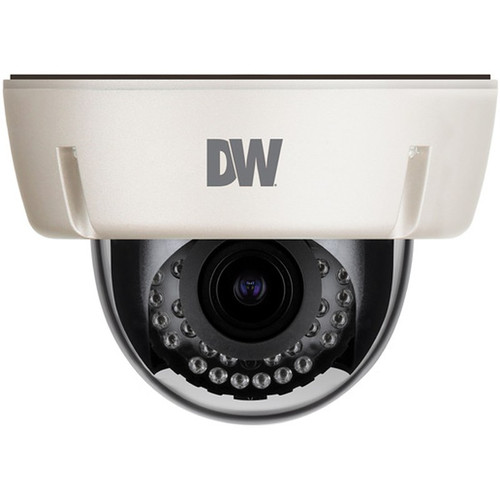
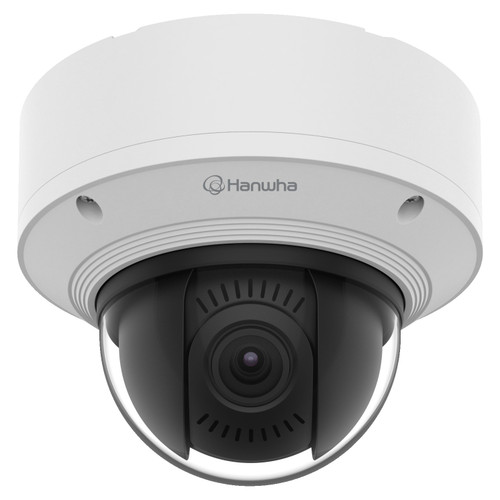
Both the Digital Watchdog DWC-V6563WTIR and the Hanwha XND-8081VZ are 5MP varifocal dome cameras positioned for installers who need motorized zoom and IK10 vandal resistance. The DW unit is rated for outdoor/indoor use with full coax-analog signal compatibility alongside IP, while the Hanwha is an indoor-only IP network camera with richer onboard analytics and a larger sensor. Buyers choosing between them will weigh outdoor vs. indoor deployment, signal technology flexibility, analytics depth, and platform ecosystem.
In This Guide
How do the imaging specs compare?
The DWC-V6563WTIR uses a 1/2.8" 5MP CMOS producing 2608×1960 pixels with a vari-focal lens spanning 2.7–13.5mm and a horizontal field of view of 102°–31.4°, delivering a 5× optical zoom range. The XND-8081VZ uses a larger 1/1.8" 6MP CMOS (specified at 5MP output resolution, 2560×1920) with a shorter 3.6–9.4mm motorized varifocal lens providing only 2.6× zoom. The wider physical sensor on the Hanwha generally captures more light per pixel, but the Digital Watchdog's longer zoom range gives greater standoff flexibility.
In low light, the XND-8081VZ reaches 0.007 lux in B/W mode versus the DWC-V6563WTIR's 0.0 lux B/W specification; color minimums are 0.08 lux (DW) versus 0.07 lux (Hanwha). Both cameras offer 120dB True WDR. The DW camera provides up to 100 feet (30 m) of Smart IR range; the Hanwha specs list IR support with a minimum object distance of 0.5 m but do not state a maximum IR throw distance. Frame rate is specified at a fixed 30fps for the Hanwha; the DW unit lists a variable frame rate with no explicit maximum stated in the provided specs.
What about installation and environment?
The DWC-V6563WTIR carries an IP66 weatherproof rating and IK10 vandal rating, making it suitable for outdoor perimeter installations exposed to water jets. It operates from -20°C to +50°C (-4°F to +122°F). The Hanwha XND-8081VZ is rated IP52 (splash-resistant, not jet-proof) and IK10, and is specified as an indoor camera; it operates across a wider thermal range of -25°C to +60°C (-13°F to +140°F). The Hanwha is not suitable for direct outdoor exposure without an additional housing.
Power options differ meaningfully: the DWC-V6563WTIR accepts 24VAC, 12VDC, or PoE Class 2 (maximum 5.3W). The XND-8081VZ accepts 12VDC or PoE IEEE 802.3af Class 3, drawing up to 11W—more than twice the DW draw—reflecting its richer processing load. The DW unit also supports CVBS, 960H, HD-Analog, HD-CVI, HD-TVI, and HD-over-Coax analog signal outputs in addition to IP, enabling hybrid coax/IP deployments; the Hanwha is IP-only via RJ-45 10/100BASE-T.
Which fits your VMS and analytics better?
The Hanwha XND-8081VZ declares ONVIF Profile S/G/T compliance and Wisenet SUNAPI, and supports a broad protocol list including SNMPv3, 802.1X (EAP-TLS, EAP-LEAP), SRTP, and HTTPS/SSL. Its onboard analytics package includes defocus detection, directional detection, fog detection, face detection, motion detection, digital auto-tracking, appear/disappear, enter/exit, loitering, tampering, virtual line, audio detection, sound classification, and shock detection, plus business intelligence functions (people counting, queue management, heatmap). It also carries dual Micro SD/SDHC/SDXC slots with up to 512GB edge storage, built-in audio in/out, and 32 privacy mask zones. The provided DWC-V6563WTIR specs do not list ONVIF compliance, network protocol details, edge analytics categories, or on-board storage capability.
Audio is present on the Hanwha (mic/line in selectable, line out) with G.711/G.726 compression; no audio capability is listed in the DW specs. Privacy masking on the Hanwha supports 32 four-point quadrangle zones with color and mosaic options; the DW lists 24 programmable privacy zones without detail on zone shape. The Hanwha also provides Digital Image Stabilization, Hallway View (90°/270° rotation), and WiseStream II smart codec for bandwidth reduction—none of these are listed in the DW specs.
Which should you choose: the V6563WTIR or the XND-8081VZ?
Our take: The XND-8081VZ is the stronger choice when the installation is indoors, the VMS ecosystem is IP-native, and analytics depth or bandwidth efficiency matter: its 1/1.8" sensor is physically larger than the DWC-V6563WTIR's 1/2.8" chip, its B/W minimum illumination of 0.007 lux is measurably better than the DW's 0.08 lux color floor, and its onboard analytics suite (14+ functions including people counting and heatmap) and dual 512GB SD slots have no equivalent in the DW specs. The DWC-V6563WTIR is the better fit when outdoor weatherproofing is required (IP66 vs. IP52), when coax-based hybrid infrastructure is in place (it supports HD-TVI/CVI/AHD/CVBS; the Hanwha is IP-only), or when a 5× zoom range (2.7–13.5mm) is needed rather than the Hanwha's 2.6× (3.6–9.4mm). The DW also carries a 5-year warranty versus the Hanwha's 3-year term.
Side-by-Side Comparison
Spec-for-spec, from manufacturer data.
| Specification | Digital Watchdog V6563WTIR | Hanwha XND-8081VZ |
|---|---|---|
| Resolution | 5MP (2608×1960) | 5MP (2560×1920) |
| Image Sensor | 1/2.8" 5MP CMOS | 1/1.8" 6MP CMOS |
| Lens / Focal Length | 2.7–13.5mm vari-focal (5× range) | 3.6–9.4mm motorized varifocal (2.6×) |
| Horizontal FOV | 102°–31.4° | 102.5° (wide end only specified) |
| Min. Illumination (Color / B/W) | 0.08 lux color / 0.0 lux B/W | 0.07 lux color / 0.007 lux B/W |
| IR Range | 100 ft (30 m) Smart IR | Not specified in provided specs |
| Wide Dynamic Range | 120dB True WDR | 120dB WDR |
| Max Frame Rate | Variable (max not stated in specs) | 30fps |
| Video Compression | Not specified in provided specs | H.265 / H.264 / MJPEG; WiseStream II |
| Signal Technology | IP; CVBS, 960H, HD-CVI, HD-TVI, HD-AHD (hybrid coax) | IP only (RJ-45 10/100BASE-T) |
| IP Rating | IP66 | IP52 |
| IK / Vandal Rating | IK10 | IK10 |
| Operating Temperature | -20°C to +50°C (-4°F to +122°F) | -25°C to +60°C (-13°F to +140°F) |
| Power Input / PoE Class | 24VAC / 12VDC / PoE Class 2 (5.3W max) | 12VDC / PoE IEEE 802.3af Class 3 (11W max) |
| Edge Storage | Not specified in provided specs | Dual Micro SD/SDHC/SDXC up to 512GB |
| Audio | Not specified in provided specs | Mic/line in (selectable) + line out |
| ONVIF | Not specified in provided specs | ONVIF Profile S/G/T |
| Onboard Analytics | Motion detection, de-fog listed | 14+ functions incl. people counting, heatmap, face detection, loitering |
| Privacy Zones | 24 programmable zones | 32 four-point quadrangle zones (color/mosaic) |
| Environment Rating | Outdoor (IP66) | Indoor (IP52) |
| Dimensions | 5.7" × 4.26" (145 × 108.3 mm) | Ø160 × 125 mm (Ø6.3" × 4.9") |
| Weight | 1.98 lbs (0.9 kg) | 1.45 kg (3.2 lbs) |
| Warranty | 5 years | 3 years |
Frequently Asked Questions
Which should you choose: the V6563WTIR or the XND-8081VZ?
The XND-8081VZ is the stronger choice when the installation is indoors, the VMS ecosystem is IP-native, and analytics depth or bandwidth efficiency matter: its 1/1.8" sensor is physically larger than the DWC-V6563WTIR's 1/2.8" chip, its B/W minimum illumination of 0.007 lux is measurably better than the DW's 0.08 lux color floor, and its onboard analytics suite (14+ functions including people counting and heatmap) and dual 512GB SD slots have no equivalent in the DW specs. The DWC-V6563WTIR is the better fit when outdoor weatherproofing is required (IP66 vs. IP52), when coax-based hybrid infrastructure is in place (it supports HD-TVI/CVI/AHD/CVBS; the Hanwha is IP-only), or when a 5× zoom range (2.7–13.5mm) is needed rather than the Hanwha's 2.6× (3.6–9.4mm). The DW also carries a 5-year warranty versus the Hanwha's 3-year term.
Is the DWC-V6563WTIR or XND-8081VZ better for low-light performance?
Based on the provided specs, the XND-8081VZ reaches 0.007 lux in B/W mode, compared to 0.08 lux color (0.0 lux B/W listed, though '0.0 lux' requires IR illumination) for the DWC-V6563WTIR. The Hanwha's larger 1/1.8" sensor also collects more light per pixel than the DW's 1/2.8" chip. However, the DW specifies a stated 100-foot IR throw distance; the Hanwha's maximum IR range is not listed in the provided specs.
Can the DWC-V6563WTIR be used outdoors while the XND-8081VZ cannot?
Yes, based on the provided specs. The DWC-V6563WTIR is rated IP66 (protected against powerful water jets) and is described as suitable for outdoor environments. The XND-8081VZ is rated IP52 (protected against dripping water at an angle) and is specified as an indoor camera. Installing the Hanwha in a fully exposed outdoor location without a separate weatherproof housing would be outside its rated protection class.
Which camera supports existing coax wiring?
The DWC-V6563WTIR supports CVBS, 960H, HD-Analog, HD-CVI, HD-TVI, and HD-over-Coax signal technologies, making it compatible with hybrid analog/IP coax installations. The XND-8081VZ is an IP-only camera with an RJ-45 Ethernet interface; it does not list any analog coax signal output in the provided specifications.
Get a Second Opinion on Your Camera Choice
Share your site layout, coverage goals, and budget. Our team will validate the camera selection, flag anything we would change, and recommend products that match the use case.