
Digital Watchdog V6563WTIR vs Hanwha QND-8080R: Specification Comparison
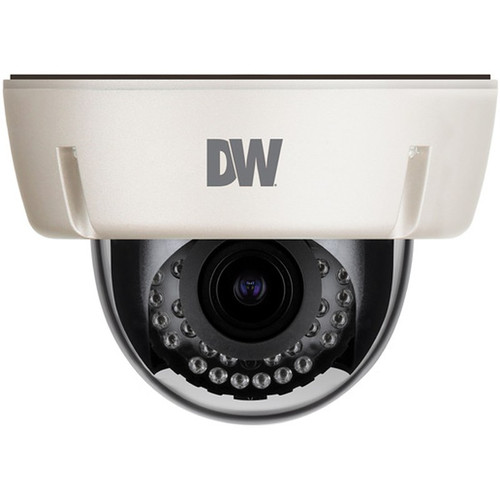
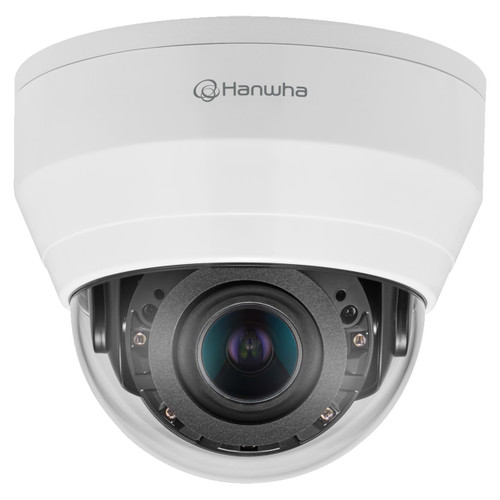
Both the Digital Watchdog DWC-V6563WTIR and the Hanwha QND-8080R are 5MP vandal dome cameras aimed at the commercial surveillance market. The DWC-V6563WTIR is a multi-format analog/HD-over-coax hybrid dome with a vari-focal lens and 100-foot IR, while the QND-8080R is a network IP dome with motorized varifocal zoom, full PTZ pan/tilt/rotate capability, and an extensive cybersecurity feature set. This comparison covers imaging performance, installation requirements, and VMS/analytics integration to help integrators choose the right unit for their deployment.
In This Guide
How do the imaging specs compare?
Both cameras use a 1/2.8" CMOS sensor at 5MP, but their active pixel counts differ slightly: the DWC-V6563WTIR resolves 2608×1960 pixels versus the QND-8080R's 2592×1944. The DW unit ships a wider vari-focal range of 2.7–13.5mm (102°–31.4° HFOV), giving a 5× optical zoom ratio, while the Hanwha offers a narrower 3.2–10mm motorized varifocal at 3.1× zoom with an HFOV of 101°–approximately 31°. Both deliver 120dB WDR. The DWC-V6563WTIR specifies True WDR at 120dB; the QND-8080R lists 120dB WDR via BLC/WDR/SSDR and adds SSNR digital noise reduction, compared to the DW's Smart DNR 3D noise reduction.
In low-light performance, the DWC-V6563WTIR has a clear edge: minimum illumination is 0.08 lux color and 0.0 lux B/W, with a Star-Light sense-up range of ×2–×32 and a 100-foot (30m) Smart IR range. The QND-8080R specifies 0.15 lux color and 0 lux IR, with an IR range of only 20m (65.6ft). The DW unit also supports a wider shutter speed range (1/30–1/30,000 sec) and offers 24 programmable privacy zones versus the Hanwha's 6 rectangular privacy mask zones. The QND-8080R adds a mechanical pan range of 0°–350°, tilt of 0°–67°, and rotate of 0°–355°, which is a positioning capability absent from the DWC-V6563WTIR's spec sheet.
What about installation and environment?
The DWC-V6563WTIR is rated IP66 and IK10 with an aluminum die-cast housing, making it suitable for outdoor use in rain, dust, and vandal-risk environments. Its operating temperature range is −20°C to +50°C (−4°F to +122°F). The QND-8080R carries only an IP42 rating and is designated for indoor use, with an operating range of −10°C to +55°C (+14°F to +131°F); it offers no IK impact resistance rating in the provided specs. For outdoor or perimeter installations the DWC-V6563WTIR's IP66/IK10 ratings are required; the QND-8080R is not rated for direct weather exposure.
Power options differ meaningfully. The DWC-V6563WTIR supports 24VAC, 12VDC, or PoE (Class 2, max 5.3W), giving installers three wiring options and compatibility with existing coax infrastructure via its HD-over-coax signal support (CVBS, 960H, HD-CVI, HD-TVI). The QND-8080R is PoE only (IEEE 802.3af, Class 3, max 8.9W typical 6.6W) and is a pure IP/network device with no analog output. The DW unit weighs 1.98 lbs (0.9 kg) versus 0.95 lbs (430g) for the Hanwha; the DW dome measures 145×108.3mm while the Hanwha is ø120.3×102mm.
Which fits your VMS and analytics better?
The QND-8080R is a full IP camera with H.265/H.264/MJPEG compression, ONVIF Profile S/G/T compliance, SUNAPI (HTTP API), and Wisenet open platform support, making it broadly compatible with modern VMS platforms. Its protocol stack covers IPv4/IPv6, RTSP, HTTPS, SNMPv1/v2c/v3, 802.1X authentication (EAP-TLS/LEAP/PEAP), firmware encryption, SD card partition encryption, and device certificate (Hanwha Private Root CA). On-board edge storage extends to 128GB via a micro SD/SDHC/SDXC slot. Built-in analytics include motion detection (4 polygonal zones), tampering, defocus detection, virtual area (intrusion/enter/exit), and virtual line (crossing/direction). The DWC-V6563WTIR's spec sheet does not list ONVIF compliance, H.265/H.264 compression, or edge storage.
The DWC-V6563WTIR operates as a multi-format analog/HD-over-coax camera (CVBS, 960H, HD-CVI, HD-TVI) with camera control via Pelco C, UTC, and UTP built-in protocols—suited for analog DVR/hybrid recorder environments rather than IP VMS platforms. Its analytics are limited to motion detection and 24 programmable privacy zones per the provided specs. Neither camera lists a built-in microphone or audio input/output in the supplied specifications. Integrators running an IP-based VMS with ONVIF or SDK integration should evaluate only the QND-8080R; those upgrading legacy coax infrastructure should evaluate only the DWC-V6563WTIR.
Which should you choose: the V6563WTIR or the QND-8080R?
Our take: The QND-8080R is the stronger choice for new IP/network deployments requiring VMS integration, advanced analytics, and cybersecurity compliance. It supports H.265/H.264 compression with ONVIF Profile S/G/T, 802.1X network authentication, firmware and SD card encryption, and five categories of built-in video analytics absent from the DWC-V6563WTIR's spec sheet. The DWC-V6563WTIR, however, wins decisively on outdoor deployments: its IP66/IK10 aluminum housing versus the Hanwha's IP42/indoor plastic, its 100-foot IR range versus the Hanwha's 20m (65.6ft), and its 0.08 lux color minimum illumination versus the Hanwha's 0.15 lux give it a clear advantage in perimeter and low-light scenarios. Its 5× (2.7–13.5mm) vari-focal range also exceeds the Hanwha's 3.1× (3.2–10mm). Choose the DWC-V6563WTIR for outdoor, coax-infrastructure, or high-IR-range requirements; choose the QND-8080R for indoor IP deployments where VMS integration, analytics depth, and cybersecurity posture are the primary criteria.
Side-by-Side Comparison
Spec-for-spec, from manufacturer data.
| Specification | Digital Watchdog V6563WTIR | Hanwha QND-8080R |
|---|---|---|
| Resolution | 5MP (2608×1960) | 5MP (2592×1944) |
| Image Sensor | 1/2.8" CMOS | 1/2.8" CMOS |
| Lens / Focal Length | 2.7–13.5mm vari-focal (5× ratio) | 3.2–10mm motorized varifocal (3.1× ratio) |
| Horizontal FOV | 102°–31.4° | 101° (Wide) — Tele not specified |
| Min Illumination (Color / B/W) | 0.08 lux color / 0.0 lux B/W | 0.15 lux color / 0 lux IR |
| IR Range | 100 ft (30m) Smart IR | 20m (65.6 ft) |
| Wide Dynamic Range | 120dB True WDR | 120dB WDR (BLC/WDR/SSDR) |
| Max Frame Rate | Variable (not specified as fps) | 30fps @ 5MP |
| Video Compression | Not specified (analog/HD-over-coax) | H.265 / H.264 / MJPEG |
| Pan / Tilt / Rotate | Not specified | 0°–350° / 0°–67° / 0°–355° |
| IP Rating | IP66 | IP42 |
| IK / Impact Rating | IK10 | — |
| Operating Temperature | −20°C to +50°C (−4°F to +122°F) | −10°C to +55°C (+14°F to +131°F) |
| Power Input / PoE Class | 24VAC / 12VDC / PoE Class 2 (max 5.3W) | PoE IEEE 802.3af Class 3 (max 8.9W / typical 6.6W) |
| Edge Storage | — | Micro SD/SDHC/SDXC up to 128GB |
| ONVIF | — | ONVIF Profile S/G/T |
| Signal Format | CVBS, 960H, HD-CVI, HD-TVI, HD-Analog | IP / Ethernet (RJ-45 10/100BASE-T) |
| Privacy Zones | 24 programmable zones | 6 rectangular zones |
| Environment Rating | Outdoor | Indoor |
| Dimensions | 145×108.3mm (5.7"×4.26") | ø120.3×102.0mm (ø4.74"×4.02") |
| Weight | 1.98 lbs (0.9 kg) | 0.95 lbs (430g) |
| Warranty | 5-year | 3-year |
Frequently Asked Questions
Which should you choose: the V6563WTIR or the QND-8080R?
The QND-8080R is the stronger choice for new IP/network deployments requiring VMS integration, advanced analytics, and cybersecurity compliance. It supports H.265/H.264 compression with ONVIF Profile S/G/T, 802.1X network authentication, firmware and SD card encryption, and five categories of built-in video analytics absent from the DWC-V6563WTIR's spec sheet. The DWC-V6563WTIR, however, wins decisively on outdoor deployments: its IP66/IK10 aluminum housing versus the Hanwha's IP42/indoor plastic, its 100-foot IR range versus the Hanwha's 20m (65.6ft), and its 0.08 lux color minimum illumination versus the Hanwha's 0.15 lux give it a clear advantage in perimeter and low-light scenarios. Its 5× (2.7–13.5mm) vari-focal range also exceeds the Hanwha's 3.1× (3.2–10mm). Choose the DWC-V6563WTIR for outdoor, coax-infrastructure, or high-IR-range requirements; choose the QND-8080R for indoor IP deployments where VMS integration, analytics depth, and cybersecurity posture are the primary criteria.
Is the DWC-V6563WTIR or QND-8080R better for low-light performance?
The DWC-V6563WTIR is specified for lower-light conditions: 0.08 lux color and 0.0 lux B/W minimum illumination with a 100-foot (30m) IR range and Star-Light sense-up (×2–×32). The QND-8080R specifies 0.15 lux color and 0 lux IR but limits IR range to 20m (65.6ft). For outdoor low-light or perimeter applications, the DW unit has a meaningful IR range and sensitivity advantage per the published specs.
Can the QND-8080R be used outdoors?
Based on the provided specifications, the QND-8080R carries an IP42 rating and is listed as an indoor-rated product. IP42 does not provide protection against rain or high-pressure water. It is not rated IK for vandal resistance in the supplied specs. The DWC-V6563WTIR is IP66 and IK10 rated with an aluminum die-cast housing, making it the appropriate choice between these two models for outdoor installation.
Does the DWC-V6563WTIR support ONVIF or H.265 for use with a modern IP VMS?
The provided specifications for the DWC-V6563WTIR do not list ONVIF compliance or H.265/H.264 compression. It is a multi-format analog/HD-over-coax camera using CVBS, HD-CVI, HD-TVI, and 960H signal formats with Pelco C, UTC, and UTP control protocols, suited for DVR or hybrid recorder environments. The QND-8080R supports ONVIF Profile S/G/T and H.265/H.264/MJPEG, making it the compatible choice for IP VMS platforms.
Get a Second Opinion on Your Camera Choice
Share your site layout, coverage goals, and budget. Our team will validate the camera selection, flag anything we would change, and recommend products that match the use case.